
Learn why blood bruises after a draw, what makes a bruise more likely, simple home care steps, and signs that call for prompt medical advice right away.
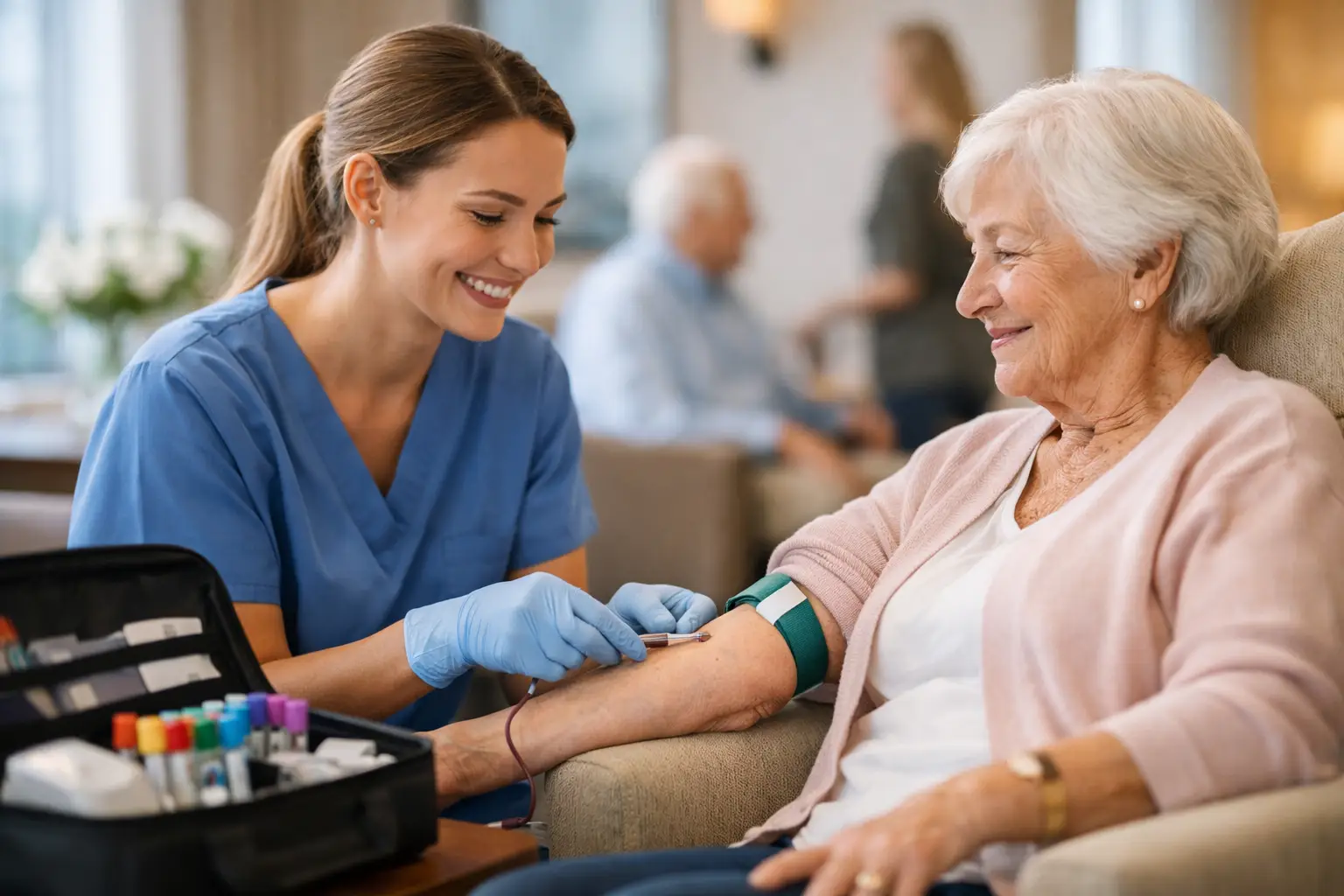
Assisted Living Phlebotomy Services That Come to You
A routine blood draw can become a full-day disruption when a resident needs a wheelchair transfer, transportation, a family escort, and a long wait at a laboratory. Assisted living phlebotomy services bring the collection appointment to the resident instead, helping care teams, families, and residents keep physician-ordered testing moving without adding unnecessary stress.
For many older adults, the hard part is not the blood draw itself. It is leaving a familiar environment, managing fatigue, waiting around strangers, or feeling rushed through an appointment. A mobile phlebotomist meets the resident where they are, with a calm approach, proper supplies, and the time to make the experience feel more comfortable.
Why On-Site Blood Draws Matter in Assisted Living
Assisted living communities work hard to preserve residents’ independence while coordinating the care they need. Lab work is often a regular part of that care. A physician may order testing to monitor medications, diabetes, kidney function, anemia, nutrition, thyroid levels, infection concerns, or other ongoing health needs.
When collection requires an off-site trip, one order can create a chain of logistics. Staff may need to coordinate transportation and paperwork. A family member may need to rearrange work. The resident may miss activities, meals, therapy, or needed rest. If transportation falls through or the resident is not feeling well that morning, the test may be delayed.
Mobile collection helps remove those barriers. The resident can remain in their apartment, room, or another approved private area within the community. Care staff can help provide relevant information and support, while family members receive the reassurance that the collection was handled with patience and respect.
There is also a practical infection-control benefit. Residents who are immunocompromised, recovering from illness, or simply more comfortable avoiding crowded waiting rooms do not have to sit in a busy lab for a standard draw. Every situation is different, but fewer unnecessary trips can mean a better experience for everyone involved.
What Assisted Living Phlebotomy Services Include
A mobile appointment starts with a valid physician order or the required documentation for the requested testing. The phlebotomist arrives with collection supplies appropriate for the ordered tests, verifies the resident’s identity, explains the process, performs the draw, labels specimens carefully, and prepares them for delivery to the designated laboratory or hospital.
That coordination is a major part of the service. A good mobile phlebotomy provider does more than collect a tube of blood. They understand the timing, handling, paperwork, and delivery expectations that help specimens reach the laboratory properly. Some tests have special requirements, such as fasting, timed collection, temperature considerations, or delivery deadlines. Those details should be clarified before the appointment whenever possible.
For communities and families, the goal is simple: let the laboratory come to the resident while keeping the process professional, private, and organized. Phlebotomy Experts provides this kind of concierge support with certified, experienced field professionals and HIPAA-compliant practices. Specimens can be coordinated with established laboratories and hospitals based on the patient’s order and collection needs.
A More Comfortable Experience for Residents
Bedside manner matters at every age, but it can be especially meaningful for a resident with memory changes, anxiety, fragile veins, hearing challenges, or a history of difficult blood draws. The best appointment is not just fast. It is gentle, clearly explained, and paced around the person receiving care.
A caring phlebotomist introduces themselves, confirms what will happen, and gives the resident a chance to get settled. They may need to work around limited mobility, position the resident safely, or allow a familiar caregiver to stay nearby. Small acts of patience can make a big difference.
Not every resident will be ready at the exact moment a phlebotomist arrives. Some need a few extra minutes after breakfast, medication, or a morning care routine. Communicating those realities in advance helps the appointment go more smoothly. Concierge care should feel human, not like another task being pushed through the schedule.
Support for Families and Care Teams
Families often carry the quiet burden of making sure follow-up lab work gets done. They may live across town, work full time, or be coordinating care for more than one loved one. On-site collection can reduce the pressure to personally transport a parent or relative to every routine appointment.
For assisted living staff, mobile draws can support the care plan without replacing the community’s responsibilities. Staff can help confirm the resident is available, share relevant nonclinical logistics, and make sure the collection area offers privacy and safe access. The phlebotomist handles the blood draw and specimen process, while the resident’s physician and laboratory remain responsible for orders, testing, and results.
Clear roles are helpful. A mobile phlebotomist does not diagnose conditions or interpret results. If a resident has concerning symptoms, the care team should follow the community’s clinical escalation procedures and contact the appropriate medical provider. Mobile collection is designed to support ordered testing, not substitute for urgent medical care.
Planning a Smooth Mobile Collection Appointment
The easiest appointments are prepared before the phlebotomist arrives. Confirm the physician order, laboratory preference, insurance or payment details as applicable, and the best contact person for scheduling. It is also helpful to know whether fasting is required and whether the resident has special mobility, communication, or cognitive needs.
A quiet, well-lit space with a stable chair, table, or bedside setup gives the phlebotomist room to work safely. The resident should be comfortable and hydrated unless the physician has given different instructions. If the person has a history of fainting, difficult veins, bruising, or blood thinner use, sharing that information ahead of time can help the provider prepare appropriately.
Timing matters, too. Certain labs need to be collected at a particular time of day or delivered promptly after collection. Routine draws may offer more flexibility, while specialty testing can require tighter coordination. Same-day availability may be possible in some locations, but scheduled appointments are often the best choice for recurring monitoring and multi-resident needs.
For a community arranging several collections, it is wise to discuss whether residents have individual orders, fasting requirements, and preferred appointment windows. Group scheduling can be efficient, but each resident still deserves an unhurried, private interaction. Convenience should never come at the cost of dignity.
When Mobile Collection Is the Better Choice
Mobile phlebotomy is especially helpful for residents with mobility limitations, fall risk, oxygen needs, dementia, chronic fatigue, or limited access to transportation. It can also be a welcome option after a hospital stay, during rehabilitation, or when recurring lab monitoring is needed for a physician-directed treatment plan.
That said, an on-site draw is not the right answer for every medical situation. A resident who is experiencing chest pain, severe shortness of breath, sudden confusion, uncontrolled bleeding, or other urgent symptoms needs immediate medical evaluation through the proper emergency pathway. Likewise, some highly specialized tests or procedures may need to be performed at a particular laboratory or medical facility.
The right question is not whether mobile service replaces all lab visits. It is whether the resident’s ordered test can be safely collected where they are, with appropriate specimen handling and timely delivery. For many routine and recurring needs, the answer is yes.
A blood draw may be a small part of a resident’s care plan, but the way it is handled can affect their entire day. When collection is brought to the assisted living setting with a Smile, steady hands, and respect for the resident’s comfort, it gives families and care teams one less difficult trip to coordinate – and gives the resident more time in the place they call home.
