Compare any iv vitamin drip by ingredients, safety screening, and cost before you book. See which questions to ask a clinic and which red flags to avoid.
At-Home Blood Tests for Toddlers: What Parents Need to Know
Quick Summary
At-home blood tests for toddlers are a common option where a licensed technician draws blood at your home, but not every test suits home collection. Confirm with your child’s doctor which tests can be drawn at home, and check that the laboratory accepts home-collected specimens.
- Routine venous draws ordered by a doctor are usually suitable for home collection.
- Tests needing special timing, sedation, or immediate processing are often better at a clinic.
- Tell your toddler what happens in simple words, and avoid promising the draw won’t hurt.
- Schedule the draw when your toddler is typically calm, avoiding hunger or overdue naps.
- Never hold your toddler down against their will, as restraint can increase future fear.
Need a calm toddler blood draw at home?Phlebotomy Experts sends licensed technicians to your home for gentle, convenient blood collection.
Table of Contents
- What Toddler Blood Tests Involve and Why They Are Ordered
- Which Blood Tests Can Be Collected at Home and Which Need a Clinic
- Blood Tests for Children Under 5: Age-Specific Guidance for Toddlers
- How to Do a Blood Test for a 2-Year-Old Step by Step
- What to Do When Your Child Refuses a Blood Test
- Safety, Sample Handling, and Clinical Oversight at Home
- Costs, Insurance, and Finding Toddler Blood Work Near You
- Booking Your Toddler’s Next Blood Draw with Phlebotomy Experts
- Frequently Asked Questions
What Toddler Blood Tests Involve and Why They Are Ordered
Last Updated: November 16, 2026
If your toddler needs a blood test, you are not alone. This guide covers what to expect before the appointment. (Source: American Academy of Pediatrics recommendations)
Parents often worry that the process will be long or painful. In most cases, a well-trained phlebotomist can complete a draw in a few minutes.
Common reasons a pediatrician may order blood work include:
- Checking for iron-deficiency anemia
- Screening for lead exposure
- Monitoring growth, thyroid, or other hormone levels
Understanding why the test is ordered helps you ask better questions.
Which Blood Tests Can Be Collected at Home and Which Need a Clinic
Many families wonder whether a blood draw can happen at home. For some tests, it can. For others, a clinic or hospital lab is the safer choice.
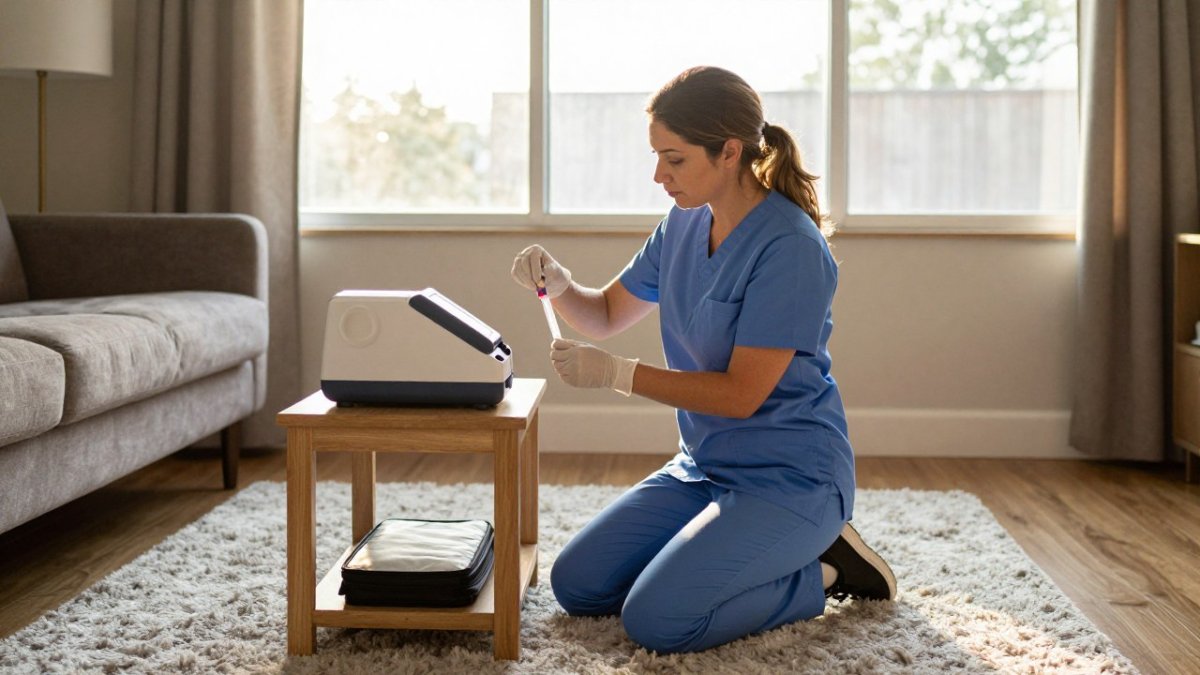
Mobile phlebotomy services bring a licensed technician to your home or office for at-home blood tests.
Not every test is a good fit for home collection. A simple way to think about it:
- Usually suitable for home: routine venous draws ordered by a doctor
- Often better at a clinic: tests requiring special timing, sedation, or immediate processing
- Always confirm with your doctor: any test that needs fasting, specific handling, or a same-day lab result
Always check with your child’s doctor before booking. The doctor’s order will name the exact test and any special instructions.
Blood Tests for Children Under 5: Age-Specific Guidance for Toddlers
Children under 5 are not a single audience. A 6-month-old, a 2-year-old, and a 4-year-old differ in vein size, cooperation, and how much they understand, so the preparation and comfort plan should change with the child. Matching the approach to the child’s developmental stage is generally considered important.
Infants (roughly 0-12 months)
- Collection site: For many infants, a heel stick (capillary sample) is used for small-volume tests such as a newborn screen or a lead check, while a venous draw from a vein in the arm or scalp is used when a larger volume or specific test is needed. Ask the ordering clinician which method the lab requires.
- Preparation: There is little to explain, so the priority is timing. Bring the baby fed and rested if the test does not require fasting, and keep the baby warm, a warm heel improves blood flow for a heel stick.
- Comfort: Skin-to-skin contact, swaddling, and a pacifier or feeding during or right after collection are common comfort measures. A small amount of sucrose solution is sometimes used in clinical settings for pain relief; ask the clinician before using anything at home.
Toddlers (roughly 1-3 years)
- Collection site: A venous draw from the arm is common for routine tests. Finger sticks can work for very small volumes but are harder to keep still and are more prone to clotting if the sample is not handled quickly.
- Preparation: Simple, concrete language works best, one short sentence about a “tiny poke” and a promise of what happens after. Avoid lengthy explanations and avoid promising no pain.
- Comfort: Lap holding facing the parent, a comfort item, a song, or bubbles are standard. Choices like which arm or which chair give a sense of control without changing the outcome.
Preschoolers (roughly 3-5 years)
- Collection site: Arm venous draws are typical. Preschoolers can often hold still with coaching, which reduces the need for restraint.
- Preparation: This age can understand a simple sequence, “first the cold wipe, then the poke, then a bandage.” Practicing on a doll and counting to three together can reduce anticipatory fear.
- Comfort: Give a job, such as holding the bandage or squeezing a parent’s hand. Praise effort rather than only the outcome.
What stays the same across ages
- The ordering clinician decides the test, the collection method, and any fasting or hydration instructions; the collection service should not substitute its own judgment.
- A calm adult voice and a predictable routine help at every age.
- If a child is acutely ill, dehydrated, or has a known bleeding disorder, tell the clinician before the draw so the plan can be adjusted.
How to Do a Blood Test for a 2-Year-Old Step by Step
A little planning makes the visit smoother for both you and your toddler. Here is a simple way to approach it.

Preparing your toddler before the visit
Start preparing a day or two before the appointment:
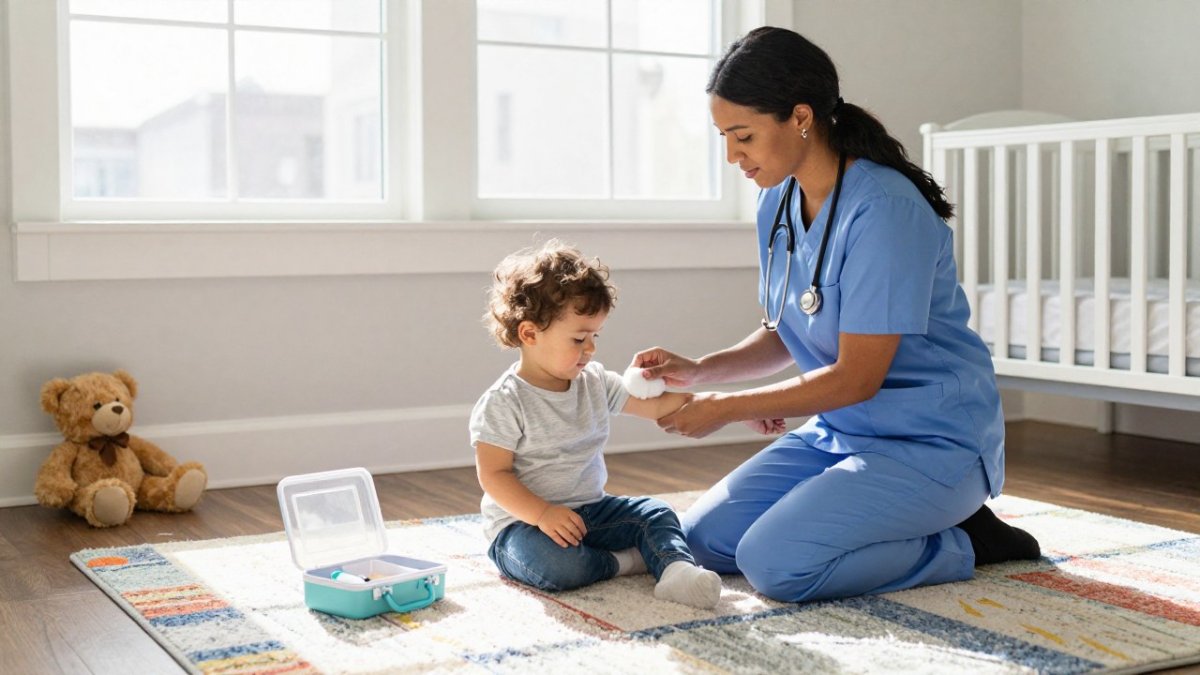
- Tell your child what will happen in simple words, such as “The nurse will check your blood with a tiny poke.”
- Avoid making promises you cannot keep, like “It won’t hurt at all.”
- Let your child practice with a favorite doll or stuffed animal.
- Confirm any fasting or hydration instructions with your doctor’s office.
- Schedule the draw for a time when your toddler is typically calm.
Comfort and distraction during collection
During the draw, a few small choices can help:
- Hold your child in your lap, facing you, for a feeling of safety, and find more blood draw anxiety tips that help children feel calmer.
- Use bubbles, a song, or a picture book to shift attention
- Let your toddler hold a comfort item
Watch out: Do not hold your toddler down against their will. Restraint can increase fear and make future draws harder. Ask the phlebotomist to explain the safest approach for your child.
The steps below summarise how to prepare a toddler for a blood draw, with timing where the article gives it.
| Step | What to do | Timing |
|---|---|---|
| Explain simply | Use a short phrase such as a tiny poke; avoid promising no pain | A day or two before |
| Practise | Let your child practise with a favourite doll or stuffed animal | Before the visit |
| Confirm instructions | Check fasting or hydration instructions with your doctor’s office | Before the visit |
| Schedule | Book the draw when your toddler is typically calm | Before the visit |
| Comfort during draw | Hold your child in your lap facing you; use bubbles, songs or a comfort item | During the draw |
| Praise | Praise your child afterward, even for small bravery | After the draw |
What to Do When Your Child Refuses a Blood Test
Some toddlers fight hard, and that is normal. A refusal does not mean the test cannot happen. Try these steps:
- Pause and let your child calm down before trying again
- Offer a choice, such as which arm or which seat to sit in
- Keep your own voice gentle and firm
If a child repeatedly refuses, tell the doctor. They can help decide the next step.
Safety, Sample Handling, and Clinical Oversight at Home
A home draw moves the collection, not the medicine. The ordering clinician still owns the test and the interpretation, and the collection service owns the safe draw and the intact sample. Parents should be able to describe both halves of that chain.
Who should order and collect
- The test should be ordered by the child’s clinician, who specifies the test, the collection method, and any timing or fasting requirements.
- The draw should be performed by a licensed phlebotomist or nurse with pediatric experience. Ask directly about the person’s pediatric and infant draw experience if your child is under 1.
- A home visit does not replace the clinician. Results go back to the ordering clinician, who decides on follow-up.
Collection sites and infection prevention
- Common sites are a vein in the arm (antecubital area) for venous draws, a finger for capillary samples in older toddlers, and a heel for infants when a heel stick is ordered.
- The site should be cleaned with an alcohol wipe and allowed to dry before the stick; skipping the dry time is a common cause of a stinging draw and a poor sample.
- The phlebotomist should wear gloves, use a new needle and single-use supplies, and dispose of sharps in a proper container.
Sample stability, transport, and rejected samples
- Many common tests have a limited window before the sample must be processed. Some need to be spun down or kept cold; others are stable at room temperature for a period set by the laboratory.
- The sample must be labeled correctly at the time of collection, with the child’s identifiers matching the order. A mislabeled tube is typically rejected regardless of the quality of the draw.
- Transport should follow the laboratory’s instructions. A sample that arrives too late, too warm, or short of the required volume may be rejected, which means a repeat draw.
Confirming the service can process the specific test
Before booking, confirm three things with the collection service and the laboratory:
- The laboratory accepts home-collected specimens for this specific test.
- The service can meet the test’s handling requirements (tube type, volume, temperature, and time to processing).
- The ordering clinician’s requisition matches the test the laboratory will run.
If any of those cannot be confirmed, a clinic or hospital lab visit is the safer choice.
When to call the clinician
Contact the child’s clinician if the draw site keeps bleeding, swells, or looks infected; if the child is hard to rouse or seems unwell after the draw; or if you are told the sample was rejected and you are unsure whether the test is still needed. Results should be reviewed with the clinician rather than interpreted alone, because reference ranges for toddlers differ by age and by laboratory.
Costs, Insurance, and Finding Toddler Blood Work Near You
Pricing depends on the specific tests ordered, your coverage, and the service arrangement. Contact Phlebotomy Experts directly for current pricing or a quote, and check with your insurance company about what they cover for home draws.
If you are searching for toddler blood work near you, start with your pediatrician’s referral. Ask whether the lab accepts home-collected specimens and whether the mobile service is in your area.
Booking Your Toddler’s Next Blood Draw with Phlebotomy Experts
Preparing for a toddler’s blood test can feel overwhelming, but you do not have to figure it out alone. Phlebotomy Experts brings licensed technicians to your home or office. Specimens can be delivered to the laboratory your doctor chooses, which may reduce time spent in waiting rooms.
Frequently Asked Questions
Can toddlers have blood tests at home?
Some blood tests can be collected at home by a licensed mobile phlebotomist, while others require a clinic or hospital setting. Simple draws for routine lab work are often possible at home, but tests that need larger volumes, special handling, or immediate clinical follow-up are usually better done in a clinic. Ask your child’s pediatrician which tests are ordered and whether a home collection is appropriate, and confirm the lab accepts specimens collected outside its facility.
What should I do if my toddler refuses a blood test?
Stay calm, avoid forcing the child, and use a short, familiar routine. Explain the visit in simple words, bring a comfort item, and let the child watch the phlebotomist prepare. Distraction with a book or song often helps, and a parent holding the child on their lap can reduce movement. If your child remains very distressed, tell the pediatrician or phlebotomist so they can adjust the approach or reschedule rather than repeatedly attempting the draw.
What blood tests are recommended for children under 5?
Which tests a child under 5 needs depends on symptoms, growth, medical history, and routine screening guidelines, so the ordering clinician decides. Common examples include tests for anemia, lead exposure, and nutritional deficiencies. Never choose a test on your own based on a search result. Ask your pediatrician what is recommended for your child’s age and health history, and bring a list of questions to the appointment.
Can a mobile phlebotomist draw blood from a toddler?
Mobile phlebotomists can draw blood from toddlers when they have pediatric experience and the test order allows home collection. Look for licensed technicians who describe their training with young children and can explain how they handle a squirming child. Confirm the test is valid for collection outside a clinic and that the sample will reach the laboratory your pediatrician specifies.

Related Posts