Use this venipuncture aftercare guide to protect your arm, limit bruising, and recognize when a blood-draw symptom calls for medical advice if needed.
Prenatal DNA Gender Testing During Pregnancy
A positive pregnancy test can bring a hundred questions at once, and one of the sweetest is often, “Are we having a boy or a girl?” Prenatal DNA gender testing gives many expectant parents an early option for learning the baby’s predicted sex through a simple maternal blood draw, without waiting for the anatomy ultrasound.
For busy parents, parents managing nausea or fatigue, or anyone who would rather skip a crowded lab waiting room, mobile collection can make the process feel much easier. You choose a convenient location, a certified phlebotomist collects the sample with care, and the specimen is prepared for delivery to the laboratory named by your test kit.
How Prenatal DNA Gender Testing Works
Prenatal DNA gender testing looks for tiny fragments of fetal DNA that naturally circulate in the pregnant mother’s bloodstream. This material is commonly called cell-free fetal DNA. If the laboratory detects Y-chromosome material, the result is typically reported as male. If no Y-chromosome material is detected, the result is typically reported as female.
The phrase “gender test” is widely used, but these tests are analyzing chromosome material to predict fetal sex. They do not tell you about your child’s personality, gender identity, or future health.
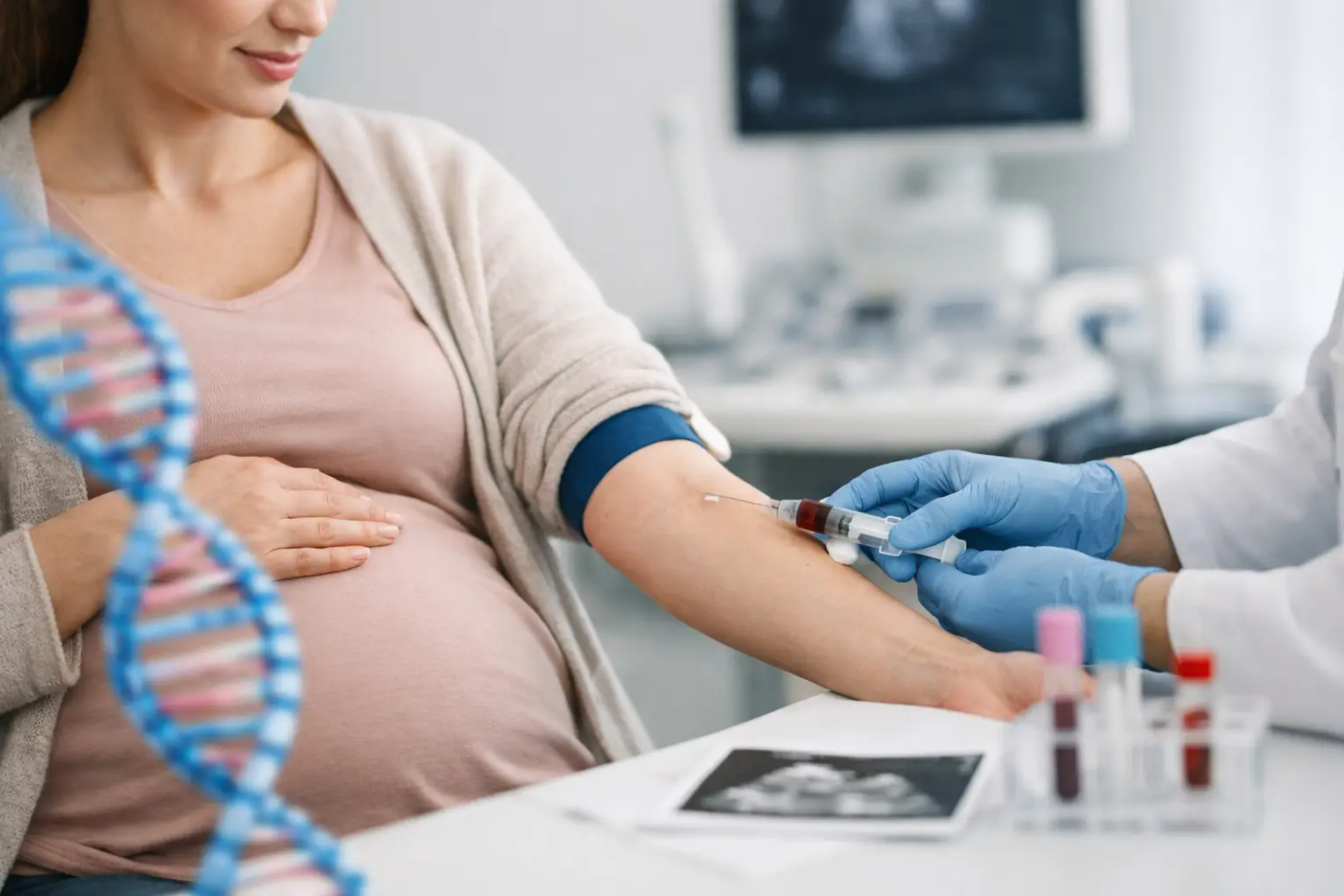
Most early gender DNA tests involve a blood sample collected from the pregnant mother. That is why a clean, correctly labeled specimen and proper handling matter. A professional blood draw helps reduce avoidable collection issues, while the laboratory performs the actual DNA analysis and reports the result.
This is different from diagnostic prenatal testing
An early fetal sex test is generally intended to provide a predicted sex result. It is not the same as diagnostic testing ordered to evaluate a genetic condition, and it should not replace prenatal care, ultrasounds, or conversations with your OB-GYN or midwife.
Some broader noninvasive prenatal screening tests may include fetal sex information along with screening for certain chromosome conditions. Those tests have a different purpose, timeline, and reporting process than a consumer prenatal gender test. If you have a family history, a high-risk pregnancy, concerning symptoms, or questions about genetic screening, your prenatal care provider is the right person to guide that decision.
When Can You Take a Prenatal DNA Gender Test?
The timing depends on the specific laboratory and kit. Many early DNA gender tests are offered starting around six weeks of pregnancy, but you should always follow the instructions provided by the laboratory that will process your sample. Testing too early can mean there is not enough fetal DNA in the blood for a clear result.
Before scheduling a collection appointment, confirm three simple details: the earliest testing week allowed by your kit, whether you need to register the kit before collection, and where the completed specimen must be sent. Keeping those details ready helps your appointment go smoothly.
If your dates are uncertain, it may be worth confirming your gestational age with your prenatal provider first. Waiting a little longer can sometimes reduce the chance of an inconclusive result and the need for a redraw.
How Accurate Are Early Gender Blood Tests?
Accuracy claims vary by laboratory, test design, and how far along the pregnancy is. When testing is done at the appropriate gestational age and the sample is collected and processed correctly, many labs report very high accuracy. Still, no test should be treated as a promise before the laboratory has issued its result.
A few factors can affect whether a result is clear. Testing before the lab’s recommended timeframe may leave too little fetal DNA in the sample. Multiple pregnancies, a recent pregnancy loss, certain fertility treatments, organ transplants, or unusual chromosome situations can also affect interpretation. The laboratory’s instructions and your clinician’s advice should take priority over general information online.
There is also a practical collection consideration. Early DNA testing is sensitive to contamination. Following the kit instructions carefully, using the correct tubes and paperwork, and having the sample collected by an experienced professional can help protect the integrity of the specimen.
If a result is unexpected, unclear, or simply does not match a later ultrasound, contact the laboratory and your prenatal care provider. A result may need confirmation, especially before making medical or major planning decisions.
Choosing Prenatal DNA Gender Testing at Home
Home collection is not only about avoiding a drive across town. Early pregnancy can come with exhaustion, food aversions, work schedules, childcare needs, and a desire for privacy. Having a qualified phlebotomist come to your home, office, or another convenient setting lets you focus on the exciting part of the experience instead of fitting a lab visit into an already full day.
With Phlebotomy Experts, the mobile collection appointment is designed to be calm, respectful, and straightforward. Our certified phlebotomists arrive prepared to collect your sample, verify the required materials, and handle your specimen with the same attention we bring to every patient we serve. Your comfort matters, whether this is your first pregnancy or you have done this before.
Mobile service can be especially helpful if you are on bed rest, caring for other children, working long hours, or trying to limit exposure to crowded public spaces. It is also a good fit for families who want to plan a small reveal but do not want the stress of a traditional laboratory visit.
What to have ready for your appointment
Your testing kit should be complete and available before the phlebotomist arrives. Keep the collection tubes, requisition or registration information, shipping materials, and any laboratory instructions together in one place. If the lab requires a photo ID, consent form, or online registration, take care of that before the appointment whenever possible.
Drink water unless your provider or kit instructions say otherwise. Hydration can make a blood draw easier for many people. Wear a top with sleeves that can be comfortably rolled up, and let your phlebotomist know if you have a history of difficult draws, fainting, bruising, or anxiety around needles. A little preparation allows for more personalized care and an awesome bedside manner with a Smile.
The collection itself is usually brief. After confirming your information, the phlebotomist performs the blood draw, labels the specimen according to the kit requirements, and prepares it for the next step. Depending on the test and service arrangement, you may be responsible for shipping the kit, or specimen delivery coordination may be available. Ask about the process when checking appointment availability so there are no surprises.
A Few Questions Worth Asking Before You Book
Ask which laboratory runs your specific test, how the specimen will be delivered, and when the lab expects to release results. It is also smart to ask what happens if the sample is insufficient or the result is inconclusive. Each company has its own redraw and reporting policies.
If you are expecting twins or conceived through IVF, mention that before booking. The collection may still be possible, but the laboratory may have special instructions or limitations. Clear information upfront protects your time and helps ensure the correct testing pathway is used.
Finally, remember that the result belongs to you. Some parents want to open it together right away, while others ask the laboratory to share it with a trusted friend or event planner for a surprise. Decide what feels right for your family before the result arrives.
A prenatal blood draw does not have to become another stressful appointment on your calendar. When you are ready to learn more about your little Angel’s predicted sex, choose a collection experience that gives your comfort, privacy, and peace of mind the attention they deserve.

Related Posts