
Are prenatal blood tests accurate? Learn what NIPT and fetal sex blood tests can tell you, when results may be less reliable, and next steps with care.
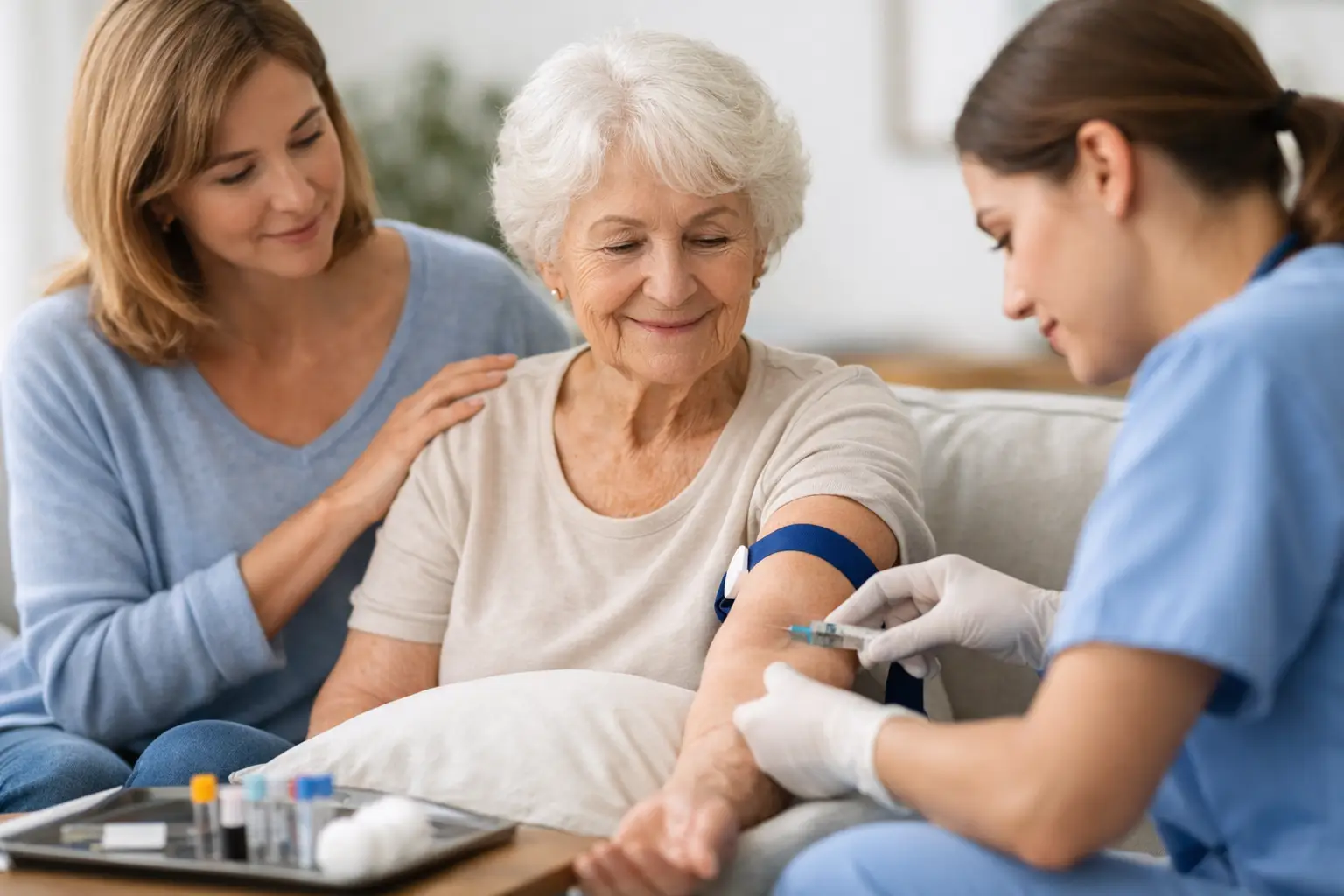
How to Support Elderly Venipuncture at Home
The moment the tourniquet goes on, an older adult may feel more vulnerable than they let on. A blood draw can bring up worry about pain, bruising, fainting, or simply the effort of getting through another medical appointment. Knowing how to support elderly venipuncture means caring for the whole person, not just helping someone get a specimen collected.
For many seniors, especially those with mobility limits, memory changes, fragile skin, or chronic health needs, a calm blood draw at home can be much easier than a rushed visit to a crowded lab. The right preparation and a patient-focused phlebotomist can make the experience safer, more comfortable, and far less stressful.
Why venipuncture can be harder for older adults
Aging can change the way veins and skin respond during blood collection. Veins may be smaller, less elastic, deeper, or more likely to roll under the skin. Skin can become thin and delicate, while dehydration can make veins less visible. Some older adults also take blood thinners, have diabetes, receive frequent lab monitoring, or have a history of difficult draws.
That does not mean a successful draw is out of reach. It means the person collecting the specimen should slow down, assess carefully, and use techniques appropriate for fragile veins. Experience matters here. A quick poke-and-go approach may not be the best fit for a senior who needs reassurance, careful positioning, and a gentle hand.
Emotional comfort matters just as much. A patient with dementia, hearing loss, anxiety, or a prior painful experience may become tense before the needle ever comes out. Tension can make a blood draw more difficult, so a familiar caregiver, clear communication, and a peaceful setting can truly help.
How to support elderly venipuncture before the appointment
The best support begins before the phlebotomist arrives. Confirm the physician’s laboratory order and review any instructions from the ordering provider or laboratory. Some tests require fasting, while others do not. Do not assume every blood test needs fasting, and do not stop prescribed medications unless the physician specifically directs it.
If the patient is allowed to drink water, encourage normal hydration ahead of the visit. Water may help support circulation and make veins easier to access. However, seniors with fluid restrictions due to heart failure, kidney disease, or another condition should follow their care plan instead. When in doubt, ask the prescribing provider what is appropriate.
Choose a warm, well-lit area with a sturdy chair that has arm support. The patient should not be standing for a blood draw, even if they normally get around well. Sitting securely reduces the risk of a fall if dizziness occurs. If the patient must remain in bed, make sure there is enough room for the phlebotomist to work safely and that the arm is supported on a pillow or stable surface.
A short conversation can also lower anxiety. Let the patient know who is coming, why blood is being collected, and what will happen next. Keep the explanation simple: “A trained professional will clean your arm, collect the blood, place a bandage, and make sure you feel okay before they leave.” For someone with memory loss, repeat this gently as needed rather than correcting or rushing them.
Have the patient’s identification, lab order, insurance information if needed, and a list of medications ready. Mention a history of fainting, difficult veins, mastectomy, dialysis access, lymphedema, skin tears, bleeding problems, or anticoagulant use. These details help the phlebotomist make safer decisions from the start.
Create a calm, respectful blood-draw space
Small details can change the entire appointment. Turn down loud television, pause phone calls, and ask extra family members to give the patient some breathing room. A quiet room helps the senior hear instructions and allows the phlebotomist to focus.
Keep the patient comfortably warm. Cold can cause veins to constrict, which may make collection more challenging. A light blanket around the shoulders or a comfortably warm room is often enough. Avoid placing heating pads directly on fragile skin unless a medical professional has advised it.
If the patient uses glasses or hearing aids, encourage them to wear them. Being able to see and hear what is happening can reduce confusion. Some people prefer to look away from the needle, while others feel calmer when they know each step. Ask, do not guess.
A supportive caregiver should stay nearby if the patient wants company, but should not crowd the working area or speak over the patient. Older adults deserve direct communication and consent, even when a family member coordinates their care. A good phlebotomist speaks to the patient first, explains what they are doing, and gives them time to respond.
What a careful phlebotomist should do differently
Elderly venipuncture is not just routine venipuncture performed on an older arm. The collector should take time to inspect both arms, identify the safest available site, and protect fragile skin during tourniquet use and bandage removal. The best vein is not always the most visible one.
A skilled phlebotomist may adjust the patient’s arm position, use a gentle approach to stabilize a rolling vein, and select equipment suited to the vein and the test requirements. They should avoid unnecessary probing and should know when to pause, reassess, or use another appropriate site. If an attempt is unsuccessful, the patient should never be made to feel at fault.
Good bedside manner is part of clinical care. The phlebotomist should explain each step in plain language, check for discomfort, and watch for signs of dizziness or distress. A patient who becomes pale, sweaty, nauseated, or unusually quiet may be close to fainting. In that moment, safety comes before finishing the draw.
For patients needing frequent testing, consistency can be especially helpful. Having an experienced mobile professional who understands the person’s veins, communication needs, and preferred positioning can make recurring blood work feel more manageable.
Help prevent bruising, bleeding, and falls afterward
After the needle is removed, firm and steady pressure is usually more helpful than repeatedly lifting the gauze to check the site. The patient should keep pressure on the area for the time instructed by the phlebotomist. Those taking blood thinners may need to hold pressure longer.
A small bruise can occur even with excellent technique, particularly when veins are fragile. Keep the bandage on as directed and encourage the patient to avoid heavy lifting with that arm for the rest of the day when possible. If there is swelling, persistent bleeding, increasing pain, numbness, or a rapidly growing bruise, contact the patient’s healthcare provider promptly.
Do not let the patient stand up immediately if they have a history of fainting or seem tired after the draw. Let them rest in the chair for a few minutes, offer water if permitted, and make sure they feel steady before walking. This simple pause can prevent a serious fall.
When mobile venipuncture is a better option
A home blood draw can be a practical solution for seniors who struggle with transportation, use walkers or wheelchairs, live in assisted living, are recovering in rehabilitation, or want to avoid long lab waits. It can also be a welcome option for immunocompromised patients who prefer not to sit in a busy waiting room.
At Phlebotomy Experts, our mobile phlebotomy concierge service brings certified collection support to the patient’s home, residential care setting, office, or other convenient location. We coordinate the collection process and prompt specimen delivery so patients and families can focus on comfort instead of traffic, parking, and waiting rooms.
Before scheduling, make sure the laboratory order is complete and ask about appointment availability, fasting instructions, specimen timing, and any special collection requirements. Some tests have strict handling rules, so the collection time and delivery plan need to fit the laboratory’s instructions.
A gentle approach is never an extra
Older adults should not have to brace themselves for a difficult blood draw. With a prepared environment, clear communication, safe positioning, and an experienced professional who takes their time, venipuncture can feel far more manageable. The kindest support is simple: stay calm, listen closely, and make sure the patient feels respected from the first hello through the final bandage.
