
Learn why blood bruises after a draw, what makes a bruise more likely, simple home care steps, and signs that call for prompt medical advice right away.
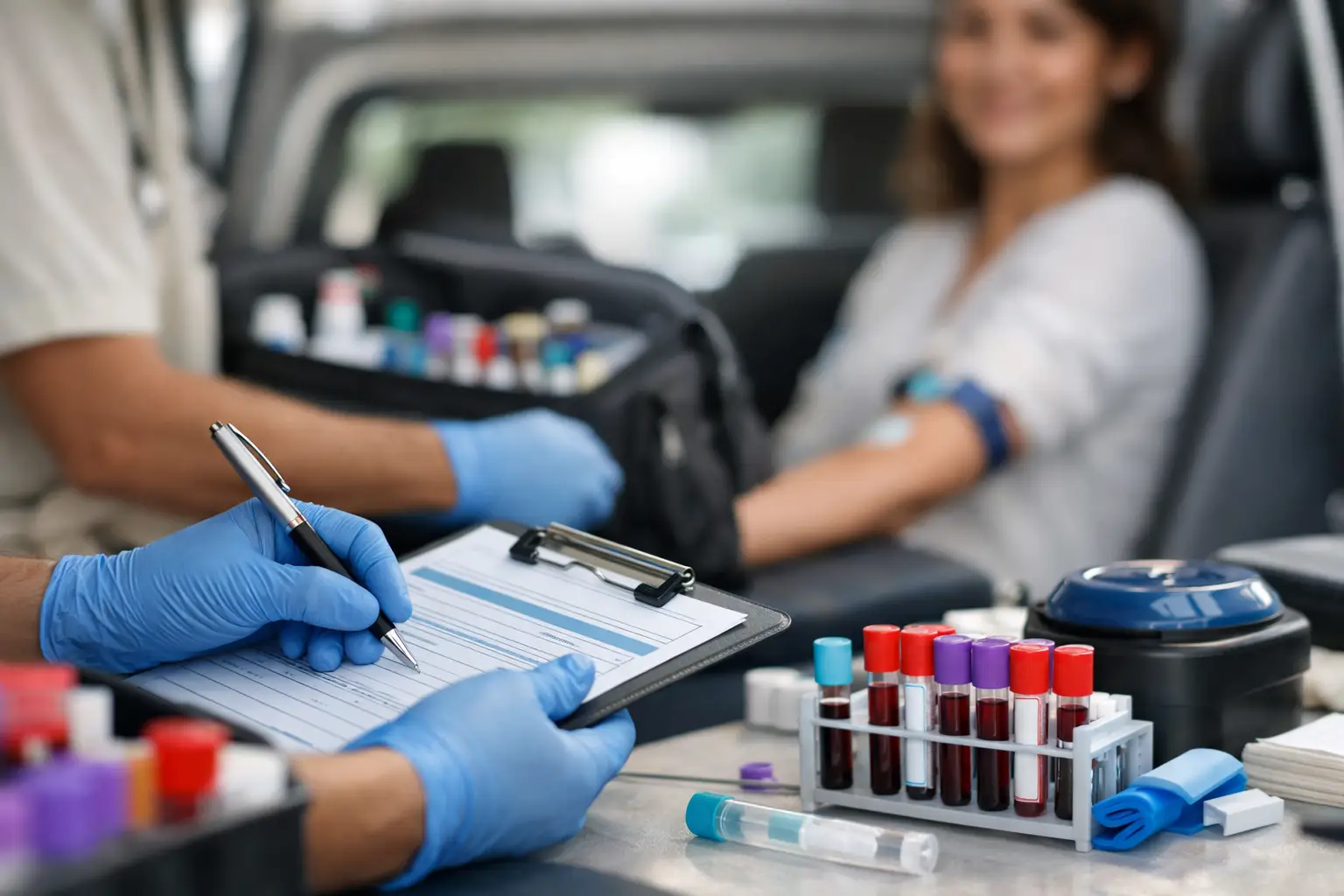
Laboratory Requisition Guide for Mobile Blood Draws
A laboratory requisition may look like a simple sheet of paper, but it is the instruction card that tells a phlebotomist and laboratory exactly what your doctor needs. When a requisition is missing, incomplete, expired, or sent to the wrong place, even a perfectly collected specimen can be delayed. This laboratory requisition guide helps you arrive prepared for a mobile blood draw so your appointment feels easy, comfortable, and on track.
For many patients, getting the order right is the part that causes the most stress. You may have a doctor’s portal message, a printed order, a prescription pad note, an email attachment, or a specialty kit in your home. The good news is that you do not have to sort it out alone. A qualified mobile phlebotomist can help review what you have before collection, but the ordering provider remains responsible for the medical order and the tests requested.
What Is a Laboratory Requisition?
A laboratory requisition, sometimes called a lab order or test order, is a document from your physician, nurse practitioner, physician assistant, or other authorized provider. It tells the laboratory which tests to perform and provides the patient information needed to match the specimen to the correct chart.
The requisition is not just paperwork. It guides the full chain of care: what tubes may be needed, whether you must fast, how the specimen should be handled, which laboratory will process it, and where final results should go. A CBC, cholesterol panel, thyroid test, hormone panel, therapeutic phlebotomy order, and specialty serum processing request can all have different collection and handling requirements.
Your phlebotomist collects the specimen. The laboratory performs the testing. Your ordering provider interprets the results and discusses what they mean for your care.
The Information Your Lab Order Should Include
Before your appointment, take a quick look at the requisition. Most orders should include your full legal name, date of birth, the ordering provider’s name and contact information, the requested tests, and the date the order was written. Many orders also list the laboratory location or preferred lab network.
Insurance details, diagnosis codes, and billing information may be required depending on the test and laboratory. A missing code does not always stop collection, but it can lead to a billing question or a laboratory hold. If you are self-paying, ask in advance whether the laboratory needs a separate payment arrangement.
Be especially careful with spelling. Your name and date of birth should match your photo ID and the laboratory’s records. A nickname, a maiden name, or one incorrect digit in a birth date can create extra work when the lab receives the specimen.
Paper, Portal, and Electronic Orders
A printed requisition is still common, but it is not the only acceptable format. Some providers send orders through patient portals, secure email, laboratory systems, or directly to a designated draw location. A clear screenshot or PDF may be useful for review, though certain laboratories or specialty tests may require an original paper order or specific kit paperwork.
Do not assume that a text message saying, “Please get labs done,” is enough. The laboratory generally needs the actual test names and provider authorization. If your provider says the order was sent electronically, confirm where it was sent and whether the mobile collection team can access or receive it before your appointment.
How to Prepare for a Mobile Blood Draw
Mobile collection means you can let the laboratory come to you, whether you are at home, at the office, in assisted living, recovering in a rehabilitation facility, or caring for a loved one in hospice. It also means a little preparation can keep your visit quick and relaxed.
Have your requisition ready before the phlebotist arrives. If it is on your phone, open the file and make sure it is readable. Keep your photo ID and insurance card nearby if they are needed. If the order involves a specialty kit, place the kit, paperwork, and any instructions together in one spot.
Ask the ordering provider whether fasting is required. Fasting requirements vary by test. Some blood work may require eight to 12 hours without food, while other tests do not require fasting at all. Water is often allowed and can make veins easier to access, but follow your provider’s specific instructions if they differ.
Also ask about medications. Do not stop a prescribed medication unless your provider tells you to. Some tests must be collected before a dose, at a certain time of day, or after a particular preparation. This matters for therapeutic drug monitoring, hormones, glucose-related testing, and certain specialty studies.
Wear sleeves that can be rolled up comfortably, and choose a stable chair or quiet area with good lighting. If you have a history of fainting, difficult veins, bruising, anxiety around needles, or a preference for a particular arm, say so right away. A compassionate phlebotomist wants that information. Comfort is not an extra. It is part of good care.
Avoiding the Most Common Requisition Delays
Most delays are preventable, and they rarely have anything to do with the blood draw itself. They happen when the order is unclear or the collection plan does not match the laboratory’s requirements.
An unsigned or incomplete order may need confirmation from the provider. An old order may no longer be valid, especially if your provider intended testing within a certain treatment window. A requisition for one laboratory may not transfer automatically to another. Quest Diagnostics, Labcorp, hospital labs, and specialty laboratories can each have their own procedures, accepted tubes, and delivery requirements.
Timing can be just as important as the form. Certain specimens must be delivered promptly, protected from light, chilled, kept at room temperature, or processed within a limited period. That is why it is wise to schedule collection at a time when specimen delivery can happen appropriately, rather than treating every test as a standard blood draw.
For patients using home test kits, prenatal DNA testing, serum eye-drop processing, PRP-related collection, or other specialized services, follow the kit or provider instructions exactly. These collections may require unique labeling, shipping materials, processing steps, or appointment timing. If something in the instructions does not make sense, ask before opening the kit or scheduling the draw.
When Your Provider Has Not Sent the Order Yet
This happens more often than you might think. You schedule a collection, then realize your doctor said they would “send the labs over” but you cannot find anything in your portal or inbox.
Call the provider’s office and ask for the complete laboratory requisition to be sent to you or to the collection service using the method they prefer. Be ready to provide your full name, date of birth, appointment date, and the laboratory destination if known. Ask the office to confirm that all requested tests are included, particularly if your provider discussed several concerns during the visit.
If your appointment is soon, do not wait until the phlebotomist is at your door to start searching for the order. A quick confirmation beforehand protects your time, reduces stress, and helps prevent a return visit.
A Mobile Phlebotomist’s Role in the Process
A mobile phlebotomist brings collection expertise to your location, but they do not replace the ordering provider or laboratory. Their job is to verify identity, review available collection instructions, use proper specimen labels and handling procedures, collect with a calm and skilled touch, and coordinate prompt delivery to the appropriate lab when the service allows.
At Phlebotomy Experts, that concierge approach is especially helpful for patients who cannot easily travel, need recurring draws, want to avoid crowded waiting rooms, or simply have a full schedule. Certified field collection, HIPAA-conscious handling, and an awesome bedside manner with a smile can make a clinical task feel much more manageable.
There are limits, and those limits protect you. A phlebotomist cannot choose tests for you, diagnose symptoms, alter your provider’s order, or interpret your results. If a test is missing or unclear, the safest next step is to contact the provider who ordered your care.
A Quick Check Before Your Appointment
Before collection day, confirm that you have the complete requisition, valid photo ID, required kit or paperwork, and any preparation instructions. Make sure you know whether to fast, when to take medication, and where the specimen needs to go. If your test is time-sensitive or specialized, schedule early enough to support proper handling and delivery.
A lab order should never be the reason you have to leave home, sit in a crowded waiting room, or feel confused about your next step. With the right paperwork ready and a caring professional at your side, your blood draw can be one small, well-organized part of taking care of yourself.
