
Concierge lab services bring blood draws to your home or office. See how mobile phlebotomy works, what it costs, and how to prepare for a blood test.
How Long Does a Mobile Blood Draw Take?
Table of Contents
- How Long Does a Mobile Blood Draw Take? The Short Answer
- How Long Does a Blood Draw Take When the Phlebotomist Is at Your Door?
- What to Expect During an At-Home Blood Draw, Step by Step
- How to Prepare for a Blood Test So the Visit Doesn’t Run Long
- What Can Make a Mobile Blood Draw Take Longer?
- Mobile Blood Draw Lab Results: When You’ll Hear Back
- When the Draw Is Difficult or Can’t Be Completed
- Conclusion
- Frequently Asked Questions
Last Updated: October 19, 2026
How Long Does a Mobile Blood Draw Take? The Short Answer
Most mobile blood draws take 10 to 15 minutes from the moment the phlebotomist sets up to the moment they pack up and leave. That is the honest answer, and it surprises people who expect a longer visit. At Phlebotomy Experts, we tell patients to set aside 15 to 20 minutes of their day, which leaves room for paperwork, a relaxed draw, and a few questions at the end. (Source: the Centers for Medicare & Medicaid Services (CMS))
A mobile blood draw is a blood collection performed by a trained phlebotomist at your home, office, or care facility instead of a lab or clinic. The draw itself is quick. What stretches the appointment is everything around it: check-in, vein selection, and specimen handling.
Keep reading, because the number that matters most is not the draw time. It is how long until you get results, and those are two very different clocks.
How Long Does a Blood Draw Take When the Phlebotomist Is at Your Door?
A routine blood draw at your door runs 10 to 15 minutes of hands-on time. The phlebotomist arrives, confirms your test order, washes up, finds a vein, collects the tubes, and secures the site. That is the core of the visit.
Here is what fills the rest of the appointment:
- Setup: 2 to 3 minutes to unpack supplies and prep the workspace
- Identification and order check: 1 to 2 minutes to confirm your name and valid test order
- The venipuncture: 1 to 3 minutes for a typical draw
- Site care and cleanup: 2 to 3 minutes
If you have easy veins and a standard panel, the whole visit can wrap in under 15 minutes. If you are a hard stick, plan for closer to 20.
Pro Tip
Have your photo ID and test order ready before the phlebotomist arrives. Digging through email for a requisition is the single most common cause of a visit running past 20 minutes.
Have your photo ID and test order ready before the phlebotomist arrives. Digging through email for a requisition is the single most common cause of a visit running past 20 minutes.
What to Expect During an At-Home Blood Draw, Step by Step
An at-home blood draw follows a predictable sequence, and knowing it removes most of the anxiety. What most guides skip is the clock.
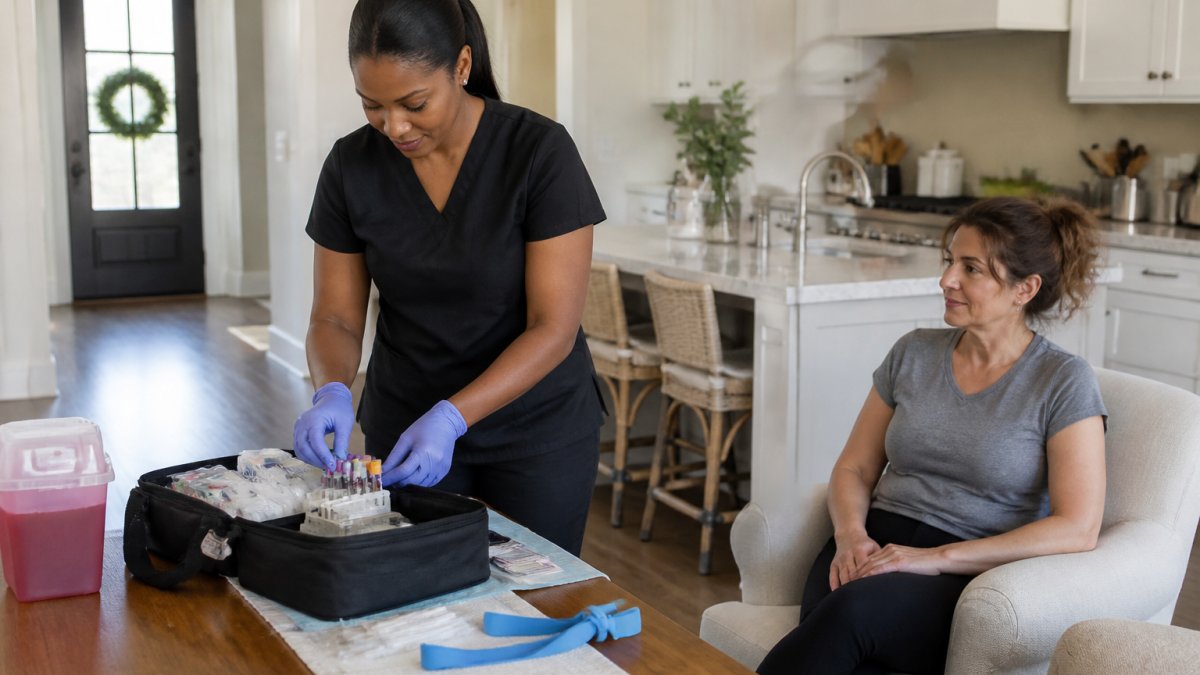
- Arrival and check-in (1 to 3 minutes). The phlebotomist confirms your identity with a photo ID and reviews the test order. If the order is a printed requisition, this is fast. If it is buried in an email or patient portal, expect the clock to stretch. This is the step where most visits lose time.
- Workspace setup (2 to 3 minutes). They clear a flat surface near a chair, lay out sterile supplies, and wash their hands. Good lighting matters here; a dim kitchen corner slows vein selection later.
- Vein selection (1 to 2 minutes). A tourniquet goes on, and the phlebotomist palpates the inner elbow for a suitable vein. Easy, well-hydrated veins are found quickly. Cold skin or a history of hard sticks can add a minute or two of searching and warming.
- Site prep and venipuncture (1 to 3 minutes). The skin is cleaned and allowed to dry, the needle goes in, and the tubes fill. A single standard tube fills in seconds; a large panel with six or more tubes takes longer because each tube must fill to its marked volume before the next is attached.
- Site care and specimen labeling (1 to 2 minutes). The needle is withdrawn, pressure is applied, and a bandage goes on. Tubes are labeled at your side, not later in the car, which protects the specimen’s chain of custody.
- Packaging and departure (1 to 2 minutes). Tubes are packed for safe transport, the phlebotomist confirms you feel well, and they leave.
Add those steps up and a routine visit lands at roughly 10 to 15 minutes of hands-on time, with a realistic appointment window of 15 to 20 minutes once you account for the doorbell, the dog, and a final question.
You do not need to provide anything beyond a flat surface, good lighting, and a chair. Have your photo ID and test order within arm’s reach before the phlebotomist arrives, and the timeline above holds.
Pro Tip
If you are booking for an older adult or someone with mobility needs, mention it when you schedule. Positioning and reassurance can add five minutes, and a phlebotomist who knows ahead of time will build that into the appointment slot rather than rushing the draw.
If you are booking for an older adult or someone with mobility needs, mention it when you schedule. Positioning and reassurance can add five minutes, and a phlebotomist who knows ahead of time will build that into the appointment slot rather than rushing the draw.
How to Prepare for a Blood Test So the Visit Doesn’t Run Long
Preparation is the one variable you fully control, and it can shave minutes off the visit. Follow the instructions that come with your test order first, since fasting rules vary by test.
- Drink water beforehand. Well-hydrated veins are easier to find and fill faster.
- Warm your hands and arms. Cold skin pushes veins deeper, which slows the draw.
- Wear a short-sleeved shirt. Rolling up a tight sleeve wastes time and can restrict blood flow.
- Have your paperwork ready. Photo ID and the test order in hand, not buried in an inbox.
- Tell the phlebotomist about past hard sticks. A history of difficult draws changes their approach from the start.
Watch Out
Skipping the fasting instructions on your test order can mean a redraw on another day. That is a 15-minute visit turned into a second appointment and a delayed result.
Skipping the fasting instructions on your test order can mean a redraw on another day. That is a 15-minute visit turned into a second appointment and a delayed result.
What Can Make a Mobile Blood Draw Take Longer?
Several factors push a draw past the 15-minute mark, and most are manageable once you understand the mechanism behind them.
Difficult veins. Dehydration, cold skin, small or rolling veins, and a history of hard sticks all make the vein harder to locate and stabilize.
Number of tubes. Large panels need more tubes, and more tubes mean more fill time.
Therapeutic phlebotomy. Removing a larger volume for a condition like iron overload or polycythemia takes longer than a standard diagnostic draw, often 30 to 45 minutes, because the volume removed is measured and the patient is monitored throughout. (Source: U.S. Department of Health and Human Services)
Mobility or cognitive needs. Patients in assisted living facilities often need extra time for positioning, transferring to a chair, and reassurance.
Paperwork gaps. A missing order, an unsigned consent, or a requisition that does not match the tests requested stops the visit cold. The phlebotomist cannot draw without a valid order, and the visit becomes a reschedule.
A common mistake is booking a mobile visit during a chaotic household moment. A quiet room and a calm patient make for a faster, easier draw.
What Happens If the Draw Is Difficult or Cannot Be Completed
Sometimes a draw does not go to plan, and that is not a failure on your part. A skilled phlebotomist will try a different site, adjust the needle angle, or use warmth to bring a vein up. Most difficult draws still succeed on a second attempt within the same visit.
If the draw cannot be completed, here is what should happen:
- The phlebotomist stops and explains what went wrong in plain language.
- You are told whether a return visit or a lab visit is the better next step, and why.
- Any partial specimen is handled properly, and nothing is sent that cannot be tested.
- You leave with a clear plan and a contact for the ordering provider, not a vague “we’ll try again.”
If you have a known history of difficult veins or needle phobia, say so when you book. A trained phlebotomist can plan the visit around it, and that planning is often the difference between one stick and three. If a draw is repeatedly unsuccessful, the next step is usually a conversation with your ordering provider about whether a lab with ultrasound-guided phlebotomy or a different collection method is appropriate.
Watch Out
A draw that cannot be completed is not a reason to skip the test. Contact your ordering provider the same day so the order can be rescheduled or redirected before any fasting window or medication timing is missed.
A draw that cannot be completed is not a reason to skip the test. Contact your ordering provider the same day so the order can be rescheduled or redirected before any fasting window or medication timing is missed.
Mobile Blood Draw Lab Results: When You’ll Hear Back
Draw time and result time are not the same thing, and mixing them up causes most of the frustration we hear about. The collection takes minutes. Laboratory processing takes hours to days, depending on the test.
Typical turnaround looks like this:
| Test Type | Typical Result Window |
|---|---|
| Routine blood work | 24 to 72 hours |
| Basic metabolic panels | 24 to 48 hours |
| Specialized or send-out tests | 3 to 10 business days |
| DNA gender testing | Varies by lab; confirm at booking |
Specimen handling matters here. A sample that is labeled, packed, and delivered promptly reaches the laboratory in good condition, which protects your result timeline. We deliver specimens to the laboratory of your choice and send results to your ordering physician.
Key Takeaway
The mobile blood draw itself takes about 15 minutes. The result is the part that requires patience, so plan around the lab’s turnaround, not the visit length.
The mobile blood draw itself takes about 15 minutes. The result is the part that requires patience, so plan around the lab’s turnaround, not the visit length.
When the Draw Is Difficult or Can’t Be Completed
Sometimes a draw does not go to plan, and that is not a failure on your part. If a vein will not cooperate, a skilled phlebotomist will try a different site, adjust the needle angle, or use warmth to bring a vein up. Most difficult draws still succeed on a second attempt.
If the draw cannot be completed, here is what should happen:
- The phlebotomist stops and explains what went wrong.
- You are told whether a return visit or a lab visit is the better next step.
- Any partial specimen is handled properly, and nothing is sent that cannot be tested.
- You leave with a clear plan, not a vague “we’ll try again.”
If you have a known history of difficult veins or needle phobia, say so when you book. A trained phlebotomist can plan the visit around it, and that planning is often the difference between one stick and three.
Conclusion
The clock is the easy part: a routine mobile blood draw takes about 10 to 15 minutes, and a realistic appointment window is 15 to 20. The harder part is finding a phlebotomist who handles difficult veins calmly and gets your specimen to the lab without delay.
That is where Phlebotomy Experts comes in. Our licensed phlebotomists bring the draw to your home, office, or facility, with a gentle bedside manner and careful specimen handling. We deliver your samples to the laboratory of your choice and send results to your ordering physician. Call now to schedule your visit and skip the waiting room entirely.
Frequently Asked Questions
How long does a mobile blood draw appointment take from start to finish?
Most routine visits run 20 to 30 minutes from the phlebotomist’s arrival to departure. The blood collection itself usually takes 5 to 10 minutes. The rest is setup, verifying your test order, labeling tubes, and confirming aftercare. If you have difficult veins or need many tubes, expect closer to 30 to 45 minutes. The mobile blood draw time does not include laboratory processing, which is separate.
Does the number of blood test vials affect how long a draw takes?
Yes, but less than most people expect. Each additional tube adds roughly 30 to 60 seconds of collection time. A single-tube draw may finish in 2 to 3 minutes, while a full panel with 5 to 7 tubes can take 5 to 10 minutes. The bigger factor is vein access. If the phlebotomist finds a good vein on the first try, extra tubes add little time to the mobile blood draw.
How should I prepare for a mobile blood draw?
Drink plenty of water for 24 hours before the visit to plump your veins. Follow any fasting instructions your healthcare provider gave for the specific blood test. Wear short sleeves or loose sleeves that roll up easily. Tell the phlebotomist about needle phobia, past fainting, or veins that have been hard to find. Have your ID and test order ready. Good preparation reduces the chance of a repeat stick and keeps the mobile blood draw quick.
How long does it take to get lab results after a mobile blood draw?
Result turnaround depends on the test, not the draw. Routine blood work often returns in 24 to 72 hours. Specialized tests such as DNA gender testing can take 3 to 10 business days. The phlebotomist’s job is specimen collection and safe delivery to the laboratory; the lab then processes the sample. Ask your ordering provider when to expect results and how they will be delivered.
