
Concierge lab services bring blood draws to your home or office. See how mobile phlebotomy works, what it costs, and how to prepare for a blood test.
What to Look for in a Professional Mobile Phlebotomist
Table of Contents
- Why the Right Mobile Phlebotomist Matters
- Mobile Phlebotomist Credentials and Licensing
- Safety, Infection Control, and Sharps Disposal
- Mobile Phlebotomy Specimen Handling and Transport
- Questions to Ask a Mobile Phlebotomist Before Booking
- Mobile Blood Draw Preparation and What a Home Visit Should Look Like
- Privacy, Communication, and Reliability Checks
- Conclusion
- Frequently Asked Questions
Last Updated: October 18, 2026
Why the Right Mobile Phlebotomist Matters
Choosing a professional mobile phlebotomist comes down to five things: verified credentials, infection control, careful specimen handling, clear communication, and reliable scheduling. Get those right and a home blood draw feels calm and simple.
A mobile phlebotomist is a licensed technician who travels to your home, office, or care facility to collect blood and other specimens and then delivers them to a laboratory for testing.
Below, we’ll show you exactly what separates a careful professional from a rushed one, and the questions that reveal the difference before you book.
Mobile Phlebotomist Credentials and Licensing
Start with the paperwork. A legitimate mobile phlebotomist holds a current phlebotomy certification and, where required, a state license, and can produce both on request. Certification alone does not prove skill, but an uncertified technician is a red flag you should not ignore.
Certification Bodies and What They Signal
Several national organizations certify phlebotomists, and each requires classroom hours plus supervised draws before issuing a credential. Ask which body certified your technician and when the credential expires. A current card tells you the basics were covered. It does not tell you how many difficult draws that person has handled, so pair the certificate with a direct question about experience.
Experience With Difficult Veins and Needle Phobia
Rolling veins, small veins, and needle anxiety are where experience shows. A skilled technician asks about past draws, uses a smaller gauge needle when appropriate, applies heat or a tourniquet strategically, and knows when to stop and try another site rather than dig.
Pro Tip
Ask specifically: “How do you handle a patient who has fainted during a draw before?” A strong answer mentions positioning the patient reclined, staying with them, and never drawing a standing patient. A vague answer tells you plenty.
Ask specifically: “How do you handle a patient who has fainted during a draw before?” A strong answer mentions positioning the patient reclined, staying with them, and never drawing a standing patient. A vague answer tells you plenty.
Safety, Infection Control, and Sharps Disposal
Safety is the one area where you can judge a mobile phlebotomist in real time, without any paperwork. Infection control is observable, and a professional expects you to watch. Use this checklist during the visit.
Before the Draw
- Hand hygiene. The technician should wash hands with soap and water or use an alcohol-based hand rub in front of you, before putting on gloves. Gloves are not a substitute for handwashing.
- Fresh gloves. Gloves should come out of a dispenser or sealed pack, not a pocket. If a technician touches a phone, a door handle, or a pen and then returns to your arm, ask for a glove change.
- Clean workspace. A disposable absorbent pad or clean mat should be placed on the surface where supplies are set out. Supplies should not be laid directly on a kitchen table or counter.
- Single-use supplies. The needle, holder, alcohol pads, gauze, and bandage should all be single-use and opened in front of you. Reusable tourniquets are common, but a professional will use a fresh one or sanitize it between patients.
During and After the Draw
- Site preparation. The draw site should be cleaned with an alcohol pad and allowed to dry before the needle goes in. Fanning or blowing on the site defeats the purpose.
- No recapping by hand. A professional disposes of the needle directly into the sharps container without recapping it by hand.
- Post-draw care. Gauze and pressure, then a bandage. The technician should confirm bleeding has stopped before packing up.
- Cleanup. All wrappers, pads, and gloves go into a waste bag the technician removes. Nothing contaminated should be left in your home.
Exposure and Spill Procedures
Ask what happens if a needle stick, spill, or exposure occurs during a home visit. A professional service has a written exposure control plan, which is a standard requirement under the Occupational Safety and Health Administration’s bloodborne pathogens standard. In practice, that means the technician knows how to contain a spill, how to report an exposure, and who to contact.
Watch Out
Red flags during setup: gloves from a pocket, a needle uncapped before the sharps container is open, supplies set directly on an uncleaned surface, or a technician who seems unsure where the sharps container is. Any one of these is a reason to pause the visit.
Red flags during setup: gloves from a pocket, a needle uncapped before the sharps container is open, supplies set directly on an uncleaned surface, or a technician who seems unsure where the sharps container is. Any one of these is a reason to pause the visit.
The CDC guidance on safe injection practices is a useful reference for what a clean collection setup should look like, and the OSHA bloodborne pathogens standard explains the exposure-control obligations a professional service should already be following.
Mobile Phlebotomy Specimen Handling and Transport
Specimen handling decides whether your test results are usable. Blood must be drawn into the correct tube type, mixed gently by inversion, kept at the right temperature, and delivered to the lab within the required window. A sample that sits too long or gets too warm can be rejected, and you start over.
Labeling, Centrifuging, and Chain of Custody
Every tube should be labeled at the bedside with your name, date of birth, and collection time, never pre-labeled.
Chain of custody matters most for legal, employment, and clinical trial collections, where each handoff is documented. For routine blood panels, accurate records and a clear delivery confirmation are enough. Ask who receives the sample at the lab and how you’ll know it arrived.
Questions to Ask a Mobile Phlebotomist Before Booking
The fastest way to judge a service is to ask direct questions and listen for specific answers. These are the ones that matter most:
- Are you certified, and by which organization?
- Are you licensed in this state, and can you share the number?
- How many draws do you perform in a typical week?
- What do you do if you can’t get the vein on the first try?
That last question deserves real attention. Your test order and results are protected health information, and a professional service explains its privacy practices without hesitation. The HHS Office for Civil Rights guidance on health information privacy explains the protections that should apply to your records.
Mobile Blood Draw Preparation and What a Home Visit Should Look Like
Preparation is simple: drink water in the hours before your appointment, avoid heavy exercise right before the draw, and follow any fasting instructions your ordering provider gave you. Have your test order and photo ID ready.
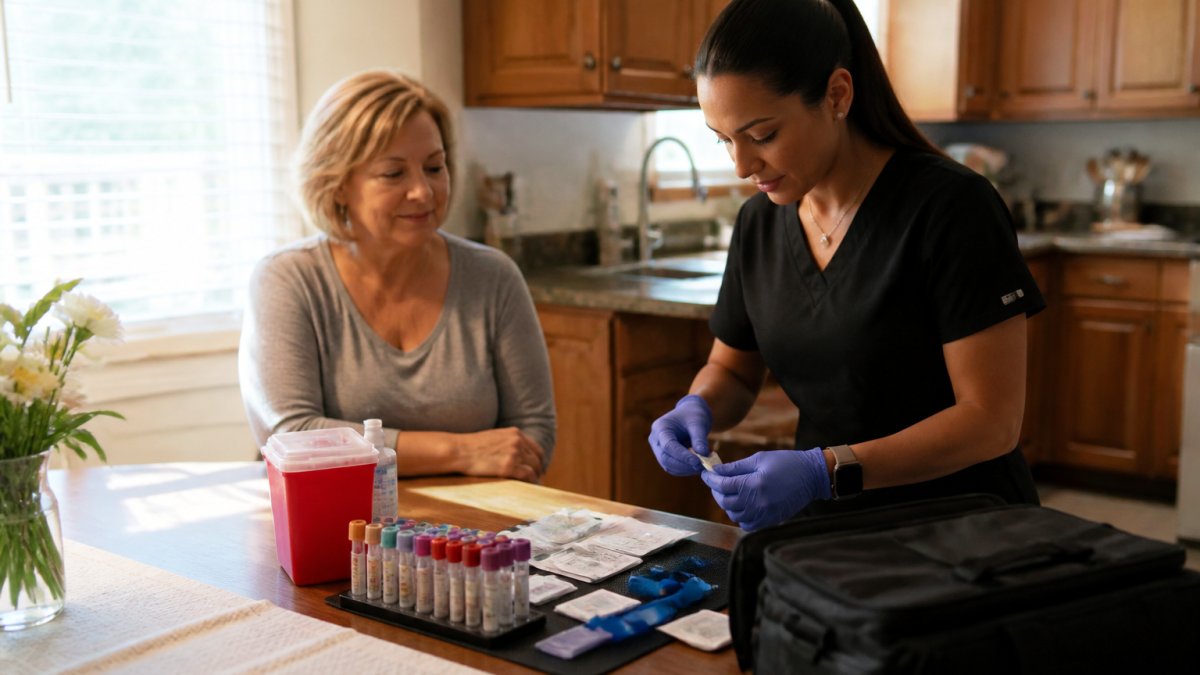
Step by Step: What a Professional Visit Looks Like
A professional home visit follows a predictable sequence. You should be able to trace each step, and nothing should feel rushed or unclear.
- Arrival and introduction. The technician arrives within the agreed window, shows identification, and states the name of the service.
- Identity and order verification. Your name, date of birth, and test order are confirmed against the requisition before any supplies are opened. The order should match the tests your provider requested.
- Hand hygiene and setup. Hands are washed, gloves are put on, and a clean mat is laid out with single-use supplies and a sharps container.
- Site selection and draw. The technician selects a vein, cleans the site, performs the draw, and checks in with you during the process.
- Labeling in front of you. Tubes are labeled at the bedside with your name, date of birth, and collection time. Tubes should never be pre-labeled before the visit.
- Post-draw care. Pressure, bandage, and a check that bleeding has stopped.
- Cleanup and handoff. Used supplies and sharps are packed away, the workspace is cleaned, and the technician confirms where the sample is going and when it will arrive.
If any step is skipped, especially identity verification or bedside labeling, ask why. A professional will explain rather than brush past it.
Accessibility and Special Patient Needs
A home visit is often chosen because a standard lab visit is hard. A professional service should be ready for that.
- Children and infants. Ask whether the technician has pediatric experience and what supplies they carry for smaller veins. For infants, a heel stick or a smaller gauge needle may be appropriate, and a second set of hands from a parent is often helpful.
- Older adults. Ask about positioning for patients who have trouble sitting upright for long, and whether the technician can draw in a recliner or bed. Hearing and vision accommodations, such as speaking clearly and writing down aftercare instructions, matter.
- Mobility limitations. Confirm before booking that the technician can work in a bedroom, at a wheelchair height, or in a space where a walker or oxygen equipment is present.
- Difficult draws. A history of rolling veins, previous multiple sticks, or a prior fainting episode should be shared at booking so the technician can bring a smaller gauge needle, a heat pack, or plan extra time.
- Fasting and preparation needs. If your provider ordered a fasting test, confirm the fasting window when you book and again the day before. The technician should not be the first person to tell you about a fasting requirement.
Pro Tip
When you book, describe the patient, not just the test. “My father is 82, uses a walker, and has small veins” tells the service more than “blood draw” and helps them assign the right technician.
When you book, describe the patient, not just the test. “My father is 82, uses a walker, and has small veins” tells the service more than “blood draw” and helps them assign the right technician.
Watch Out
If a technician arrives without a test order, skips identity verification, or draws without gloves, stop the visit. Those shortcuts put your sample accuracy and your safety at risk.
If a technician arrives without a test order, skips identity verification, or draws without gloves, stop the visit. Those shortcuts put your sample accuracy and your safety at risk.
Privacy, Communication, and Reliability Checks
Reliability is the quiet factor that decides whether mobile phlebotomy works for you. Ask about arrival windows, cancellation policies, and how the technician communicates delays.
Communication skills matter just as much. A good technician explains each step, checks in during the draw, and tells you what to expect afterward.
This is where our team at Phlebotomy Experts focuses its effort: licensed phlebotomists, a gentle bedside manner, and specimens delivered to the laboratory or hospital of your choice.
Conclusion
Finding a mobile phlebotomist you trust takes a few direct questions, not a leap of faith. Check the certification, watch the safety habits, confirm how samples are handled, and ask how your information is protected.
If you’d rather skip the search, Phlebotomy Experts brings licensed phlebotomists to your door with in-home blood draws, specimen delivery to your preferred lab, and specialized care for infants and children. Call Now to Scheduled!
Frequently Asked Questions
How can I verify a mobile phlebotomist’s training or credentials?
Ask which certifying body issued the credential, such as ASCP, NHA, or AMT, and request the certificate or license number before the visit. Many states require a phlebotomy license or certification, so check your state health department’s verification tool. A professional mobile phlebotomist will share this information without hesitation and can explain how many draws they perform each week, which tells you more about skill than a certificate alone.
What should I ask before booking a mobile phlebotomist?
Ask about credentials and years of experience, whether the collection fee is separate from lab testing fees, which laboratories they deliver specimens to, and how they handle STAT or time-sensitive samples. Confirm they carry proper collection supplies and sharps containers, and ask what happens if a draw is unsuccessful. Also ask whether they can accommodate mobility needs, needle phobia, or pediatric patients, and get the total cost in writing before the appointment.
How do I prepare for an in-home blood draw?
Follow any fasting instructions from your ordering physician, since a routine blood panel, lipid panel, or comprehensive metabolic panel may require 8 to 12 hours without food. Drink water beforehand to make veins easier to find, and have your test order and insurance card ready. Clear a well-lit space with a table and chair, and let the phlebotomist know about blood thinners, prior fainting, or difficult veins so they can adjust their approach.
How should blood samples be handled after an at-home draw?
Specimens should be labeled at the point of collection with your name, date, and time, then processed according to the test requirements. Some samples need centrifuge processing within a set window, while others require refrigeration or protection from light. Ask how the phlebotomist transports samples and how quickly they reach the lab, because delays or temperature swings can affect results and force a repeat draw.
What should I do if a mobile phlebotomist cannot collect a sample?
A skilled phlebotomist will try a limited number of sites and stop rather than keep sticking. Ask whether they can return with additional equipment or recommend a clinic that handles difficult veins with ultrasound guidance. Reputable services explain their policy on unsuccessful draws up front, including whether the collection fee is charged. Never let anyone attempt repeated venipuncture beyond two or three tries without reassessing.
