Breaking down the cost of in home blood draws: collection fees, lab charges, insurance, and what you actually pay out-of-pocket.
Mobile Phlebotomy for Difficult Veins: What to Expect
Table of Contents
- Why Difficult Veins Make Standard Blood Draws Harder
- Vein Finding Technology for Blood Draws That Actually Helps
- Preparing for a Blood Draw With Small Veins: A Patient Checklist
- Mobile Phlebotomy Service Benefits for Hard Sticks
- Mobile Phlebotomy for Difficult Veins: What a Home Visit Looks Like
- Managing Needle Phobia and Post-Draw Care for Fragile Veins
- Frequently Asked Questions
Last Updated: September 14, 2026
Why Difficult Veins Make Standard Blood Draws Harder
Difficult venous access (DVA) describes veins that are hard to locate, stabilize, or enter with a needle during a routine blood draw. For patients with DVA, a standard venipuncture appointment can mean multiple needle sticks, bruising, and anxiety. This guide covers what makes veins difficult, how vein-finding technology helps, and why mobile phlebotomy for difficult veins has become a practical option.
Roughly one in ten patients present with veins that resist a straightforward stick, according to clinical guidance on venous access from MedlinePlus, and the consequences go beyond discomfort. Repeated attempts raise the risk of hematoma, delay specimen processing, and can compromise specimen integrity if a draw is rushed.
A sample that sits too long, or comes from a vein that partially collapses mid-collection, can produce questionable results. The real question isn’t just “can someone get the needle in”, it’s “can they get a clean sample the first time.”
Vein Finding Technology for Blood Draws That Actually Helps
Vein finding technology for blood draws is not a gimmick, but it is not a replacement for a skilled hand either. Knowing how each tool works, and where it fails, helps you ask better questions when you book a hard-stick draw.
The two device categories you’ll encounter most are vein illumination and transillumination.
Vein visualization devices project near-infrared light (typically 700-1,000 nm) onto the skin. Hemoglobin absorbs that light more than surrounding tissue, so superficial veins appear as dark lines on the skin or a small display. Transillumination applies the same principle in a handheld unit pressed against the skin.
| Tool Type | How It Works | Best For | Limitations |
|---|---|---|---|
| Vein illumination device | Near-infrared light absorbed by hemoglobin, vein map projected onto skin | Deep or obscured antecubital fossa veins | Struggles with deeper vessels; ambient light can wash out the image |
| Transillumination | Light passes through tissue; veins appear as dark channels | Hand and wrist vein access | Less useful on thicker arms or darker skin tones |
| Palpation | Trained fingertip assessment of depth, bounce, and direction | Rolling or fragile veins | Requires experience; not transferable to a novice |
| Ultrasound (in clinical settings) | Sound waves map vessel depth and diameter | Obese patients, prior IV drug use, history of multiple failed sticks | Not typically carried on a mobile kit; requires separate training |
What the Evidence Actually Shows
Most practitioners find vein visualization devices improve confidence and reduce attempts in patients with known difficult access, but the effect is modest and depends on operator skill. A device shows where a vein is, not how it behaves under negative pressure. Palpation remains the foundation of hard-stick technique.
When Palpation Still Beats the Machine
Palpation, assessing a vein’s depth, bounce, and direction, remains the gold standard for fragile and rolling veins. A vein that shifts under the skin won’t stay put because a machine highlighted it. An experienced phlebotomist uses the device to confirm what their fingers already suspect.
Three signals that a technician is using technology well:
- They palpate before they illuminate, not after.
- They use the device to compare two candidate sites, not to justify a single one.
- They abandon a site quickly if the vein feels thin or cord-like, rather than chasing it with a smaller needle.
Pro Tip
If a technician reaches straight for a device without first feeling your arm, that’s worth noting. Palpation tells them how a vein behaves, not just where it is.
If a technician reaches straight for a device without first feeling your arm, that’s worth noting. Palpation tells them how a vein behaves, not just where it is.
Questions to Ask About Equipment Before You Book
If you are choosing a mobile provider because your veins are difficult, ask what they carry and how they decide when to use it. A provider with only straight needles and one butterfly size is not equipped for hard-stick presentations; one with multiple gauge sizes, both needle types, warm packs, and a visualization tool can adapt when the first site fails.
overview of venous access and venipuncture technique
Preparing for a Blood Draw With Small Veins: A Patient Checklist
Preparing for a blood draw with small veins starts well before you sit down. Hydration and warmth do more for vasodilation than almost anything else you can control.
Here’s a checklist you can actually use:
- Drink two to three glasses of water in the two hours before your appointment
- Avoid caffeine the morning of your draw, since it constricts blood vessels
- Wear short sleeves or a shirt with sleeves that roll above the elbow
- Apply a warm compress to your inner arm for five minutes beforehand
- Bring a list of your medications, especially blood thinners
- Tell the phlebotomist about past difficult draws, fainting, or needle phobia
- Mention if you’ve had chemotherapy, IV drug use, or multiple prior surgeries in the arm
The Day Before and the Morning Of
Dehydration is one of the most common and most fixable causes of a hard stick. If your veins are difficult, treat hydration as a two-day project, not a last-minute one, and skip alcohol the night before for the same reason.
What to Tell Your Phlebotomist Before the Needle Goes In
Say it plainly: “I’ve had multiple sticks before.” “This arm has been used a lot.” “I get faint.” Patient history changes which arm is used, which gauge is selected, and how long the technician palpates before committing to a site.
Watch Out
Skipping this conversation is the single most common reason patients get stuck twice. A phlebotomist who doesn’t know your history may default to the antecubital fossa, the inside of the elbow, when a hand vein would have worked better.
Skipping this conversation is the single most common reason patients get stuck twice. A phlebotomist who doesn’t know your history may default to the antecubital fossa, the inside of the elbow, when a hand vein would have worked better.
Mobile Phlebotomy Service Benefits for Hard Sticks
Mobile phlebotomy service benefits are most obvious for patients burned by a bad draw before. The core advantage isn’t convenience, it’s continuity: one technician, one setting, and enough time to do the draw properly instead of rushing through a full waiting room.
For patients with needle phobia, that shift can mean the difference between a successful draw and an abandoned appointment. For fragile or rolling veins, it means unhurried palpation with no queue behind them.
What Actually Happens on a Mobile Hard-Stick Visit
A well-run mobile visit follows a predictable sequence:
- Intake and identity confirmation. The technician verifies your name, date of birth, and the ordering provider’s requisition.
- History review. They ask about prior difficult draws, which arm tends to work, medications (especially blood thinners), fainting history, and any recent chemotherapy or IV access in the arm.
- Setup. A clean, well-lit surface, single-use supplies opened in front of you, and a sharps container within reach.
- Site assessment. Palpation first, then, if the provider carries one, a visualization device to confirm the candidate site.
- Draw and stabilization. Butterfly or straight needle selected based on vein behavior, not habit. Tourniquet released at the right moment to avoid hemolysis.
- Post-draw pressure and packaging. Firm pressure for three to five minutes, then labeling and packaging for transport.
- Specimen transport. Delivery to the laboratory or hospital your physician specified, within the handling window the tests require.
How to Vet a Mobile Provider Before You Book
Ask direct questions, you are hiring a licensed professional to enter your home and draw blood.
- Are your phlebotomists licensed, and can you confirm it?
- How many attempts do you make before escalating or rescheduling?
- Which laboratory do you deliver specimens to, and how quickly?
- Do you carry sterile single-use supplies and sharps containers?
- How do you handle a patient with needle phobia or a history of fainting?
- What is your policy if the draw fails?
- Do you carry more than one needle gauge and both straight and butterfly needles?
At Phlebotomy Experts, our team is led by a licensed phlebotomist and Navy Veteran Medic with two decades of medical field experience, and we deliver specimens to the laboratory or hospital of your choosing, which matters if your physician has a preferred lab.
Insurance, Billing, and What You’ll Actually Pay
A mobile hard-stick draw usually has two cost components: the specimen collection (the draw itself) and the mobile or convenience fee (the trip to your home or office). Billing depends on your plan and whether the draw is tied to a covered medical order.
- When a physician orders the test for a covered diagnosis, the collection portion is often billable to your plan the same way a lab draw would be. The mobile fee frequently is not, and may be charged to you directly.
- When the draw is for convenience or for a test your plan does not cover, you will typically pay out of pocket for the full visit.
- Medicare and most commercial plans do not have a separate benefit category for ‘difficult vein’ draws. The difficulty of your veins does not change coverage, the medical necessity of the test does.
- Health savings account (HSA) and flexible spending account (FSA) funds can generally be used for out-of-pocket draw fees if the underlying test is a qualified medical expense.
Before you book, ask the provider three things in writing: the total out-of-pocket cost if insurance denies the claim, whether they will submit the claim on your behalf or provide a superbill for you to submit, and whether they charge a separate fee for a failed draw or a return visit.
Watch Out
A provider who cannot tell you in advance whether they bill insurance, what the cash price is, and what happens if the draw fails is a provider you should not book for a hard-stick visit. Those three answers separate a professional operation from a side gig.
A provider who cannot tell you in advance whether they bill insurance, what the cash price is, and what happens if the draw fails is a provider you should not book for a hard-stick visit. Those three answers separate a professional operation from a side gig.
When Mobile Is Worth It, and When It Isn’t
Mobile phlebotomy earns its cost when your history includes multiple failed sticks, needle phobia, mobility limits, or a schedule that makes a lab visit impractical. If your veins are straightforward and you only want to save a trip, a standard lab draw is usually faster and cheaper.
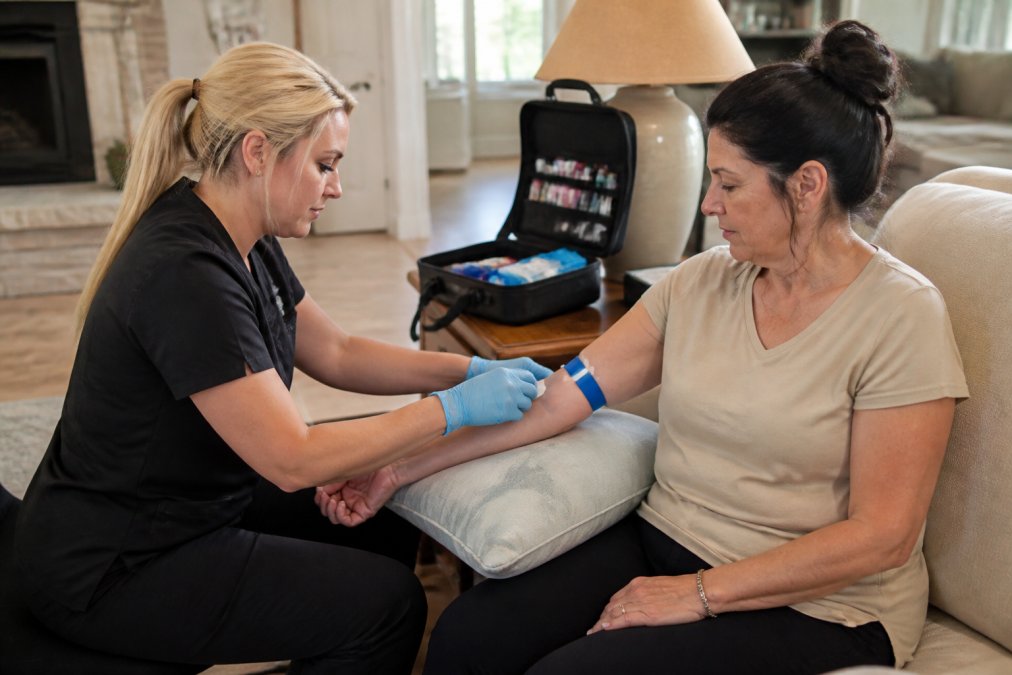
Mobile Phlebotomy for Difficult Veins: What a Home Visit Looks Like
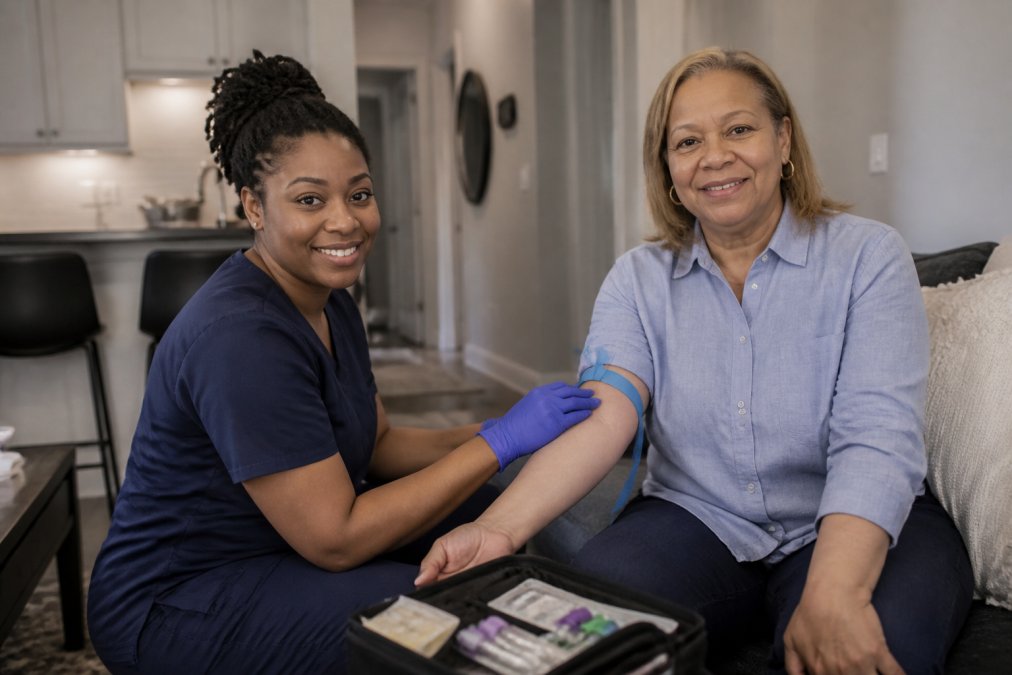
The technician arrives, confirms your identity and orders, and sets up in a clean, well-lit area. They ask about prior draws, medications, and which arm tends to work, then take their time with palpation and tourniquet application before choosing a site.
Equipment a Skilled Phlebotomist Brings
A properly equipped mobile kit for hard sticks includes more than one needle option. Butterfly needles (winged infusion sets) suit fragile or small veins because the flexible tubing lets the technician adjust angle without moving the needle tip. Smaller gauges reduce trauma but can slow the draw and raise hemolysis risk on veins that need faster flow.
Beyond needles, a skilled phlebotomist carries:
- Multiple gauge sizes and both straight and butterfly needles
- Tourniquets, alcohol prep, and sterile gauze
- Blood collection tubes matched to the ordered tests
- A sharps container and biohazard transport packaging
- Warm packs to encourage vasodilation on site
Key Takeaway
The right needle for a difficult vein is rarely the biggest one. It’s the one that lets the technician keep the tip steady while blood flows freely.
The right needle for a difficult vein is rarely the biggest one. It’s the one that lets the technician keep the tip steady while blood flows freely.
Managing Needle Phobia and Post-Draw Care for Fragile Veins
Needle phobia is common and manageable. Tell your phlebotomist before the draw starts, ask to lie down rather than sit, and ask them to talk you through each step, or not narrate at all, whichever helps. Applied tension techniques, tensing large muscle groups and releasing, can reduce the blood pressure drop that causes fainting.
Bruising, Hematoma, and Aftercare
A hematoma is a pooling of blood under the skin from a vein that leaks after the needle is withdrawn. It looks alarming but is usually harmless, a sign the vein was fragile or the site wasn’t held long enough. For fragile veins, apply firm pressure for three to five minutes without peeking, and skip heavy lifting with that arm for the rest of the day. Ice helps for the first several hours; warmth supports reabsorption after that. If bruising spreads, the arm swells, or you feel numbness or tingling, contact your physician.
Pro Tip
Hold pressure longer than feels necessary. Most bruising after a difficult draw comes from releasing too early, not from the needle itself.
Hold pressure longer than feels necessary. Most bruising after a difficult draw comes from releasing too early, not from the needle itself.
Frequently Asked Questions
Is it bad to have difficult veins for a blood draw?
Difficult veins are not a health problem in themselves, but they do raise the odds of a missed stick, bruising, or a hematoma. Conditions like dehydration, cold rooms, and frequent draws can narrow or flatten veins, while fragile or rolling veins move under the needle. A skilled phlebotomist can usually work around these issues using palpation, a butterfly needle, or vein illumination. If you know your veins are hard to reach, tell the technician before the draw so they can plan accordingly.
How much does a mobile phlebotomist cost?
Pricing depends on your location, the type of draw, and how many patients are being served. Some mobile providers bill through insurance when a physician orders the test; others charge a flat visit fee for concierge service. Because rates vary widely, ask for a written quote before booking and confirm whether the fee covers the draw only or also specimen delivery to your chosen lab. Check with your insurer about coverage for home visits as well.
Can mobile phlebotomists use vein-finding technology?
Yes. Many mobile phlebotomists carry vein visualization devices, including infrared vein illumination and transillumination tools that make deeper or smaller veins easier to see. These devices help with hand vein access, wrist vein access, and patients whose antecubital fossa veins are hard to locate. Technology is a supplement, not a replacement, for palpation and clinical competency. Ask the provider whether they carry a vein visualization device if you have a history of hard sticks.
What are the risks of mobile phlebotomy?
The risks mirror those of any blood draw: bruising, hematoma, lightheadedness, or a missed stick. The bigger variables are sterile technique and specimen handling. A licensed phlebotomist follows standard precautions, labels tubes at the bedside, and keeps samples at the right temperature during transport. Ask how the provider delivers specimens and how quickly they reach the lab. If you take blood thinners or have fragile veins, mention it so the technician can choose a smaller needle gauge and apply pressure longer.

Related Posts