
Concierge lab services bring blood draws to your home or office. See how mobile phlebotomy works, what it costs, and how to prepare for a blood test.
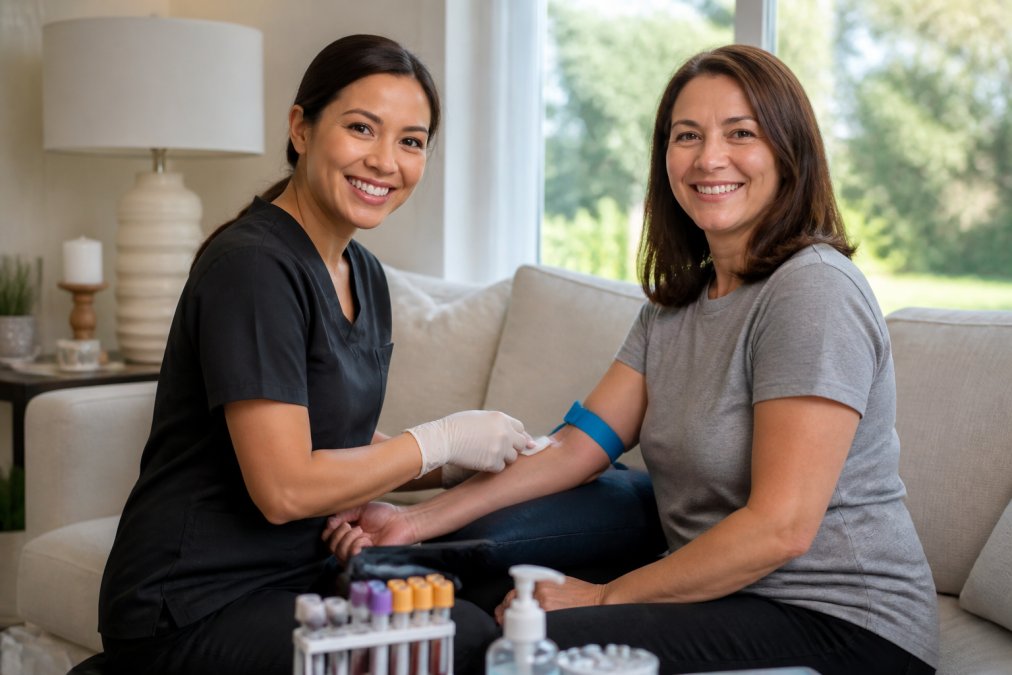
Mobile Phlebotomy for Needle Phobia: 8 Tips That Work
Table of Contents
- Why a Home Blood Draw Eases Needle Phobia
- What to Expect During a Mobile Phlebotomy Visit
- 8 Tips for Needle Phobia During Blood Tests
- How Phlebotomists Manage Anxiety in the Field
- Gentle Blood Draw for Infants and Children
- Insurance, Costs, and Preparing for Your Appointment
- Post-Draw Recovery and Self-Care
- Conclusion
- Frequently Asked Questions
Last Updated: September 8, 2026
Why a Home Blood Draw Eases Needle Phobia
Needle phobia, clinically known as trypanophobia, is more than just feeling uneasy about shots (peer-reviewed research). For many, it triggers a vasovagal response, a sudden drop in heart rate and blood pressure that can lead to fainting, nausea, or intense situational anxiety. The trigger is often the clinical environment itself: the sterile smell, the bright lights, and the bustling atmosphere of a waiting room all prime the body for a perceived threat before the needle even appears.
Removing that environment can change the entire experience. Mobile phlebotomy for needle phobia works because it replaces a stressful, unfamiliar setting with the safety and calm of your own home. You are in control of your space, your music, and your seating. This simple shift in control is a powerful anxiety management tool, reducing the emotional escalation that typically precedes a blood draw.
The goal of this guide is to give you practical, evidence-informed coping strategies and preparation tips. We will cover what actually happens during a home visit and share eight specific techniques that work, from the applied tension technique to breathing exercises. By the end, you will have a clear plan to approach your next diagnostic test with more confidence and less fear.
What to Expect During a Mobile Phlebotomy Visit
A mobile phlebotomy visit is designed to be a simplified, low-stress event, typically lasting under 15 minutes for the actual blood collection. A licensed phlebotomist arrives at your scheduled time, carrying all necessary supplies, and first reviews your lab requisition and confirms your identity and informed consent. This initial conversation is also your chance to voice specific concerns, whether that involves difficult veins or a history of fainting.
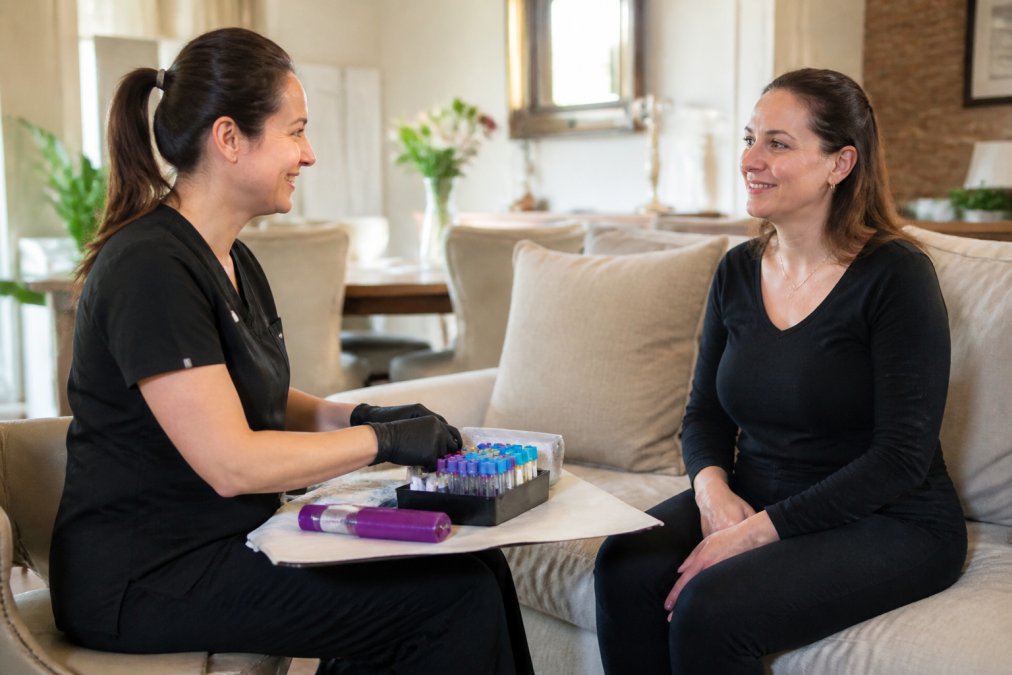
After setup, the phlebotomist will position you comfortably, often reclining to help prevent a vasovagal episode. They select the appropriate needle gauge, frequently using a smaller butterfly needle for delicate or difficult veins, and proceed with the venipuncture. Once the samples are collected, they are labeled and prepared for transport to your preferred laboratory for processing. The setting of a home can allow for unhurried, patient-centered care.
8 Tips for Needle Phobia During Blood Tests
Managing a blood draw when you have needle phobia requires a proactive strategy. These eight tips for needle phobia during blood tests are designed to be used in the days before and the moments during your appointment. Practice them, and you change your body’s physical response to the procedure.
Master the Applied Tension Technique
The applied tension technique is a scientifically backed method to prevent fainting by raising your blood pressure (PubMed). It works by tensing the muscles in your arms, legs, and torso to force blood back toward your heart, counteracting the drop in pressure that causes lightheadedness.
- Sit comfortably and cross your legs.
- Tense the muscles in your arms, legs, and abdomen as hard as you can.
- Hold the tension for 15 to 20 seconds, or until you feel your face get warm.
- Relax for 20 to 30 seconds, then repeat.
- Continue this cycle during the blood draw, especially when you feel symptoms starting.
Use Distraction and Breathing Exercises
Distraction is a powerful tool because it occupies the cognitive pathways that would otherwise focus on the needle. Bring noise-canceling headphones and listen to a podcast, or use a meditation app to guide your breathing. Slow, diaphragmatic breathing activates the parasympathetic nervous system, which helps counteract the fight-or-flight response.
Try a simple pattern: inhale for four counts, hold for four counts, and exhale for six counts. Focus entirely on the count. Many patients find that engaging a phlebotomist in conversation about a neutral topic, like a recent vacation or a favorite show, provides enough distraction to get through the procedure comfortably.
How Phlebotomists Manage Anxiety in the Field
The skill of a phlebotomist goes far beyond finding a vein; it involves significant patient advocacy and emotional support. A practitioner experienced with anxious patients will use a calm, lower-toned voice, explain each step before doing it, and never rush the process. They are trained to recognize the early signs of a vasovagal response, such as pallor or sweating, and will stop to implement comfort measures before continuing.
In a mobile setting, the dynamic is different. The phlebotomist has the time to build rapport and adapt their technique to you. They can adjust your positioning, use a butterfly needle for a more gentle draw, and apply a warm compress to make veins more accessible, reducing the number of attempts needed. This focus on stress reduction and patient comfort can distinguish a therapeutic home visit.
Gentle Blood Draw for Infants and Children
Needle phobia often begins in childhood, and a negative early experience can create lasting medical trauma. For infants and young children, the approach requires specialized skill and a focus on the parents’ anxiety as well. A gentle blood draw for infants involves using the smallest possible needle and, often, a technique that minimizes the sensation of the stick.
For pediatric patients, the phlebotomist’s strategy centers on positioning and distraction. Infants are often held by a parent, which provides security and warmth. For toddlers and older children, techniques like blowing bubbles, watching a short video, or using a numbing cream beforehand can make a significant difference. The phlebotomist guides the parent on how to hold the child securely to prevent sudden movement, ensuring the draw is done safely and quickly to minimize distress for everyone involved.
Insurance, Costs, and Preparing for Your Appointment
Cost and insurance coverage are the two most common barriers preventing patients with needle phobia from booking a mobile blood draw. Unlike an in-network lab visit where you pay a copay or coinsurance, mobile phlebotomy is typically classified as a convenience service. Here is what you need to know to navigate the financial side with confidence.
How Insurance Typically Treats Mobile Phlebotomy
Most private insurers do not cover the mobile visit fee itself. What they may cover is the laboratory testing component, provided the lab that processes your specimens is in-network. This creates a two-part billing structure:
- The mobile service fee (typically $50-$150 per visit depending on your geographic area and time of day), almost always paid out-of-pocket.
- The lab processing fee, billed to your insurance by the laboratory, subject to your normal deductible, copay, or coinsurance.
Medicare and Medicaid generally do not reimburse for mobile phlebotomy travel or convenience fees, though the lab tests themselves remain covered when ordered by a physician and processed by an approved laboratory (medicare.gov).
How to Verify Coverage Before You Book
Follow this three-step process to avoid surprise bills:
- Call your insurance member services. The number is on the back of your insurance card. Ask two specific questions: (a) “Is [laboratory name] an in-network provider for my plan?” and (b) “Does my plan cover a mobile phlebotomy service fee under any billing code, or is it considered non-covered?”
- Ask the mobile service which laboratory they use. Most mobile phlebotomy companies partner with national labs such as Quest Diagnostics or Labcorp. Confirm that the specific lab is in-network before your appointment.
- Request a written estimate. Federal law requires healthcare providers to provide a good-faith estimate of expected charges upon request. Ask the mobile phlebotomy service for a written estimate that separates the service fee from any lab processing fees you may owe directly.
What You Will Likely Pay Out-of-Pocket
For a standard blood draw during normal business hours, pricing depends on quantity, dates, and delivery. After-hours, weekend, or holiday appointments may incur a surcharge. Always ask about these before booking.
Flexible Spending Accounts and Health Savings Accounts
If you have a Flexible Spending Account (FSA) or Health Savings Account (HSA), you can use those pre-tax dollars to pay for the mobile phlebotomy service fee. FSA and HSA funds may cover diagnostic testing services, including the travel component when the service is medically necessary. Check with the IRS or your plan administrator for current guidelines. Keep your itemized receipt and the lab requisition from your physician as documentation.
Preparing for Your Appointment
Once the financial logistics are settled, use this checklist to prepare:
- Confirm your fasting status. Some tests (fasting glucose, lipid panel, certain metabolic panels) require 8-12 hours without food or drink other than water. Verify this with your ordering physician at least 48 hours before your appointment.
- Hydrate strategically. Drink 16-24 ounces of water in the two hours before your draw. Well-hydrated veins are easier to palpate and less likely to roll or collapse.
- Wear loose, accessible clothing. A short-sleeved shirt or a top with sleeves that roll easily above the elbow is ideal. Avoid tight cuffs or compression sleeves.
- Avoid caffeine and nicotine for two hours prior. Both can constrict peripheral blood vessels, making veins harder to find and potentially increasing anxiety symptoms.
- Eat a light snack if not fasting. Low blood sugar can amplify vasovagal symptoms. A small meal with protein and complex carbohydrates 60-90 minutes before the draw is recommended.
- Have your insurance card and photo ID ready. The phlebotomist will need to verify your identity and may need to copy your insurance information for the lab.
- Prepare your space. Choose a well-lit room with a comfortable chair or couch where you can recline. Have a glass of water and a small snack ready for immediately after the draw.
Watch Out
If you take blood-thinning medication (such as warfarin, apixaban, or rivaroxaban), inform the phlebotomist when booking. They may recommend a specific time of day for your draw and will apply extended pressure to the puncture site to minimize bruising.
If you take blood-thinning medication (such as warfarin, apixaban, or rivaroxaban), inform the phlebotomist when booking. They may recommend a specific time of day for your draw and will apply extended pressure to the puncture site to minimize bruising.
What to Ask When Booking
When you call to schedule, ask these five questions:
- What is the total all-inclusive price, and are there any additional fees (travel, after-hours, supplies)?
- Which laboratory will process my specimens, and is it in-network with my insurance?
- What is your cancellation policy if I need to reschedule due to anxiety?
- Do you have phlebotomists specifically trained in working with patients who have needle phobia or a history of fainting?
- Can I request a butterfly needle and topical numbing cream in advance?
By treating the financial and logistical preparation as seriously as the psychological preparation, you remove the two most common reasons patients cancel or avoid mobile phlebotomy appointments, uncertainty about cost and uncertainty about the process.
Post-Draw Recovery and Self-Care
The care you give yourself after the draw is just as important as the preparation. Immediately after the needle is removed, apply firm pressure to the site for a few minutes to prevent bruising. Do not rush to stand up; sit for a few minutes and have a glass of water and a small snack to help your body recover and stabilize your blood sugar.
For the rest of the day, avoid strenuous exercise and heavy lifting with the arm that was used. If you experience any soreness or a small bruise at the puncture site, this is normal and should resolve within a few days. The most effective post-draw self-care is acknowledging that you successfully completed the procedure. Recognizing your accomplishment, regardless of how anxious you felt beforehand, helps build confidence and rewires your brain’s association with the experience for next time.
Conclusion
Confronting needle phobia is a significant challenge, but it is one that can be managed with the right environment and the right techniques. The comfort of a home visit combined with practical coping strategies like the applied tension technique can transform a dreaded medical necessity into a manageable, even helping, experience.
If you are ready to schedule a blood draw in an environment where your comfort is the priority, consider the services offered by Phlebotomy Experts. Our licensed phlebotomists specialize in providing patient-centered care for those with anxiety, difficult veins, and special needs, right in your own home. We ensure your specimens are safely delivered to your preferred laboratory for prompt processing. Call now to schedule your appointment and experience a calm, professional blood draw designed around you.
Frequently Asked Questions
How can I get blood drawn if I am afraid of needles?
Start by telling your phlebotomist about your fear before they begin. Request a lying-down position to prevent fainting and ask for a butterfly needle, which is smaller. Practice the applied tension technique during the draw: tense your leg, arm, and stomach muscles for 15 seconds, then release. Mobile phlebotomy helps because you stay in a familiar, comfortable space rather than a clinical environment that can heighten situational anxiety.
Is mobile phlebotomy covered by insurance?
Coverage varies by plan and provider. Some insurance plans cover the cost of the lab test itself but not the convenience fee for the mobile visit. Contact your insurance company before booking to ask about coverage for in-home specimen collection. Phlebotomy Experts can provide a receipt you can submit for potential reimbursement. Pricing depends on your location and specific needs, so check their website for a quote.
What techniques do phlebotomists use to help anxious patients?
Professional phlebotomists use several comfort measures. They may use a smaller butterfly needle, apply a warm pack to make veins more visible, and use distraction techniques like conversation or guided breathing exercises. For patients prone to a vasovagal response, they will have you lie down and may coach you through the applied tension technique to keep your blood pressure stable. Clear communication and informed consent before each step also reduce the shock of the procedure.
What should I do after a blood draw to recover?
Keep pressure on the site for a few minutes after the needle is removed to prevent bruising. Eat a small snack and drink water to help your body replenish fluids. If you feel lightheaded, sit with your head between your knees until it passes. Avoid strenuous exercise for a few hours. If you experienced a vasovagal response, rest for 15 minutes before standing up fully.
