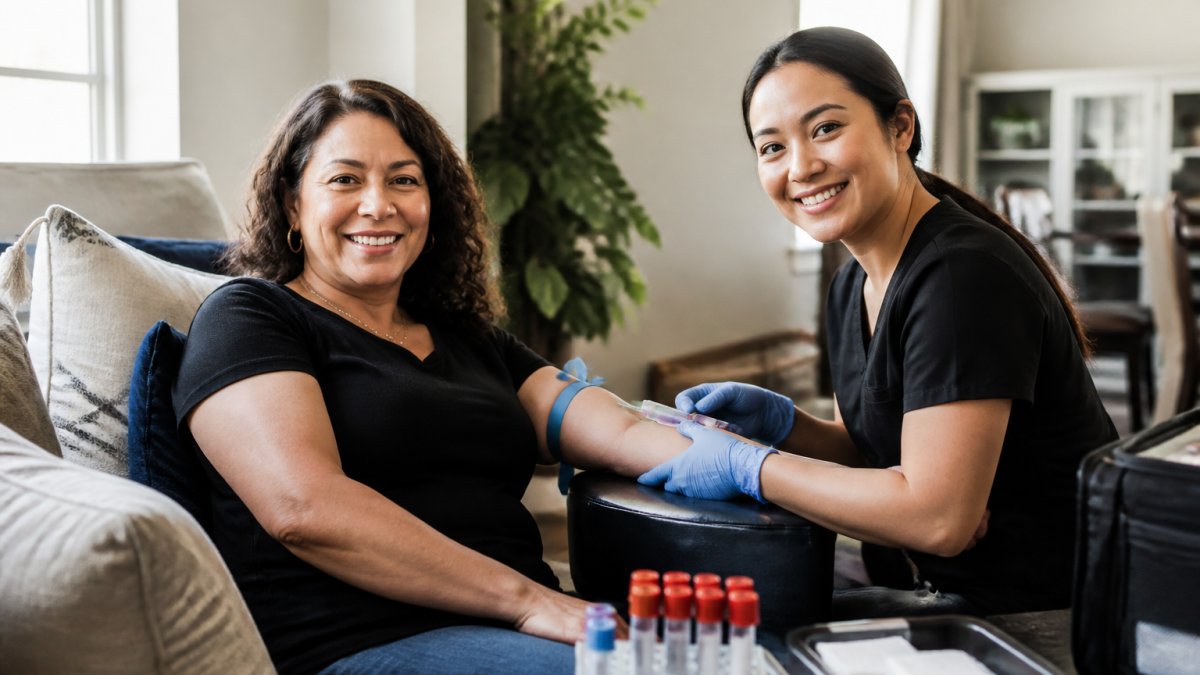
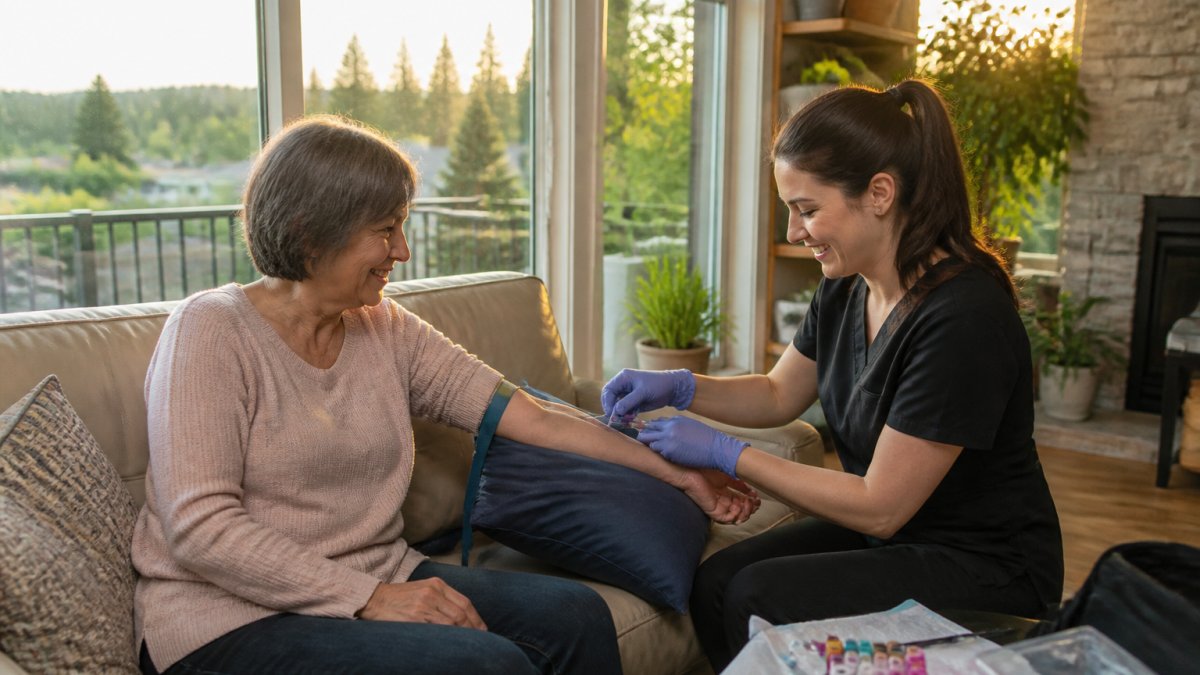
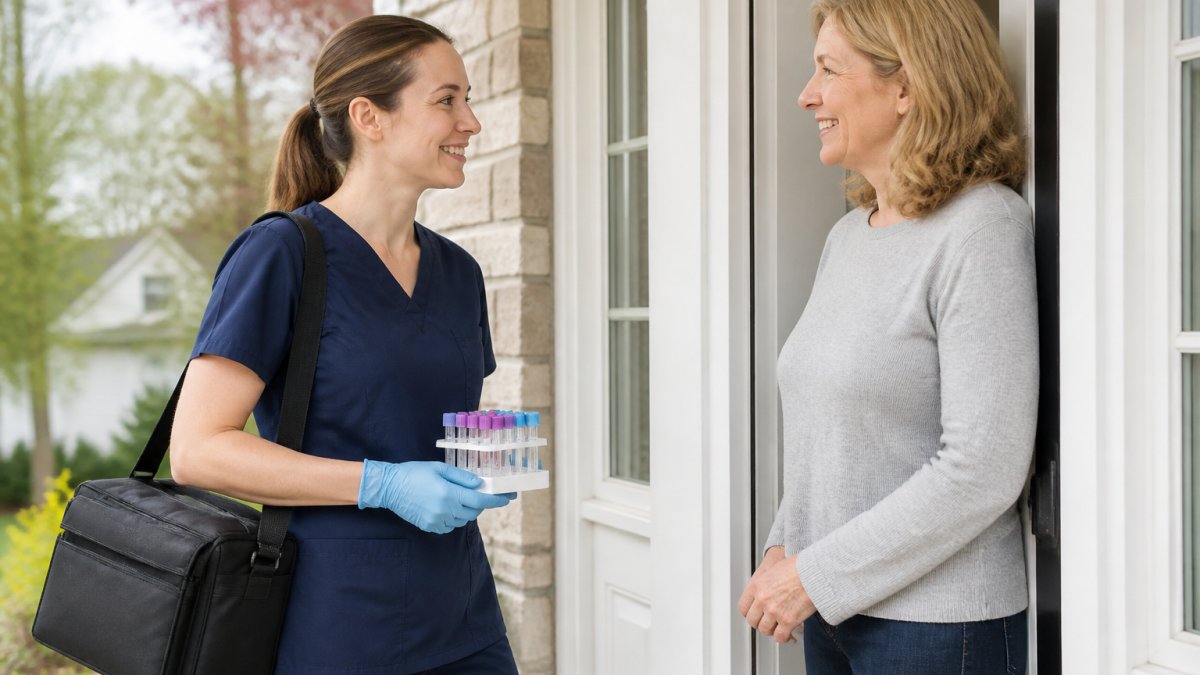
Breaking down the cost of in home blood draws: collection fees, lab charges, insurance, and what you actually pay out-of-pocket.
At Home Blood Draw Services: A 2026 Guide
Table of Contents
- How At Home Blood Draw Services Work
- Types of Lab Tests Available Through Mobile Phlebotomy
- How to Prepare for a Blood Draw at Home
- Mobile Phlebotomy Cost and Insurance Coverage
- Concierge Lab Services: Beyond a Standard Blood Draw
- At Home Blood Draw for Special Populations
- Safety, Hygiene, and Clinical Accuracy Standards
- Frequently Asked Questions
Last Updated: September 1, 2026
How At Home Blood Draw Services Work
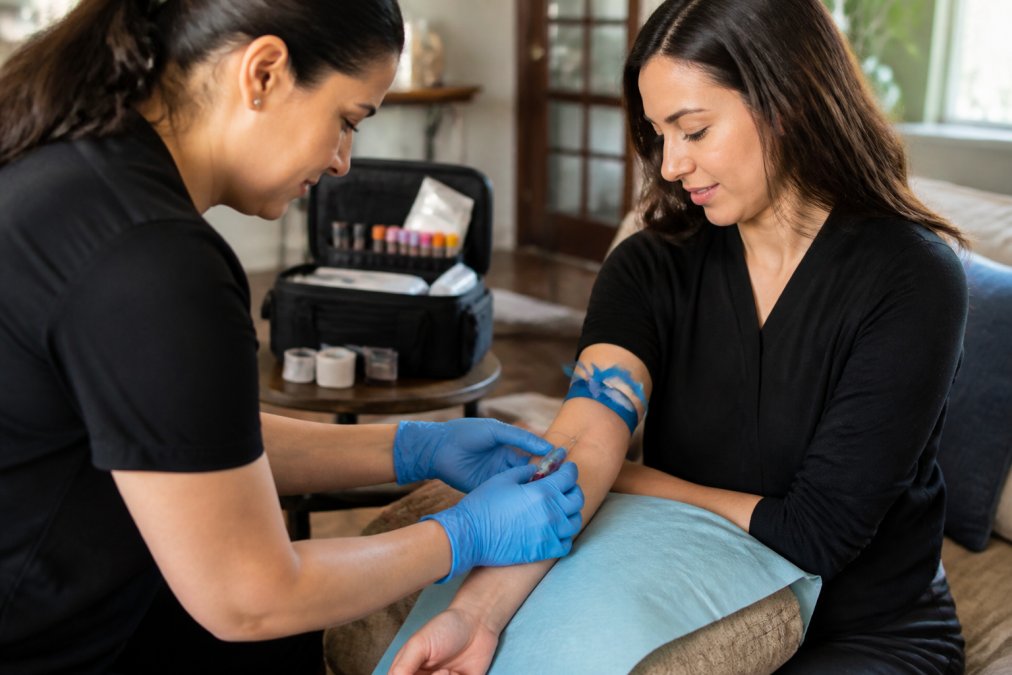
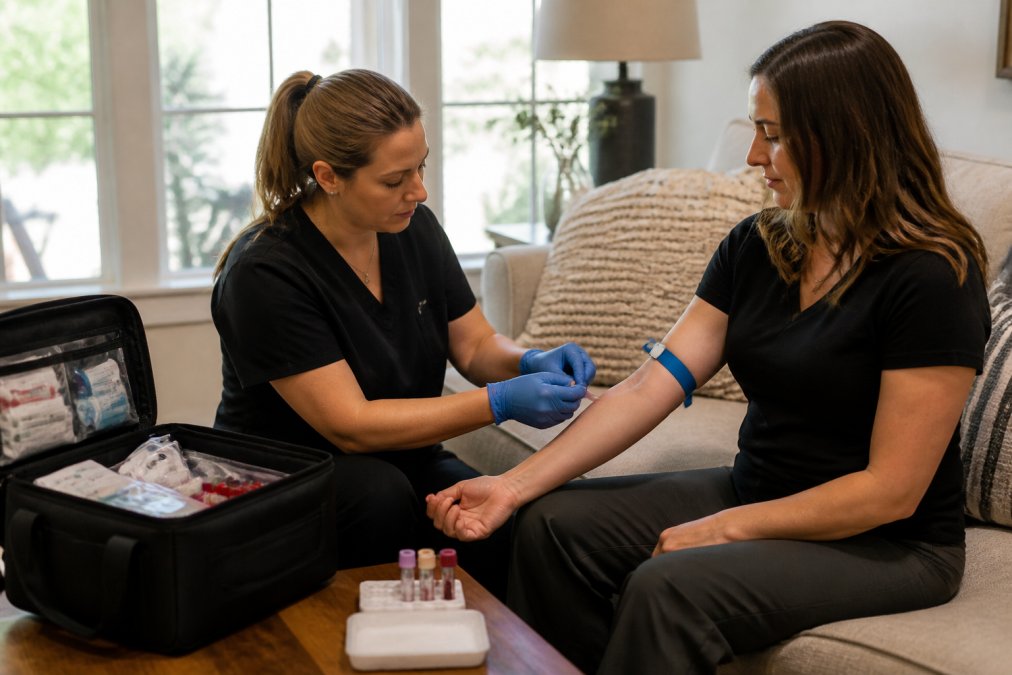
At home blood draw services bring certified phlebotomists directly to your location, home, apartment, office, or care facility, so you can complete routine and specialty lab work without visiting a clinical waiting room. Mobile phlebotomy uses portable, sterile equipment that meets the same clinical accuracy standards as any fixed-site facility.
At Phlebotomy Experts, our licensed technicians carry full professional medical kits to every appointment, handling everything from sample collection to specimen transport so your results reach the lab intact and on time.
Scheduling Your Appointment
Contact the service, confirm your location and test requirements, and select an appointment window that fits your schedule. You will typically need a physician’s order for most diagnostic tests; some concierge lab services can coordinate directly with your ordering provider if you need help obtaining one.
What Happens During the Visit
A certified phlebotomist arrives with all necessary supplies: collection tubes, sterile needles, tourniquets, gauze, bandages, and specimen labels. The technician confirms your identity, reviews the test order, and selects the best venous access site. The blood draw typically takes only a few minutes. For patients with difficult veins, an experienced phlebotomist will use palpation techniques and may apply a warm compress to reduce the likelihood of multiple sticks.
Specimen Transport and Chain of Custody
Proper chain of custody is non-negotiable in mobile phlebotomy. After collection, specimens are placed in labeled, temperature-appropriate containers and transported using protocols that preserve sample integrity. HIPAA-compliant documentation accompanies every specimen, tracking custody from collection through lab receipt. A reputable service will deliver your samples to the laboratory or hospital of your choice, not just a single contracted facility.
Types of Lab Tests Available Through Mobile Phlebotomy
Mobile phlebotomy covers far more ground than most patients realize. The assumption that at home blood draw services only handle basic panels is a common misconception.
Routine and Specialty Blood Work
General blood testing available through mobile services typically includes:
- Complete blood count (CBC)
- Comprehensive metabolic panel
- Lipid panels and cardiovascular markers
- Thyroid function tests (TSH, T3, T4)
- Diabetes screening (HbA1c, fasting glucose)
- Hormonal panels, including fertility and reproductive health markers
- Mold and environmental toxin testing using specialty kits
- Biometric screening for employer wellness programs
The phlebotomist collects the sample and delivers it to the lab. Results flow back to your ordering physician through normal reporting channels.
Therapeutic Phlebotomy and Specialized Services
Therapeutic phlebotomy removes a controlled volume of blood to treat conditions such as hemochromatosis and polycythemia vera. Unlike a standard diagnostic blood draw, it requires precise volume management and careful patient monitoring. Having this done at home is valuable for patients who need regular sessions and find repeated clinic visits exhausting.
Concierge lab services also extend to specimen collection for autologous serum eye drops, DNA gender testing, and clinical trial or sports medicine panels. These specialized services require technicians with specific training beyond standard phlebotomy certification.
How to Prepare for a Blood Draw at Home
Preparation directly affects sample quality and result accuracy. Poor preparation is one of the most avoidable reasons for repeating a blood draw.
Fasting Requirements and Hydration
Fasting requirements vary by test. Lipid panels, fasting glucose, and comprehensive metabolic panels typically require 8 to 12 hours of fasting. Thyroid tests and most hormonal panels do not require fasting. Always confirm the specific requirement when you schedule.
Hydration matters significantly. Being well-hydrated makes veins easier to access and reduces difficult draw risk. Drink water freely in the hours before your appointment unless your physician has instructed otherwise. Avoid alcohol for at least 24 hours before any blood work.
What to Have Ready Before the Phlebotomist Arrives
A short checklist prevents delays and ensures a smooth visit:
- Your physician’s test order or lab requisition form
- A photo ID
- Insurance card (if billing through insurance)
- A list of current medications and supplements
- A comfortable chair or surface where you can sit with your arm extended
- A glass of water for after the draw

Post-Draw Care Instructions
Apply firm pressure to the site with gauze for at least two minutes. Do not bend your arm at the elbow to hold the gauze, as that increases bruising. Keep the bandage on for at least 30 minutes. Avoid heavy lifting or strenuous activity with the affected arm for the rest of the day. If you feel lightheaded, sit or lie down immediately and let the phlebotomist know before they leave. Mild bruising is normal and typically resolves within a few days. If you notice swelling, persistent pain, or signs of infection, contact your physician.
Mobile Phlebotomy Cost and Insurance Coverage
Mobile phlebotomy cost has two components: the convenience fee for the at-home visit, and the cost of the laboratory tests ordered. These are billed separately in most cases. The visit fee covers the phlebotomist’s time, travel, and supplies. Lab test charges depend on which tests were ordered and what your insurance covers.
Many patients find the convenience fee more accessible than expected, particularly when weighed against the time, transportation, and co-pay costs of a traditional lab visit. Pricing varies by provider, service area, and draw complexity. Contact Phlebotomy Experts directly for current pricing based on your location and testing needs.
Pro Tip
Before booking, ask the provider exactly which entity will bill your insurance for the lab portion of the visit. Some services bill through a partner laboratory, which may have different in-network status than the mobile phlebotomy company itself.
Before booking, ask the provider exactly which entity will bill your insurance for the lab portion of the visit. Some services bill through a partner laboratory, which may have different in-network status than the mobile phlebotomy company itself.
How to Verify Your Insurance Coverage
Insurance coverage for mobile phlebotomy is not universal. Here is a practical process:
- Call the member services number on your insurance card. Ask specifically whether mobile phlebotomy or at-home specimen collection is a covered benefit.
- Ask for the billing codes. CPT codes for phlebotomy services typically include codes for venipuncture and specimen collection, allowing precise coverage verification.
- Confirm which laboratory is in-network. If specimens are processed at an out-of-network lab, you may owe more even if the draw itself is covered.
- Request a reference number for the call and the representative’s name. Document everything.
- Ask about prior authorization. Some plans require pre-approval for home health services, including mobile phlebotomy.
According to the Centers for Medicare and Medicaid Services guidelines on home health coverage, Medicare does cover certain at-home specimen collection services under specific conditions, so Medicare beneficiaries should verify eligibility through their plan administrator.
Concierge Lab Services: Beyond a Standard Blood Draw
Standard mobile phlebotomy is a transaction: a technician comes, draws blood, and leaves. Concierge lab services operate on a different model, providing comprehensive, patient-centered diagnostic support with attention that a busy clinic cannot realistically provide.
Phlebotomy Experts offers this expanded model. In addition to routine and specialty blood work, our services include DNA gender testing, IV vitamin therapy, and autologous serum eye drop collection, all performed by licensed phlebotomists at your home or office. Specimens are delivered to the laboratory or hospital of your choice, not a single contracted facility.
This flexibility matters for patients with established relationships with specific labs or whose physicians prefer results from a particular diagnostic provider.
Key Takeaway
Concierge lab services are about continuity of care, keeping your diagnostic data flowing through the providers and systems your medical team already uses.
Concierge lab services are about continuity of care, keeping your diagnostic data flowing through the providers and systems your medical team already uses.
At Home Blood Draw for Special Populations
The clinical case for at home blood draw services is strongest when the patient faces a genuine barrier to accessing traditional labs.
Pediatric and Infant Blood Draws
Pediatric venipuncture requires different skills than adult draws. Children’s veins are smaller, their tolerance varies by age, and the emotional environment matters as much as technical execution. A child who has a traumatic experience at a clinic lab may develop lasting anxiety around medical procedures.
At-home draws offer a controlled, familiar environment with caregivers present and calm. An experienced phlebotomist specializing in pediatric care can complete the draw with minimal distress. Phlebotomy Experts provides specialized care for infants and children, recognizing this population deserves a different approach.
Elderly, Mobility-Limited, and Facility-Based Patients
For elderly patients and those with mobility limitations, a trip to a lab can be genuinely difficult, involving transportation coordination, physical exertion, and extended wait times. Regular blood work for chronic condition management becomes a recurring burden.
Mobile phlebotomy eliminates that burden entirely. For nursing homes and assisted living facilities, on-site specimen collection for multiple residents on a scheduled basis is a practical operational solution. According to the National Institute on Aging’s guidance on home health services, access to in-home health services significantly improves health outcomes and quality of life for older adults managing chronic conditions.
Patients with Needle Phobia or Difficult Veins
Needle phobia is a recognized clinical condition, not simply nervousness. For patients who avoid necessary blood work because of genuine fear, the standard lab environment amplifies anxiety before the draw even begins.
A familiar setting, a calm technician who communicates clearly, and the absence of other anxious patients can change the experience substantially. The same logic applies to patients with difficult venous access. An experienced phlebotomist with time to assess the patient, warm the site, and select the optimal approach is more likely to achieve a successful draw on the first attempt.
Watch Out
If you have a history of fainting during blood draws, inform the phlebotomist before the appointment begins. They can position you appropriately and monitor you throughout. Never attempt to sit upright for a draw if you have previously lost consciousness; lying down is safer and the phlebotomist can accommodate this at home.
If you have a history of fainting during blood draws, inform the phlebotomist before the appointment begins. They can position you appropriately and monitor you throughout. Never attempt to sit upright for a draw if you have previously lost consciousness; lying down is safer and the phlebotomist can accommodate this at home.
Safety, Hygiene, and Clinical Accuracy Standards
A legitimate concern about at home blood draw services is whether clinical accuracy equals what you would get at a fixed-site lab. When the service operates to proper standards, it should.
Certified phlebotomists are trained to collect specimens using sterile equipment and established venipuncture protocols regardless of collection site. Single-use needles and collection tubes are standard. Proper labeling, temperature control during specimen transport, and documented chain of custody are non-negotiable requirements for any specimen processed by an accredited laboratory.
The Clinical Laboratory Improvement Amendments program administered by CMS sets federal standards for laboratory testing quality in the United States. While CLIA regulates the laboratory rather than the collection site, specimen integrity at the point of collection directly affects downstream result reliability. A well-trained mobile phlebotomist follows collection protocols that preserve that integrity.
When evaluating any mobile phlebotomy provider, ask about phlebotomist certification requirements, specimen transport protocols, and which accredited laboratories they work with. A provider that cannot answer these questions clearly is not one you should trust with your diagnostic samples.
| Preparation Step | Timing | Why It Matters |
|---|---|---|
| Confirm fasting requirements | When scheduling | Incorrect fasting invalidates certain test results |
| Hydrate well | Night before and morning of | Improves venous access, reduces difficult draws |
| Gather physician’s order and ID | Day before | Prevents delays at appointment start |
| Avoid alcohol | 24 hours before | Alcohol affects multiple lab markers |
| Apply pressure post-draw | Immediately after | Reduces bruising and bleeding at site |
| Avoid heavy lifting | Rest of the day | Prevents hematoma formation at puncture site |
Proper patient preparation, skilled venipuncture technique, and rigorous specimen transport are what separate a reliable at-home blood draw from one that produces a compromised sample. All three components matter equally.
Scheduling blood work should not require you to rearrange your day, arrange transportation, or sit in a waiting room when you are already unwell. Phlebotomy Experts brings licensed, experienced phlebotomists directly to you, whether you need routine wellness testing, therapeutic phlebotomy, or specialized services like DNA gender testing. Our technicians deliver your specimens to the laboratory of your choice, with the care and professionalism your health deserves. Call Phlebotomy Experts now to schedule your at-home blood draw.
Frequently Asked Questions
Is it possible to get blood work done at home?
Yes. A certified phlebotomist comes to your home, performs the venipuncture using sterile equipment, and transports your specimens directly to a laboratory. The sample collection process is clinically identical to what happens at a traditional lab draw site. Most routine tests, CBC, lipid panels, thyroid, diabetes screening, are fully available through mobile phlebotomy, and many specialty and therapeutic draws are supported as well. You receive results through your ordering physician or a patient portal.
Do I need a doctor’s order for mobile phlebotomy services?
For most standard laboratory tests, a physician’s order is required before a phlebotomist can collect and submit your specimen. This protects both clinical accuracy and your insurance coverage. Some concierge lab services offer direct-access testing for certain wellness panels without a prior order, but coverage and availability vary. Contact your provider before scheduling to confirm what documentation you need to have ready, especially if you plan to bill insurance for the lab portion of your visit.
How much does it cost to have a phlebotomist come to your house?
Mobile phlebotomy cost typically includes two separate charges: a convenience or travel fee for the home visit itself, and the cost of the lab tests ordered. The visit fee varies by provider and location. Lab test fees depend on what your physician orders and whether your insurance covers them. Some providers bill insurance directly for the lab portion; the mobile visit fee may or may not be covered. Contact Phlebotomy Experts directly for current pricing specific to your location and testing needs.
How are my blood samples transported safely to the lab?
Reputable mobile phlebotomy services follow strict chain-of-custody protocols. Specimens are labeled at the point of collection, stored in temperature-appropriate containers, and transported by a medical courier or the phlebotomist directly to a CLIA-certified laboratory. HIPAA-compliant documentation travels with the sample. At Phlebotomy Experts, specimens are delivered to the laboratory or hospital of your choice, and the same clinical accuracy standards that apply to in-clinic draws govern every at home blood draw we perform.
This article was written using GrandRanker

Related Posts