
Concierge lab services bring blood draws to your home or office. See how mobile phlebotomy works, what it costs, and how to prepare for a blood test.
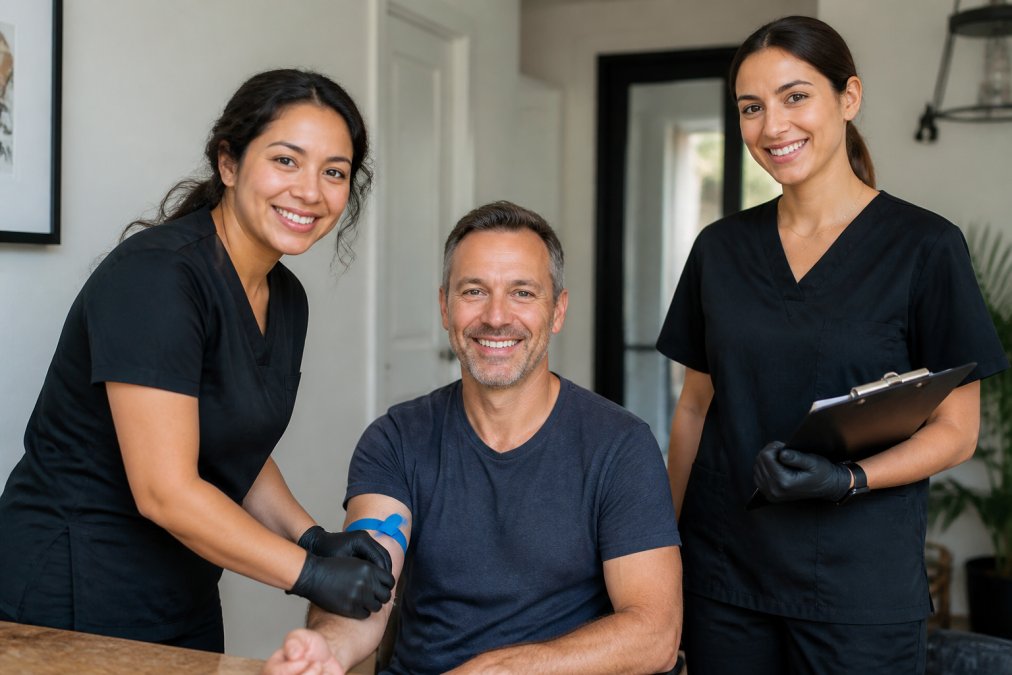
Best Concierge Phlebotomy Alternatives for 2026
Table of Contents
- Why Look Beyond Traditional Concierge Phlebotomy?
- Top Concierge Phlebotomy Alternatives Compared
- Understanding Mobile Phlebotomy Cost Structures
- When At-Home Health Testing Kits Make Sense
- Lab Specimen Transport Regulations and Sample Integrity
- How to Choose the Right Alternative for Your Needs
- Conclusion
- Frequently Asked Questions
Last Updated: September 7, 2026
Why Look Beyond Traditional Concierge Phlebotomy?
Concierge phlebotomy brings the lab to your living room, but the model is not one-size-fits-all. Some providers focus on high-touch, full-service care, while others operate as lean scheduling platforms or compliance-first partners for clinics. The wrong match means paying for services you do not need or missing the clinical support you do.
For anyone weighing the best concierge phlebotomy alternatives, the starting point is identifying what drives the need. A homebound patient requiring routine therapeutic draws has different priorities than a busy professional who simply wants to skip the waiting room.
The core tension is convenience versus clinical depth. App-based services excel at speed and transparency, while full-service providers deliver specimen handling and patient-centered care that fragile populations depend on. Below, we break down the leading options so you can see which model fits your situation, what each tier typically costs, and where hidden variables like sample integrity and lab partnerships live.
Top Concierge Phlebotomy Alternatives Compared
The mobile blood draw market splits into distinct service tiers. We have grouped the leading options into five profiles ranging from full-service concierge care to app-driven scheduling. Each offers in-home blood draw capability, but the experience, compliance posture, and pricing structure differ significantly.
| Service | Best For | Pricing Model | Key Differentiator |
|---|---|---|---|
| Phlebotomy Experts | Full-service care, specialized draws | Custom quote | Licensed technicians, lab of your choice |
| LabFly | Routine draws, app users | Per-visit fee | Fixed, transparent convenience fee |
| OnCall Mobile Labs | Clinical partnerships | Service contract | HIPAA-compliant workflows |
| MyOnsite Healthcare | Self-pay patients | Per-visit fee | Clear pricing guidance |
| Filos Health | High-touch experiences | Service based | Compassionate bedside manner |
Phlebotomy Experts: Full-Service Concierge Care
Our top pick is Phlebotomy Experts because the service model covers the full spectrum of in-home needs, not just routine venipuncture. Licensed technicians handle standard blood draws, DNA gender testing, and specialized treatments like IV vitamin therapy and autologous serum eye drops.
The defining advantage is specimen delivery to the laboratory or hospital of your choice. That control matters when your physician has an established relationship with a specific lab or when you need results routed to a particular hospital system. Technicians bring a professional bedside manner and particular experience with patients who dread needles.
LabFly: App-Based Scheduling for Routine Draws
LabFly operates as a mobile application that connects patients with concierge phlebotomy services for home or office blood collection. Available on Apple iTunes and Google Play, the app handles scheduling directly and uses a standardized convenience fee structure.
The appeal is simplicity. You book through the app, pay a transparent per-visit convenience fee, and a phlebotomist arrives at your chosen location. The trade-off is that service is limited to the geographic areas supported by the application’s network.
OnCall Mobile Labs: Compliance-First Partnerships
OnCall Mobile Labs positions itself as a professional partner for medical practices and laboratories rather than a consumer-first brand. The service staffs certified and experienced phlebotomists and emphasizes HIPAA-compliant data and specimen handling workflows.
For clinics outsourcing their mobile collection needs, this compliance-first approach carries real weight. The drawback is that pricing is not publicly listed, so prospective partners must initiate direct outreach for a service-based contract quote.
MyOnsite Healthcare: Transparent Self-Pay Options
MyOnsite Healthcare focuses on in-home or office blood collection with an emphasis on patient convenience and flexibility. The provider publishes educational resources comparing mobile versus traditional lab costs to help self-pay patients set expectations.
The per-visit collection fee is disclosed openly, though lab processing fees are typically billed separately by the testing facility. This model suits individuals who prioritize comfort and flexibility and want clarity on the collection portion of their bill.
Filos Health: High-Touch Patient Experience
Filos Health delivers concierge blood draw services with a strong emphasis on compassionate patient interaction. Certified phlebotomy staff travel to the patient’s preferred location, and the service model centers on bedside manner and comfort.
This option works well for patients who have had difficult prior experiences or who simply value a warmer interaction. Scheduling flexibility accommodates busy professionals and homebound patients alike. Service availability may be geographically restricted, so confirm coverage in your area.
Understanding Mobile Phlebotomy Cost Structures
Mobile phlebotomy cost breaks down into two separate line items. The first is the collection fee, which covers the phlebotomist’s travel, time, and the actual venipuncture. The second is the laboratory processing fee, which the testing facility charges for analyzing your specimens.
Industry guidance on mobile phlebotomy pricing highlights that lab fees are typically charged separately from the collection fee. That means a quoted per-visit price rarely represents your total out-of-pocket expense. When comparing services, ask directly whether the quote includes lab processing or only the home visit.
How to Get Insurance to Cover the Mobile Visit
This is the single biggest factor separating a $50 experience from a $300 one. Medicare and most private insurers cover medically necessary lab tests, but they do not always cover the convenience of having a phlebotomist come to you. The collection fee is the part that typically falls on the patient.
A common pattern is that the lab processing fee is billed to your insurance as a standard claim, while the mobile collection fee is billed separately as a non-covered service. Before booking, call your insurer and ask three questions:
- Is CPT code 36415 (routine venipuncture) covered when performed in a non-clinic setting? Some plans have site-of-service restrictions.
- Does my plan have a telehealth or in-home care benefit that extends to diagnostic lab work? Some newer plans include this under chronic care management.
- Will I receive a separate Explanation of Benefits (EOB) for the collection fee, or is it bundled with the lab claim? This determines whether you can submit a claim for reimbursement.
If your plan does not cover the collection fee, ask the provider for a superbill, an itemized receipt with the procedure codes and your diagnosis code. You can submit this to your insurer as an out-of-network claim. Reimbursement is not guaranteed, but many patients recover 30-70% of the collection fee this way. Health Savings Account (HSA) and Flexible Spending Account (FSA) funds also cover both fees, making the cost tax-free.
The Self-Pay Math: What You Actually Pay
A critical question to ask before booking: Does the provider charge a travel surcharge for your ZIP code? Some services build travel into the base fee, while others add a per-mile charge beyond a 15-mile radius. Also ask whether there is a minimum draw requirement, some providers charge a higher fee if only one tube is needed.
Watch Out
When At-Home Health Testing Kits Make Sense
At-home health testing kits serve a different purpose than concierge phlebotomy, and conflating the two leads to frustration. Mail-in kits work well for wellness screening and preventative health checks where you collect a sample yourself, such as a finger prick for cholesterol or a cheek swab for genetic predisposition.
The limitation appears when diagnostic testing demands a proper venipuncture. Tests requiring serum separation, larger blood volumes, or strict handling protocols do not translate well to self-collection. A failed or degraded sample means a redraw.
For routine wellness panels and biometric screening, a kit offers genuine convenience. For diagnostic testing where your physician needs reliable results, a trained phlebotomist performing an in-home blood draw remains the safer route. The decision comes down to whether the test tolerates self-collection error.
Lab Specimen Transport Regulations and Sample Integrity
Sample integrity begins the moment blood leaves the vein, and lab specimen transport regulations exist to protect that chain. Temperature sensitivity, handling time, and proper labeling all affect whether a sample yields accurate results. A specimen that sits too long or gets exposed to heat can produce misleading results, forcing a redraw.
CDC guidelines on specimen handling and transport outline the standards for maintaining sample stability during transit. The Clinical and Laboratory Standards Institute guidance on specimen collection further defines best practices for blood collection and handling. These standards matter because the phlebotomist’s responsibility extends beyond the draw itself to ensuring the specimen reaches the lab in a condition that supports accurate analysis.
What Happens Between the Vein and the Lab
Understanding the chain of custody is the difference between trusting a service and merely hoping it works. Here is the standard sequence a CLIA-compliant mobile phlebotomist follows:
- Immediate labeling at the bedside. The phlebotomist labels each tube with your name, date of birth, collection time, and a unique accession number, in your presence, never at the car or back at the office.
- Temperature-controlled transport. Most routine chemistry tests require storage at room temperature (20-25°C), while others, such as cold agglutinins or ammonia, require transport on ice or at body temperature. A professional service carries a validated cooler with temperature monitoring, not just an insulated lunch bag.
- Time-to-lab windows. The Clinical and Laboratory Standards Institute (CLSI) recommends that most specimens reach the lab within two hours of collection. Some tests, like complete blood counts (CBC), are stable for up to 24 hours, but potassium and glucose levels begin to shift within hours if the sample is not processed.
- Centrifugation and separation. For tests requiring serum or plasma, the sample must be spun in a centrifuge before transport if the lab is more than a short drive away. Ask whether the phlebotomist carries a portable centrifuge or whether the lab handles separation on arrival.
What You Should Ask Before the Draw
Because the home environment is less controlled than a clinic, the phlebotomist relies on you to help protect the sample. A professional service will send clear instructions ahead of time. If they do not, that is a red flag. The key requirements are:
- A clean, flat surface at least the size of a small tray table, cleared of clutter, where the phlebotomist can lay out sterile equipment.
- Adequate lighting. Natural daylight or a bright lamp helps the phlebotomist locate veins and reduces the risk of multiple sticks.
- A chair with armrests or a bed where the patient can sit or lie comfortably with the arm extended.
- A nearby sink or hand sanitizer for the phlebotomist to wash up before starting.
Chain of Custody for Legal and Employment Testing
Chain of custody is a related concern, particularly for legal or employment-related testing. Providers that emphasize HIPAA-compliant workflows and documented handling procedures give you confidence that your sample was not compromised. For forensic or workplace drug testing, the phlebotomist must follow a strict chain-of-custody form documenting every handoff. Any break in that chain invalidates the test.
When evaluating a mobile service, ask how specimens are transported, how quickly they reach the lab, and what procedures protect sample integrity during transit. A reputable provider will answer without hesitation and may even share their temperature-logging protocol. If the response is vague, consider that a warning sign, sample integrity is not negotiable.
How to Choose the Right Alternative for Your Needs
Selecting among concierge phlebotomy options comes down to matching the service model to your clinical needs and your tolerance for self-management. Start by asking what type of testing you need. Routine wellness panels with standard venipuncture work with nearly any provider. Specialized draws require a service with demonstrated experience in those areas.
Next, determine who coordinates the lab work. Some services deliver specimens only to partner laboratories, while full-service providers like Phlebotomy Experts deliver to the laboratory or hospital of your choice. If your physician has a preferred lab, that distinction decides the matter.
Consider the patient profile as well. For homebound patients, elderly individuals, or those with needle anxiety, the technician’s bedside manner and experience with difficult veins matter more than app polish. For busy professionals, scheduling flexibility and transparent mobile phlebotomy cost structures may take priority.
Finally, verify licensing and certifications before booking. A certified phlebotomist has completed accredited training and demonstrated proficiency in venipuncture. Confirming this credential protects you from an inexperienced technician who cannot locate a vein and attempts multiple sticks.
Conclusion
Concierge phlebotomy is not a single product but a spectrum of service models. App-based schedulers offer speed and transparent fees for routine draws. Compliance-first partners serve clinical practices with documented workflows. Full-service providers deliver the depth of care that specialized testing and vulnerable patients require.
The right choice balances your clinical needs, your insurance situation, and your comfort with coordinating lab logistics. For patients who want a licensed technician, delivery to a preferred laboratory, and experience with difficult draws, Phlebotomy Experts brings two decades of medical field experience directly to your door. Call now to schedule your in-home visit.
Frequently Asked Questions
How much does a mobile phlebotomist charge?
Mobile phlebotomy cost varies by provider and location. Some services advertise a flat per-visit convenience fee, while others price based on the specific tests ordered and travel distance. This fee typically covers the technician’s time and travel, but lab processing fees from facilities like Quest or LabCorp are usually billed separately. It is best to request a detailed quote from the service and confirm what is included before scheduling your appointment.
Is concierge phlebotomy covered by health insurance?
Coverage for concierge phlebotomy is inconsistent. The convenience fee for the mobile visit is often not covered by insurance and is paid out-of-pocket, though you may be able to use FSA or HSA funds. The actual lab testing, if ordered by your physician, is typically billed to your insurance as a standard claim. Contact both your insurance provider and the phlebotomy service to understand their specific billing and reimbursement policies before your visit.
What are the primary differences between concierge phlebotomy and traditional lab visits?
The core difference is the setting and process. A traditional lab visit requires you to travel to a facility, wait in a queue, and have your blood drawn during their business hours. Concierge phlebotomy brings a certified professional to your chosen location, such as your home or office, at a scheduled time that fits your day. This eliminates travel time and waiting room exposure, offering a more private and often less stressful experience, though it typically involves an additional convenience fee.
Are there non-invasive alternatives to traditional blood draws?
Yes, some at-home health testing kits use a finger-prick method to collect small blood samples, which can be less intimidating than a full venipuncture. These kits are sent to a lab for analysis. However, they are not suitable for all tests, as some require a larger volume of blood or specific handling. For comprehensive panels or if you have difficult veins, a professional in-home concierge phlebotomy service remains the most reliable option.
