Looking for at-home blood tests for toddlers? Learn which tests suit home collection, how to calm a fussy child, and when a clinic is the better choice.

IV Vitamin Therapy for Athletic Recovery: What to Know
Last Updated: November 4, 2026
Quick Summary
IV vitamin therapy delivers vitamins, minerals and fluids directly into the bloodstream through a vein, bypassing the digestive system. It can help athletes with a confirmed deficiency or an absorption problem, but healthy athletes who eat well often see little measurable benefit.
- IV delivery bypasses the gut and liver, so the full dose reaches circulation.
- Oral supplements are inexpensive and usually sufficient for generally healthy athletes.
- A normal serum vitamin level does not rule out a functional deficiency.
- Soreness is better managed through protein, sleep, progressive training load and rest.
- Ask any provider for the ingredient list with amounts and the lab result behind the session.
Table of Contents
- How IV Vitamin Therapy Works for Athletes
- Key Nutrients and Vitamins in Athletic IV Drips
- IV Therapy vs. Oral Supplements: What the Evidence Shows
- Hydration, Electrolytes, and Muscle Soreness: What IV Therapy Can and Cannot Do
- IV Therapy Recovery Time: When Athletes Feel the Effects
- Myers Cocktail IV for Athletes: Contents, Uses, and Limits
- Screening, Safety, and Choosing a Concierge Medical Provider
- Booking Your Recovery Consultation
- Frequently Asked Questions
How IV Vitamin Therapy Works for Athletes
Athletes who train hard often ask whether an IV vitamin drip can speed up recovery, and the honest answer is that it can deliver fluids and nutrients directly into the bloodstream without going through the digestive system. IV vitamin therapy is the practice of administering vitamins, minerals, and fluids through a small catheter placed in a vein, typically in the arm. That route bypasses the gut, which is the main reason clinicians use it for patients who cannot absorb nutrients well from food or pills. (Source: the scientific understanding of nutrient bioavailability)
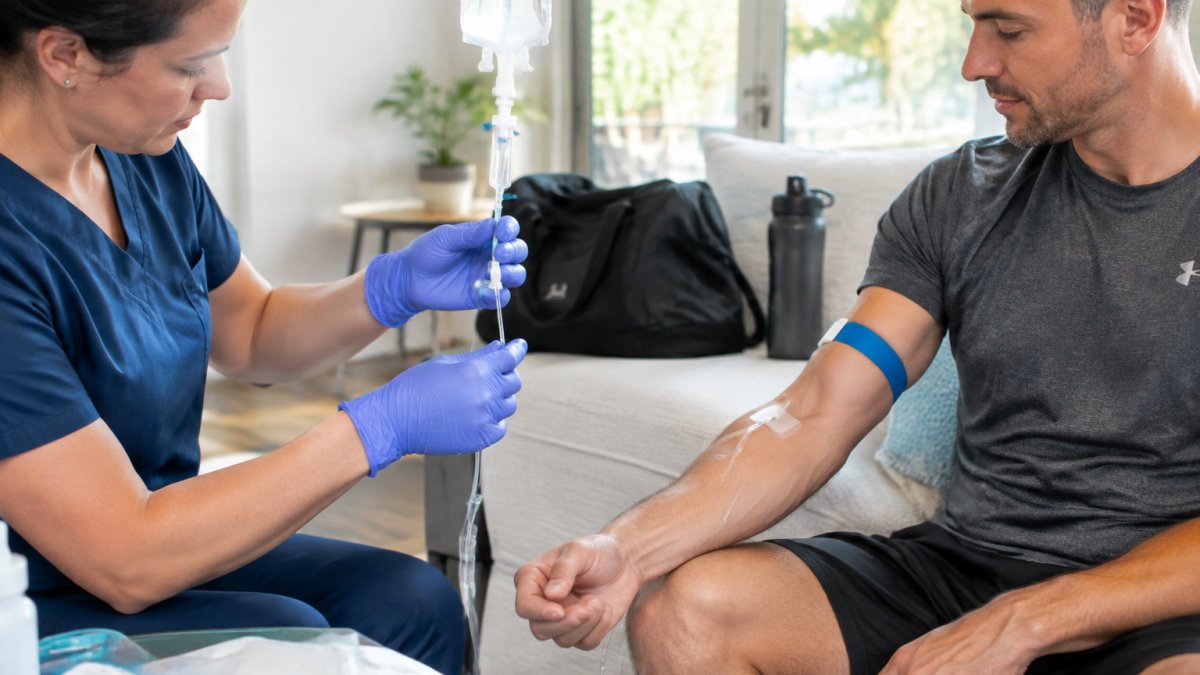
A typical session is simple from the athlete’s side. A licensed clinician places the line, and the athlete sits comfortably while the solution drips. Phlebotomy Experts offers in-home and office visits with licensed technicians, which can suit athletes who cannot spare a clinic visit between training blocks.
The mechanism matters less than the limits. Once nutrients enter the bloodstream, the body uses what it needs and excretes the rest, so the benefit depends on whether a deficiency existed in the first place. Athletes who eat well and sleep enough may see little measurable change.
Key Nutrients and Vitamins in Athletic IV Drips
Each ingredient has a specific job. B vitamins support energy metabolism, magnesium is involved in muscle contraction and relaxation, and vitamin C contributes to collagen formation and antioxidant defense. Glutathione is also sometimes added, though evidence for its benefit in healthy athletes remains limited. A common mistake is assuming more is better: megadoses of water-soluble vitamins are largely cleared in urine, and some minerals can cause problems at high levels.
Ask any provider for the ingredient list with amounts, compare it against your lab results, and confirm who prepared the bag and how it was compounded.
IV Therapy vs. Oral Supplements: What the Evidence Shows
The core argument for IV delivery is bioavailability, meaning the share of a nutrient that reaches the circulation and becomes usable.
When you swallow a supplement, the nutrient must survive stomach acid, pass through the intestinal wall, and then survive first-pass metabolism in the liver before it reaches systemic circulation. Water-soluble vitamins absorbed above a certain threshold are largely excreted in urine, and absorption efficiency falls as the oral dose rises. That is why a high-dose oral vitamin C tablet does not deliver proportionally more vitamin C to your blood than a moderate dose does. Intravenous delivery bypasses the gut and the liver’s first pass entirely, so the full dose reaches circulation. That difference is real and well documented in general nutrition science.
Whether that difference matters for performance is a separate question, and this is where most marketing content stops short. For most healthy athletes, a balanced diet and a daily multivitamin cover basic needs, and the research supporting IV drips for athletic performance is thin.
There is also a practical cost trade-off. Oral supplements are inexpensive per dose and can be taken daily; an IV session requires a clinician, a sterile setup, and chair time, and it delivers a single bolus rather than a sustained intake. For an athlete with a confirmed deficiency, a digestive condition that limits absorption, or a need for rapid fluid replacement, the IV route can be the more efficient choice. For a generally healthy athlete, oral supplements are usually the cheaper and sufficient option.
Watch out: a normal serum vitamin level does not rule out a functional deficiency, and an abnormal level does not automatically mean an IV drip is the right fix. Lab interpretation belongs to a clinician who knows your training load and history, not to a menu at a drip bar.
Ask for the dose, the rationale, and the lab result that justifies the session before you book.
The table below compares the two routes on the points the article raises. (Source: the role of B vitamins in energy metabolism)
| Factor | IV therapy | Oral supplements |
|---|---|---|
| Route to circulation | Bypasses gut and liver first pass | Must pass stomach, intestine and liver |
| Dose reaching blood | Full dose delivered | Falls as oral dose rises |
| Typical use | Confirmed deficiency or absorption problem | Daily intake for most healthy athletes |
| Cost per dose | Clinician, sterile setup and chair time | Inexpensive per dose |
| Intake pattern | Single bolus per session | Sustained daily intake |
Hydration, Electrolytes, and Muscle Soreness: What IV Therapy Can and Cannot Do
The honest framing is that IV therapy can address fluid and electrolyte deficits, while soreness is better managed through adequate protein, sleep, progressive training load, and rest.
IV Therapy Recovery Time: When Athletes Feel the Effects
Expectations should stay modest. Some athletes report feeling more energetic after a session, but the cause may be rehydration or simply the rest that comes with sitting still for an hour. Keep a simple log of how you feel and perform across sessions, so you can judge whether the change is real rather than relying on a single impression.
If recovery feels slow regardless of IV therapy, the cause may lie in training load or sleep, and a medical evaluation is the right next step.
Myers Cocktail IV for Athletes: Contents, Uses, and Limits
Exact contents vary between clinics, so compare the ingredient list and doses before booking. A Myers cocktail is a reasonable option for someone with a documented need, and a poor purchase for someone expecting a performance boost.
Screening, Safety, and Choosing a Concierge Medical Provider
IV therapy is a medical procedure and carries risks, which can include infection at the insertion site, bruising, and allergic reactions. Anyone considering it should discuss their medical history with a qualified professional.
Before any session, a qualified provider should review your history, current medications, and recent lab results. Ask whether the clinician is licensed, who administers the IV, what the formula contains, and how emergencies are handled.
Phlebotomy Experts provides licensed mobile phlebotomy and concierge lab services for clients across Southern California and multiple states. Whatever provider you choose, confirm credentials and ask for a written explanation of the treatment before the needle goes in.
Booking Your Recovery Consultation
If you are considering IV vitamin therapy, start with a consultation rather than a drip. A qualified clinician can review whether a deficiency or absorption problem exists and help you decide whether IV therapy is appropriate for your situation.
Phlebotomy Experts offers in-home and office visits with licensed technicians who handle blood draws and concierge IV services. Pricing depends on the service, quantity, and location, so contact us directly for a current quote. Call now to schedule your recovery consultation.
Frequently Asked Questions
Can IV treatment help with chronic fatigue?
IV therapy delivers fluids and nutrients directly into the bloodstream, which can ease dehydration-related fatigue. Evidence that it treats chronic fatigue syndrome or persistent fatigue from other causes is limited. Fatigue that lasts more than a few weeks should be evaluated by a physician, who can check blood levels and rule out underlying conditions before any infusion is considered.
Are mobile IV services worth it for athletes?
Whether a mobile service is worth the cost depends on how often you need it and what you pay for comparable clinic visits. Phlebotomy Experts provides current pricing and quotes on its website, since fees depend on the service, quantity, and location.
How long does IV therapy take to help recovery?
Effects on muscle soreness or perceived recovery vary by person, training load, and the specific formula, so athletes should set realistic expectations and track how they feel over several training days.
Is IV vitamin therapy considered doping?
Athletic governing bodies set their own rules, and IV infusions can be restricted or require disclosure or a therapeutic use exemption depending on the substance and the competition level. Athletes competing under drug-testing programs should check the rules of their specific organization before receiving any IV treatment and keep records of what was administered.

Related Posts