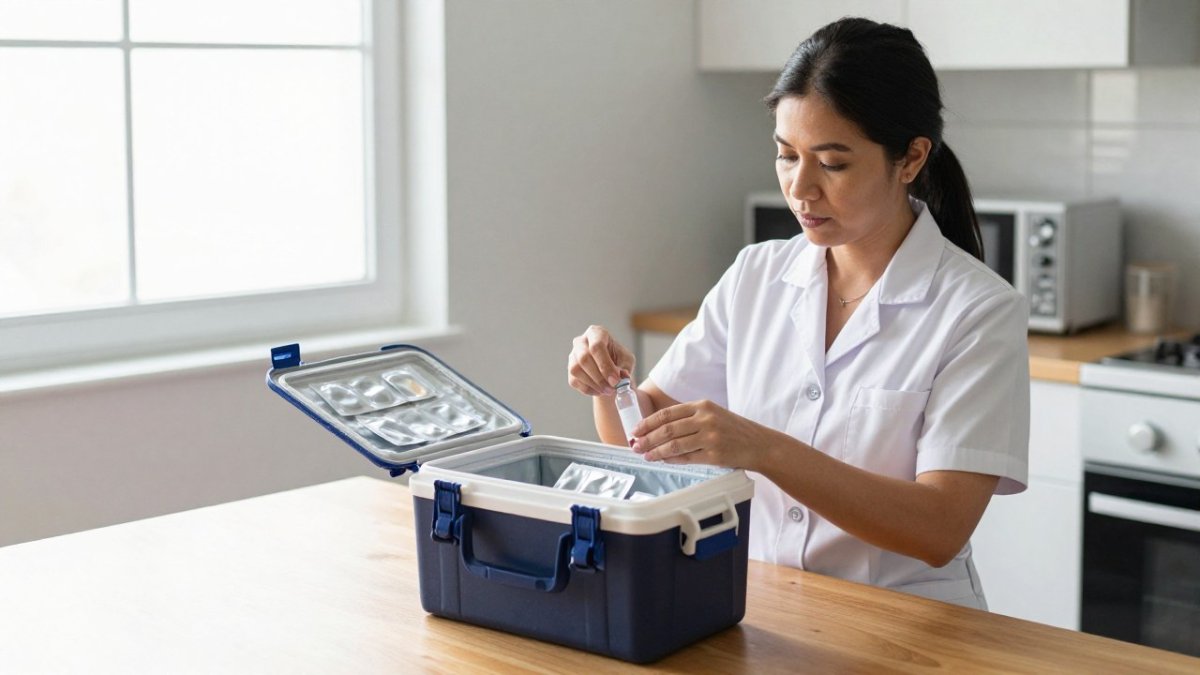
Learn coping strategies for needle phobia in children: build a coping plan with your child, practice at home, and prepare for the appointment.

Pediatric Blood Test Preparation by Age Explained
Quick Summary
Good blood test preparation for a child depends on age. Infants and toddlers do best with routine, comfort and a calm voice, while older children benefit from simple explanations and a sense of control. Always confirm fasting and medication rules for the specific test with the care team.
- Tell young children about the test in one or two sentences, using the same words each time.
- Confirm fasting, medication and hydration rules with the ordering provider or lab for the specific test.
- Never promise a blood test will feel like nothing; say it may pinch and that you will stay close.
- Adolescents do best with honest details and choices, such as which arm to use.
- Share any sensory, developmental or medical needs with the lab when you book the appointment.
Table of Contents
- How Age Shapes Blood Test Preparation for Children
- How to Prepare Your Child for a Lab Test at Every Age
- Fasting, Medication, and Hydration Instructions by Test Type
- When Your Child Refuses a Blood Test: What to Do
- Doing a Blood Test for a 2-Year-Old: Practical Steps
- Pain Relief, Sensory Needs, and Questions for Your Care Team
- Booking Your Child’s Mobile Blood Draw and Next Steps
- Frequently Asked Questions
How Age Shapes Blood Test Preparation for Children
Last Updated: November 18, 2026
Preparing a child for a blood test works best when the approach matches the child’s age, since good blood test preparation depends on the child’s developmental stage. For how a pediatric mobile draw is handled as teens take a larger role in the decision, see the adolescent guidance. Most parents find that the right words, a predictable routine and a calm setting do more to ease fear than any single trick. (Source: evidence-based guidelines from the American Academy of Pediatrics)
The main idea is simple. Younger children respond to comfort and routine. Older children respond to honest explanations and a sense of control. When you match your preparation to your child’s stage, the visit goes more smoothly for everyone.
Keep one rule in mind from the start. Never promise that a blood test will feel like nothing at all. Say what will happen, say it is quick, and say that you will be right there.
How to Prepare Your Child for a Lab Test at Every Age
Most practitioners find that preparation works best as a short timeline rather than a single talk. A common pattern is to introduce the idea two or three days ahead, confirm test-specific instructions the day before, and focus on comfort on appointment day. The steps below combine that timeline with age-specific guidance, so you can match the plan to your child’s developmental stage.
A Simple Preparation Timeline
- Two to three days before: Tell your child a blood test is coming in one or two sentences. Use the same words each time. Confirm with the ordering provider or lab whether fasting, medication timing, or hydration rules apply to the specific test.
- The day before: Lay out comfortable clothing with short or loose sleeves. Plan a comfort item, a distraction, and a small reward for afterward. If your child has sensory, developmental, or medical needs, call the lab and share them now.
- Appointment day: Keep meals, naps, and routines as close to normal as the test allows. Bring water unless the care team says otherwise. Arrive a few minutes early so the waiting room does not add stress.
- During the draw: Use the age-specific positioning and distraction steps below. Stay calm and keep your voice steady.
Infants and Toddlers: Comfort and Routine
Babies and toddlers cannot follow a long explanation, but they do respond to routine, feeding, holding, and a calm voice. Learn more about a gentle draw for infants and how it is performed.
- Keep feeding and nap times close to normal on the day of the test, unless fasting is required for the specific test.
- Bring a favorite blanket, pacifier, or small toy.
- Ask whether a warm compress or a topical numbing product is appropriate before the visit.
- Hold your child on your lap or against your chest during the draw, facing slightly away from the needle, and let the phlebotomist guide the arm.
- Use rhythmic motion, such as swaying or patting, and a low, steady voice.
Watch out: Do not promise that the test will not hurt. Say it may pinch for a moment and that you will stay close.
Preschoolers and School-Age Children: Simple Explanations
Children from about three to twelve can follow a short, concrete story. Use a picture book about doctor visits or let them practice on a stuffed animal.
- Explain the test in one or two sentences, such as “The nurse will take a little blood to check how your body is doing.”
- Let them pick a comfort item or a sticker to bring.
- Tell them it may pinch or sting for a moment, then it is over.
- Practice at home: count to five together, then say “all done,” so the child rehearses the sequence.
- Offer a simple choice, such as which arm or which comfort item, to restore a sense of control.
Adolescents: Honest Information and Choice
Teens often want facts and a say in the process. Give them the real details and let them ask questions.
- Explain why the test is needed and what the results will show.
- Ask what worries them most and answer that question directly.
- Let them choose the arm, the position, or whether you stay in the room, when possible.
- Respect privacy and avoid talking about the test in front of others unless they agree.
Test-Specific Instructions to Confirm
Preparation depends on the ordered test, so confirm these points with the care team before the visit:
- Does this test require fasting, and for how many hours?
- Should my child keep taking regular medication that morning?
- Can my child drink water, and how much?
- Are there any foods or drinks to avoid the day before?
Watch out: Never apply blanket fasting or medication rules from another child’s test. Instructions are test-specific, and the ordering provider or lab should confirm them.
Fasting, Medication, and Hydration Instructions by Test Type
Instructions change with the type of blood test, so always confirm them with your child’s care team before the visit. For a step-by-step home preparation guide for fasting blood work, see this article. Some tests need fasting, while others do not. Water is usually allowed unless the care team says otherwise.
Ask these questions when you book:
- Does this test require fasting, and for how many hours?
- Should my child keep taking regular medication that morning?
- Can my child drink water, and how much?
Instructions vary by test, so check each one with the care team before the visit.
| Question | What to confirm | Why it matters |
|---|---|---|
| Fasting required? | Whether the test needs fasting | Fasting rules differ by test |
| Fasting duration | Number of hours to fast | Confirm the exact window |
| Regular medication | Whether to give it that morning | Timing can affect results |
| Drinking water | Whether water is allowed, and how much | Some tests limit fluids |
When Your Child Refuses a Blood Test: What to Do
Refusal is common, and it does not mean you failed. Stay calm, lower the pressure and give your child a short break to regain control.
Many families find these steps helpful:
- Name the feeling: “You feel scared, and that is okay”
- Offer a choice, such as which arm or which comfort item
- Try deep breathing together, with a slow count to five
- Ask the care team whether a different time of day might help
Doing a Blood Test for a 2-Year-Old: Practical Steps
A two-year-old usually needs to be held during the draw. For guidance on holding a baby safely and positioning during the draw, see this article. Sit the child on your lap, face them slightly away from the needle and keep one arm gently around their body.

Bring a distraction, such as a bubble wand, a book or a song the child knows well. Sing or talk the whole time so your child focuses on your voice.
Pain Relief, Sensory Needs, and Questions for Your Care Team
Most practitioners find that a combination of positioning, distraction, and topical numbing works better than any single method. The right mix depends on your child’s age, health history, and the test ordered, so confirm options with the care team before the visit.
Pain-Reduction Options to Ask About
- Topical numbing products: Some clinicians approve an over-the-counter lidocaine cream applied 30 to 60 minutes before the draw. Ask the care team whether it is appropriate for your child’s age and health history.
- Vibration or cold devices: Small vibrating devices placed near the site can compete with the needle sensation. Ask the phlebotomist whether one is available.
- Comfort holds: For younger children, a lap hold or chest-to-chest position often reduces distress. Let the phlebotomist guide the arm position.
- Distraction: Bubbles, a favorite song, a video, or a counting game can shift attention during the draw.
- Breathing and counting: Slow breathing with a count to five gives older children a concrete task.
Watch out: Do not apply numbing cream or any product without confirming with the care team, especially for infants and children with skin conditions or medication sensitivities.
Preparation for Children with Sensory, Developmental, or Medical Needs
Children with autism, ADHD, sensory processing differences, needle phobia, or a history of difficult draws often benefit from a personalized plan. Share these details when you book so the visit can be adjusted.
- Ask for a quieter room or a less busy time of day.
- Request that the phlebotomist explain each step before doing it.
- Bring noise-reducing headphones, sunglasses, or a weighted lap pad if these help your child.
- Ask whether a parent can stay in physical contact throughout the draw.
- For needle phobia, ask about a step-by-step plan, such as looking away, counting, or using a numbing product.
Questions to Ask Your Care Team
- What pain relief options are appropriate for my child’s age and health history?
- How long will the draw take, and what happens if my child moves?
- What signs should I watch for afterward, and when should I call the clinician?
- Can we schedule the draw at a time when my child is rested and fed?
Watch out: If your child has a bleeding disorder, is on a blood thinner, or has had a reaction to a numbing product, tell the care team before any preparation step is used.
Booking Your Child’s Mobile Blood Draw and Next Steps
A mobile draw at home can reduce stress for many children because they stay in familiar surroundings. Phlebotomy Experts offers in-home mobile phlebotomy and specimen delivery to the laboratory your care provider chooses.
To get started, call Phlebotomy Experts to schedule a visit and ask any preparation questions you have.
Frequently Asked Questions
What blood tests are recommended for children by age?
Recommended blood tests depend on your child’s age, health history, and symptoms, and are set by the pediatrician rather than a fixed schedule. Newborns usually have screening blood spots collected shortly after birth, and older children may have a complete blood count, lead level, or cholesterol panel when a clinician has a reason to order one. Ask your child’s doctor which tests are routine for your child’s age and which are additional screening. Keep a written list of tests and dates so you can compare results over time.
Do kids have to fast before bloodwork?
Many routine pediatric blood tests do not require fasting, but some tests, such as certain glucose or lipid panels, may. Fasting usually means no food or drink except water for a set number of hours, often around eight to twelve hours, though the ordering provider sets the exact requirement. Ask the provider or lab before the appointment whether your child should fast, whether medications should be taken, and whether water is allowed. Infants and young toddlers often cannot fast safely, so confirm what is appropriate for their age.
What should I do if my child refuses to get blood drawn?
Stay calm, avoid bribing or threatening, and explain the procedure in short, honest sentences that match your child’s age. Let your child choose small things, such as which arm or where to sit, and bring a comfort item or distraction like a book or video. Ask the phlebotomist about numbing options and whether a parent can hold or comfort the child during the draw. If refusal is persistent, talk with your pediatrician about the test, since they can explain the reason and suggest other approaches.
How can I help my child stay calm during a blood draw?
Practice slow breathing together, such as blowing bubbles or pretending to blow out birthday candles, and count together to give the child a rhythm to follow. Encourage your child to look at a favorite book, toy, or video instead of the needle, and hold their hand or sit close. Tell the phlebotomist your child’s needs in advance, including any sensory or developmental concerns. Praise your child for their effort afterward, whatever happened during the draw.

Related Posts