Looking for at-home blood tests for toddlers? Learn which tests suit home collection, how to calm a fussy child, and when a clinic is the better choice.
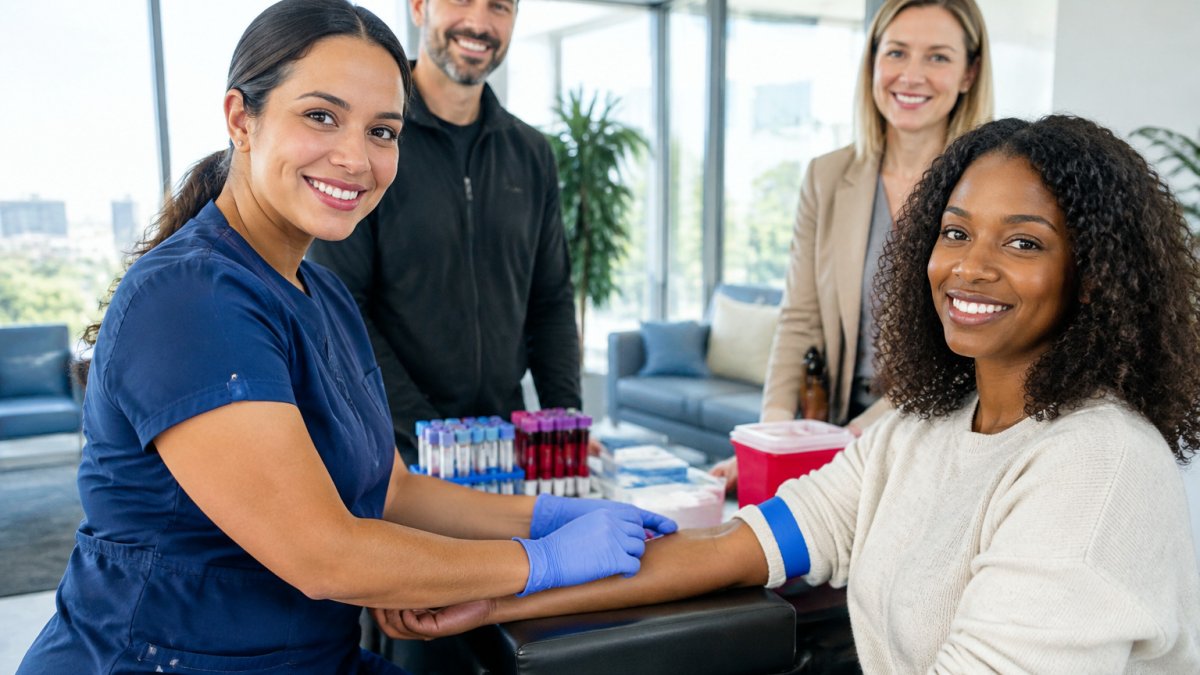
How to Set Up Mobile Phlebotomy for Workplace Wellness
Quick Summary
Mobile phlebotomy brings a licensed blood draw technician to your workplace so employees can get blood tests during the work day instead of driving to a lab. Setting it up takes clear goals, a private draw area, scheduled time slots and a written consent and privacy plan.
- Plan roughly 10 to 15 minutes per employee and leave buffer time between appointments.
- Send sign-up links and schedules at least two weeks before the event.
- Send fasting reminders at least 48 hours ahead to avoid wasted slots.
- Use separate consent forms, collected by the clinical vendor rather than HR.
- Keep clinical data firewalled from employment records to protect employee privacy.
Table of Contents
- What Mobile Phlebotomy Means for a Workplace Wellness Program
- Benefits of On-Site Blood Draws for Employers
- Planning Your First Mobile Phlebotomy Event
- Preparing Employees for Workplace Blood Testing
- Protecting Privacy, Consent and Employee Health Data
- Costs, Budgeting and Measuring Return on Investment
- Booking Your Next Corporate Wellness Blood Testing Event
- Frequently Asked Questions
What Mobile Phlebotomy Means for a Workplace Wellness Program
Last Updated: November 6, 2026
Mobile phlebotomy brings a licensed blood draw technician to your workplace, so employees can get blood tests during the work day instead of driving to a lab.
Phlebotomy is the medical term for drawing blood from a vein (What You Need to Know About Blood Testing: MedlinePlus Medical Test).
A workplace blood draw event typically works like this:
- The employer books a date, location and list of tests
- Employees sign up for time slots
- A licensed phlebotomist sets up a private draw area
- Samples go to a partner laboratory for processing
Many wellness programs use this model for annual screenings, cholesterol checks and general health assessments.
Benefits of On-Site Blood Draws for Employers
On-site blood draws remove the biggest barrier to participation: the trip to a lab. Employers comparing this approach can review our workplace health screening service to see how it is delivered on site.

Here are the main advantages employers tend to notice:
- Higher participation: Fewer steps means more people finish the process.
- Less time away from work: Employees avoid long waits and drive time.
- Fewer missed follow-ups: Scheduled draws are easier to keep than open-ended lab visits.
- Better group planning: One visit can cover a whole team, shift or department.
A common mistake is treating the event as a one-time perk.
Mobile service also suits businesses with remote, field-based or distributed staff. Instead of coordinating dozens of separate lab appointments, you schedule one visit at a shared site or a few regional stops.
Planning Your First Mobile Phlebotomy Event
A good first event starts with clear goals. For the full step-by-step planning details, see our complete guide to corporate wellness mobile phlebotomy. Decide who the event serves, what tests you want to offer and how you will measure success before you pick a date.
Ask these questions early:
- How many employees are eligible, and how many do you expect to participate?
- Do you want the screening to be voluntary, incentivized or part of a health plan?
- What is your budget, and who will approve it?
- Which location works best: a conference room, break room or a separate private space?
Choosing which tests and screenings to offer
Test selection shapes everything else, including the time each draw takes, the lab partner you use and the privacy steps you need.
Common options in workplace screening include lipid panels, glucose checks, A1C testing and general metabolic panels. Confirm with your provider which tests they can collect on-site.
Work with your phlebotomy provider to confirm which tests they can collect on-site and which lab will process them.
Scheduling and event logistics
Good scheduling keeps the line moving and keeps people comfortable. Read our practical how-to for scheduling mobile phlebotomy to set up event timing step by step. To compare mobile phlebotomy against traditional lab visits for your workforce’s schedule, see which option fits best.
Logistics checklist:
- Reserve a private, well-lit room with a table and chairs
- Confirm power, clean water access and a sharps disposal plan
- Send a schedule and sign-up link at least two weeks ahead
- Post clear fasting and hydration instructions
Watch out: Sending fasting instructions only on the morning of the event leads to wasted slots. Employees who have already eaten must reschedule, so send reminders at least 48 hours before.
The article lays out the key planning checklist items for a mobile phlebotomy event.
| Planning item | What to do | Timing |
|---|---|---|
| Appointment slots | Plan 10 to 15 minutes per employee | Before the event |
| Room setup | Reserve a private, well-lit room | Before the event |
| Sign-up schedule | Send schedule and sign-up link | At least two weeks ahead |
| Fasting reminder | Send fasting reminders | At least 48 hours before |
| Recovery area | Set up a quiet space with snacks and water | On the event day |
Preparing Employees for Workplace Blood Testing
Most employees feel more comfortable when they know what to expect. Clear, friendly preparation messages do a lot to reduce anxiety and no-shows.
Send a short guide that covers:
- What tests are being done and why they matter for wellness
- Whether they need to fast, and for how long
- What to eat and drink beforehand
- What to bring, such as a photo ID or sign-up confirmation
- How long the appointment takes
Some employees have needle anxiety or difficult veins. Tell them they can ask for a seated position, a lying-down option or a break at any time.
Keep messages plain and short. Long technical emails get skipped. A simple checklist and a single point of contact work better.
Protecting Privacy, Consent and Employee Health Data
Blood test results are among the most sensitive categories of employee information, and a workplace screening program creates a paper trail that touches multiple parties: the phlebotomy vendor, the laboratory, the ordering physician, and the employer. Getting privacy wrong exposes the company to legal risk and destroys the trust that drives participation. Getting it right requires deliberate design before the first needle is uncapped.
The regulatory framework employers need to know
Several federal laws may apply to workplace blood collection, depending on how the program is structured.
- ADA and GINA: The Americans with Disabilities Act and the Genetic Information Nondiscrimination Act both limit how employers can collect and use medical and genetic information. Review how these federal rules apply to your program with qualified counsel, and check the official sources at the U.S. Equal Employment Opportunity Commission (eeoc.gov) (Background Information for EEOC Final Rule on Title II of the Genetic Information…).
- HIPAA: If the screening is tied to a group health plan, the HIPAA Privacy and Security Rules may apply to how health information flows between the plan, the vendor, and the employer. Check the official HHS guidance on HIPAA for your situation.
- EEOC wellness rules: The U.S. Equal Employment Opportunity Commission publishes guidance on wellness programs connected to health plans. Review its current guidance at eeoc.gov with counsel before launch (EEOC’s Final Rule on Employer Wellness Programs and the Genetic Information…).
- State law: State rules on consent, reporting, and data retention can differ from federal law. Check the requirements for each state where you have employees.
Consent that actually holds up
A signed consent form is the floor, not the ceiling. Effective consent covers four things in plain language: what is being tested, who will see the results, how long data is retained, and how the employee can withdraw. The form should be separate from any general wellness waiver and should be collected by the clinical vendor, not by the employer’s HR team.
Separating clinical data from employment records
The single most important structural safeguard is a data firewall between the clinical record and the HR record. In practice, this means:
What to ask your vendor in writing
Before signing, request written answers to these questions: Who is the covered entity or business associate? Where are consent forms stored, and for how long? How are specimens labeled and tracked from draw to lab? What is the process if an employee wants results sent to a personal physician? How are data breaches handled and reported? A vendor that cannot answer these in writing is a liability, not a convenience.
Costs, Budgeting and Measuring Return on Investment
Pricing depends on quantity, dates, and delivery, so request a quote for your specific program. This section breaks down the cost drivers, shows how to build a defensible budget, and explains how to measure value without overstating what a screening program can deliver.
What drives the price
Mobile phlebotomy pricing typically has four components:
Ask for a quote that itemizes the costs involved so you can compare providers fairly.
Building the budget
A practical budget has three layers: fixed, variable, and internal.
- Fixed costs: Event minimums, travel, and setup fees that apply whether five employees or fifty participate.
- Variable costs: Per-draw fees and lab panels, which scale with participation.
- Internal costs: HR and facilities staff time for planning, check-in, and follow-up, plus any employee incentives.
Model two scenarios: a conservative participation rate and an optimistic one, and budget on the conservative number to protect against overruns. If a vendor offers a per-employee cap or a not-to-exceed clause, consider negotiating it into the contract.
Measuring return on investment honestly
ROI for a screening program is real but indirect, and employers who promise hard dollar savings in year one usually regret it. A more defensible model tracks three tiers of value:
- Participation and reach: The share of eligible employees who complete a screening, and whether that share rises year over year.
- Follow-up completion: The share of employees with an abnormal result who see a physician or take a recommended next step. This is where clinical value is created.
- Program-level outcomes: Over multiple cycles, look at changes in absenteeism, chronic condition management enrollment, and employee satisfaction scores. These are lagging indicators and should be framed as trends, not guarantees.
Set baselines before the first event so you have something to compare against. A program that cannot show a participation baseline cannot show improvement.
Watch out: Promising leadership a specific dollar return before the first event sets the program up to be cut when the numbers do not materialize on schedule.
A simple vendor cost comparison
When comparing quotes, normalize them to a cost-per-completed-draw figure that includes service, lab, travel, and administration. Then compare that figure against the vendor’s turnaround time, credentialing, and follow-up support. The lowest per-draw price is rarely the lowest total cost if results arrive late or employees cannot get questions answered.
Booking Your Next Corporate Wellness Blood Testing Event
Mobile phlebotomy works best when it is planned, communicated clearly and followed up on. Start by listing your goals, eligible employees and preferred dates, then request quotes from providers who can show licensed staff, clear consent processes and reliable lab partners.
Phlebotomy Experts offers in-home and on-site mobile phlebotomy, with licensed technicians who focus on a gentle, professional bedside manner.
Frequently Asked Questions
How does mobile phlebotomy work for workplace wellness programs?
A mobile phlebotomy provider sends licensed phlebotomists to your worksite with portable supplies to collect blood samples in a private room or designated area. Employees book time slots, complete a short check-in, and have samples collected without traveling to a clinic. The provider then transports the specimens to the laboratory the ordering physician or your program specifies. Before scheduling, confirm the lab network, the tests offered, how results are returned to employees, and whether a physician order is required for each panel.
What should employers consider when arranging on-site blood draws?
Start with headcount and the number of participants you expect, since this determines how many phlebotomists and time slots you need. Choose a room with a door, a chair for each draw, and a clean sink area. Confirm the provider’s licensing, their infection control practices, and their process for sample labeling and transport. Ask how they handle difficult veins, what they do if an employee faints, and how results are delivered. Request a written service agreement that covers these points before signing.
How do employers protect employee privacy during wellness screenings?
Participation should be voluntary, and employers should not receive individual test results. Ask the provider to send results directly to each employee or to the ordering physician, and to share only aggregate, de-identified data with the company. Consent forms should explain what is tested, who sees the results, and how samples are stored and disposed of. Keep attendance lists separate from any health information. Review your plan with legal counsel to confirm it meets applicable federal and state rules, including those governing employer wellness programs and the Americans with Disabilities Act.
Can employees choose whether to participate in workplace health screenings?
Employees should be able to decline blood draws and screenings without penalty. Federal rules govern whether wellness programs that collect health information must be voluntary and how incentives may be offered. Check the official U.S. guidance on these rules. Communicate clearly that participation is optional, explain what each screening involves, and offer alternatives where feasible. Check current requirements with your benefits advisor or legal counsel before launching the program.

Related Posts