Breaking down the cost of in home blood draws: collection fees, lab charges, insurance, and what you actually pay out-of-pocket.

Mobile Lab Services for Seniors: 2026 Guide
Table of Contents
- How Mobile Lab Services Bring Blood Draws to Seniors
- Benefits of Concierge Phlebotomy for Seniors
- Medicare Coverage for Mobile Lab Services
- How to Prepare for an At-Home Blood Draw
- Safety, Sample Integrity, and Emergency Protocols
- Choosing a Mobile Lab Service: What Caregivers Should Compare
- Frequently Asked Questions
Last Updated: September 20, 2026
How Mobile Lab Services Bring Blood Draws to Seniors
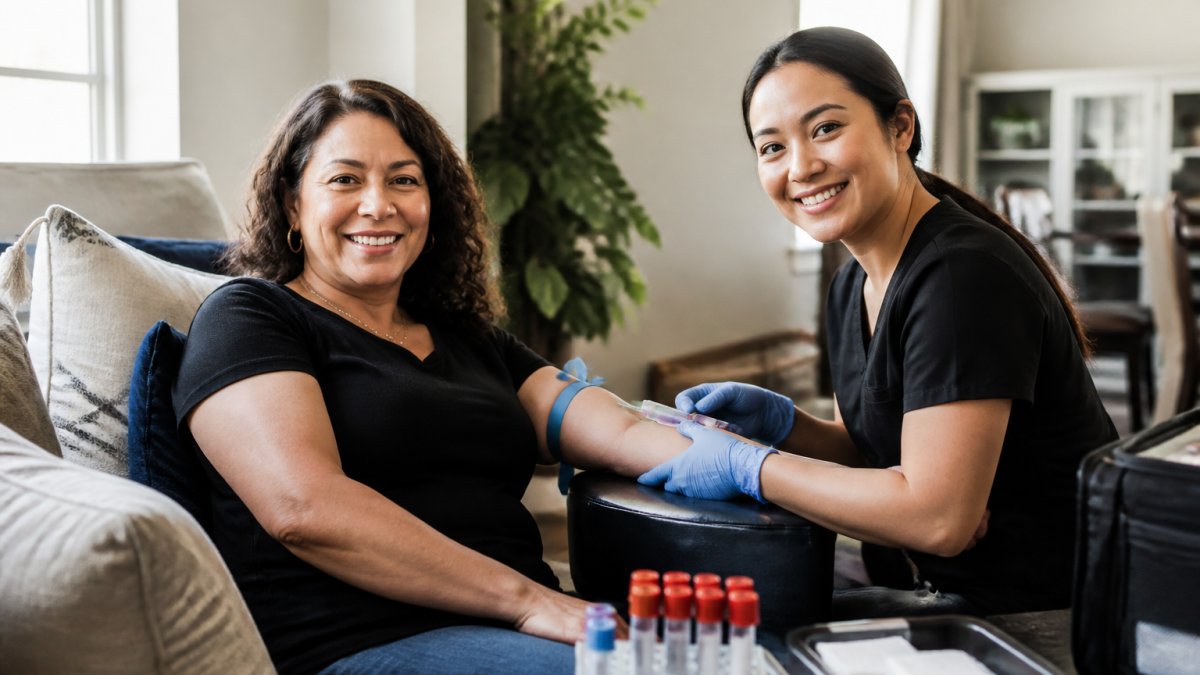
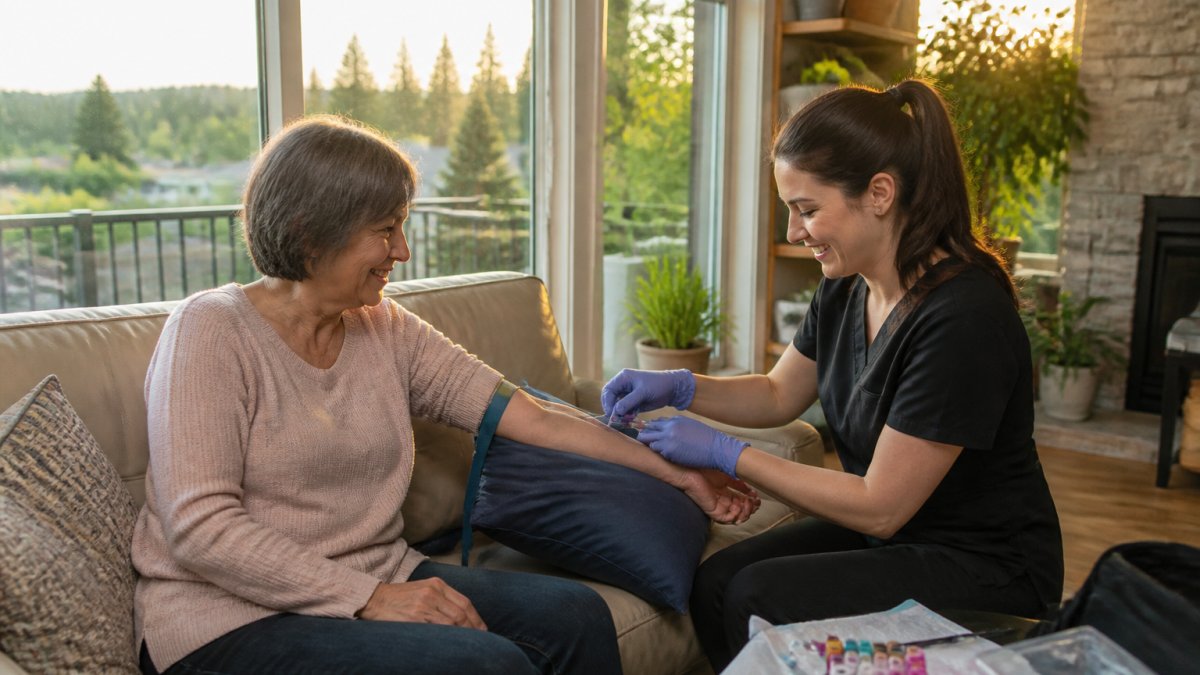
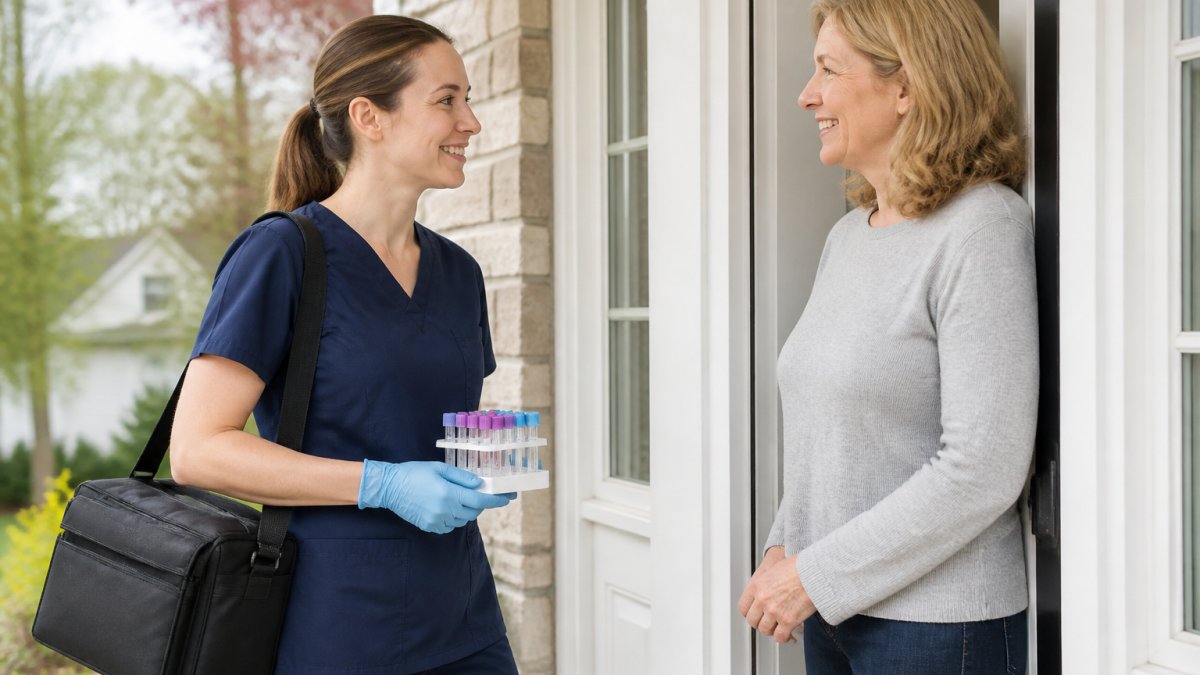
Mobile lab services for seniors bring the blood draw to the patient instead of the patient to the lab. A licensed phlebotomist arrives at the home, assisted living facility, or care community, performs the venipuncture, and transports the specimen to the laboratory named on the physician’s order.
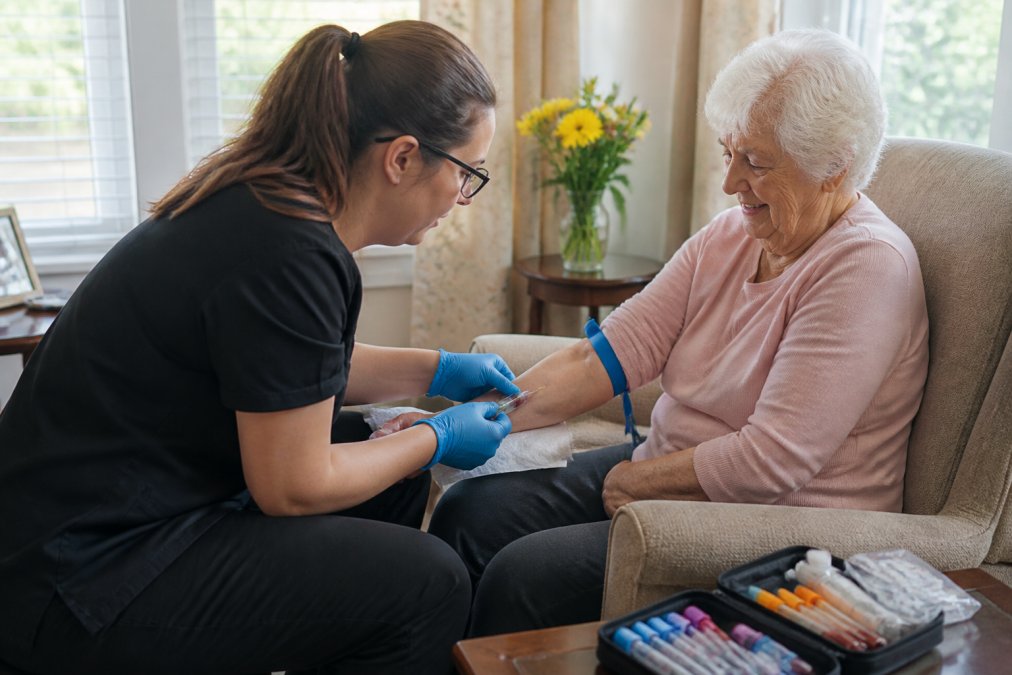
The Appointment-to-Lab-Results Process
The process follows a fixed sequence, and knowing it removes most of the anxiety:
- The physician submits a lab order for the tests needed.
- You book a home visit with a mobile provider.
- The phlebotomist verifies identity, orders, and insurance information on arrival.
- The blood draw takes a few minutes; most visits run 15 to 30 minutes total.
- The specimen is labeled, stored, and transported to the laboratory.
- Results go to the ordering physician, who reviews them with you.
Common Lab Tests Collected at Home
- Routine panels: complete blood count, comprehensive metabolic panel, lipid panel
- Chronic condition monitoring: A1C, thyroid function, kidney function, coagulation studies
- Preventative screening: vitamin levels, prostate-specific antigen, anemia workups
- Therapeutic phlebotomy: scheduled draws for conditions managed by blood removal
Benefits of Concierge Phlebotomy for Seniors
Concierge phlebotomy is a scheduled, in-home blood draw performed by a licensed phlebotomist who comes to the patient rather than a clinic. For seniors, the practical benefit is that it removes transportation barriers, waiting rooms, and the physical strain of a clinic visit.
Medicare Coverage for Mobile Lab Services
Medicare coverage for mobile lab services depends on the test, not the location of the draw. If Medicare covers the laboratory test itself, the fact that it was collected at home does not automatically disqualify it. The confusion most families run into is not whether the test is covered, it is who pays for the visit that produced it.
The Collection Fee Is the Real Question
Mobile providers usually bill a separate collection, travel, or convenience fee. That fee is the part most often not covered, because it is a service charge rather than a laboratory test. A common pattern is a flat visit fee per draw, sometimes waived or discounted for multi-patient stops at the same assisted living community. Ask three questions before booking:
- Is the collection fee billed separately from the lab test?
- Is that fee waived, capped, or bundled for facility residents?
- Will the provider bill the plan directly, or will the patient receive an invoice?
Part B vs. Part C: How the Money Actually Flows
Original Medicare (Part B) generally covers the lab test when it is medically necessary and ordered by a physician. The draw itself is usually folded into that coverage when performed by a lab the plan recognizes. The travel or convenience component is where gaps appear.
Financial Assistance and Navigation for Families
For patients who qualify, state Medicaid programs can cover lab services and, in some cases, in-home collection. Non-profit care navigation services can offset costs and screen for programs a family did not know existed. The National Council on Aging’s benefits check-up tool helps families screen for assistance programs by zip code and income.
A practical sequence for caregivers:
- Confirm the test is medically necessary and ordered in writing by the physician.
- Call the plan and ask specifically whether the collection fee is covered.
- If it is not, ask the provider whether the fee can be waived, bundled, or billed at a facility rate.
- If cost remains a barrier, screen for Medicaid and non-profit assistance before canceling the draw.
Pro Tip
Ask the provider to put the collection fee in writing before the visit, an email confirmation is enough. A quoted fee that arrives in writing is far easier to dispute than a number mentioned on a call.
Ask the provider to put the collection fee in writing before the visit, an email confirmation is enough. A quoted fee that arrives in writing is far easier to dispute than a number mentioned on a call.
Watch Out
Do not assume a Medicare Advantage plan covers the collection fee just because it covers the test. The two are billed separately, and the fee is the line item most likely to land on the patient’s invoice.
Do not assume a Medicare Advantage plan covers the collection fee just because it covers the test. The two are billed separately, and the fee is the line item most likely to land on the patient’s invoice.
How to Prepare for an At-Home Blood Draw
Preparation for an at-home blood draw is simple, but the details matter. Get clear instructions from the ordering physician about fasting, medication timing, and hydration, because the requirements differ by test.
- Confirm whether fasting is required, and for how long.
- Drink water in the hours before the visit unless you have a fluid restriction.
- Take medications as directed unless told otherwise.
- Have your insurance card, photo ID, and the lab order ready.
- Clear a table, turn on a lamp, and have a chair with armrests available.
- Tell the phlebotomist about anticoagulants, prior difficult draws, or needle anxiety.
Pro Tip
Warmth improves vein visibility more than almost anything else. Have the patient hold a warm compress or a heated blanket over the arm for five minutes before the phlebotomist arrives. It sounds minor; it routinely turns a difficult draw into a one-stick draw.
Warmth improves vein visibility more than almost anything else. Have the patient hold a warm compress or a heated blanket over the arm for five minutes before the phlebotomist arrives. It sounds minor; it routinely turns a difficult draw into a one-stick draw.
Safety, Sample Integrity, and Emergency Protocols
Safety in mobile phlebotomy rests on three things: a licensed, trained phlebotomist, correct specimen handling, and a clear plan for the rare complication.
Watch Out
Never let a draw proceed without a sharps container on site and a documented plan for a bleeding or fainting event. Seniors on anticoagulants can bleed longer than expected, and a provider without a written escalation protocol is not equipped for that moment.
Never let a draw proceed without a sharps container on site and a documented plan for a bleeding or fainting event. Seniors on anticoagulants can bleed longer than expected, and a provider without a written escalation protocol is not equipped for that moment.
Choosing a Mobile Lab Service: What Caregivers Should Compare
Choosing a mobile lab service comes down to licensing, specimen handling, laboratory coordination, and pricing transparency. Convenience is easy to advertise; those four factors are what actually protect the patient. For adult children coordinating a parent’s care, the decision usually lands on one person’s shoulders, and the questions below are the ones that separate a safe provider from a risky one.
| What to Compare | Why It Matters | What to Ask |
|---|---|---|
| Licensing and training | Ensures safe venipuncture and complication handling | Are technicians licensed phlebotomists? |
| Specimen handling | Affects sample integrity and retest risk | How and when are samples transported? |
| Lab coordination | Determines where results go | Can you deliver to our preferred lab? |
| Pricing structure | Prevents surprise collection fees | Is the visit fee separate from lab costs? |
| Facility experience | Matters for multi-resident scheduling | Do you serve assisted living communities? |
| Emergency protocol | Determines what happens if a draw goes wrong | What is your written escalation plan? |
A Step-by-Step Guide for Caregivers
Most content on this topic is written for the patient. If you are the adult child managing a parent’s care, the workflow looks different, you are the one making calls, holding the paperwork, and following up on results. Here is the sequence that works:
- Get the lab order in hand. Ask the physician’s office to send it to you or directly to the mobile provider. Confirm exactly which tests are ordered before you book anything.
- Verify coverage before you schedule. Call the plan and ask whether the test and the collection fee are covered. Check the Centers for Medicare & Medicaid Services guidance on lab services if you need the billing rules in writing.
- Assemble the paperwork. Insurance card, photo ID, medication list, and the lab order. Keep a copy for yourself.
- Book the visit and ask about the fee in the same call. Do not split these into two conversations.
- Prepare the space and the patient. Confirm fasting or medication instructions, clear a table, turn on a lamp, and have a chair with armrests ready.
- Stay for the draw if it helps. A familiar face calms patients with dementia or needle anxiety, and a calmer patient is often an easier draw.
- Confirm where results go and follow up. Results should reach the ordering physician, who reviews them with you. If you have not heard back within the provider’s stated turnaround window, call.
Pro Tip
Keep a single folder, paper or digital, with the lab order, insurance card image, medication list, and each visit’s results. When a parent sees multiple specialists, that folder is what prevents duplicate draws and missed follow-ups.
Keep a single folder, paper or digital, with the lab order, insurance card image, medication list, and each visit’s results. When a parent sees multiple specialists, that folder is what prevents duplicate draws and missed follow-ups.
Are Home Blood Draws as Accurate as Clinic Draws?
This is the fear nobody names out loud: that a draw done in a living room is somehow less reliable than one done in a clinic. The honest answer is that accuracy depends far more on specimen handling than on where the draw happened.
- Tube order and fill. Blood tubes must be drawn in the correct order and filled to the correct volume. A short-filled tube can skew results.
- Labeling at the bedside. Labels applied later, away from the patient, are a known source of sample mix-ups.
- Temperature and transport time. Some tests are sensitive to how long a specimen sits and at what temperature. Direct-to-lab delivery on the same day protects the result.
- Provider competence. A licensed phlebotomist who draws fragile veins daily is more likely to get a clean, usable sample on the first stick.
Key Takeaway
The two questions that separate a good mobile provider from a risky one: how fast does the specimen reach the lab, and what happens if the draw goes wrong. Get both answered before the first visit.
The two questions that separate a good mobile provider from a risky one: how fast does the specimen reach the lab, and what happens if the draw goes wrong. Get both answered before the first visit.
Frequently Asked Questions
Do mobile lab services accept Medicare for seniors?
Medicare Part B typically covers medically necessary lab tests ordered by a physician, whether collected at home or in a lab. However, the mobile collection fee itself may not be covered and could be billed separately. Medicare Advantage plans sometimes include additional home visit benefits. Coverage varies by plan and situation, so check with your plan or call the service directly to confirm what is included before scheduling.
How do I schedule a mobile blood draw for an elderly family member?
Start by obtaining a physician’s order for the specific tests needed. Then contact a mobile lab service and provide the patient’s address, the ordered tests, and any mobility or vein-access concerns. Most services offer online booking or phone scheduling. Confirm whether the collection fee is separate from lab processing and whether the service delivers specimens to your preferred laboratory. Ask about appointment windows and what to have ready on visit day.
Are mobile phlebotomy technicians licensed and certified?
Licensing requirements for phlebotomists vary by state. When choosing a mobile lab service, ask directly whether technicians hold current state licensure and national certification. A reputable provider will confirm credentials and explain their training for difficult draws, geriatric venipuncture, and patient comfort. Do not assume credentials; verify them before booking.
What types of lab tests can be performed at home?
Most routine blood tests can be collected at home, including complete blood counts, comprehensive metabolic panels, lipid panels, thyroid function tests, hemoglobin A1c for diabetes management, and therapeutic drug monitoring. Coagulation studies and other specialized tests may also be possible depending on the service. Some tests require specific timing, fasting, or handling, so confirm with the mobile provider and the ordering physician that home collection suits your test.
Is a doctor’s order required for mobile lab services?
For diagnostic testing covered by insurance, a physician’s order is generally required. Some services offer wellness panels or screening tests that can be purchased directly without a physician order, but these are typically paid out of pocket. Therapeutic phlebotomy, DNA gender testing, and most medically necessary lab work require a valid order. Always confirm the service’s policy and your insurance requirements before scheduling.
What is the difference between therapeutic phlebotomy and regular phlebotomy?
Regular phlebotomy is performed to collect blood samples for diagnostic testing. Therapeutic phlebotomy is a treatment that removes a specific volume of blood to manage conditions like hemochromatosis, polycythemia, or porphyria cutanea tarda. The procedure is similar, but therapeutic phlebotomy is prescribed for treatment rather than testing. Mobile services may offer both, but therapeutic phlebotomy requires a physician’s order specifying the volume and frequency.

Related Posts