Use this venipuncture aftercare guide to protect your arm, limit bruising, and recognize when a blood-draw symptom calls for medical advice if needed.
HIPAA Compliant Mobile Phlebotomy at Home
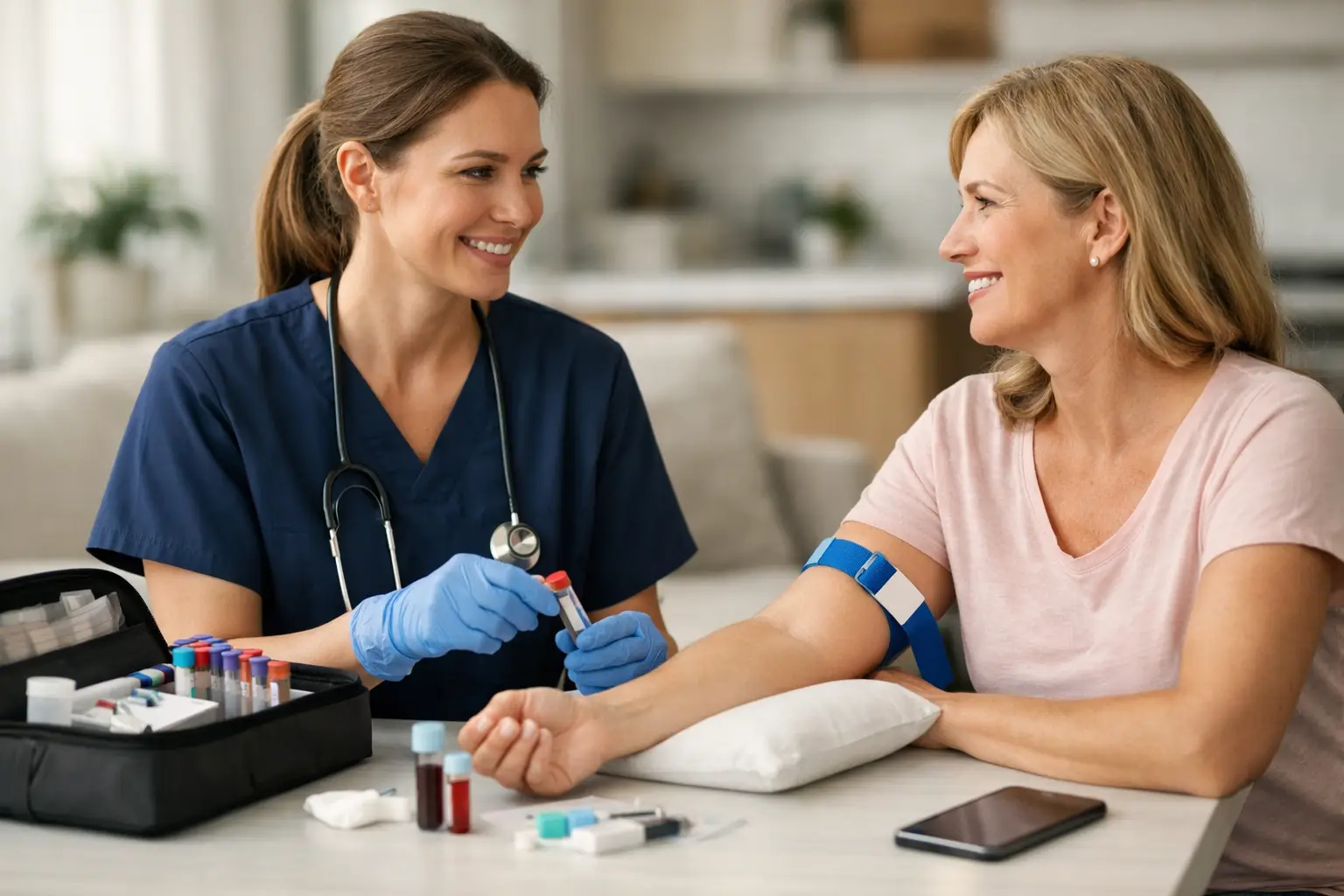
A blood draw may take only a few minutes, but getting to the lab can take half a day. For an older adult, a patient in hospice, a busy parent, or someone managing a chronic condition, the travel, waiting room, paperwork, and exposure to crowded spaces can be the hardest part. HIPAA compliant mobile phlebotomy brings the collection appointment to your home, office, care community, or another comfortable location while treating your health information with the privacy it deserves.
At Phlebotomy Experts, this is not a rushed curbside errand. It is concierge-level specimen collection with an experienced, certified professional who understands that a good blood draw includes a calm explanation, a gentle touch, accurate paperwork, and respectful handling of every detail.
What HIPAA Compliance Means During a Mobile Blood Draw
HIPAA is the federal privacy law that sets standards for protecting a patient’s protected health information, often called PHI. That includes more than a test result. Your name, date of birth, medical record details, insurance information, physician order, diagnosis information, and appointment records can all require protection.
In a mobile setting, privacy does not happen automatically just because the appointment is in your home. It requires thoughtful procedures from the moment you schedule until the specimen reaches the designated laboratory or hospital. A HIPAA-compliant provider uses appropriate safeguards to limit unnecessary access to your information and share it only for permitted healthcare purposes, such as coordinating your collection with your ordering provider and laboratory.
That matters because mobile service involves movement. A phlebotomist may collect paperwork at your kitchen table, verify an order on a secure device, label tubes at the bedside, and transport specimens for delivery. Each handoff needs care. Privacy is part of the job, right alongside proper identification, tube labeling, temperature requirements, and timely delivery.
HIPAA Compliant Mobile Phlebotomy Is More Than a Private Location
Having a blood draw at home can feel more private than sitting in a packed laboratory waiting room. Still, a private location by itself is not the same thing as compliant practice. The provider’s processes are what make the difference.
A professional mobile phlebotomy appointment begins by confirming the right patient and the right order. Your phlebotomist should use identifiers such as your full name and date of birth before collecting anything. Tubes should be labeled carefully in your presence, according to the laboratory’s requirements. This protects both accuracy and privacy, helping prevent the frightening possibility of a specimen being linked to the wrong patient.
Your information should also be handled discreetly during conversations. If you live with family, receive care in assisted living, or are collecting at work, you may want to choose a quiet space where you can speak openly. A good mobile phlebotomist will respect that preference and avoid discussing details that do not need to be shared with others nearby.
There is also a practical side to HIPAA. Appointment details, contact information, orders, and collection records should be managed through appropriate administrative and technical safeguards. Paper documents, if used, should not be left visible in a vehicle or on a counter. Electronic information should be accessed and transmitted through approved methods, not casually passed through personal channels.
What Happens at Your Appointment
Mobile service should make care easier, not make you guess what comes next. Once you have a physician’s order or laboratory kit, scheduling typically starts with confirming your location, the requested collection, fasting instructions if any, and the laboratory or hospital destination.
On the day of your appointment, your phlebotomist arrives with the supplies needed for the collection. You can settle into a chair, sofa, bed, or another safe position based on your mobility and comfort. For children, anxious patients, and anyone with difficult veins, a little patience goes a long way. There is no prize for rushing.
After identity and order verification, the collection is performed using proper protective protocols. Specimens are labeled and prepared for transport according to the testing requirements. Some samples need prompt delivery, special temperatures, or processing within a specific timeframe. That is why laboratory coordination is so much more than simply carrying a tube from Point A to Point B.
Your phlebotomist then transports the specimen to the designated laboratory or hospital, such as Quest Diagnostics, Labcorp, WestPac Labs, CMB Laboratory, St. Joseph, or Cedars-Sinai when appropriate for your order and location. Results are generally released through your ordering physician and laboratory, not interpreted by the mobile collector. If you have questions about results, medications, or what a result means, your physician is the right person to call.
Who Benefits Most From At-Location Collection
For many people, mobile collection is a convenience. For others, it removes a real barrier to care. A person recovering in rehabilitation may not be able to travel safely. Someone receiving hospice care deserves a quieter, more comfortable experience. An immunocompromised patient may prefer to limit time in public waiting areas, especially during periods of increased illness in the community.
It can also be a practical solution for recurring needs. Patients who require therapeutic phlebotomy, regular monitoring, specialty kit collections, autologous serum or plasma eye-drop processing, or clinical-study collections may need a dependable process more than once. Consistent collection practices and prompt handoff to the right laboratory help reduce unnecessary stress.
Busy professionals and families have their own reasons. Taking time off work, arranging childcare, driving across town, and sitting in a waiting room can turn a simple lab order into a logistical headache. An office or home appointment lets the laboratory come to you, while still following the physician-directed testing process.
Questions to Ask Before Booking
Not every blood test can be handled the same way, and the best mobile appointment depends on the order. Before scheduling, ask whether the provider can collect your specific test, kit, or therapeutic service and whether there are timing requirements. Some specialty specimens need immediate processing or a particular drop-off site. Others require fasting, morning collection, or a specific preparation from your physician.
You should also confirm which laboratory will receive the specimen, whether you need to provide printed orders or kit materials, and whether your insurance covers the laboratory testing separately from the mobile collection visit. Mobile phlebotomy fees and lab billing are often different parts of the care process. Clear answers before the appointment prevent surprises later.
If privacy is a particular concern, say so when you schedule. You can request a preferred appointment location, ask how your paperwork is handled, and let the team know who is authorized to speak about the visit. These are reasonable questions. Your health information belongs in careful hands.
Comfort and Privacy Work Together
A compassionate bedside manner is not separate from professional standards. It supports them. Patients are more likely to share relevant information, such as a history of fainting, difficult veins, or anxiety around needles, when they feel heard. That lets the phlebotomist adjust the experience by choosing a safer position, allowing extra time, or using a calm approach with a child or nervous adult.
Mobile care also has boundaries. A phlebotomist can collect specimens, follow the order, and coordinate delivery, but cannot replace your physician’s clinical guidance. HIPAA compliance protects the information involved in your care; it does not eliminate the need for a valid order, accurate insurance information, or laboratory-specific instructions. Good service is honest about those limits.
If you need a blood draw but getting to a lab feels like one more mountain on an already full day, ask about appointment availability. The right mobile phlebotomy team can bring skill, discretion, and a reassuring smile right to your door, so you can focus a little less on the trip and a little more on feeling cared for.

Related Posts