Breaking down the cost of in home blood draws: collection fees, lab charges, insurance, and what you actually pay out-of-pocket.

4 Ways to Recover From a Hangover Fast
Table of Contents
- Why Hangovers Happen: Alcohol Metabolism and Symptoms
- Way 1: How to Rehydrate Quickly After Drinking
- Way 2: Over-the-Counter Pain Relief and Stomach Care
- Way 3: IV Therapy for Hangover Recovery
- Way 4: Rest, Sleep, and Managing Hangxiety
- Supplements, Myths, and Recovery Timelines by Alcohol Type
- Conclusion: What Actually Works for Hangover Recovery
- Frequently Asked Questions
Last Updated: October 1, 2026
Why Hangovers Happen: Alcohol Metabolism and Symptoms
A hangover is your body’s response to alcohol metabolism, dehydration, and disrupted sleep, producing symptoms that typically peak when your blood alcohol level returns to zero. The exact discomfort you feel traces back to how your liver processes alcohol and the toxic by-products it creates along the way.
How Your Body Processes Alcohol
Your liver breaks down alcohol in two main stages. First, an enzyme converts alcohol into acetaldehyde, a toxic by-product that causes many hangover symptoms. Then, a second enzyme converts acetaldehyde into harmless acetate.
Common Hangover Symptoms and What Causes Them
Hangover symptoms include headache, fatigue, nausea, dehydration, and irritability. Each has a specific cause:
- Dehydration from increased urination leads to thirst and dizziness
- Gastric irritation from alcohol directly inflames your stomach lining
- Sleep deprivation occurs because alcohol disrupts REM sleep
- Low blood sugar contributes to weakness and mood changes
Understanding these causes helps you target each symptom directly.
Way 1: How to Rehydrate Quickly After Drinking
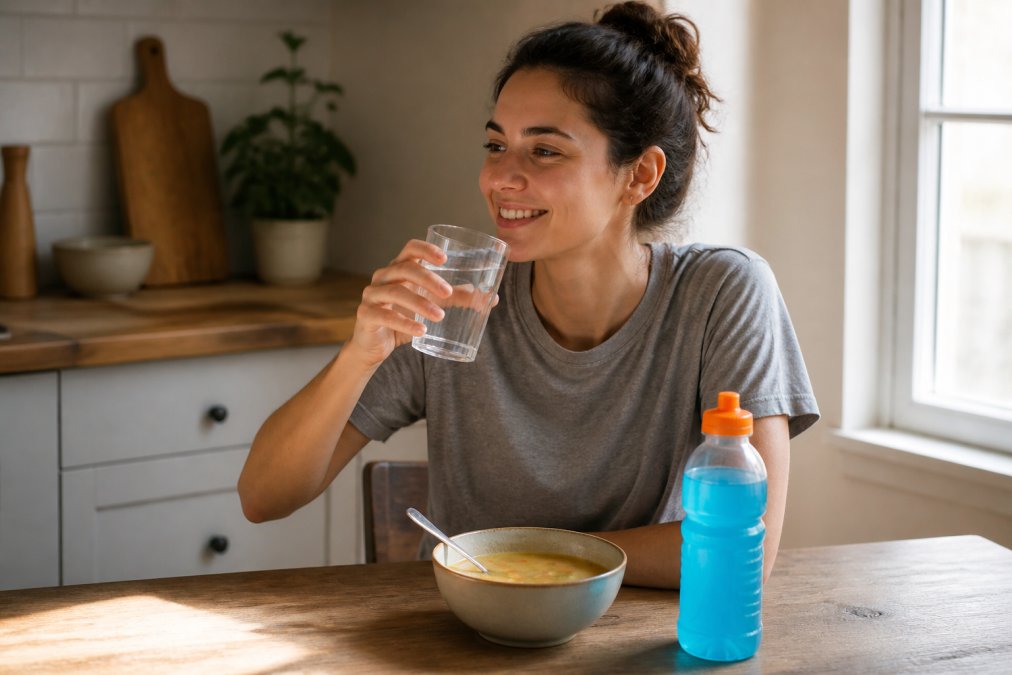
The fastest way to rehydrate after drinking is to combine water with electrolytes, since alcohol depletes both fluids and essential minerals. Plain water helps, but it doesn’t replace lost sodium and potassium efficiently.
Electrolytes, Fluids, and Foods That Help
Several options support quick rehydration:
- Electrolyte solutions like Pedialyte replace sodium, potassium, and glucose in a balanced ratio
- Sports drinks such as Gatorade provide electrolytes and carbohydrates for energy
- Bouillon soup or broth delivers sodium and fluids in an easy-to-digest form
- Fruit juice offers natural sugars and some potassium
- V8 vegetable juice supplies vitamins and simple sugars
Pro Tip
Drink small amounts frequently rather than chugging a large volume at once. Your stomach is likely irritated, and sipping every 10-15 minutes is gentler and absorbs better.
Drink small amounts frequently rather than chugging a large volume at once. Your stomach is likely irritated, and sipping every 10-15 minutes is gentler and absorbs better.
Way 2: Over-the-Counter Pain Relief and Stomach Care
Headache and muscle aches after drinking are driven by inflammation, dilated blood vessels, and dehydration. Over-the-counter pain relievers can blunt those signals, but the choice of which one matters more after alcohol than most people realize.
NSAIDs vs. Acetaminophen: The Real Trade-Off
NSAIDs, ibuprofen (Advil, Motrin), naproxen (Aleve), and aspirin, work by blocking cyclooxygenase enzymes, which reduces the prostaglandins that drive pain and inflammation. That mechanism is why they help a throbbing headache. The catch is that NSAIDs also reduce the prostaglandins that protect your stomach lining, and alcohol has already irritated that lining. Taking an NSAID on top of a night of drinking raises the risk of gastritis and stomach bleeding.
Calming Nausea and Gastric Irritation
Alcohol directly inflames the stomach lining and slows gastric emptying, which is why nausea often lingers after the headache fades. Options that help:
- Antacids (calcium carbonate, magnesium hydroxide) neutralize existing stomach acid and can ease burning, though they do not stop nausea
- Bismuth subsalicylate (Pepto-Bismol) coats the stomach lining and can reduce nausea and diarrhea, but it contains a salicylate, so do not stack it with an NSAID
- Ginger, ginger tea, chews, or capsules, has the most consistent evidence of any home remedy for reducing nausea
- Bland, low-fat foods like crackers, toast, or plain rice are easy on an irritated stomach and help stabilize blood sugar
- Broth or chicken noodle soup delivers sodium, fluid, and easily digested carbohydrates in one step
Watch Out
Never take pain relievers on an empty stomach after drinking. Alcohol already irritates your stomach lining, and NSAIDs on top of that can cause real discomfort and increase the risk of stomach bleeding. If you take a blood thinner, have kidney or liver disease, or are unsure which pain reliever is safe for you, talk to a pharmacist or clinician before taking anything.
Never take pain relievers on an empty stomach after drinking. Alcohol already irritates your stomach lining, and NSAIDs on top of that can cause real discomfort and increase the risk of stomach bleeding. If you take a blood thinner, have kidney or liver disease, or are unsure which pain reliever is safe for you, talk to a pharmacist or clinician before taking anything.
Pro Tip
If nausea is severe enough that you cannot keep fluids down for several hours, that is a sign to seek medical care rather than keep self-treating, persistent vomiting can lead to dangerous dehydration and electrolyte loss.
::: (Source: Centers for Disease Control and Prevention’s guidelines on alcohol consumption)
If nausea is severe enough that you cannot keep fluids down for several hours, that is a sign to seek medical care rather than keep self-treating, persistent vomiting can lead to dangerous dehydration and electrolyte loss.
::: (Source: Centers for Disease Control and Prevention’s guidelines on alcohol consumption)
Way 3: IV Therapy for Hangover Recovery
IV therapy for hangover recovery delivers fluids, electrolytes, and vitamins directly into your bloodstream, bypassing digestion entirely. This is why many people report feeling better faster than with oral rehydration alone.
Way 4: Rest, Sleep, and Managing Hangxiety
Sleep is when your body does most of its physiological healing. Alcohol disrupts sleep architecture, so even if you slept eight hours, the quality was poor. Give yourself permission to rest.
The Psychological Side of Hangovers
“Hangxiety” is the heightened anxiety many people feel the day after drinking. It happens because alcohol alters brain chemistry, and the rebound effect can leave you feeling worried or down. This is a normal psychological impact of drinking, not a sign something is wrong with you.
Helpful steps:
- Limit caffeine, which can worsen anxiety and dehydration
- Eat a balanced meal with carbohydrates and protein to stabilize blood sugar levels
- Take a walk outside for natural light and gentle movement
Supplements, Myths, and Recovery Timelines by Alcohol Type
This is where most hangover guides either repeat viral claims or wave them away. Here is what the evidence actually supports, and what it does not.
Myth vs. Fact: Do Hangover Supplements Work?
B vitamins. Alcohol depletes B vitamins, especially B1 (thiamine), B6, and B12, and chronic heavy drinking can cause real deficiencies. But taking a B-complex the morning after does not measurably speed recovery in someone who is not deficient. Think of it as replenishing a depleted store, not erasing a hangover.
The honest answer on supplements is that none has strong, replicated evidence for curing a hangover. They may support your body if you are deficient, but they do not override alcohol’s effects. Spend your money on electrolytes and a real meal first.
Why Recovery Time Depends on What You Drank
Recovery speed is shaped less by total alcohol volume alone and more by congeners, compounds produced during fermentation and aging that give darker drinks their color and flavor. Congeners like methanol, acetaldehyde, and fusel oils are metabolized slowly and are associated with more intense, longer-lasting hangovers. This is why the same number of standard drinks can hit very differently depending on the pour.
| Alcohol Type | Congener Level | Typical Recovery Window |
|---|---|---|
| Vodka, gin, white rum | Low | Milder symptoms, often easing in several hours |
| Whiskey, bourbon | High | More intense symptoms, often lasting into the next day |
| Red wine | High | Headache-prone, slower recovery |
| Beer | Moderate | Depends on volume consumed |
| Sugary mixed drinks | Varies | Sugar spikes and drops can worsen fatigue and headache |
Prevention Beats Cure
The most effective “recovery” strategy is the one you use before bed: alternate each alcoholic drink with a glass of water, eat a meal with protein and fat before drinking, and set a hard stop time. None of that is glamorous, but it outperforms every supplement on the market.
Conclusion: What Actually Works for Hangover Recovery
Hangovers are uncomfortable, but the right combination of rehydration, pain management, rest, and professional support can shorten your recovery time. If nausea or dehydration makes it hard to recover on your own, IV therapy offers a faster path.
Frequently Asked Questions
What are the most effective home remedies for hangover symptoms?
The most effective home remedies for hangover symptoms focus on rehydration and rest. Drink water or an electrolyte solution like Pedialyte to replace lost fluids and sodium. Eat a light, easy-to-digest meal such as bouillon soup or toast with fruit juice to support blood sugar levels. Take an over-the-counter pain reliever like ibuprofen for headache, but avoid acetaminophen if you still have alcohol in your system. Sleep is essential because your body needs time to clear toxic by-products like acetaldehyde. Most hangover symptoms improve within 8 to 24 hours with these steps.
What is the fastest way to rehydrate after drinking alcohol?
The fastest way to rehydrate after drinking is to drink fluids that contain electrolytes, not just plain water. Alcohol suppresses vasopressin, a hormone that helps your body retain water, so you lose more fluid than usual. An oral rehydration solution with a balanced glucose-to-electrolyte ratio, such as Pedialyte, absorbs faster than water alone. Sports drinks like Gatorade also help but contain more sugar. Avoid caffeine and more alcohol, since both worsen dehydration. If you cannot keep fluids down because of nausea, small sips every few minutes work better than large amounts at once.
Do over-the-counter pain relievers help with hangover headaches?
Yes, over-the-counter pain relievers can help with hangover headaches. Ibuprofen (Advil) is a nonsteroidal anti-inflammatory drug that reduces pain and inflammation. Take it with food to avoid gastric irritation. Avoid acetaminophen (Tylenol) if you still have alcohol in your system, because the combination can stress your liver. Aspirin also works but can irritate the stomach. Never exceed the label dose, and if your headache is severe or does not improve, seek medical attention.
How long does hangxiety typically last after drinking?
Hangxiety, the anxiety that often accompanies a hangover, usually peaks when your blood alcohol level drops to zero and can last anywhere from a few hours to a full day. It is linked to changes in brain chemistry, dehydration, poor sleep, and the psychological effects of alcohol. Getting rest, rehydrating with electrolytes, and eating a balanced meal can help shorten it. If hangxiety lasts longer than 24 hours or feels overwhelming, talk to a healthcare professional, as it may be a sign of an underlying condition.
When should I seek medical attention for alcohol-related symptoms?
Seek medical attention if you experience severe vomiting that prevents you from keeping fluids down, confusion, seizures, slow breathing, or a body temperature that is too low or too high. These can be signs of alcohol poisoning, which is a medical emergency. Also get help if your hangover symptoms last more than 24 hours or if you have underlying health conditions like diabetes or liver disease. A mobile phlebotomy service like Phlebotomy Experts can draw blood for testing at your home if your doctor orders labs, but it does not replace emergency care.

Related Posts