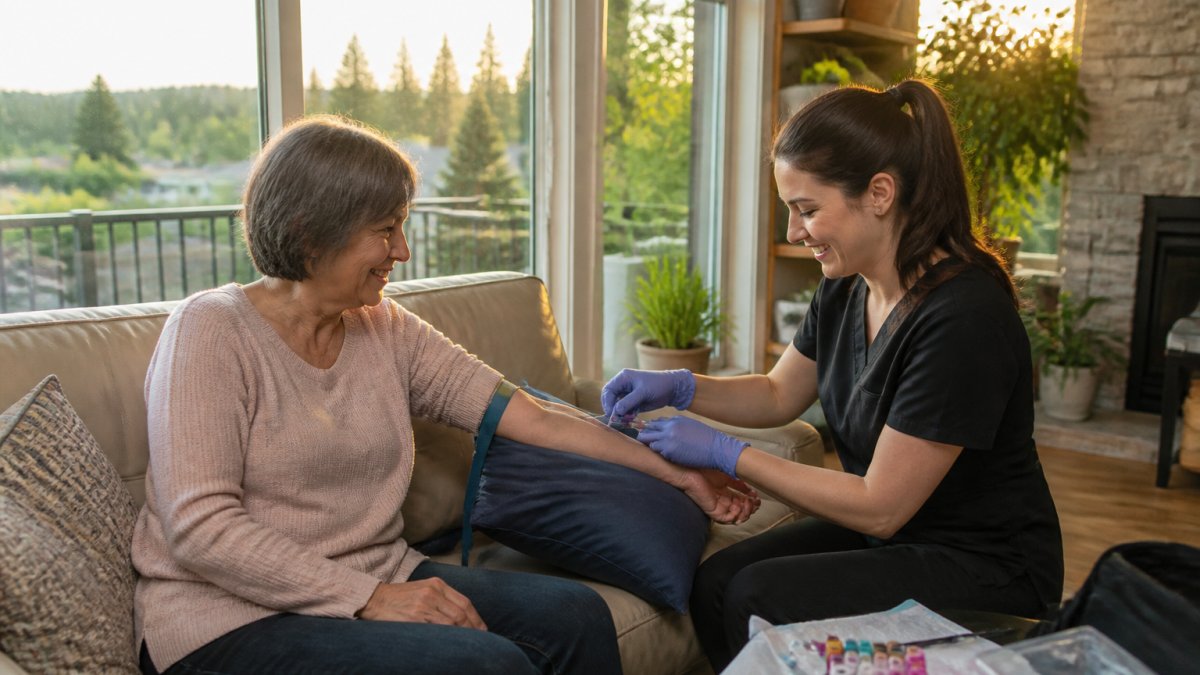
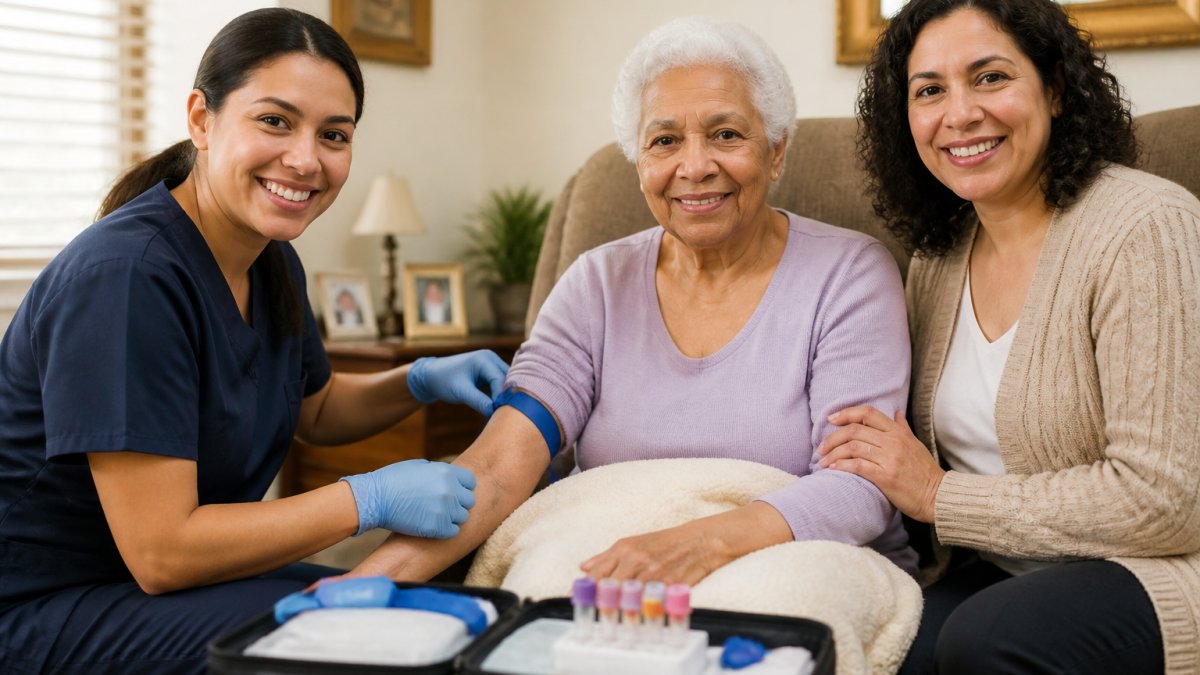
Compare the best onsite phlebotomy solutions alternatives for mobile blood draws, including service areas, pricing factors, and facility coverage.
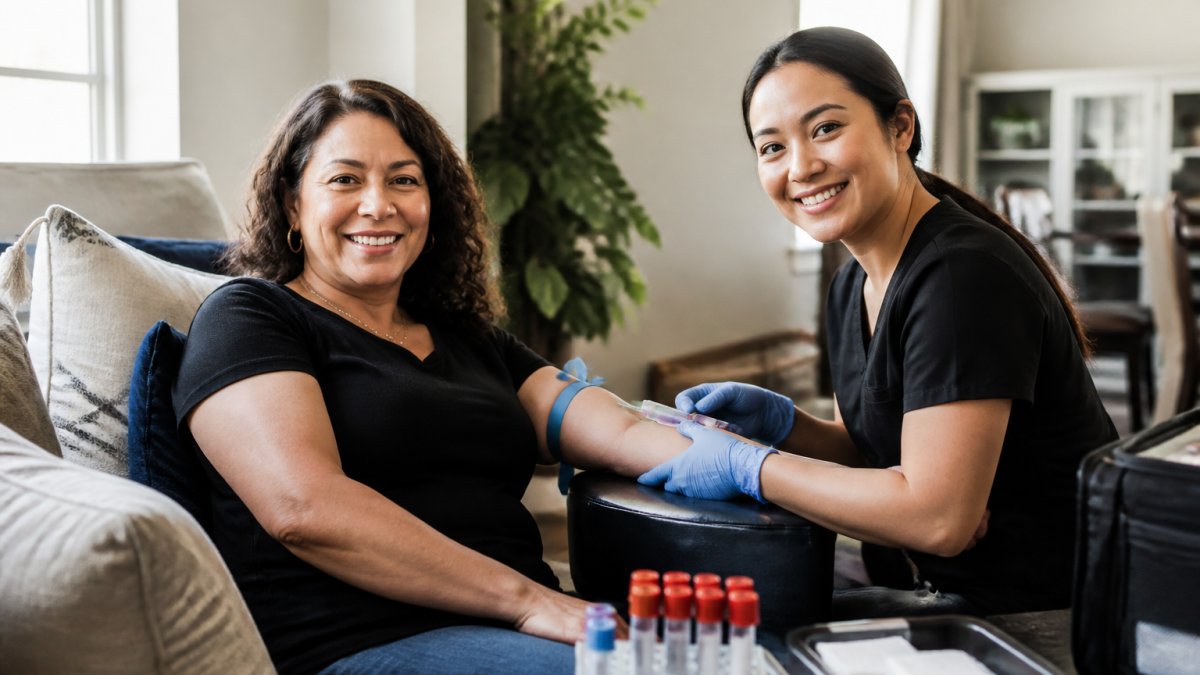
Cost of In Home Blood Draws: 2026 Pricing Guide
Table of Contents
- What Goes Into the Cost of In Home Blood Draws
- Mobile Phlebotomy Cost: What Providers Charge for the Visit
- At-Home Blood Test Cost: How Test Type Changes the Price
- Mobile Phlebotomy Insurance Coverage and Out-of-Pocket Costs
- How to Prepare for a Blood Draw at Home
- Additional Charges, Cancellation Policies, and How to Compare Providers
- Frequently Asked Questions
Last Updated: October 6, 2026
What Goes Into the Cost of In Home Blood Draws
The cost of in home blood draws is not one number. It is two separate charges: a collection fee for the visit, and a laboratory fee for the testing. Most pricing confusion, and most surprise bills, disappears once you understand that split. At Phlebotomy Experts, we explain this distinction to every client before booking, because it is the biggest source of sticker shock in mobile phlebotomy.
Collection Fee vs. Laboratory Test Charges
The collection fee covers the visit: the phlebotomist’s time, travel, supplies, and specimen handling. The laboratory fee covers the test panel ordered by your physician. A mobile blood draw service typically charges only the first, so if a quote looks unusually low, check whether it includes lab work.
Why the Two Are Billed Separately
Laboratory testing is billed by the lab, not the draw service, because the lab owns the analyzer, reagents, and certification. Mobile phlebotomy companies are the collection arm, not labs. This separation is standard, and it is why insurance often covers one charge and not the other.
Key Takeaway
Ask any provider two questions before booking: what is the collection fee, and which laboratory will process my sample? If they cannot answer both clearly, keep looking.
Ask any provider two questions before booking: what is the collection fee, and which laboratory will process my sample? If they cannot answer both clearly, keep looking.
Mobile Phlebotomy Cost: What Providers Charge for the Visit
Mobile phlebotomy cost varies by provider, location, and travel. These are collection fees only; laboratory testing is billed separately.
Mobile Blood Labs guide to mobile phlebotomy cost notes that the collection fee is distinct from lab fees, which is the correct way to read any mobile phlebotomy quote.
What drives the visit fee up or down:
- Travel distance. Rural or outlying addresses often carry a travel surcharge.
- Scheduling window. Evening and weekend appointments usually cost more than weekday mornings.
- Number of patients. Facilities booking multiple residents in one visit often pay less per draw.
Mobile Phlebotomy App’s overview of average home blood draw prices reports a typical standard home draw range of $75 to $200, and specifically flags travel fees and centrifugation charges as add-ons to confirm upfront.
| Cost Component | What It Covers | Billed By |
|---|---|---|
| Collection fee | Phlebotomist visit, travel, supplies | Mobile draw provider |
| Laboratory fee | Analysis of the ordered test panel | The laboratory |
| Travel surcharge | Distance beyond a standard service area | Mobile draw provider |
| Handling fee | Centrifugation, cold-chain, special transport | Mobile draw provider |
At-Home Blood Test Cost: How Test Type Changes the Price
At-home blood test cost depends almost entirely on which panel your physician orders, not the draw itself. A basic CBC or chemistry panel costs far less than a specialized genetic or hormone panel, even though the collection process is identical. The draw fee stays roughly the same; the lab fee does not.
Common Panels and What They Cover
A complete blood count (CBC) measures red cells, white cells, and platelets. A basic metabolic panel covers electrolytes, glucose, kidney function, and calcium. A comprehensive metabolic panel adds liver function markers.
More specialized testing, such as DNA gender testing or therapeutic monitoring, typically costs more because it requires different equipment and, sometimes, a different laboratory entirely. If cost is your main concern, ask your physician whether a narrower panel would answer the same clinical question.
Pro Tip
If you are paying out of pocket, ask the laboratory for its self-pay rate before the draw. Self-pay prices are often lower than the billed rate, but you usually have to ask for them by name.
If you are paying out of pocket, ask the laboratory for its self-pay rate before the draw. Self-pay prices are often lower than the billed rate, but you usually have to ask for them by name.
Mobile Phlebotomy Insurance Coverage and Out-of-Pocket Costs
Insurance is where in-home blood draw pricing gets complicated, because nearly every payer treats the two charges differently. The laboratory test is a covered medical service when medically necessary and physician-ordered. The home visit is a convenience service, usually the first thing a plan excludes. Knowing which bucket each charge falls into is the difference between a $0 bill and a $150 surprise.
How the Two Charges Are Treated Differently
A useful rule of thumb: payers reimburse for the specimen, not the trip. The lab test has a CPT code and fee schedule. The mobile draw is often billed under a phlebotomy or specimen-collection code, and whether it is payable depends on the plan, setting, and patient status. Many commercial plans pay that code for a clinic or patient service center draw but deny it at home, because the home setting is not a covered place of service.
Medicare Part B
Medicare Part B generally covers medically necessary clinical laboratory tests ordered by a treating physician. For the home visit, Medicare’s homebound rules matter: a patient is homebound when leaving home requires considerable and taxing effort, is medically contraindicated, or requires another person or a device. When those criteria are met and a physician orders the draw, Medicare can cover a home collection; otherwise the visit is typically the patient’s responsibility.
Two practical points most patients miss:
- Advance Beneficiary Notice (ABN). If a provider believes Medicare may not pay for the collection, they are supposed to give you an ABN before the service. Signing it means you accept financial responsibility if Medicare denies. You can decline the service instead. Never sign an ABN without reading which specific charge it covers.
- Assignment. Ask whether the lab and the draw provider accept Medicare assignment. If they do, they agree to Medicare’s allowed amount and cannot balance-bill you beyond your coinsurance and deductible for covered services. If they do not, you can be billed the difference between their charge and Medicare’s allowed amount.
Medicaid
Medicaid is administered state by state, so home draw coverage ranges from fully covered with a physician order to not covered at all. Some programs pay for mobile phlebotomy for homebound beneficiaries; others treat it as a non-covered convenience. The only reliable answer is to call the number on the back of the card and ask whether the specific collection code is covered for a home setting.
Private Plans and Out-of-Network Billing
Commercial plans vary widely. A common pattern: the lab test is covered at the in-network rate, while the mobile draw is either not a covered benefit or covered only when the provider is in-network. With an out-of-network phlebotomist, expect one of three outcomes:
- The plan reimburses a portion of the collection fee at its out-of-network rate, and you pay the balance.
- The plan denies the collection fee entirely as a non-covered convenience service.
- The plan applies the collection fee to your deductible, so you pay it now and nothing is reimbursed until the deductible is met.
To pursue reimbursement for an out-of-network draw, ask the provider for a superbill with the provider’s NPI, the collection CPT code, the date of service, and the diagnosis code from your physician’s order. Submit it with a claim form. Reimbursement is not guaranteed, but a complete superbill is the only way to find out.
What You Actually Pay Without Insurance
Without insurance, your out-of-pocket cost is the sum of three separate line items:
- The collection fee paid to the mobile draw provider
- The laboratory fee paid to the lab that runs the panel
- Any travel, handling, after-hours, or redraw surcharge
Self-pay rates are often lower than billed rates, but you usually have to ask for the self-pay price by name before the draw. Some labs publish a self-pay price list; others quote it only on request.
Watch Out
A covered lab test does not mean a covered collection fee. Confirm both charges with your plan before booking, and ask the provider to put the collection fee in writing. Booking first and appealing later is the most common and most expensive mistake in this category.
A covered lab test does not mean a covered collection fee. Confirm both charges with your plan before booking, and ask the provider to put the collection fee in writing. Booking first and appealing later is the most common and most expensive mistake in this category.
Pro Tip
When you call your insurer, ask three specific questions: Is the home collection fee a covered benefit? Is the specific test panel covered under my plan? What is my responsibility if the provider is out-of-network? Write down the reference number for the call.
When you call your insurer, ask three specific questions: Is the home collection fee a covered benefit? Is the specific test panel covered under my plan? What is my responsibility if the provider is out-of-network? Write down the reference number for the call.
How to Prepare for a Blood Draw at Home
Preparation matters more than most people expect, and it is the easiest way to avoid a repeat visit. Hydrate well before your appointment, since good hydration makes veins easier to find.
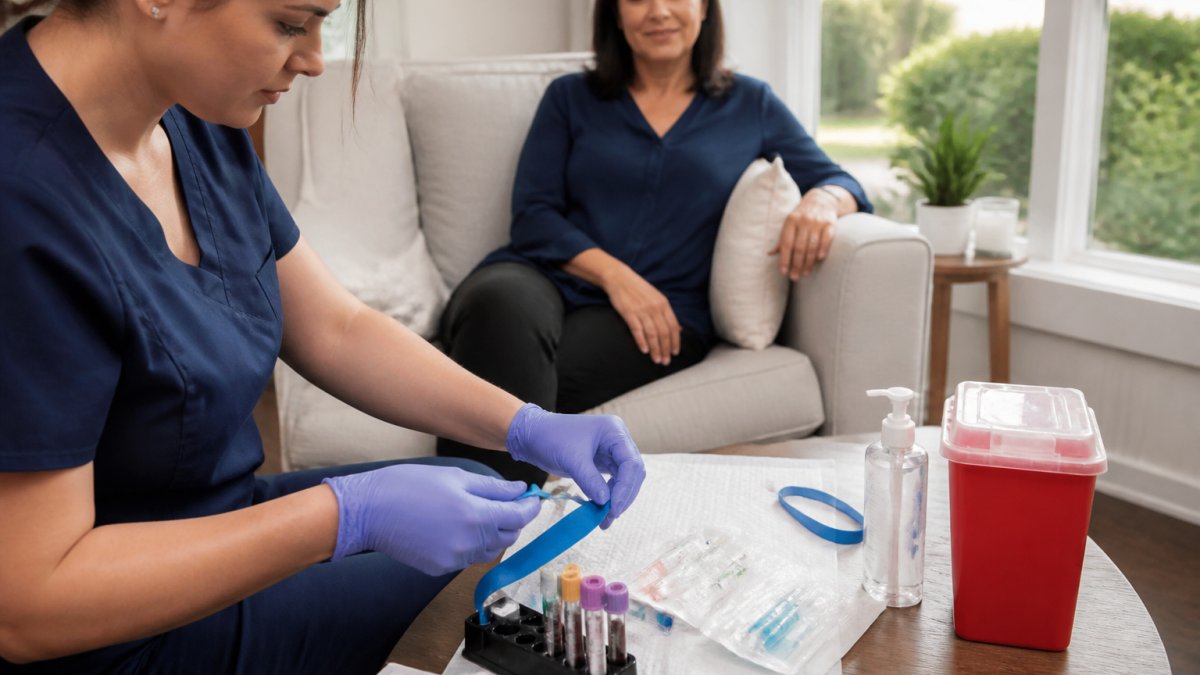
A few practical steps make the visit smoother:
- Clear a table near where you will sit, so the phlebotomist has a clean work surface.
- Have your photo ID, insurance card, and physician’s order within reach.
- Tell the phlebotomist about needle phobia, prior difficult draws, or veins that have been hard to access before.
That last point is not a minor detail. Patients with a history of difficult veins or needle anxiety often need more time, and a provider who knows in advance can plan for it. CDC guidance on preparing for a blood test covers the general preparation basics, including fasting and hydration.
Additional Charges, Cancellation Policies, and How to Compare Providers
Two providers can advertise the same $95 visit fee and produce bills that differ by $80 once travel, handling, and missed-appointment fees are added. The headline price is not the price. What you want is the all-in number: collection fee plus every surcharge for your address, appointment window, and test. Here is how to get it before you book.
The Full Fee Schedule to Ask For
Request these line items in writing, even if the answer is “not applicable”:
- Base collection fee for a standard weekday draw at your address
- Travel fee and the mileage or ZIP code threshold that triggers it
- After-hours and weekend surcharge and the exact hours it applies
A Like-for-Like Bill Example
Suppose your physician orders a comprehensive metabolic panel and a lipid panel, and you book a weekday morning draw at a suburban address inside the provider’s service area. A transparent quote breaks down like this:
| Line item | Billed by | Notes |
|---|---|---|
| Collection fee | Mobile draw provider | Covers the visit, supplies, and specimen handling |
| Laboratory fee | The lab | Covers analysis of the ordered panels |
| Travel surcharge | Mobile draw provider | $0 if inside the service area; applies if outside |
| Handling fee | Mobile draw provider | $0 for routine panels; applies to centrifuged or cold-chain specimens |
| After-hours surcharge | Mobile draw provider | $0 for a weekday morning slot |
If the provider cannot fill in every row, that is your answer about their pricing transparency. The same framework works for a weekend evening draw with a specialized panel: collection and lab fees stay roughly the same, while travel, handling, and after-hours rows change.
Cancellation and No-Show Policies
Cancellation windows vary widely. Some providers allow free cancellation up to 24 hours before the appointment; others charge a flat no-show fee if you are not home when the phlebotomist arrives. Ask two questions: What is the notice window, and what is the fee if I miss it? If you have a mobility issue or fluctuating schedule, a short notice window is worth paying slightly more for.
A Provider Comparison Checklist
Run every candidate through the same six checks:
- Licensure and certification. Verify the phlebotomist is licensed in your state, and certified where the state requires it. Ask for the certifying body.
- Insurance. Confirm the provider carries professional liability coverage. Ask for the certificate of insurance if you are booking on behalf of a facility.
- Service area and travel policy. Get the exact boundary and the travel fee in writing.
- Specimen handling. Ask which laboratory processes the specimen, how it is transported, and how long it is in transit. Cold-chain and centrifugation capability matter for specialized panels.
- Transparent quote. Insist on the full fee schedule, not a single number. A provider who will not itemize is a provider who will surprise you.
- Redraw policy. Ask who pays if the sample is rejected and a second draw is needed.
Best For
Patients who need a licensed, insured phlebotomist at home, including those with difficult veins, needle phobia, or mobility limitations, and facilities booking multiple residents in a single visit.
Patients who need a licensed, insured phlebotomist at home, including those with difficult veins, needle phobia, or mobility limitations, and facilities booking multiple residents in a single visit.
Phlebotomy Experts delivers in-home mobile phlebotomy with licensed phlebotomists, specimen delivery to the laboratory or hospital of your choice, and specialized care for infants and children. Call us for a current quote and a written breakdown of every line item that applies to your appointment.
Frequently Asked Questions
How much does it cost to have a phlebotomist come to your house?
The collection fee for a mobile phlebotomist varies by location and provider. This fee covers the phlebotomist’s travel time, the blood draw itself, and specimen handling. Laboratory testing charges are usually billed separately. Always confirm whether the quoted price includes lab processing or only the collection service.
Does the in-home blood draw fee include the laboratory test?
In most cases, the collection fee and the laboratory test charges are separate. The mobile phlebotomy cost covers the visit and the draw itself. The laboratory then bills for processing your blood sample and running the requested tests. A complete blood count, chemistry panel, or other test panel carries its own price. When comparing quotes, ask each provider to break down the collection charge and the lab test price so you see the full out-of-pocket cost.
Does insurance cover mobile phlebotomy?
Mobile phlebotomy insurance coverage varies by plan. Some private insurance plans, Medicare, and Medicaid may reimburse the collection fee when a physician orders the blood work and the service is deemed medically necessary. However, many mobile phlebotomy providers operate on a self-pay basis and do not bill insurance directly. Contact your insurance company before booking to confirm whether at-home collection is a covered benefit and what documentation they require.
What affects the cost of an in-home blood draw?
Several factors influence pricing: your geographic location and whether the provider serves your area, the type and number of tests ordered, whether special handling like centrifugation is needed, travel distance for the phlebotomist, and whether you book during regular hours or after hours. Additional charges may apply for cancellation within a short window or for stat processing. Request an itemized quote that lists the collection fee, lab charges, and any potential add-ons before you confirm your appointment.

Related Posts