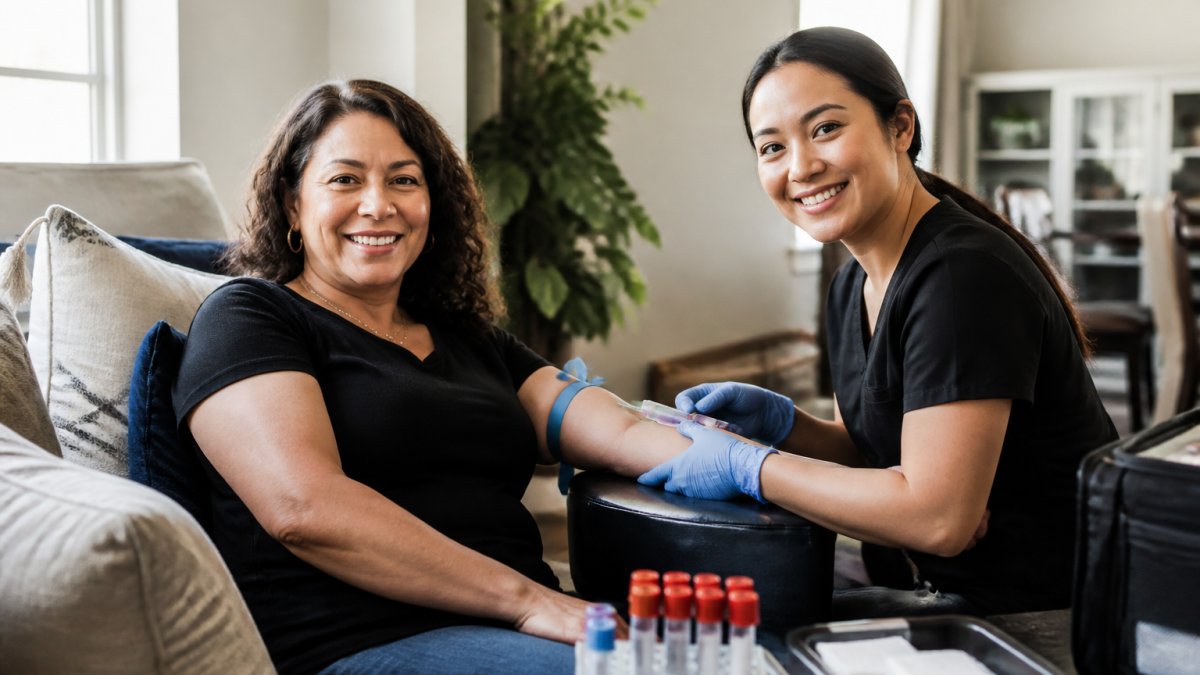
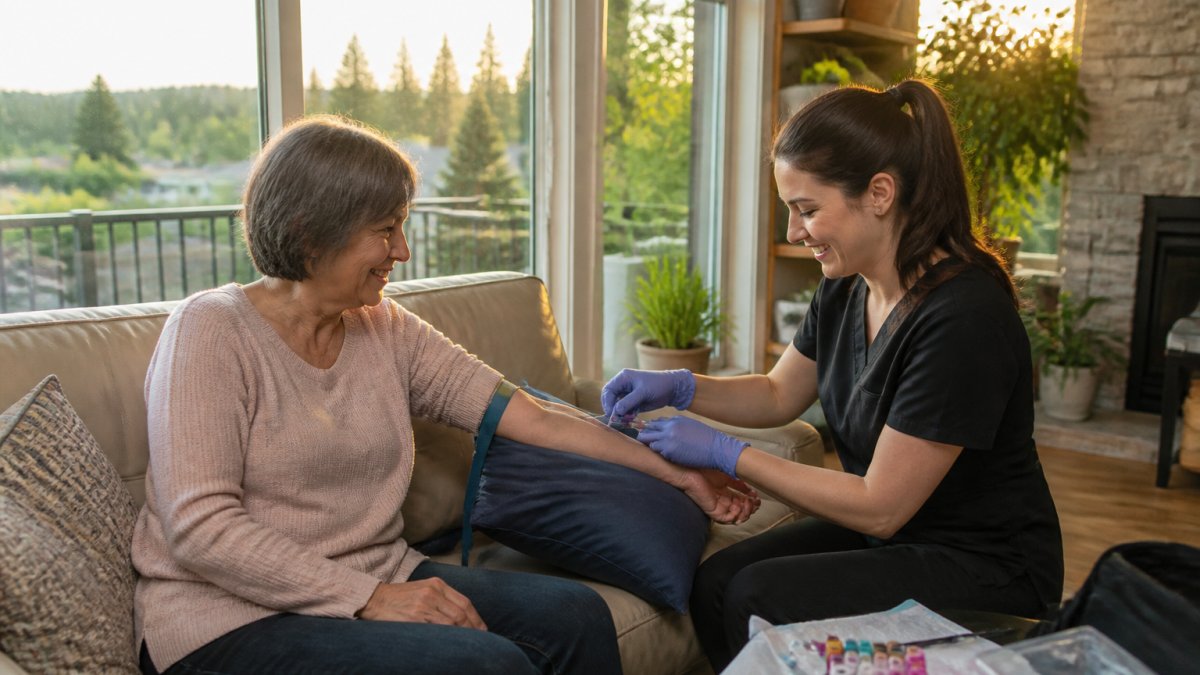
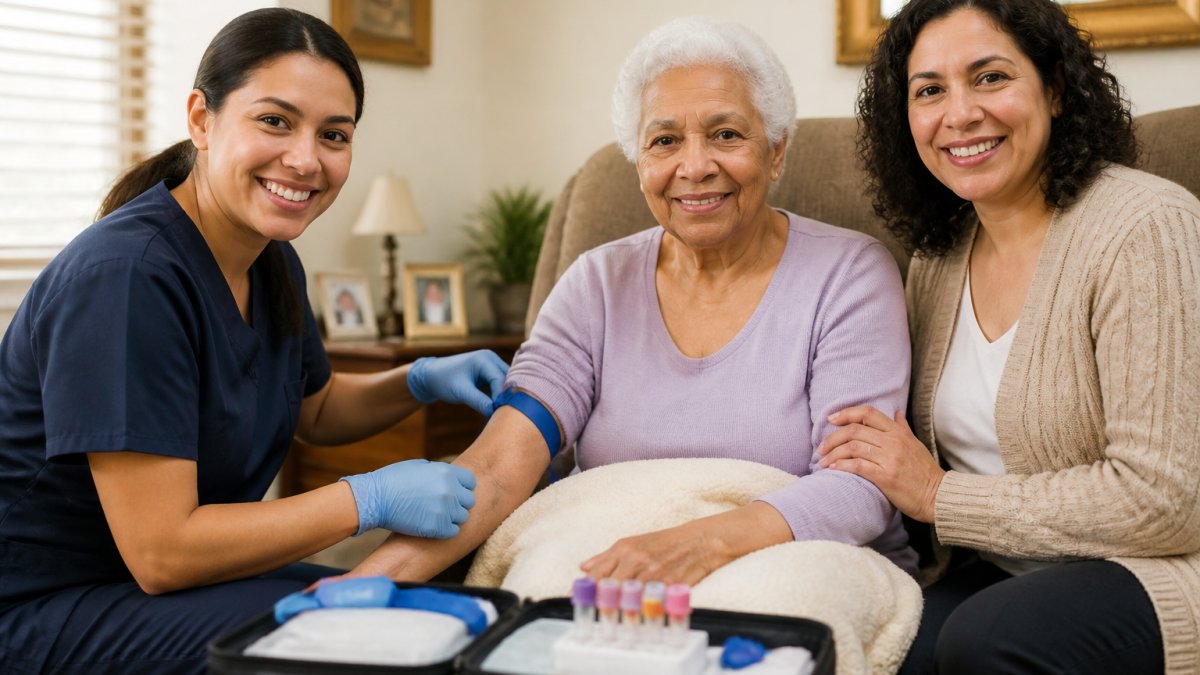
Breaking down the cost of in home blood draws: collection fees, lab charges, insurance, and what you actually pay out-of-pocket.

How to Find a Mobile Lab That Accepts Your Insurance
Table of Contents
- Start With Your Insurance: What Mobile Lab Insurance Coverage Actually Includes
- How to Verify a Mobile Lab Is In-Network Before You Book
- Does Medicare Cover Mobile Blood Draws?
- How to Request a Home Blood Draw From My Doctor
- What to Do When Your Insurance Does Not Cover Mobile Services
- Verify Credentials and Safety Before You Let Anyone Draw Blood
- Step-by-Step: How to Schedule an At-Home Blood Draw That Your Insurance Accepts
- Frequently Asked Questions
Last Updated: October 4, 2026
Start With Your Insurance: What Mobile Lab Insurance Coverage Actually Includes
Learning how to find a mobile lab that accepts my insurance starts with one step: read your plan’s lab benefit before you book.

Mobile lab insurance coverage means your plan pays for a licensed professional to collect a blood sample at your home, office, or facility, as long as the lab and the collection are covered services.
Two things decide what you pay:
- Whether the mobile lab is an in-network provider for your plan
- Whether each test on your lab order is a covered service
Skip either check and you may get a bill you did not expect.
In-Network vs. Out-of-Network Mobile Lab Providers
An in-network provider has a contract with your plan that sets the rate, so you usually pay only your normal copay or coinsurance. An out-of-network mobile lab has no contract: your plan may pay less or nothing, and you can be billed the full amount.
Here is the part most people miss: the phlebotomist and the lab can be separate. A mobile draw service may be in-network while the clinical laboratory that runs your tests is not. Always check both.
Lab Fees vs. Convenience Fees: What Insurance Pays For
Lab fees cover the testing; convenience fees cover travel and the at-home visit. Insurance typically pays the lab fee when the test is covered, but the convenience fee is often yours, since many plans treat it as a non-covered add-on.
Ask one question up front: “Is the travel fee billed to my plan, or to me?” Get the answer in writing before the appointment.
How to Verify a Mobile Lab Is In-Network Before You Book
The fastest way to confirm a mobile lab takes your insurance is to call the member services number on your card and ask them to check the lab’s tax ID number, not its business name. Names vary; tax IDs do not.
But network status alone will not tell you what you owe. The real answer lives in the CPT codes on your lab order.
Get the CPT Codes Before You Call
Ask your doctor’s office for the CPT codes on your lab order, not just test names; if they push back, ask them to read the codes off the requisition.
Once you have the codes, run them through your plan’s member portal or app. Most major insurers publish a “price a service” or “estimate my cost” tool where you enter the CPT code and see your specific copay, coinsurance, or deductible.
The Tax ID Check, Step by Step
Here is a checklist:
- Find your plan’s lab benefit summary in your patient portal
- Get the lab’s legal name and tax ID number (also called an EIN or TIN)
- Get the CPT codes and ICD-10 codes from your doctor’s office
- Run each CPT code through your plan’s cost-estimate tool
- Call member services and confirm network status for that tax ID
- Ask whether the at-home collection is a covered benefit or a convenience fee
Pro Tip
Ask for the call reference number every time you speak with your plan. If a claim is later denied, that number is your proof of what you were told.
Ask for the call reference number every time you speak with your plan. If a claim is later denied, that number is your proof of what you were told.
Questions to Ask When You Call Your Health Plan
Write these down before you dial, and read them in order:
- Is this lab’s tax ID in-network for my specific plan?
- For CPT code [read the code], what is my patient responsibility, copay, coinsurance, or deductible?
- Is a home visit covered, or is it billed as a convenience fee to me?
- Do I need a physician referral or just a lab order?
- Does any code on this order require prior authorization?
- What will I owe out of pocket if I use this lab versus an in-network draw station?
When the Lab Is Out-of-Network
If the mobile lab is not contracted with your plan, you are not necessarily stuck paying full price. Many plans include out-of-network benefits that reimburse a percentage of the allowed amount after a separate out-of-network deductible.
If you pay out of pocket, request a superbill from the mobile lab: an itemized receipt listing the provider’s name and tax ID, the CPT and ICD-10 codes, the date of service, and the amount paid.
Does Medicare Cover Mobile Blood Draws?
Medicare Part B generally covers diagnostic testing when a doctor orders it and the lab accepts Medicare, with the blood draw usually covered as part of that lab service. But the details decide whether you pay nothing or get a bill for the full visit.
The Assignment Rule That Decides Your Bill
The key question for a Medicare patient is whether the lab accepts assignment. A lab that does accepts Medicare’s approved amount as full payment: you pay only your share, typically 20% after the Part B deductible, and it cannot bill you the difference.
Before you book, ask the mobile lab directly: “Do you accept Medicare assignment?” Get the answer in writing, and confirm it against Medicare’s own provider lookup at medicare.gov.
The Homebound Question
Medicare does not typically pay a separate convenience fee for a mobile visit; travel is not a covered benefit on its own.
If you believe you qualify as homebound, the path runs through your doctor, not the lab. Your physician must certify the home health plan of care and order the in-home service. Ask your doctor’s office whether they will document homebound status for the blood draw.
Medicaid: Rules Vary by State
Medicaid is administered state by state, so there is no single answer. Some programs cover mobile phlebotomy as a distinct service with its own billing code; others bundle the draw into the lab test and pay nothing extra for travel.
Call the member services number on your Medicaid card and ask three questions:
- Does my plan cover a phlebotomist coming to my home?
- Is there a separate billing code for the home visit, or is it bundled into the lab test?
- Does my plan require prior authorization for in-home collection?
If you are on a Medicare Advantage plan rather than Original Medicare, the rules differ again. Medicare Advantage plans often add benefits Original Medicare does not cover, including transportation and in-home services.
What to Do If Medicare Denies the Claim
A denial is not always final. Common reasons include a missing diagnosis code, a test Medicare considers screening rather than diagnostic, or a lab that billed under the wrong code. If you receive a Medicare Summary Notice showing a denial, you have 120 days from the notice date to file a first-level appeal; instructions are printed on the notice. For Medicare Advantage, the appeal window and process are set by the plan, so check your member handbook.
Watch Out
Do not assume a denied claim is final. Many denials are coding errors, not coverage decisions. Check your plan’s deadline and file fast.
Do not assume a denied claim is final. Many denials are coding errors, not coverage decisions. Check your plan’s deadline and file fast.
Key Takeaway
For Medicare and Medicaid members, the two questions that matter most are: does the lab accept assignment, and is a home visit covered for my specific case? Rules differ by plan and by state, so confirm your own coverage rather than relying on a general answer.
For Medicare and Medicaid members, the two questions that matter most are: does the lab accept assignment, and is a home visit covered for my specific case? Rules differ by plan and by state, so confirm your own coverage rather than relying on a general answer.
How to Request a Home Blood Draw From My Doctor
To request a home blood draw from your doctor, ask for a written lab order and tell them you want the sample collected at home. Most doctors are fine with it.
Your doctor sends the order to the lab, or gives you a copy. You then book the mobile draw. The phlebotomist collects the sample and delivers it to the lab your doctor chose.
What Your Lab Order Needs to Include
A complete lab order should have:
- Your full name and date of birth
- The ordering doctor’s name and NPI number
- Each test name and its billing codes
- The diagnosis code that supports medical necessity
- The lab the sample should go to
Missing codes are the number one reason a claim gets denied. Check the order before your appointment.
What to Do When Your Insurance Does Not Cover Mobile Services
When your plan will not cover the at-home visit, you still have options: pay the convenience fee yourself and let insurance cover the lab work, or use a draw station and skip the fee.
Call your plan and ask about out-of-network benefits. Some plans reimburse part of an out-of-network collection if you submit a claim. Ask for the reimbursement steps and the form.
Verify Credentials and Safety Before You Let Anyone Draw Blood
Before anyone draws your blood, confirm they are a certified phlebotomist or licensed technician. Ask for their name and credential. A real professional will not mind.
Also ask how they handle specimen transport. Samples need proper handling and timely delivery, or results can be wrong and you may need a repeat draw.
Red flags to watch for:
- No credential or license offered when asked
- No clear answer on where the sample goes
- No paperwork or order on file
- Pressure to pay cash with no receipt
Step-by-Step: How to Schedule an At-Home Blood Draw That Your Insurance Accepts
Scheduling a covered at-home draw takes about 15 minutes of prep. Follow these steps:
- Check your plan. Log into your patient portal and find your lab benefit.
- Get the order. Ask your doctor for a written lab order with codes.
- Verify the lab. Call member services and confirm the lab’s tax ID is in-network.
- Confirm the visit. Ask if the home collection is covered or a convenience fee.
- Book the appointment. Schedule a time and share any access notes.
- Prep for the draw. Follow fasting or timing instructions from your doctor.
- Keep your records. Save the order, the reference number, and the receipt.
For appointment scheduling, have your insurance card, photo ID, and lab order ready. This speeds up health insurance verification and avoids delays on the day.
At Phlebotomy Experts, our licensed phlebotomists handle the draw, then deliver your specimen to the lab or hospital of your choice. We serve clients across Southern California and multiple states with home visits, facility visits, and special event draws.
Frequently Asked Questions
Does Medicare cover mobile blood draws?
Medicare Part B generally covers medically necessary lab tests, and the specimen collection itself is typically bundled into the lab service. However, Medicare does not always pay a separate fee for the mobile phlebotomist’s travel or convenience charge. Coverage depends on whether the test is ordered by a physician and deemed medically necessary. Check with your Medicare plan directly to confirm what is covered for at-home collection before you schedule.
How do I verify if a mobile phlebotomy service is in-network with my health insurance?
Call the member services number on the back of your insurance card and ask two things: whether the mobile phlebotomy company is an in-network provider, and whether the clinical laboratory receiving your specimen is also in-network. These can be different entities. Get a reference number for the call. Some health plans also list in-network providers in their patient portal, so check there first before calling.
What information do I need to check insurance coverage for mobile labs?
Have your insurance card, the name of the mobile phlebotomy company, the name of the clinical laboratory processing your specimen, and the specific lab order or test names from your physician. You may also need the CPT codes for the tests your doctor ordered. With these details, your health plan can confirm patient eligibility, whether prior authorization is required, and what your out-of-pocket expenses would be.
Can I get bloodwork done from home and still use my insurance?
Yes, in many cases. If your physician provides a lab order and the mobile phlebotomy service delivers your specimen to an in-network clinical laboratory, your health insurance may cover the diagnostic testing as it would for an in-office draw. The mobile service’s convenience fee may or may not be covered depending on your health plan. Always verify both the provider and the laboratory are in-network before your appointment.
Finding a mobile lab that takes your insurance comes down to three checks: confirm the lab’s network status, confirm the tests are covered, and confirm who pays the travel fee. Get those in writing and the rest is easy. Phlebotomy Experts offers in-home mobile phlebotomy, concierge lab services, and specimen delivery to the lab of your choice, all handled by licensed technicians with a gentle bedside manner. Call now to schedule your at-home blood draw and skip the waiting room.

Related Posts