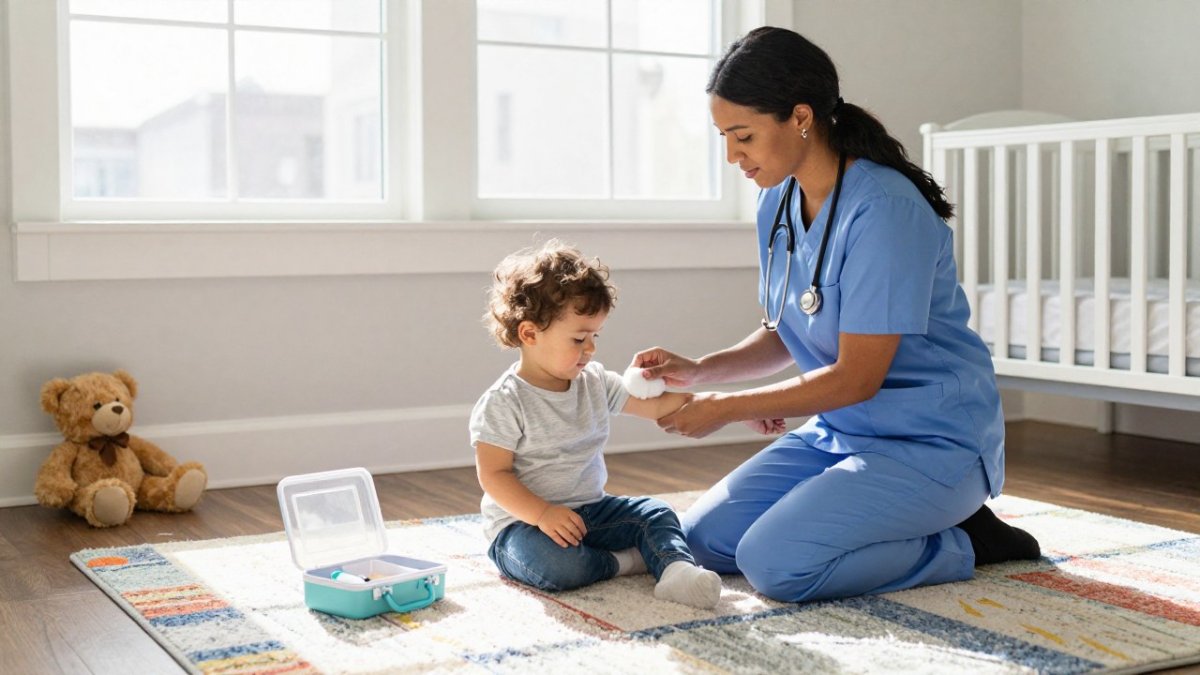
Looking for at-home blood tests for toddlers? Learn which tests suit home collection, how to calm a fussy child, and when a clinic is the better choice.
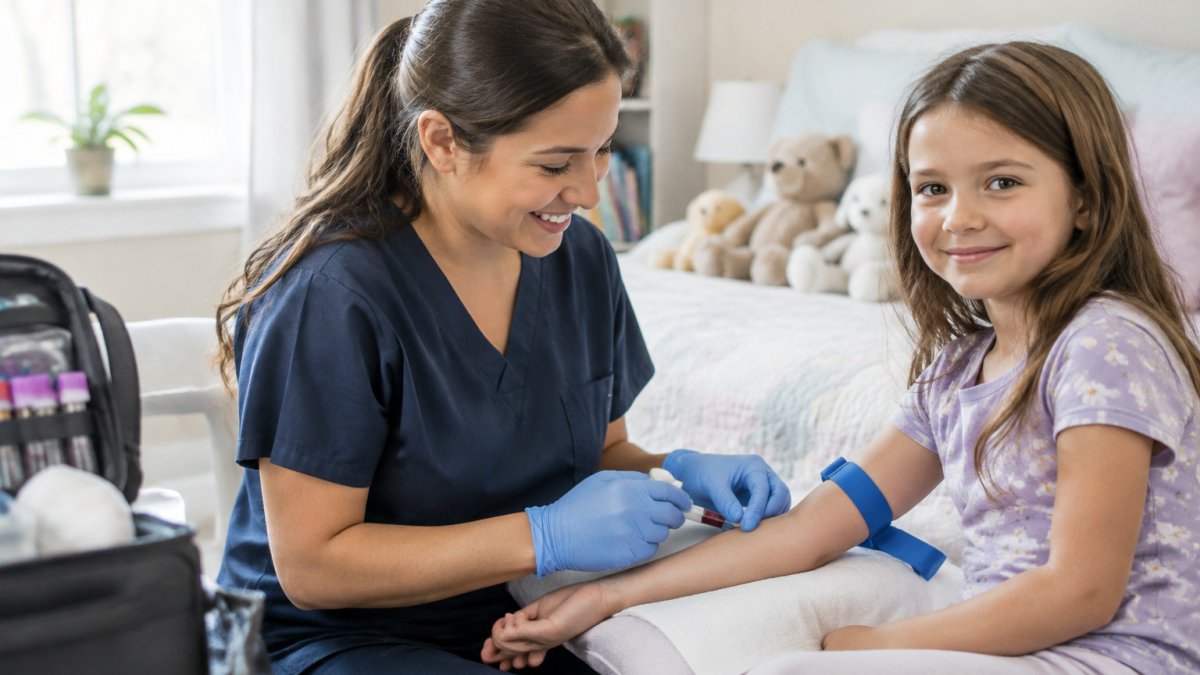
How Mobile Phlebotomy Benefits Pediatric Patients
Last Updated: November 4, 2026
Quick Summary
Mobile phlebotomy lets a technician draw a child’s blood at home, where familiar surroundings can reduce anxiety and remove the stress of travel and waiting rooms. Children can stay with a parent, hold a favorite toy, and be handled calmly by a trained technician. The approach can also be adapted for infants and children with special needs.
- Home visits remove the drive, parking and waiting room, which are common triggers for stress.
- Children can sit on their own couch with a favorite toy and stay close to a parent.
- Infants are kept warm and held securely, and a caregiver stays present throughout the draw.
- Families should share a child’s triggers and comfort strategies with the technician before the visit.
- Confirm the ordered tests, fasting needs and lab acceptance before booking a home visit.
Table of Contents
- What Mobile Phlebotomy Means for Children
- Why In-Home Blood Draws Can Reduce Anxiety in Children
- Gentle Blood Draw for Infants at Home
- How to Prepare a Child for a Blood Draw
- Mobile Phlebotomy for Special Needs Children
- Pediatric Safety, Credentials, and Specimen Handling
- Booking a Home Blood Draw for Your Child
- Frequently Asked Questions
What Mobile Phlebotomy Means for Children
Mobile phlebotomy is a blood draw performed where the patient already is, usually at home, rather than at a clinic or hospital lab. Read the core explainer on how pediatric mobile phlebotomy works. Mobile phlebotomy services bring the collection kit to the family’s home, and the sample can then travel to the laboratory the ordering physician has chosen.
Phlebotomy is the medical term for drawing blood, typically by venipuncture technique overview from a vein in the arm. A mobile visit simply changes the setting. The technician works from a portable kit, and the child stays in familiar surroundings the whole time.
Families with young children often juggle school, work and sibling schedules. Skipping the drive, parking and waiting room removes several sources of stress before the needle is even out of its packaging.
Why In-Home Blood Draws Can Reduce Anxiety in Children
Many children feel uneasy about needles, and that unease often starts before they reach the examination room. The sight of a clinic, the smell of antiseptic and the sounds of other patients can all build tension.
A blood draw at home removes many of those triggers. A child can sit on their own couch, hold a favorite toy and stay close to a parent.
Here is what often changes at home:
Anxiety is not identical in every child, so a home visit is not a cure-all. It does, however, give the technician more room to adapt to the individual child.
A home visit removes several common sources of stress for children facing a blood draw, including:
| Stressor at a clinic | What changes at home | Why it helps |
|---|---|---|
| Drive and parking | No travel needed | Removes stress before the visit |
| Waiting room | Child stays in familiar space | Fewer triggers before the draw |
| Unfamiliar sights and smells | Own couch, favorite toy | Child feels more secure |
| Other patients and sounds | Quiet, familiar environment | Less overstimulation |
Gentle Blood Draw for Infants at Home
A gentle blood draw for infants at home focuses on keeping the baby calm, warm and held securely throughout the procedure. Infants cannot understand what is happening, so the environment and the handling do most of the work.
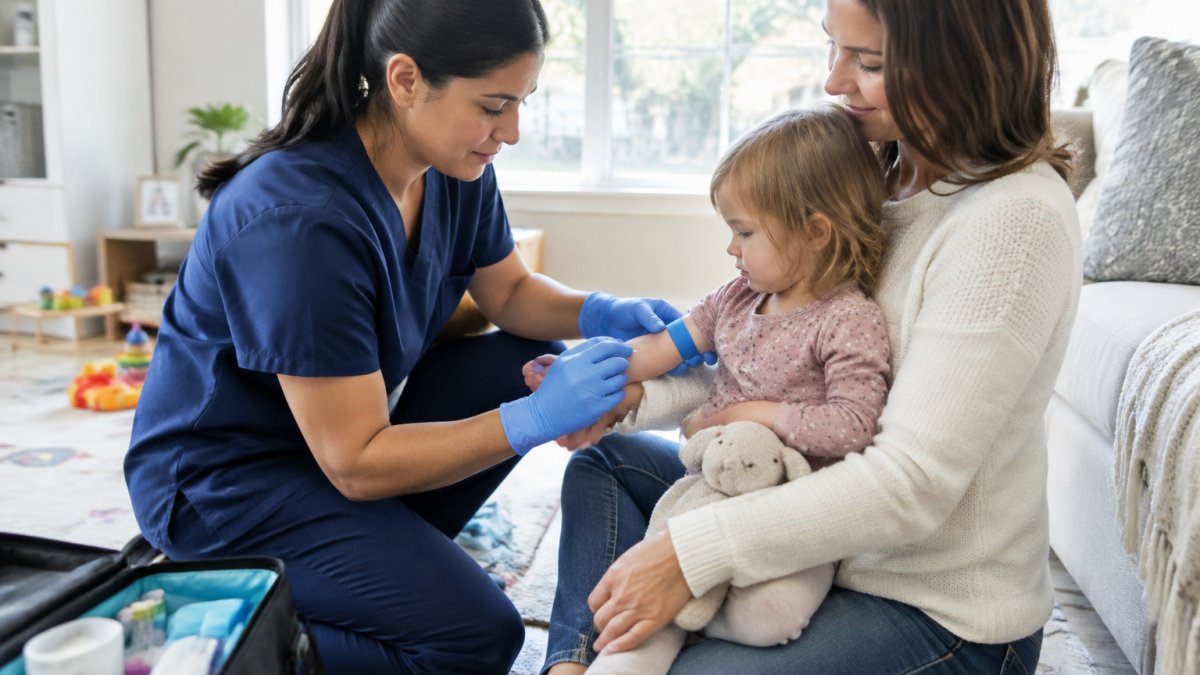
What to Expect During a Home Visit for a Baby
Afterward, the technician labels the specimen on site and transports it to the designated lab, keeping it stable for the journey.
How to Prepare a Child for a Blood Draw
Preparation works best when it is honest, simple, and matched to the child’s age. Telling a toddler exactly what will happen usually creates more trust than reassurance alone, but the same words will bore a teenager and overwhelm an infant.
Infants (birth to about 12 months)
Infants cannot understand explanations, so preparation is really about the caregiver and the environment. Feed the baby shortly before the visit if the test does not require fasting, a full, drowsy infant is easier to collect from. A caregiver should hold the baby throughout, and a pacifier or a finger to suck on can help during the stick. Read a parent’s guide to what a gentle infant blood draw involves.
Toddlers (about 1 to 3 years)
Toddlers understand far more than they can say, so short, concrete sentences work best. Say “the nurse will take a little blood from your arm, and it will pinch for a moment,” rather than promising it will not hurt. Let the child hold a favorite stuffed animal and narrate what the animal is doing, a stuffed bear can “get a blood draw too” to model calm behavior.
School-age children (about 4 to 11 years)
Children in this range can handle a real explanation and usually want one. Describe the sequence in order: cleaning the skin, the quick pinch, the tube filling, the bandage. Let them ask questions and answer honestly, including that it may hurt briefly. Give them a job, holding the bandage, choosing which arm, counting to ten, because a sense of control reduces distress.
Adolescents (about 12 years and up)
Teenagers often want privacy and a sense of agency more than comfort items. Explain the reason for the test, let them decide whether a parent stays in the room, and give them the chance to ask the technician questions directly. Some adolescents are more anxious than younger children but less willing to show it, so a matter-of-fact tone helps. If they have fainted with past draws, tell the technician in advance so the draw can be done lying down.
Steps that help at every age
- Hydrate beforehand. Unless the test requires fasting, have the child drink water in the hour before the visit; good hydration makes veins easier to find.
- Confirm fasting instructions. Fasting requirements depend on the specific test, so check with the ordering physician rather than assuming.
- Prepare the space. Choose a room with good light and a flat surface, and settle siblings and pets elsewhere.
- Dress for access. Short sleeves or loose sleeves make the arm easy to reach without undressing.
- Stay calm yourself. Children read parents’ body language closely, so a relaxed tone and steady hands help more than any script.
- Plan the aftercare. Keep the bandage on for the time the technician recommends, watch for bleeding or swelling, and offer a drink and a quiet activity afterward.
Watch out: if a child has a history of fainting or a severe needle phobia, tell the technician when booking rather than on arrival, the visit may need to be scheduled differently or the child may need to be seen in a setting with clinical backup.
Mobile Phlebotomy for Special Needs Children
Bright lights, unfamiliar sounds and strict waiting-room routines can make a routine blood draw very difficult.
Home-based collection can offer a more predictable environment. The child can keep their own routines, use calming objects and move around a space they know. Some families also arrange visits for the same time of day to build consistency.
Every child with special needs is different.
Pediatric Safety, Credentials, and Specimen Handling
Parents are right to ask hard questions about who is performing a blood draw on their child. Review whether mobile phlebotomy is safe and what credentials to expect. Phlebotomy Experts provides services by licensed phlebotomists, and families are welcome to ask about a technician’s credentials before a visit.
What pediatric training should include
Pediatric collection is a distinct skill. A technician who is excellent with adult veins may still struggle with a toddler’s small, deep, or rolling veins. The following competencies matter most:
- Vein selection by age. Infants and toddlers are often collected from a scalp or hand vein rather than an antecubital vein, and the technician should be able to explain why a particular site was chosen.
- Needle and tube sizing. Smaller-gauge butterfly needles and low-volume tubes reduce trauma and prevent hemolysis in small samples.
- Restraint and positioning. Safe holding is a two-person job with a caregiver present; the technician should direct the hold rather than apply force alone.
- Order-of-draw awareness. When multiple tubes are ordered, the sequence affects additive carryover. A trained technician follows the standard order of draw rather than filling tubes in whatever order they are handed over.
Identity and order verification
Before any needle is opened, it is good practice for the caregiver and technician to confirm three things together: the child’s full name and date of birth, the ordering physician and the specific tests on the requisition, and the laboratory the sample is going to. A common failure pattern is a requisition that lists a test the chosen lab does not run, which forces a repeat draw. Confirm the lab accepts the order before the visit.
Infection control and site care
Infection-control practices such as hand hygiene, clean work surfaces and proper site preparation are standard in phlebotomy, whether in a clinic or at home.
Specimen handling and test reliability
A clean draw can still produce a rejected sample if handling goes wrong. The variables that matter most are labeling, transport time, and temperature:
- Labeling at the bedside. Tubes should be labeled accurately at the time of collection to keep specimens correctly identified.
- Transport window. Most routine chemistry and hematology samples are stable for a limited window at room temperature, often measured in hours rather than a full day.
- Temperature and light. Some tests require refrigeration or protection from light; others are degraded by cold. The technician should know which category the ordered tests fall into.
- Special handling. Coagulation studies, blood cultures, and some endocrine tests have tighter requirements. If the ordered test is one of these, confirm the mobile service can meet the handling requirement before booking.
When a child should be seen in a clinical setting instead
Mobile collection is not appropriate for every situation. A child should be evaluated in a clinic or emergency setting rather than at home if any of the following apply:
- The child is acutely ill with fever, dehydration, lethargy, or difficulty breathing.
- The draw is expected to be difficult, for example, a history of multiple failed attempts, very small or scarred veins, or a need for a large blood volume.
- The test requires an arterial sample or a timed draw that must be processed immediately on site.
- The child has a bleeding disorder or is on anticoagulation and the ordering physician has not cleared home collection.
- There is any concern about the child’s stability that would benefit from on-site clinical backup.
If a child shows unusual reactions after the draw, prolonged fainting, persistent bleeding, swelling, or signs of infection at the site such as spreading redness or warmth, the family should contact the ordering physician or seek medical care.
Booking a Home Blood Draw for Your Child
Booking is usually straightforward. Follow a step-by-step guide to scheduling a mobile blood draw. Gather the physician’s order, the child’s details and your preferred laboratory, then call Phlebotomy Experts to request a visit. Ask about arrival windows, what you need to have ready and whether the child should fast beforehand, since that depends on the tests ordered.
Pricing depends on the tests, visit details and delivery arrangements, so please contact Phlebotomy Experts directly for a current quote.
Call Now to Schedule your child’s home blood draw.
Frequently Asked Questions
What does a pediatric phlebotomist do?
A pediatric phlebotomist is trained to collect blood samples from infants, toddlers, and older children. Their work goes beyond the draw itself: they explain each step in age-appropriate language, choose the right equipment for small veins, and watch for signs of distress. Parents are usually present and involved in the process. When you book a home visit, ask the provider about the technician’s credentials and experience with children.
Is mobile phlebotomy safe for infants and toddlers?
Blood draws carry some risk for any patient, including bruising, bleeding at the site, or in rare cases infection. Blood collection involves general risks, and safety depends on training, sterile technique and equipment. Parents should confirm that the provider is licensed, follows standard infection-control practices, and has a plan for escalating care if a problem occurs. Discuss any concerns about your child’s health with their pediatrician before scheduling.
How does mobile phlebotomy reduce stress for children?
Many children feel calmer in familiar surroundings, and a home visit removes the trip to a clinic, the waiting room, and the unfamiliar setting. Children can stay in a favorite spot with a parent nearby, which can make the experience less overwhelming. Families also avoid the stress of travel with a sick or fussy child.
Who should I contact about a home blood draw for my child?
Start by asking your child’s pediatrician whether the blood tests are needed and whether any special instructions apply, such as fasting. Then contact Phlebotomy Experts to confirm service availability in your area, the technician’s qualifications, and how specimens will be delivered to the laboratory your doctor specifies. Pricing depends on the tests ordered, the visit details, and delivery arrangements, so request a current quote directly from Phlebotomy Experts.

Related Posts