
Learn why blood bruises after a draw, what makes a bruise more likely, simple home care steps, and signs that call for prompt medical advice right away.
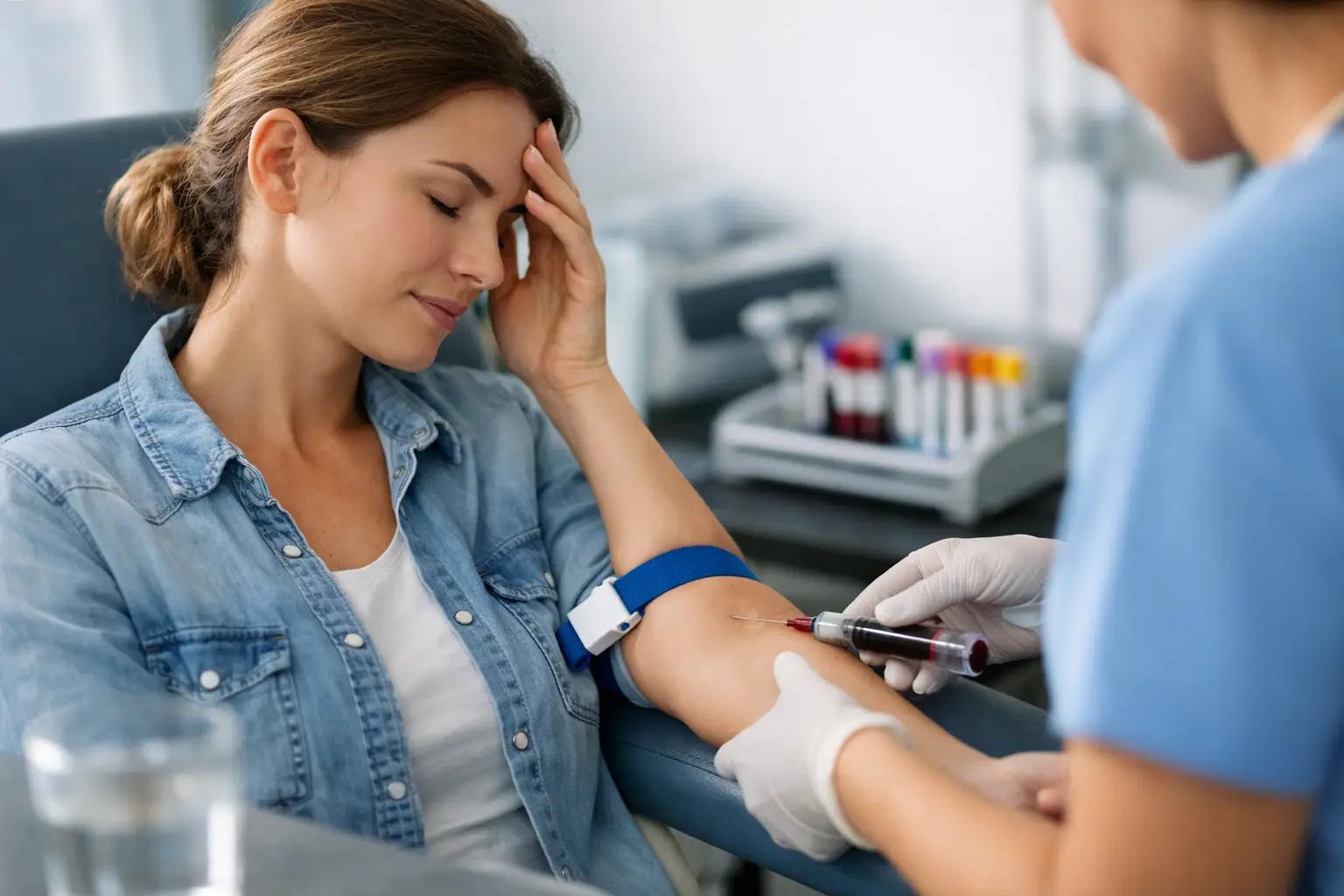
How to Avoid Vasovagal Reactions During Blood Draws
A blood draw is often quick, but the feeling that comes before it can be very real: warmth in the face, a sudden sweat, nausea, ringing in the ears, or the sense that you might faint. If you want to avoid vasovagal reactions, the best plan starts before the needle comes out. A few simple choices around food, fluids, body position, and communication can make a major difference.
Vasovagal reactions are common, and they are not a sign that you are weak, difficult, or “bad with needles.” They are an automatic nervous-system response that can be triggered by fear, pain, the sight of blood, prolonged standing, dehydration, or even an empty stomach. The goal is not to tough it out. The goal is to help your body stay steady and to let your phlebotomist know what support helps you most.
Why Vasovagal Reactions Happen During Blood Draws
A vasovagal reaction happens when your body briefly overreacts to a trigger. Your heart rate and blood pressure may drop, reducing blood flow to the brain for a moment. That can leave you lightheaded, pale, clammy, nauseated, or faint.
For some people, the trigger is the needle itself. For others, it is the anticipation of the appointment. Patients who have fainted before, have a strong fear of medical procedures, are dehydrated, or have been fasting may be more likely to have symptoms. A difficult day, poor sleep, pain, illness, and anxiety can add to the mix.
The good news is that experienced phlebotomists see this often. Saying, “I have fainted during blood draws before,” is useful medical information, not an inconvenience. It gives your care team the chance to prepare the right setup before collection begins.
How to Avoid Vasovagal Reactions Before Your Appointment
Preparation matters, especially if you know your body tends to react during needles or blood collection. Follow any instructions your doctor or laboratory gave you first. Some tests require fasting, and fasting instructions should not be changed without checking with the ordering provider.
Eat and drink when your test allows it
If your test does not require fasting, have a balanced meal or snack before your draw. Something with protein and complex carbohydrates can help you feel more stable than coffee and a pastry alone. Eggs and toast, yogurt with fruit, or a simple sandwich can all be reasonable choices.
Hydration is equally helpful. Drinking water ahead of time may support circulation and can also make veins easier to access. Start the day with fluids rather than trying to drink several large glasses in the final five minutes before your appointment. Alcohol can contribute to dehydration, so it is wise to skip it the night before and the day of collection.
If you must fast, ask your provider whether plain water is permitted. It often is, but your specific lab order is the authority. Do not assume that every blood test has the same preparation rules.
Tell your phlebotomist early
Do not wait until you feel dizzy to mention a past fainting episode. Let your phlebotomist know when the appointment begins. You can be direct: “Needles make me lightheaded,” “I have passed out before,” or “Please do not show me the needle.”
This one conversation can change the experience. Your phlebotomist may collect your sample while you are reclined, give you time to settle in, keep the procedure out of your line of sight, and monitor you more closely afterward. There is no prize for sitting upright if lying back is safer for you.
Choose a setting that lets you relax
Crowded waiting rooms, rushing across town, and worrying about getting back to work can make anxiety worse. For people who have mobility concerns, needle anxiety, chronic illness, or a history of fainting, an at-home or at-office draw can provide a calmer environment.
With a mobile appointment, you can be in a familiar space, wear comfortable clothing, and take a few quiet minutes afterward instead of immediately driving or standing in line. Phlebotomy Experts provides concierge blood collection with a patient-first approach, helping patients arrange collection where comfort and convenience make the most sense.
What to Do During a Blood Draw
Once the draw begins, your job is simple: stay supported, breathe normally, and speak up if anything changes. Your phlebotomist handles the collection. You do not need to watch, brace against the chair, or hold your breath.
Look away from the equipment if seeing blood or needles is a trigger. Focus on a fixed point in the room, listen to music through one earbud if permitted, or talk about something ordinary. A casual conversation about your weekend, your kids, or your favorite show can help your nervous system settle.
Try a slow breathing pattern: inhale gently through your nose, then exhale a little longer than you inhaled. Avoid fast, shallow breathing, which can make lightheadedness feel worse. The aim is calm breathing, not dramatic deep breaths.
Use muscle tension if you are prone to fainting
Applied muscle tension can help some people who feel faint around blood or needles. While seated or reclined, tighten the muscles in your legs, buttocks, and abdomen for several seconds, then relax briefly. Repeat as needed. This may help keep blood pressure from dropping too quickly.
Do not tense the arm being used for the draw, and do not grip or pump your fist unless your phlebotomist asks you to. Too much arm movement can interfere with collection and make the experience less comfortable. Keep the collection arm relaxed while using the other muscles in your body.
If muscle tension makes you uncomfortable, stop and tell your phlebotomist. The right approach depends on how you feel and on any medical conditions you have.
Recognize the early warning signs
Vasovagal symptoms can come on quickly, but many people notice a warning. Tell your phlebotomist immediately if you feel hot, sweaty, nauseated, shaky, weak, dizzy, or as if your vision is narrowing. Other signs include yawning repeatedly, hearing a buzzing sound, or suddenly feeling very tired.
Do not try to stand up and “walk it off.” Staying reclined or lowering your head as directed is usually safer. Your phlebotomist can pause, protect you from a fall, and give your body time to recover.
After the Draw: Give Your Body a Minute
The tube is filled, but the appointment should not end the second the needle is removed. Stay seated or reclined until you feel fully steady. If you had symptoms during collection or have fainted in the past, take a little extra time. Have water and a snack if your test preparation allows it.
Keep pressure on the bandage site as instructed to reduce bruising. Avoid heavy lifting with that arm for the rest of the day if your phlebotomist recommends it, especially after a larger-volume draw such as therapeutic phlebotomy. Stand slowly, and make sure you feel clear-headed before walking away.
If possible, do not drive yourself immediately after a significant fainting episode. Ask a family member, friend, caregiver, or staff member to stay nearby until you feel normal again. For recurring collections, it can help to schedule at a time when you are not rushing into a meeting, school pickup, or long commute.
When Symptoms Need Medical Attention
Most vasovagal reactions improve with rest, fluids, and positioning. Still, not every episode of dizziness or fainting should be assumed to be a needle reaction. Seek urgent medical care for chest pain, trouble breathing, persistent confusion, severe headache, a serious injury from a fall, seizure-like activity, or symptoms that do not improve promptly.
You should also speak with your doctor if fainting happens repeatedly, occurs without an obvious trigger, happens during exercise, or is new for you. Your clinician can decide whether further evaluation is needed.
A good blood draw experience is not about pretending you are not nervous. It is about giving yourself permission to ask for a reclined position, a slower pace, a sip of water when allowed, and a few extra minutes of care. Small accommodations can help your next appointment feel far more manageable.
