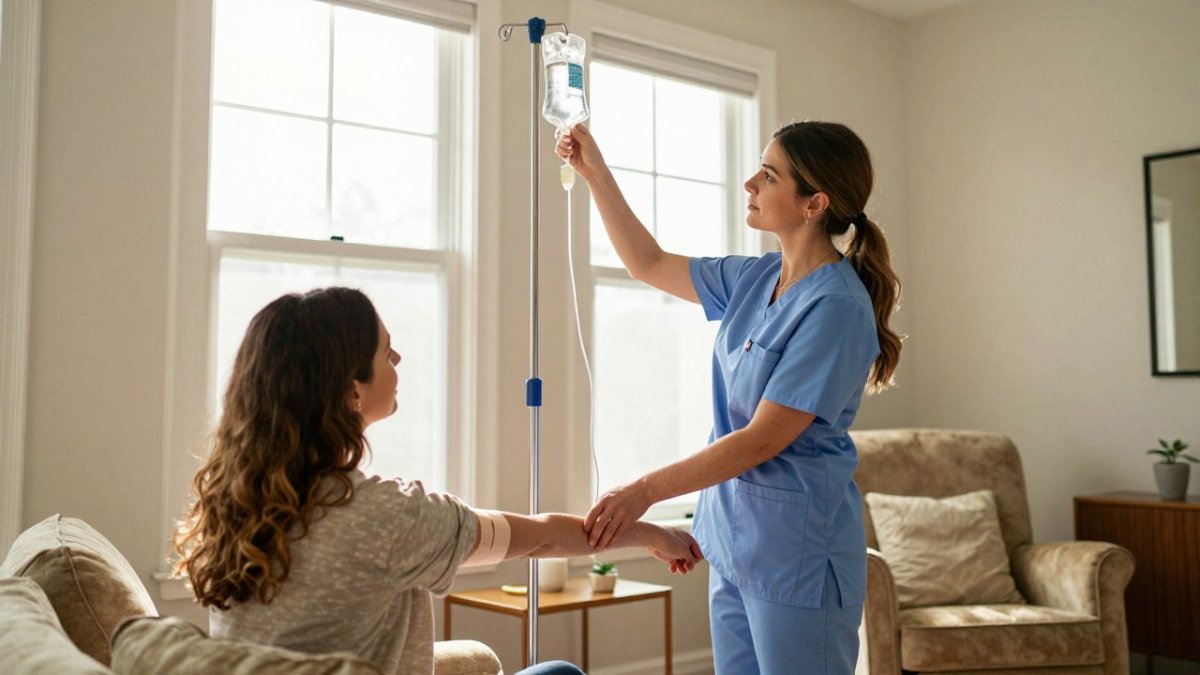
Looking for at-home blood tests for toddlers? Learn which tests suit home collection, how to calm a fussy child, and when a clinic is the better choice.
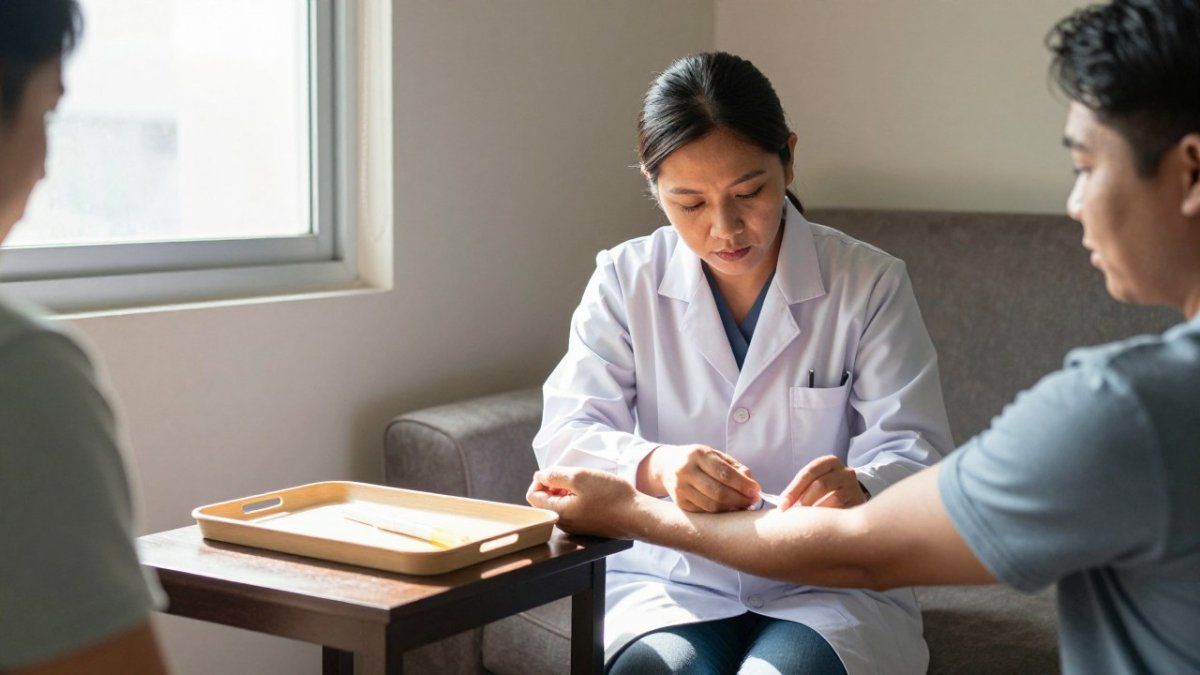
How to Qualify for Specialized Phlebotomy Roles
Last Updated: November 12, 2026
Quick Summary
Specialized phlebotomy roles require a formal training program with supervised venipuncture, a national certification such as NHA, ASCP, or AMT, and a current CPR card. Mobile and home-based positions also need strong specimen-handling skills and, where applicable, a driver’s license and insurance.
- Complete a formal phlebotomy training program that includes supervised venipuncture.
- Obtain a national certification: NHA’s CPT, ASCP’s PBT, or AMT’s RPT.
- Check whether your state requires a phlebotomy-specific license before performing draws.
- Keep a current CPR card, immunization records, and a background check ready for onboarding.
- Document supervised draws with specific counts and draw types on your resume.
Ready to find your specialty phlebotomy role?Phlebotomy Experts offers licensed in-home blood draws and concierge lab services.
Table of Contents
- What Specialized Phlebotomy Roles Actually Involve
- Core Phlebotomy Certification Requirements Across States
- Phlebotomist Skills Beyond Credentials
- Qualification Matrix by Specialized Setting
- Documenting Your Experience for Specialty Hiring
- Finding Phlebotomy Technician Jobs That Match Your Qualifications
- Your Next Step Toward a Specialty Phlebotomy Position
- Frequently Asked Questions
What Specialized Phlebotomy Roles Actually Involve
Specialized phlebotomy roles go beyond routine blood draws. Examples include mobile phlebotomy, concierge lab work, clinical trial draws, and home-based therapeutic phlebotomy. (Source: U.S. Department of Labor’s Occupational Outlook Handbook)
Most of the daily work is the same across these settings: identifying patients, preparing them for the draw, collecting specimens correctly, labeling them, and getting them to the right lab. What changes is the environment.
The biggest difference is independence. In a hospital, a phlebotomist usually works with nurses and other staff nearby.
Many specialized roles also involve difficult draws. Patients may have small or hard-to-find veins, needle anxiety, or conditions that make collection harder. Strong technique and a calm bedside manner matter more here than in a busy lab.
Core Phlebotomy Certification Requirements Across States
Phlebotomy credentialing is not uniform, and the difference between a state-issued credential and an employer preference decides whether a candidate can be hired at all. The practical rule is to separate three layers: what the state requires by law, what a national certifying body offers, and what an individual employer demands on top of both.
A high school diploma or GED is the baseline almost everywhere, followed by a formal phlebotomy training program that includes supervised venipuncture. From there, requirements diverge.
States With a Specific Phlebotomy Credential
A minority of states require a dedicated phlebotomy license or certification before a person may perform venipuncture. A small number of states have their own phlebotomy credentialing pathways, and the specific requirements differ from state to state. Because these lists change through legislation and board rulemaking, verify the current status directly with the state health department or the board that oversees clinical laboratory personnel.
States That Defer to National Certification or Employers
Most states do not issue a phlebotomy-specific license. In those states, a national certification is voluntary in the legal sense but often mandatory in practice, because hospitals, reference laboratories, and mobile draw companies write it into job descriptions. A candidate with no certification may still be legally eligible to draw blood yet fail every applicant screen.
National Certification Bodies and What Each Requires
The three credentials most often requested in job postings are:
- National Healthcareer Association (NHA), Certified Phlebotomy Technician (CPT). Eligibility typically includes completion of an approved training program or a defined period of documented on-the-job experience, plus a passing exam score.
- American Society for Clinical Pathology (ASCP), Phlebotomy Technician, PBT(ASCP). ASCP routes applicants through several eligibility tracks, including formal training programs and verified work experience, and requires renewal through continuing education.
- American Medical Technologists (AMT), Registered Phlebotomy Technician (RPT). AMT accepts training-program graduates and experienced technicians who meet its documented-experience thresholds.
Each body sets its own exam content outline, passing standard, and recertification cycle. Confirm the current eligibility rules on the certifying body’s site before you pay for an exam, because a training program that satisfies one body may not satisfy another.
The Multi-State and Mobile Complication
Mobile phlebotomy and concierge services create a credentialing problem that hospital employees rarely face. A technician who crosses a state line to complete a draw may be practicing under the rules of the state where the patient is located, not the state where the technician was trained or certified. Mobile operators often require a national certification plus proof of current CPR and immunization status, and verify each state’s rules before dispatching a technician. Before accepting a multi-state assignment, confirm three things in writing: whether the patient’s state requires a state-issued credential, whether your national certification is accepted there, and whether the employer will cover any additional state-specific training or fees.
A certification that is valid in your home state does not automatically authorize a draw performed across a state line.
What Employers Ask For Beyond the Credential
Even in states with no phlebotomy license, onboarding packets commonly request a current CPR card (often Basic Life Support from the American Heart Association or an equivalent), immunization records including hepatitis B status or a signed declination, a background check, and sometimes a drug screen. Specialized settings add their own layers: clinical research sites may require human-subjects protection training, and home-visit programs may require a driver’s license, vehicle insurance, and a clean driving record. Treat these as part of the qualification package, not paperwork to handle after the offer.
Phlebotomist Skills Beyond Credentials
A certificate proves you have learned the basics. Specialized employers want proof that you can use those basics under real conditions. Building these skills and being able to describe them clearly helps.

- Vein selection: Find a good vein quickly, even on patients with small or rolling veins.
- Order of draw: Collect tubes in the correct sequence to avoid cross-contamination of additives.
- Specimen labeling: Label every tube at the bedside, with two patient identifiers, before leaving the room.
- Patient communication: Explain each step, and calm nervous patients without rushing them.
- Infection control: Follow standard precautions, use personal protective equipment, and dispose of sharps safely.
- Attention to detail: Check requisitions, timing, and fasting instructions before the draw. (Source: CLIA regulations)
Manual dexterity and steady hands matter too, especially for pediatric or geriatric draws. Interpersonal skills often decide whether a patient trusts you enough to come back.
Qualification Matrix by Specialized Setting
Credentials get a candidate past the screen. Competence gets the candidate through the practical evaluation, and specialized settings assess competence differently. The matrix below separates what is universal from what is setting-specific, then explains how employers actually test each one.
| Setting | Universal Qualifications | Setting-Specific Training or Evidence | How Competence Is Assessed |
|---|---|---|---|
| Mobile phlebotomy | National certification, CPR, state credential where required | Safe transport and specimen stability training, driver’s license and insurance | Supervised draws, route or transport scenario questions, background and driving checks |
| Concierge lab | National certification, CPR | Difficult-draw experience, professional communication | Interview scenarios, references from prior private-client work, trial draw |
| Clinical research | Certification, CPR | Human-subjects protection training, protocol and documentation training | Protocol quiz, documentation audit, delegated authority log |
| Home therapeutic draws | Certification, CPR | Experience with chronic conditions, therapeutic phlebotomy protocols | Supervised collections, escalation and adverse-event drills |
| Nursing homes and assisted living | Certification, CPR | Multi-patient scheduling, resident communication | Observed draws, time-on-task evaluation, reference checks |
| Pediatric and specialty clinics | Certification, CPR | Pediatric draw training, distraction and restraint protocols | Supervised pediatric collections, competency sign-off |
Universal Competencies Every Setting Tests
Regardless of setting, employers look for the same core behaviors, and they verify them the same way: by watching a candidate draw. A supervisor typically observes patient identification using two identifiers, order of draw, tube labeling at the bedside, sharps disposal, and hand hygiene. Many employers keep a competency checklist and require sign-off before a new hire works independently. A candidate who can describe these steps precisely and demonstrate them under observation clears the most common practical hurdle.
Difficult-Draw and Special-Population Competence
Specialized roles concentrate the hard cases. Pediatric draws call for smaller-gauge needles, distraction techniques, and a clear understanding of when to stop and ask for help. Older adults and patients with chronic conditions often have fragile or sclerosed veins that require different site selection and lower-pressure technique. Patients with needle anxiety need a slower approach and explicit coaching. Interviewers often ask candidates to describe a draw that went wrong and what they did next, since the answer shows how much practical judgment the candidate has. Employers also want to know that a technician will escalate rather than persist after repeated failed attempts, and that the technician knows the local protocol for when to seek a nurse or supervisor.
Specimen Integrity and Documentation Checks
Specialized settings, especially clinical research and mobile collection, test whether a candidate can protect specimen integrity from collection to delivery. Expect questions about labeling at the point of collection, temperature and handling requirements during transport, chain-of-custody documentation, and what to do when a requisition and a label disagree. A candidate who can walk through a rejected-specimen scenario step by step demonstrates more than a certificate does.
Evidence Candidates Can Provide Before the Interview
Applicants can shorten the evaluation by bringing evidence: a log of supervised collections with counts and draw types, certification numbers and expiration dates, a current CPR card, immunization records, and two or three references who can speak to draw quality and reliability. A specific resume line, such as one that states the number of supervised venipunctures and the types of draws performed, gives an interviewer something concrete to probe.
Documenting Your Experience for Specialty Hiring
Specialty employers want evidence, not just claims. Keep a simple record of your training hours, the number and types of draws you have performed, and any supervised clinical experience. Note whether draws were routine or difficult.
When you write your resume, list phlebotomy skills in specific terms, such as “performed 200+ venipunctures under supervision” instead of “experienced in blood draws.” Include your certification numbers, expiration dates, and CPR card details. Phlebotomy skills resume examples can help you find the right wording.
Keep copies of your certificates and immunization records in one place. Many specialty employers ask for them during onboarding, and having them ready speeds up the process.
Finding Phlebotomy Technician Jobs That Match Your Qualifications
Start by matching your credentials to the setting. A candidate with a national certification and mobile experience will fit mobile and concierge roles. A candidate with research training may be better suited to a clinical trial site. Look at job postings closely and note which certifications and skills they list as required versus preferred.
Search job boards using terms like “phlebotomy technician jobs,” “mobile phlebotomist,” and “specialized phlebotomy roles.” Also contact mobile lab companies and concierge services directly, since many do not post every opening online. For guidance on matching your background to employers, see our resource on finding professional phlebotomists in 2026.
Your qualifications matter, but so does fit. Ask about the work environment, daily schedule, and training support before accepting a position. If you are considering concierge work, Concierge Lab Services for Busy Professionals explains how that service model operates.
Your Next Step Toward a Specialty Phlebotomy Position
Pick one specialized setting that interests you and check the qualifications listed in this guide against your current skills. Close any gaps with training, certification, or supervised experience. Then update your resume and start applying.
If you want help understanding what a qualified service looks like, read our guide on what credentials mobile phlebotomists should hold. Phlebotomy Experts provides in-home blood draw services with licensed phlebotomists. For questions about pricing or availability, visit the Phlebotomy Experts website for current information or a quote.
Frequently Asked Questions
What qualifications do you need for phlebotomy?
Most employers require a high school diploma or GED and completion of a phlebotomy training program that includes supervised clinical practice. Many employers also expect a national certification such as the NHA Certified Phlebotomy Technician (CPT) or ASCP Phlebotomy Technician (PBT) credential, plus current CPR certification and proof of immunizations. Requirements vary by employer and state, so check the licensing rules for the state where you plan to work and the job posting for specific expectations.
Do specialized phlebotomists need additional certification?
Some specialty roles, such as research, donor centers or pediatric draws, may ask for extra training or documented competencies beyond a basic certificate. Employers often value hands-on experience with difficult draws, capillary collection or specimen processing. Ask prospective employers which additional credentials they prefer, and check whether your state requires any separate license before taking on a specialty assignment.
What skills are important for specialized phlebotomy roles?
Beyond venipuncture, employers look for patient identification accuracy, correct order of draw, specimen labeling and transport, infection control practices, and clear patient communication. Specialty settings may also require the ability to work with pediatric, geriatric or anxious patients, and to handle difficult veins calmly. Attention to detail and manual dexterity are consistently valued in every setting.
What experience helps phlebotomists qualify for specialty positions?
Documented clinical experience, especially in a setting that matches the specialty, carries significant weight. Experience with high-volume draws, pediatric patients, or specimen handling in a laboratory environment can strengthen an application. Keep a log of your draw volume, patient populations and any procedures you have performed, since this detail helps employers evaluate your readiness quickly.

Related Posts