
Are prenatal blood tests accurate? Learn what NIPT and fetal sex blood tests can tell you, when results may be less reliable, and next steps with care.
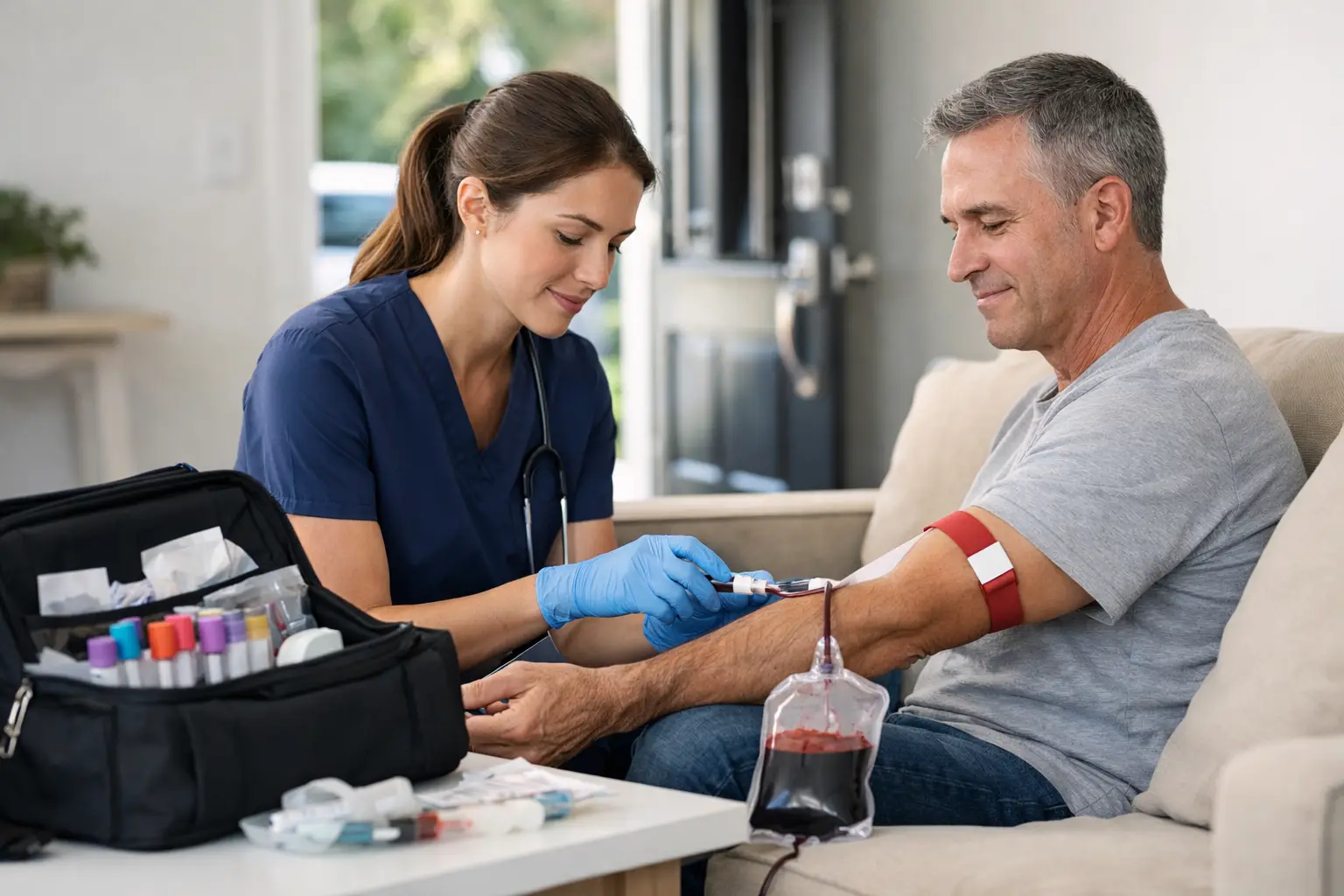
Therapeutic Phlebotomy Service at Your Door
A recurring therapeutic phlebotomy appointment should not mean losing half a day in a waiting room, finding transportation, or asking a family member to rearrange their schedule. A mobile therapeutic phlebotomy service brings the collection appointment to your home, office, care facility, or another appropriate location, so physician-directed treatment can fit more gently into real life.
For patients who need blood removed on a regular schedule, convenience is more than a nice extra. It can make it easier to stay consistent with the plan your physician has prescribed. With an experienced mobile phlebotomist at your side, the visit can feel more personal, calm, and manageable – especially when mobility, fatigue, exposure concerns, or a demanding workday make a laboratory visit difficult.
What Is a Therapeutic Phlebotomy Service?
Therapeutic phlebotomy is a medical procedure in which a prescribed amount of blood is removed to help manage certain health conditions. It is different from a routine blood draw for lab testing. Your physician determines whether treatment is appropriate, how much blood should be removed, how often it should happen, and whether there are any special instructions for your care.
It may be ordered for conditions involving excess iron or an elevated red blood cell level, among other physician-diagnosed concerns. Because every patient’s medical history is different, this is not a one-size-fits-all service. The order, frequency, volume, monitoring requirements, and next steps should always come from the treating physician.
A concierge collection provider supports that treatment plan by performing the ordered procedure in a convenient setting and coordinating the required specimen handling or laboratory delivery when applicable. The goal is simple: let the laboratory come to you while keeping the process professional, respectful, and organized.
Why Mobile Therapeutic Phlebotomy Can Make a Difference
For someone who feels perfectly well and lives close to a lab, a traditional appointment may be the right choice. But recurring treatment can become a real burden when getting out of the house requires extra planning. That is particularly true for older adults, patients recovering in rehabilitation, people in assisted living or hospice settings, and anyone with limited mobility.
A mobile visit also helps busy patients protect their time. Instead of driving, checking in, waiting, and traveling home after the procedure, you can arrange a visit around your day. Some people prefer an early appointment before work. Others need a quieter time at home, with a loved one nearby and a comfortable place to rest afterward.
There is also the comfort factor. Many patients are understandably nervous around needles, even if they have had treatment before. A skilled phlebotomist with an awesome bedside manner can make the experience feel less clinical and less rushed. You can ask questions, settle in, and receive care from a professional focused on you rather than the next number in a crowded lobby.
Mobile service is not automatically the best fit for every order. Some patients may need treatment in a hospital, infusion center, or another supervised setting because of their health status or physician instructions. A reputable provider will review the order and explain whether an at-location appointment is appropriate before scheduling.
How an At-Location Appointment Works
The process starts with a valid physician order. This order should clearly identify the therapeutic phlebotomy instructions, including the prescribed volume and frequency, as well as any requested lab work or parameters. If you are unsure what paperwork is needed, ask before your visit so there are no surprises on appointment day.
Once the order is confirmed, you choose a convenient location and appointment time. Phlebotomy Experts provides scheduled and, when available, same-day mobile support across Southern California, the Bay Area, Austin, and Las Vegas. The setting should be clean, private, and comfortable, with a suitable chair or place for you to recline if needed.
At the appointment, the phlebotomist verifies your identity and reviews the order. They will explain what is happening, prepare the collection area, and follow protective and HIPAA-compliant practices. The blood removal is performed according to the physician’s instructions. If specimens are also ordered, they are labeled and handled for delivery to the designated laboratory or hospital.
After the procedure, you will have time to sit, rest, and make sure you feel steady before returning to your normal activities. Your phlebotomist may provide practical aftercare reminders, but your physician remains the right person to contact for medical questions, symptoms, or changes to your treatment plan.
Preparing for Your Therapeutic Phlebotomy Visit
A little preparation can help your appointment go smoothly. Unless your physician has given you different directions, eating a light meal and drinking water beforehand may help you feel more comfortable. Avoid arriving dehydrated if you can. Wear a shirt with sleeves that can be easily rolled up, and plan to remain seated for a few minutes after the collection.
Have your photo identification, physician order, insurance or billing information if requested, and a list of current medications available. If you have ever felt faint during a blood draw, let the phlebotomist know before the procedure begins. That information helps the care team choose the most comfortable setup and keep a closer eye on how you are feeling.
It is also wise to give yourself a little breathing room after the appointment. Many people return to their usual routine quickly, but your own experience can vary based on the volume collected, your overall health, and your physician’s instructions. Do not plan strenuous activity unless your clinician has told you it is fine.
Questions Worth Asking Before You Schedule
A professional mobile therapeutic phlebotomy service should make the logistics clear. You deserve to know who is coming to your location, whether they are properly trained and certified, what documents are required, how specimens will be handled, and what happens if you do not feel well during the visit.
Ask whether the provider has experience with physician-directed therapeutic collections, not only routine lab draws. Proper procedure, accurate documentation, and timely delivery matter. If your care involves a specific laboratory, hospital, or specialist, confirm how coordination will work before the appointment.
You may also want to ask about service availability in your area and whether someone can be present with you if that would make you more comfortable. For a recurring treatment plan, ask how future visits can be scheduled. Having a dependable rhythm can reduce stress and help you avoid last-minute scrambling.
Comfort, Safety, and Respect Are Part of the Care
Blood collection is technical work, but it is also personal. Patients who need recurring treatment are not a specimen number or a time slot. They may be juggling a chronic condition, a difficult recovery, caregiving responsibilities, or plain old appointment fatigue. A compassionate phlebotomist understands that a calm voice, a gentle approach, and a few extra minutes can matter.
The right provider balances that human touch with serious operational care. That includes following the physician order, using appropriate collection procedures, protecting patient privacy, documenting the visit correctly, and coordinating prompt specimen delivery when testing is involved. Convenience should never mean cutting corners.
If you or someone you care for has a physician-directed therapeutic phlebotomy plan, ask whether a mobile appointment is appropriate for your needs. The best visit is one that supports your treatment, respects your time, and leaves you feeling cared for from the first call through the moment you are comfortably resting at home.
