
Learn why blood bruises after a draw, what makes a bruise more likely, simple home care steps, and signs that call for prompt medical advice right away.
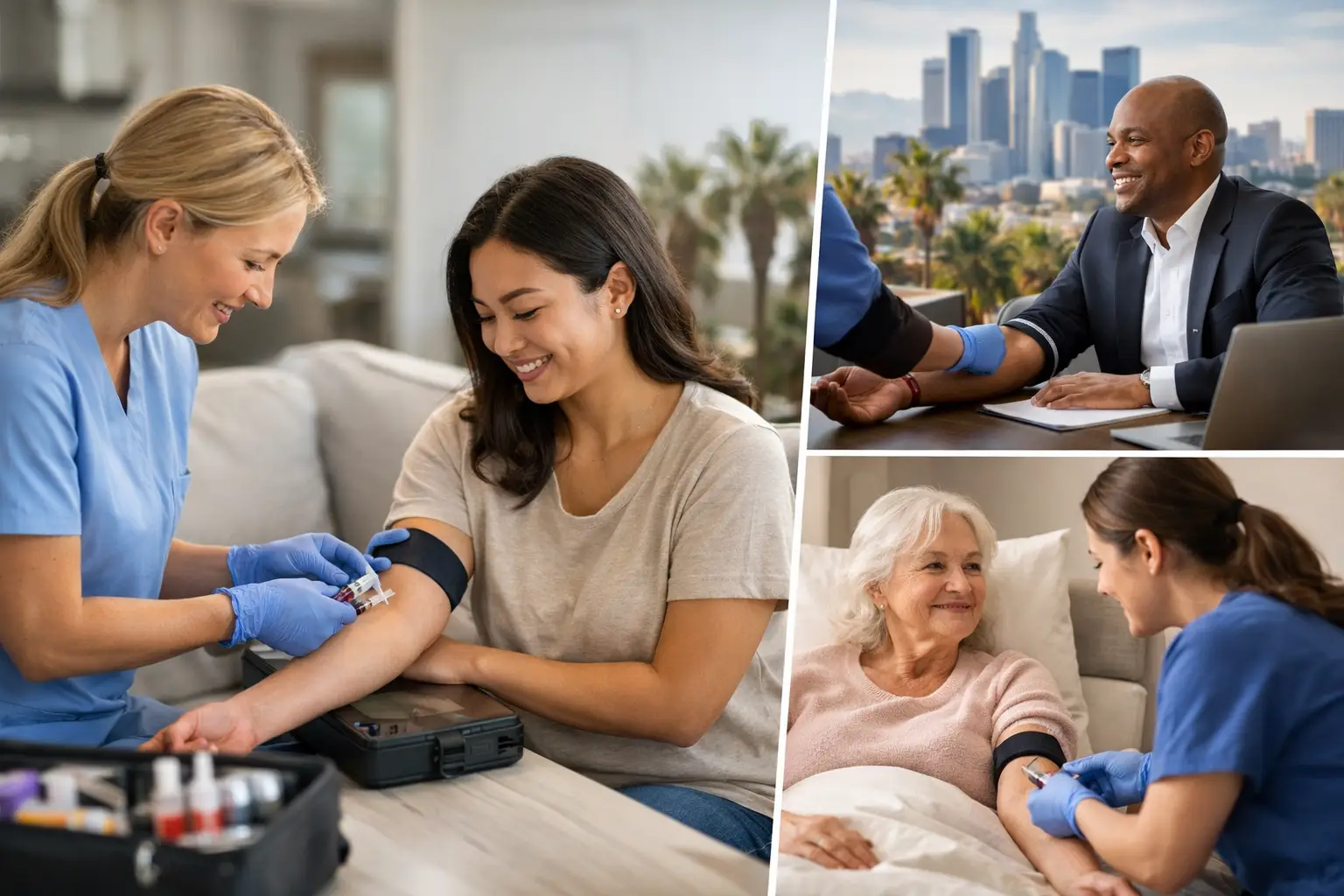
Blood Draw Los Angeles at Home, Work, or Care
A blood draw in Los Angeles should not have to mean rearranging your whole day around traffic, parking, a crowded waiting room, and a long line at the lab. When your physician has ordered testing, the hard part should be over. A mobile phlebotomist can come to the place where you are most comfortable – at home, at work, in an assisted-living community, or at a rehabilitation or hospice setting – and handle collection with calm, professional care.
For many patients, this is more than a convenience. It is a practical way to keep up with physician-directed testing when getting to a laboratory is difficult, stressful, or simply one more task an already busy family cannot fit in.
When a Mobile Blood Draw Makes Sense
Los Angeles is a big place, and a routine lab appointment can easily take half a day once travel is included. Busy professionals may not be able to leave the office during a laboratory’s limited collection hours. Parents may be balancing school drop-off, work, and a child who needs testing. Older adults and people recovering from illness may find transportation, stairs, parking structures, and long waits especially exhausting.
A mobile blood draw is also a thoughtful option for patients who want to limit time in crowded medical settings. That can matter for immunocompromised people, people managing chronic conditions, and anyone who feels more at ease in familiar surroundings. The appointment is built around your location, not around a lab lobby.
Some patients need more specialized support. Therapeutic phlebotomy may be ordered on a recurring basis. A patient using a home blood-test kit may need a trained professional to collect, label, and prepare the specimen correctly. Families arranging care for a loved one in a group home, skilled nursing setting, or hospice program may need a reliable professional who can work respectfully alongside caregivers.
The right service depends on the order, the testing laboratory, the specimen type, and timing requirements. Some tests are easy to collect in a home or office. Others have strict handling rules or must be performed at a specific facility. A good mobile phlebotomy concierge will confirm those details before the appointment instead of making assumptions.
How a Blood Draw Los Angeles Appointment Works
The process should feel straightforward. First, have your physician’s laboratory order or requisition available. If you are using a specialty collection kit, keep the kit and all included instructions nearby. When scheduling, share the laboratory involved, the tests requested, your preferred location, and any timing needs such as fasting or an early-morning collection.
A certified phlebotomist arrives at the scheduled location with the appropriate collection supplies. Before beginning, they verify patient identity, review the order, and prepare the materials needed for the requested draw. A careful collector takes the time to help you get settled, especially if you have difficult veins, feel anxious around needles, or need to remain seated or in bed.
After collection, the specimen is labeled and handled according to the laboratory’s requirements. It is then delivered to the designated laboratory or hospital for processing. Phlebotomy Experts coordinates collection and delivery with established laboratories and hospitals, including Quest Diagnostics, LabCorp, WestPac Labs, CMB Laboratory, St. Joseph, and Cedars-Sinai, when the order and collection requirements allow.
Your results are generally provided through your ordering physician or the laboratory’s normal reporting process. The phlebotomist’s role is to collect and transport the specimen properly, not to interpret results or replace medical advice. If you have questions about what your test measures, whether you need to fast, or what an abnormal result may mean, your physician is the right person to ask.
Comfort Matters More Than People Think
Nobody has to pretend a blood draw is their favorite appointment. Even patients who have frequent labs can feel nervous, lightheaded, or frustrated by a difficult stick. A skilled phlebotomist brings technical experience, but bedside manner matters just as much.
At-home collection gives you more control over the experience. You can sit in your preferred chair, lie down if you have a history of fainting, keep a family member nearby, and take a few quiet minutes afterward before returning to your day. For children, a familiar environment can make the experience less intimidating. For an older adult, it can eliminate the physical strain of getting dressed, traveling across town, and sitting in an unfamiliar room.
Be open when you schedule and again when the phlebotomist arrives. Mention if you have small or rolling veins, a history of fainting, a port or vascular-access restrictions, adhesive sensitivities, or an arm your care team has told you to avoid. Those details help the collector plan appropriately and help you feel cared for rather than rushed.
Preparing for Your Appointment
Preparation is usually simple, but it should follow your ordering provider’s instructions. Do not fast unless your physician or laboratory has told you to fast. For many routine blood tests, drinking water is helpful because hydration can make veins easier to access. If fasting is required, clarify whether you may take regular medications and whether plain water is allowed.
Choose a well-lit space with a clean surface and a comfortable chair. Wear a shirt with sleeves that can be rolled up easily. Keep your photo identification, insurance information if requested, laboratory order, and collection kit together before the appointment begins. If you are arranging the draw for a parent, partner, or resident in a care facility, make sure the person providing consent and relevant paperwork is available.
It also helps to plan for the few minutes after the draw. Stay seated if you tend to feel dizzy, have a snack if your fasting period is over, and keep the bandage on for the recommended amount of time. Minor soreness or a small bruise can happen after any venipuncture. Significant pain, swelling, persistent bleeding, or concerns about your condition should be addressed with a medical professional.
Home, Office, and Care-Facility Collection Are Different
The destination changes the logistics, but the goal stays the same: safe collection and prompt, appropriate delivery. At a home appointment, privacy and comfort often lead the conversation. At an office, discretion and timing can be especially important, so a private conference room or quiet space is usually best.
In assisted living, rehabilitation, and hospice settings, the phlebotomist may coordinate with family members, nurses, or caregivers to avoid medication times, therapy sessions, or rest periods. This is where a hands-on approach makes a real difference. Patients should never feel like they are being moved through an assembly line.
There can be trade-offs. Mobile service has a concierge fee, availability can vary by location and appointment window, and not every insurance plan handles mobile collection in the same way. Laboratory billing and mobile service fees may be separate. Asking about the total process before booking helps avoid surprises and lets you decide whether at-location care is the best fit.
A Better Option for Recurring and Specialty Needs
For patients who need frequent testing, consistency can reduce stress. Having a trusted, experienced collector who understands your preferences, difficult veins, mobility needs, and collection routine can turn a recurring obligation into a manageable part of care.
That same personal attention is valuable for specialty services such as therapeutic phlebotomy, prenatal DNA gender testing, autologous serum or plasma eye-drop processing, PRP-related collection, and certain home-kit collections. These services require close attention to the ordering provider’s instructions, kit requirements, timing, and transport. They are not one-size-fits-all appointments, which is exactly why experienced coordination matters.
If you need a blood draw, start with the order and the practical details: where you are, when the specimen needs to be collected, which laboratory will receive it, and what would make the appointment feel easier. From there, compassionate mobile collection can bring professional care to your door – with less waiting, less running around, and a little more peace of mind.
