
Learn why blood bruises after a draw, what makes a bruise more likely, simple home care steps, and signs that call for prompt medical advice right away.
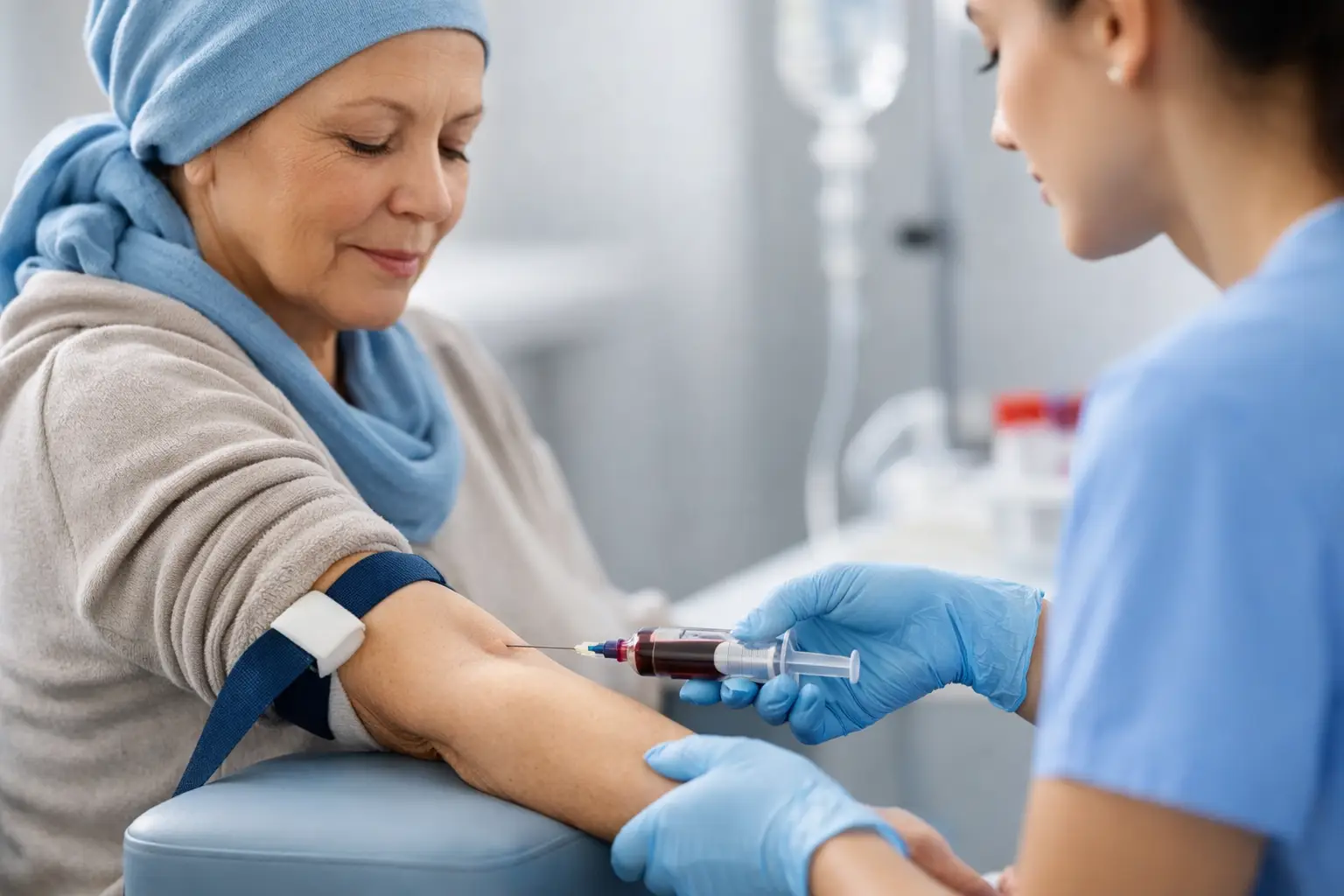
Blood Draw for Immunocompromised Patients
For someone with a weakened immune system, a routine lab order can create an uncomfortable question: is getting bloodwork worth the exposure of a crowded waiting room? A blood draw for immunocompromised patients does not have to mean sitting near coughing strangers, navigating a busy lab, or asking a family member to arrange transportation. With a qualified mobile phlebotomist, the collection can often take place where the patient is most comfortable – at home, in assisted living, at a rehabilitation facility, or another appropriate private setting.
That convenience is not just a nice extra. For many patients, it is a practical way to stay on schedule with physician-ordered testing while limiting unnecessary contact with public medical environments.
Why blood draws can feel higher-stakes
Immunocompromised is a broad term. A person may have reduced immune function because of chemotherapy, an organ transplant, an autoimmune condition, HIV treatment, certain medications, advanced age, or another chronic illness. Their care team may order bloodwork frequently to monitor medication effects, blood cell counts, organ function, treatment response, or signs that need follow-up.
At the same time, these patients may have good reason to avoid long waits in high-traffic healthcare settings. A standard laboratory is often safe and well managed, but it can still involve parking lots, check-in lines, shared seating, and close contact with other patients. The risk level depends on the person’s condition, current treatment, local illness activity, and instructions from their physician. There is no one rule that fits everyone.
Mobile collection gives patients another option. Instead of asking the patient to fit into the laboratory’s day, it lets the laboratory visit fit more carefully into the patient’s day.
How a mobile blood draw for immunocompromised patients works
The first step is confirming the lab order and the receiving laboratory. A mobile phlebotomist collects the specimen ordered by the patient’s physician or authorized provider, labels it correctly, completes the required paperwork, and coordinates delivery to the designated laboratory or hospital.
That coordination matters. Some tests require specific tubes, special handling, temperature control, fasting, a timed collection window, or prompt processing after the draw. A patient should never assume every test can be collected in every location. Before the appointment, the collection provider should review the order and determine whether the requested test is appropriate for mobile collection.
On appointment day, the phlebotomist arrives with the needed collection supplies and works to keep the visit calm, organized, and respectful. The draw itself is usually brief, but a good appointment does not feel rushed. For patients who are tired, anxious, have delicate veins, or need to remain in bed, bedside manner and experience make a real difference.
After collection, the specimen is prepared for transport and delivered according to the laboratory’s requirements. Patients should ask when the specimen will be dropped off, especially if the order includes time-sensitive testing. Results are generally provided by the ordering physician or laboratory, not interpreted by the phlebotomist.
Reducing exposure without making promises we cannot keep
No medical setting can promise zero exposure to illness. Home collection reduces unnecessary public contact, but it does not replace the infection-control plan recommended by a patient’s treating physician. A patient with severe neutropenia, an active infection, a fever, or new symptoms should contact their care team for guidance before proceeding with any non-urgent appointment.
Still, thoughtful mobile service can reduce several common points of contact. There is no shared waiting room, no crowded check-in counter, and no need to spend an hour traveling or sitting in a public lab. The appointment is scheduled, private, and centered on one patient.
Patients can also ask practical questions before booking. Will the phlebotomist follow hand hygiene and protective protocols? Can the visit be arranged at a quieter time? What information is needed in advance so paperwork is handled efficiently? Is the collector experienced with patients who have fragile skin, ports, mobility challenges, or a history of difficult draws?
Clear answers help patients and caregivers make a decision that feels right for their specific circumstances.
Preparing for the appointment
A little preparation can make the collection easier and help avoid a repeat visit. Confirm whether the physician ordered fasting and follow those directions exactly. Do not stop prescribed medications unless the prescribing clinician tells you to do so. If permitted, drinking water beforehand may help support hydration and make veins easier to access.
Have the lab order, photo identification, insurance details if requested, and the ordering provider’s information ready before the phlebotomist arrives. If the patient has a preferred arm, a history of fainting, a mastectomy, lymphedema, dialysis access, or a port, share that information before the draw begins. Those details can affect where and how a collection should be performed.
For patients receiving cancer treatment or immune-suppressing medication, it can also help to have a caregiver nearby. The caregiver can assist with paperwork, provide reassurance, and make sure the patient has a comfortable place to rest for a few minutes afterward. A blood draw is usually simple, but fatigue and lightheadedness can happen.
When home collection may not be the right choice
Mobile phlebotomy is a collection service, not emergency care. If a patient is experiencing chest pain, trouble breathing, confusion, uncontrolled bleeding, severe weakness, or a rapidly worsening condition, emergency medical care comes first.
There are also tests that require equipment or processing that may only be available at a hospital or specialized laboratory. Some patients need blood drawn through a central line or port, which should be handled only under the appropriate clinical authorization and by the properly qualified provider. A mobile collector should be upfront if a request falls outside the service’s scope.
This honesty is part of safe care. Convenience should never override the clinical instructions attached to a specific test or treatment plan.
A more comfortable option for caregivers, too
Caregivers often carry the logistics of lab work: arranging rides, taking time off, keeping an older parent steady in a parking lot, or trying to bring a recovering loved one into a busy building. A scheduled home blood draw can remove much of that burden.
It also gives caregivers a quieter setting to ask questions about the collection process. They can confirm specimen destination, provide the medication list or lab order, and ensure the patient is settled afterward. For residents of assisted living, hospice, or rehabilitation settings, on-site collection may also help preserve routine and reduce the physical strain of an off-site appointment.
At Phlebotomy Experts, this is the heart of the Mobile Phlebotomy Concierge approach: experienced, HIPAA-compliant collection with a real person who understands that a patient is more than a lab order. The goal is careful handling, prompt coordination with established laboratories and hospitals, and an awesome bedside manner with a Smile.
Questions worth asking before scheduling
Before booking, confirm that the provider is qualified to perform the requested draw and familiar with the laboratory receiving the specimen. Ask whether the test requires fasting, a particular appointment time, or special transport. It is also reasonable to ask how the phlebotomist verifies patient identity, labels specimens, and manages delivery.
Patients should tell the collection team about immune-related precautions, mobility needs, language preferences, needle anxiety, and difficult veins when scheduling rather than waiting until the visit starts. The more the team knows in advance, the better prepared they can be.
For an immunocompromised patient, keeping up with lab monitoring should not automatically mean taking on the stress of a crowded laboratory trip. When the order is appropriate for mobile collection, a calm visit in a familiar place can make a necessary part of care feel a little more manageable.
