
Learn why blood bruises after a draw, what makes a bruise more likely, simple home care steps, and signs that call for prompt medical advice right away.
Blood Draws for Rehabilitation Facilities
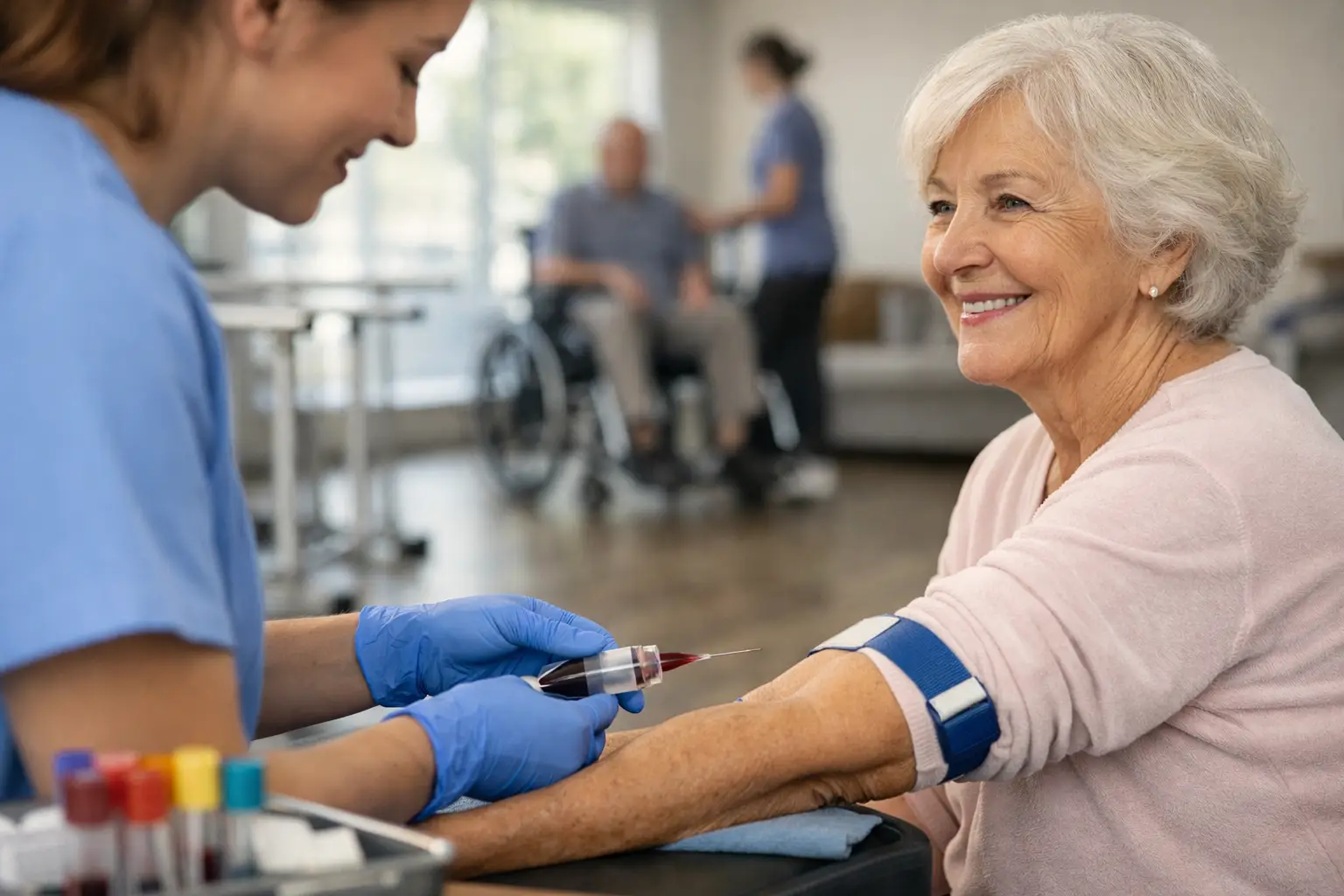
A resident is making real progress after surgery, a stroke, or a serious illness, and then a routine lab order creates a new obstacle: getting to an outside laboratory. Transportation must be arranged, therapy schedules may be interrupted, and a patient who is already tired or unsteady may face an uncomfortable trip. Blood draws for rehabilitation facilities help keep that routine care where it belongs – close to the resident, coordinated with the care team, and handled with a calm bedside manner.
For short-term rehab centers, skilled nursing settings, residential recovery programs, and group homes, mobile phlebotomy can make laboratory collection far less disruptive. A certified phlebotomist comes to the facility, collects the ordered specimen, follows protective and HIPAA-compliant procedures, and coordinates prompt delivery to the appropriate laboratory or hospital.
Why On-Site Collection Helps Rehabilitation Residents
Rehabilitation is demanding work. Residents may be rebuilding strength after orthopedic surgery, learning to manage new medications, recovering from an injury, or working toward independence after a hospital stay. Even a simple errand can take energy they would rather save for physical, occupational, or speech therapy.
An on-site blood draw removes the need to transfer a resident into a vehicle, wait in a public collection center, and make the trip back. That matters for people with limited mobility, fall risk, pain, fatigue, cognitive changes, or a weakened immune system. It also reduces the number of moving pieces for families and facility staff.
The value is not only convenience. Lab work often supports timely clinical decisions. A physician may need to monitor medication effects, anemia, hydration, kidney function, blood glucose, infection markers, or other health concerns. When collection is easier to arrange, care teams have a more practical path to completing ordered testing on schedule.
For a resident, the experience can feel more personal, too. Instead of navigating an unfamiliar waiting room, they can be collected in a familiar setting with staff nearby. A patient who is nervous about needles, confused by a change in routine, or simply having a difficult day deserves a phlebotomist who slows down, explains what is happening, and treats them with respect.
Blood Draws for Rehabilitation Facilities Need Coordination
Mobile collection works best when the details are clear before the phlebotomist arrives. The facility, patient, family member, ordering provider, and laboratory may all have a role. Good coordination prevents missed draws, delayed specimens, and unnecessary stress for the resident.
The first step is confirming the laboratory order. The order should identify the patient, requested tests, ordering provider, and any special instructions. Some testing has specific timing requirements. A medication level may need to be collected at a certain hour, while fasting labs may require the resident to avoid food for a designated period. The ordering provider’s instructions should always guide preparation.
It is also helpful to confirm where the specimen needs to go. Established laboratories and hospital systems may use their own requisitions, collection requirements, and delivery procedures. A mobile phlebotomy concierge can coordinate specimen delivery to laboratories such as Quest Diagnostics, Labcorp, WestPac Labs, CMB Laboratory, St. Joseph, or Cedars-Sinai when the order and service area allow.
Scheduling should account for the resident’s day. Early morning may be best for fasting tests, but it may not be ideal for someone receiving morning medications, wound care, or therapy. A thoughtful appointment time respects clinical needs without making the resident feel rushed. Same-day availability can be valuable when an order is urgent, though it depends on location, appointment demand, test requirements, and courier timing.
What Facility Staff Can Prepare
Facility staff do not need to turn into a laboratory department. A few simple preparations make the visit easier for everyone: have the complete order ready, verify the resident’s identity, share relevant mobility or communication needs, and provide a clean, private place for collection when possible.
Staff should also let the phlebotomist know if the resident has a history of fainting, difficult veins, limb restrictions, a central line, dialysis access, or other concerns. Not every collection situation can be handled with a standard peripheral blood draw. When there are special clinical circumstances, the ordering provider or facility nurse may need to give further direction.
Hydration can help some residents, but it is not a universal answer. A resident with fluid restrictions should follow their established care plan. Likewise, fasting instructions should never be altered just to make a draw more convenient. The right approach is always the one that protects the resident and supports an accurate test result.
A Better Experience for Residents and Families
For families, lab work can become one more responsibility during an already emotional recovery period. They may be coordinating medical appointments, insurance questions, therapy updates, and discharge planning. Mobile blood collection gives them one less trip to manage.
It can be especially helpful when a family member lives out of town or cannot take time away from work. Rather than asking a resident to wait until transportation is available, the facility can arrange an on-site visit that fits the resident’s care plan. Families still receive the reassurance that the collection has been handled professionally, without needing to be physically present for every routine order.
A compassionate approach matters just as much for residents who do have family nearby. Some people feel embarrassed when they need help getting dressed, transferring from bed to chair, or communicating their needs. A skilled phlebotomist recognizes that blood collection is not just a technical task. It is a short but meaningful patient interaction.
That means introducing yourself, confirming identity carefully, listening to the resident, using gentle technique, and avoiding a rushed attitude. The goal is a safe specimen collection with an awesome bedside manner and a Smile.
Specimen Handling Is Part of the Service
A successful blood draw is more than getting blood into a tube. The specimen must be labeled correctly, handled according to test requirements, and delivered promptly. Some specimens need specific temperature handling, protection from light, or a limited delivery window. Delays or incorrect handling can lead to rejected specimens and repeat draws – something no rehabilitation resident wants.
This is why facilities should work with experienced, certified professionals who understand field collection. The phlebotomist should follow identification and labeling procedures at the point of collection, maintain privacy, and prepare the specimen for the receiving laboratory. Prompt delivery supports the laboratory’s ability to process the order correctly.
There are trade-offs to consider. A traditional lab may be the simplest option for an ambulatory resident with easy transportation and flexible scheduling. But for residents whose recovery, safety, or comfort would be affected by travel, mobile collection is often the more patient-centered choice. The right service model depends on the resident’s condition, the urgency of the order, the test requested, and the facility’s workflow.
Choosing a Mobile Phlebotomy Partner
Rehabilitation facilities should look for more than appointment availability. Ask whether the service uses certified, experienced phlebotomists; whether it follows HIPAA-compliant practices; how it coordinates laboratory delivery; and whether its team is comfortable working around mobility limitations, cognitive changes, and complex care environments.
Clear communication is another sign of quality. The facility should know what to provide before the visit, what testing can be collected on-site, how special specimens are managed, and what happens if an order is incomplete. A dependable partner does not leave staff guessing.
Phlebotomy Experts brings mobile collection directly to rehabilitation settings across Southern California, the Bay Area, Austin, and Las Vegas, with a hands-on approach built around resident comfort and proper laboratory coordination. Appointment availability varies, so it is wise to confirm the order details and timing as early as possible.
When a resident is working hard to regain strength, routine lab work should not become the hardest part of their week. A well-coordinated on-site draw gives the care team useful information while allowing the resident to stay focused on the next small victory in recovery.
