
Learn why blood bruises after a draw, what makes a bruise more likely, simple home care steps, and signs that call for prompt medical advice right away.
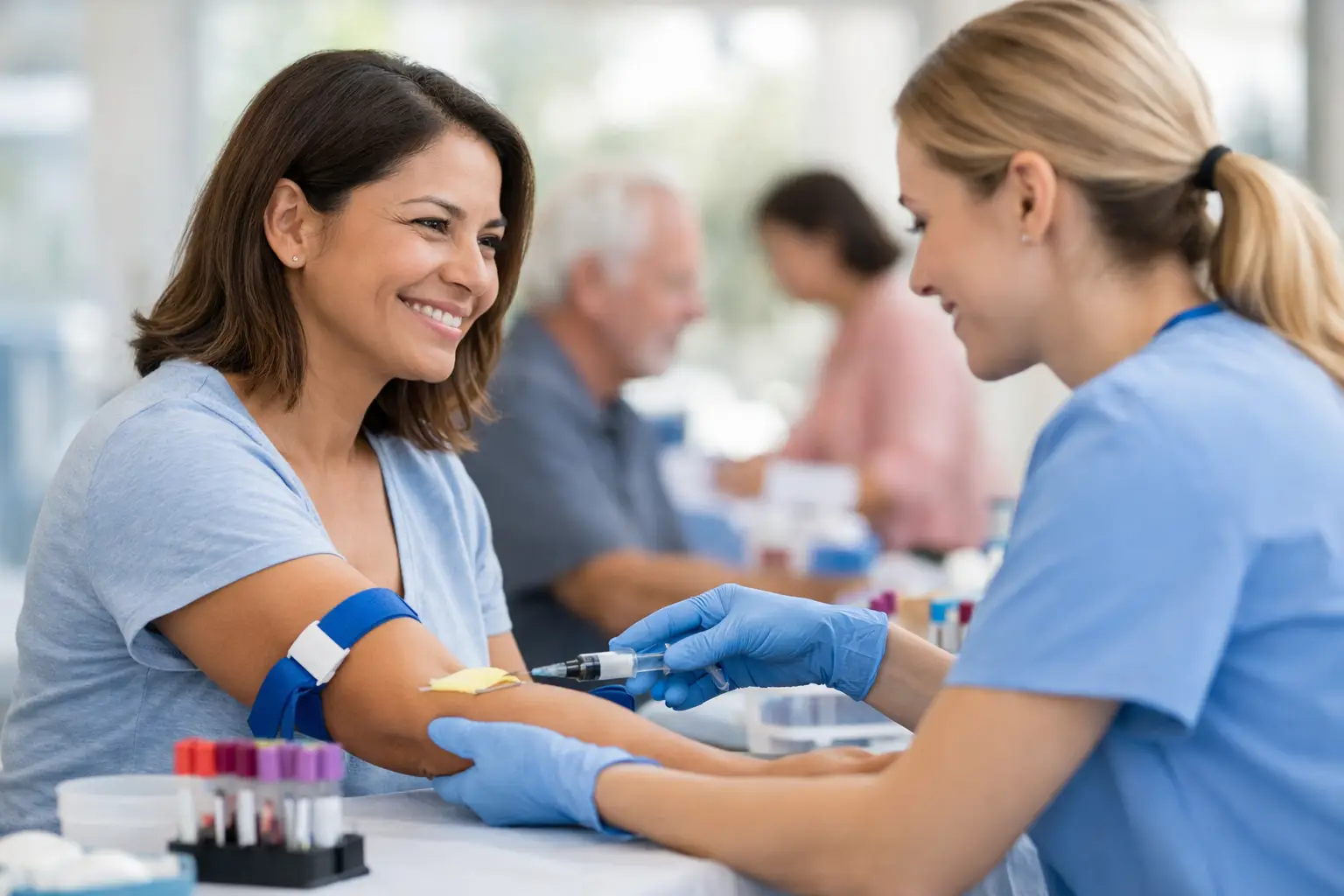
Health Fair Blood Draw Care Made Personal
A health fair can be a wonderful employee benefit or community resource, but the blood-draw station is where good intentions need a real plan. Nobody wants to stand in a long line wondering whether their paperwork is correct, whether their sample will get where it needs to go, or whether a busy event will make an already nervous moment feel worse. A well-run health fair blood draw gives people a convenient path to follow through on their care, with privacy, kindness, and experienced hands at the center.
For employers, senior communities, wellness coordinators, and clinical partners, mobile phlebotomy brings the collection process to the place people already are. That can mean an office conference room, an assisted-living community, a rehabilitation facility, a community center, or another organized event location. The goal is simple: let the laboratory come closer to the patient while protecting the quality of the specimen and the dignity of every person in the chair.
What a Health Fair Blood Draw Should Feel Like
A blood draw may take only a few minutes, but the experience around it matters. Some attendees are comfortable with lab work and arrive with forms in hand. Others have difficult veins, a fear of needles, a disability that makes standing in line hard, or questions about fasting and medications. A good health fair makes room for all of them.
That starts with a calm, clearly marked collection area. Attendees should know where to check in, what documents to bring, and whether they need to fast for their physician-ordered tests. They should also have a private place to speak with the phlebotomist and receive collection services without feeling like they are on display.
The right team brings more than supplies. Experienced phlebotomists know how to help a nervous patient settle in, identify an appropriate collection site, and keep the process moving without making people feel rushed. A warm bedside manner with a smile can change the entire experience, especially for older adults, children, and anyone who has had a rough draw in the past.
Planning a Health Fair Blood Draw That Runs Smoothly
The best event days are planned well before the first attendee walks through the door. Event organizers should start by deciding who the health fair is meant to serve and what type of collection support is needed. A workplace wellness event may need scheduled appointment blocks around meetings and shift changes. A residential-care event may need more seating, mobility support, and extra time for residents who require gentle assistance.
The laboratory relationship also needs to be clear from the beginning. In most cases, blood collection follows a physician’s order and uses the appropriate laboratory paperwork or test kit. The phlebotomy team collects and prepares the specimen according to required procedures, then coordinates prompt delivery to the designated laboratory or hospital. This is not a pop-up screening table with vague next steps. It should be an organized collection service with a defined specimen path.
A few details make a big difference before event day:
- Confirm which laboratory orders, kits, or employer-sponsored testing programs will be accepted.
- Give attendees clear instructions about fasting, hydration, identification, insurance information, and arrival times.
- Choose a clean, temperature-appropriate room with seating, a nearby restroom, good lighting, and enough space for privacy.
- Build a schedule that allows for walk-ins when appropriate, while protecting time for people with mobility needs or scheduled appointments.
- Designate an event contact who can help with room access, directions, and day-of questions.
When expectations are clear, attendees are less likely to miss their collection because they did not know what to bring or whether they could have coffee that morning. Clear communication is a form of patient care.
Privacy Is Not Optional
Health information should never become hallway conversation. A professional mobile collection service follows HIPAA-compliant practices and handles paperwork, labels, and patient information with care. At a health fair, this means more than keeping forms off a table. It means creating a process where each person’s information, specimen, and questions are treated as private.
For organizations, privacy also builds trust. Employees and residents are more likely to participate when they understand that their individual medical details are not being shared with their manager, coworkers, or event host. The collection team can coordinate the draw. Test results and medical interpretation belong with the appropriate laboratory and ordering provider.
Specimen Handling Is the Part People Do Not See
A friendly draw is essential, but proper handling after the needle is just as important. Tubes must be labeled accurately, protected according to collection requirements, and delivered in a timely manner. Certain tests have specific processing, temperature, or delivery needs. That is why event collection should be handled by professionals who understand the chain of custody and laboratory coordination.
This is where a mobile service can be especially helpful. Rather than asking an event coordinator to figure out specimen transport, a qualified phlebotomy team can manage collection supplies, packaging, and delivery arrangements to established laboratories and hospitals. The attendee gets convenience without compromising the care required behind the scenes.
Making the Event Easier for Every Attendee
Health fairs often bring together people with very different needs. The person stepping out of a meeting has different concerns than a hospice patient, a resident using a wheelchair, or someone managing recurring therapeutic phlebotomy. One-size-fits-all scheduling does not always work.
For a corporate event, early morning and late afternoon appointment options may reduce time away from work. For assisted living or rehab settings, collection may need to happen room by room or in smaller groups, with staff support available. For immunocompromised attendees, a quieter appointment window and careful protective protocols can offer peace of mind. The most thoughtful setup is the one that respects the people being served.
Encourage attendees to drink water unless their care team has told them to limit fluids. Hydration can make a draw easier for many people. They should also bring their photo ID, insurance card if applicable, laboratory order, and any test kit or instructions provided by their physician. If they are unsure about fasting, medications, or whether a test can be collected at the event, they should check with the ordering provider before arriving.
People who tend to feel lightheaded should say so right away. They may do better reclining, taking a few extra minutes after the draw, and having a small snack afterward if their testing instructions allow it. There is no prize for pretending you are fine. A good phlebotomist wants to know how to make you more comfortable.
When Mobile Collection Is a Better Fit Than a Traditional Lab Visit
A health fair blood draw is not meant to replace every laboratory appointment. Some specialty tests, urgent collections, or tests requiring specific equipment may need to be handled at a laboratory or medical facility. It depends on the order, the testing requirements, and the patient’s condition.
Still, event-based collection can remove a major barrier for many people. Busy professionals avoid losing half a day to traffic and waiting rooms. Older adults and people with limited mobility avoid an unnecessary trip. Families and caregivers get a more practical option. Organizations can show meaningful support by making a basic but necessary part of healthcare easier to complete.
Phlebotomy Experts provides mobile collection support for health fairs and other on-site needs, bringing certified, experienced phlebotomists to convenient locations while coordinating specimens with established laboratories and hospitals. The service is designed to feel personal, organized, and respectful from check-in through delivery.
A Better Experience Begins Before the Needle
The most successful health fair is not the one with the most tables or the busiest room. It is the one where a person who has been putting off lab work finally feels comfortable enough to sit down and get it done. That takes a clean setup, clear instructions, careful specimen handling, and a caring professional who treats each attendee like a person, not a number.
If you are planning a workplace, residential, or community event, ask early about appointment availability, laboratory coordination, privacy practices, and the needs of your attendees. A little preparation can turn a stressful errand into a simple moment of care – and that is a benefit people will truly remember.
