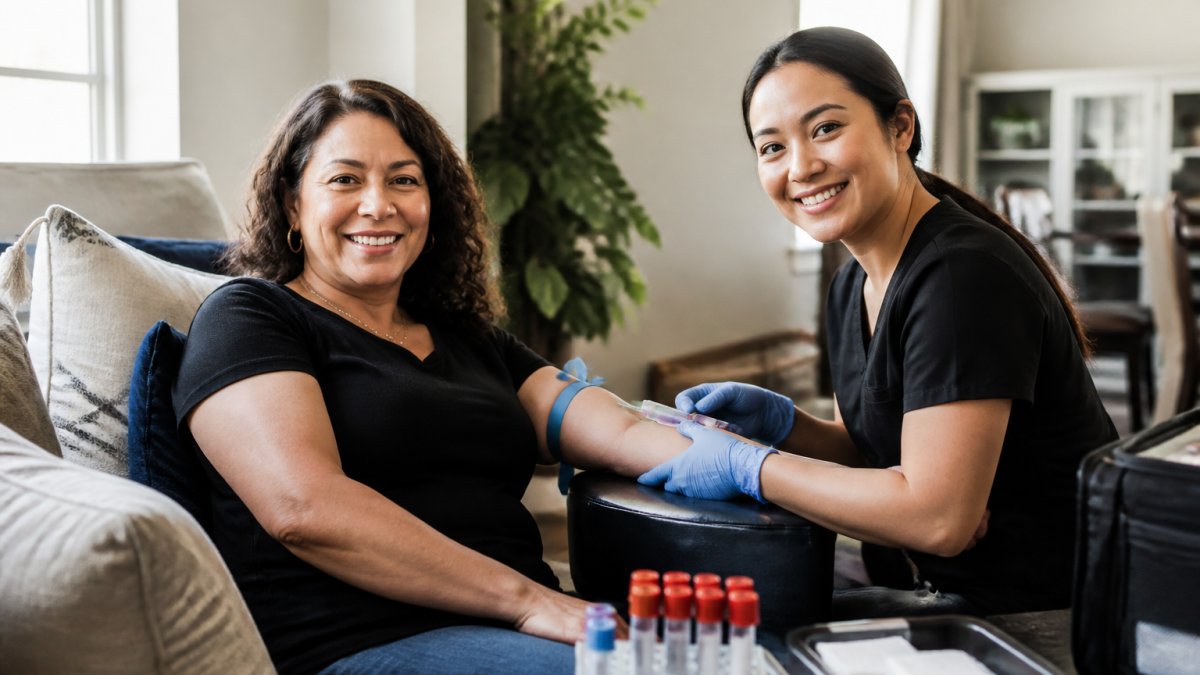
Breaking down the cost of in home blood draws: collection fees, lab charges, insurance, and what you actually pay out-of-pocket.

Concierge IV Vitamin Therapy Benefits in 2026
Table of Contents
- What Concierge IV Vitamin Therapy Is and How It Works
- 7 Benefits of Concierge IV Vitamin Therapy
- Concierge IV Therapy for Energy and Fatigue Management
- How Long Does IV Therapy Take? A Step-by-Step Timeline
- Mobile IV Therapy Safety Standards and Contraindications
- Cost-Benefit Analysis: Concierge IV vs. Oral Supplements
- Frequently Asked Questions
Last Updated: September 18, 2026
What Concierge IV Vitamin Therapy Is and How It Works
Concierge IV vitamin therapy is a mobile medical service that delivers vitamins, minerals, and hydration directly into the bloodstream through an intravenous infusion, typically in a patient’s home, office, or hotel. At Phlebotomy Experts, our licensed technicians bring clinical administration to your living room, which matters when your schedule does not allow for a waiting room.
The core advantage is bioavailability. When you swallow a supplement, your digestive system breaks it down before it reaches circulation, and absorption varies widely from person to person. An intravenous infusion bypasses digestion entirely, delivering micronutrients straight into the bloodstream for systemic absorption. That is the entire mechanism, and it is the reason people seek out a concierge IV therapy for energy rather than reaching for another capsule.

Intravenous Infusion vs. Oral Supplements
The difference comes down to delivery, not ingredients. Oral supplements pass through the stomach and liver before a fraction of the dose reaches your cells. Intravenous infusion delivers a therapeutic dose directly, so more of what you paid for actually circulates.
7 Benefits of Concierge IV Vitamin Therapy
The benefits of concierge IV vitamin therapy fall into seven practical categories. What separates a well-designed infusion from a generic drip is that each benefit maps to a specific micronutrient and a specific physiological job, not a vague promise of “wellness.”
- Rapid rehydration and electrolyte balance. Sodium, potassium, magnesium, and chloride are the electrolytes that drive nerve signaling, muscle contraction, and fluid balance. When they are depleted by illness, travel, heat, or intense exercise, an isotonic saline or lactated Ringer’s base restores blood volume faster than drinking water, because the fluid and electrolytes arrive together and bypass the gut.
- Immune defense support. High-dose vitamin C and zinc are the most common immune-focused ingredients. Vitamin C is a water-soluble antioxidant that supports normal immune cell function; zinc contributes to immune signaling. These are commonly known public facts, and the infusion simply delivers them without the absorption ceiling that oral dosing can hit.
- Cellular recovery. Amino acids and B-complex vitamins support the repair and energy pathways your cells use after physical stress. Magnesium, in particular, is a cofactor in hundreds of enzymatic reactions, including those involved in muscle recovery.
- Energy and fatigue management. B vitamins, especially B12 and the B-complex group, are cofactors in converting food into usable cellular energy. A deficiency in B12 or folate can produce fatigue that no amount of caffeine corrects, because the underlying metabolic gap is still there.
- Hydration therapy beyond water. Plain water without electrolytes can dilute the balance your body is trying to restore. An infusion delivers fluid and electrolytes in a controlled ratio, which is why rehydration therapy is a distinct benefit from simply drinking more.
- Mental clarity support. B vitamins and metabolic cofactors support the same energy pathways that feed brain function. When dehydration and nutrient gaps are the drivers of brain fog, correcting both at once is the mechanism, not a stimulant effect.
- Convenience of a mobile medical service. The clinical administration comes to your home, office, or hotel, removing travel, parking, and waiting-room time from the equation.
Each benefit depends on the formulation, so the infusion drip is tailored rather than one-size-fits-all. A drip built for post-travel rehydration looks different from one built for immune support.
Hydration, Immune Defense, and Cellular Recovery
Hydration therapy does more than quench thirst. Electrolytes drive nerve signaling and muscle function, and when they are depleted, fatigue and brain fog follow. Vitamin C and antioxidants help the body manage oxidative stress, while B-complex vitamins and amino acids support cellular recovery.
The mechanism is the point: an intravenous infusion bypasses digestion, so the micronutrients reach circulation directly rather than passing through the stomach and liver first.
Concierge IV Therapy for Energy and Fatigue Management
Concierge IV therapy for energy works because it addresses common drivers of tiredness: dehydration and nutrient deficiency. B-complex vitamins play a direct role in converting food into usable energy, and when you are low, no amount of coffee fixes the underlying gap. Rehydration with electrolytes restores blood volume and circulation.
This is not a substitute for sleep or a diagnosis. If fatigue is persistent, it deserves a conversation with your physician, and a blood draw can tell you whether a deficiency is actually behind it. That is where in-home lab services earn their place: you get the data and the infusion without rearranging your week.
How Long Does IV Therapy Take? A Step-by-Step Timeline
Most IV therapy sessions take 30 to 60 minutes from setup to finish, though the exact time depends on the formulation and how your body responds. Here is how a typical visit unfolds:
| Step | What Happens | Typical Time |
|---|---|---|
| Screening | Health history and contraindication check | 5-10 minutes |
| Setup | Site preparation and IV placement | 5-10 minutes |
| Infusion | Drip runs at a controlled rate | 30-45 minutes |
| Monitoring | Technician watches for reactions | Throughout |
| Post-care | Hydration and aftercare instructions | 5 minutes |
The infusion drip itself is the longest phase, and it moves at a controlled rate on purpose. Rushing an intravenous infusion is how avoidable reactions happen.
Mobile IV Therapy Safety Standards and Contraindications
Mobile IV therapy safety standards exist because an infusion is a clinical procedure, not a spa treatment. A proper screening covers your medical history, current medications, kidney and heart function, and known allergies before a single needle is opened. Licensed clinical administration, sterile technique, and continuous monitoring during the drip are the baseline.
Contraindications matter. People with certain kidney conditions, heart failure, or specific medication interactions may not be candidates for high-dose infusions. Pregnancy, uncontrolled blood pressure, and active infection also warrant a physician’s clearance first. The U.S. Food and Drug Administration guidance on sterile compounding is a useful reference for why sourcing and preparation standards are not optional.
Watch Out
Skipping the screening to save time is the most common mistake in mobile IV settings. A hidden kidney or heart condition can turn a routine infusion into a medical emergency, which is exactly what the intake questions are designed to catch.
Skipping the screening to save time is the most common mistake in mobile IV settings. A hidden kidney or heart condition can turn a routine infusion into a medical emergency, which is exactly what the intake questions are designed to catch.
Pre- and Post-Infusion Protocols
Before your appointment, eat something light, drink water, and have your medication list ready. Tell the technician about every supplement and prescription, since interactions are the quiet risk. After the infusion, keep drinking fluids, avoid alcohol for the rest of the day, and give your body a few hours before intense exercise. If you notice swelling, rash, or shortness of breath, contact a medical professional immediately.
Cost-Benefit Analysis: Concierge IV vs. Oral Supplements
Most articles on this topic either ignore the price question or wave it away. A neutral comparison is more useful, and it starts with an honest admission: oral supplements win on price per dose, and they should. A bottle of capsules costs far less than a single infusion, and for many people that is the correct choice.
The comparison only becomes interesting when you separate price per dose from cost per absorbed dose.
Pro Tip
Ask whether the infusion is formulated for your goal or pulled from a standard menu. If a provider cannot explain why a specific nutrient is in the bag, that is your answer.
Ask whether the infusion is formulated for your goal or pulled from a standard menu. If a provider cannot explain why a specific nutrient is in the bag, that is your answer.
Pricing for concierge IV services varies by formulation, location, and provider, so it is worth requesting a quote rather than assuming. National Institutes of Health Office of Dietary Supplements publishes plain-language guidance on nutrient needs that can help you judge whether a specific infusion is targeting a real gap, and whether an oral supplement would do the same job for less.
Safety Screening Before You Compare Cost
A cost-benefit analysis is incomplete without the safety side of the ledger. An infusion is a clinical procedure, not a spa treatment, and a proper screening covers your medical history, current medications, kidney and heart function, and known allergies before a single needle is opened. People with certain kidney conditions, heart failure, or specific medication interactions may not be candidates for high-dose infusions.
Frequently Asked Questions
Do IV vitamin infusions really work for nutrient absorption?
IV vitamin therapy delivers micronutrients directly into the bloodstream, bypassing the digestive system. This route can achieve higher bioavailability than oral supplements, which must survive stomach acid and first-pass liver metabolism. How well it works depends on the specific formulation, the dose, and your individual nutrient status. For people with absorption issues or a diagnosed deficiency, IV delivery can be more reliable. For general wellness, the evidence is mixed, so a consultation with a qualified professional is the best way to decide if it fits your needs.
Why do I feel energized after a concierge IV therapy for energy session?
Feeling energized after an IV infusion often comes from rapid rehydration and the delivery of B-complex vitamins, vitamin C, and electrolytes that support metabolic function. If you were mildly dehydrated or low on certain nutrients, correcting that quickly can improve mental clarity and reduce fatigue. The infusion itself also prompts a temporary fluid shift that some people experience as a lift. Individual responses vary, and IV therapy is not a substitute for sleep, nutrition, or medical treatment for chronic fatigue.
How long does IV therapy take from start to finish?
Most concierge IV therapy sessions last between 30 and 90 minutes, depending on the specific infusion drip and the volume of fluids. The setup, including a brief health screening and vein assessment, usually adds 10 to 15 minutes. Some formulations with larger fluid volumes or added ingredients can take closer to two hours. A mobile medical service often builds in travel time, so plan for the appointment window rather than just the drip time. Your provider can give a more precise estimate based on your wellness protocol.
What safety standards should I look for in mobile IV therapy?
Mobile IV therapy safety standards include administration by a licensed medical professional, a thorough health history and contraindication screening before every session, and the use of sterile, single-use supplies. Reputable providers also have protocols for managing adverse reactions and clearly state which medications or conditions make IV therapy unsafe. In the United States, oversight varies by state, so ask who supervises the clinical administration and how they handle emergencies. A provider that welcomes your questions about credentials and safety is a good sign.

Related Posts