
Concierge lab services bring blood draws to your home or office. See how mobile phlebotomy works, what it costs, and how to prepare for a blood test.
Is an At-Home Blood Draw Worth It? A 2026 Guide
Table of Contents
- How At-Home Blood Draws Work
- Mobile Phlebotomy Cost: What You Actually Pay For
- How to Prepare for an At-Home Blood Draw
- Mobile Phlebotomy Safety Standards and Credentials
- At-Home vs. Clinical Lab Draws: Pros and Cons
- Who Benefits Most From an At-Home Blood Draw
- Conclusion
- Frequently Asked Questions
Last Updated: September 17, 2026
How At-Home Blood Draws Work
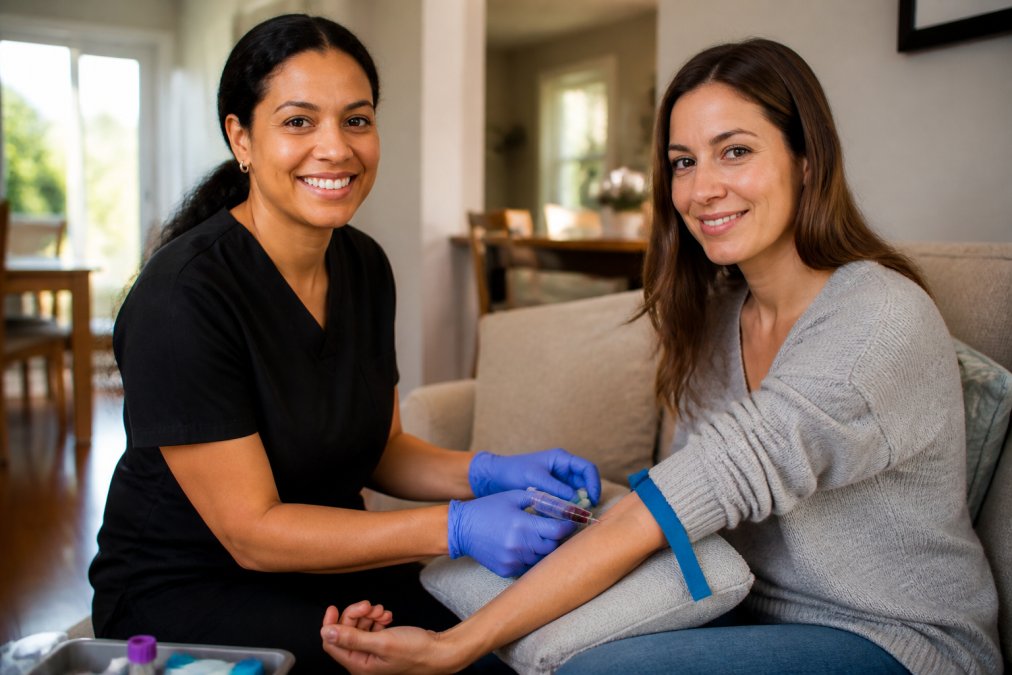
An at-home blood draw is a [mobile phlebotomy](/how-to-find-mobile-phlebotomy-services/) service in which a licensed phlebotomist travels to your home, office, or care facility to collect blood samples and deliver them to a clinical laboratory for testing. Whether an at-home blood draw is worth it depends on three things: your mobility, your schedule, and how difficult your veins are.
From Booking to Lab: The Full Process
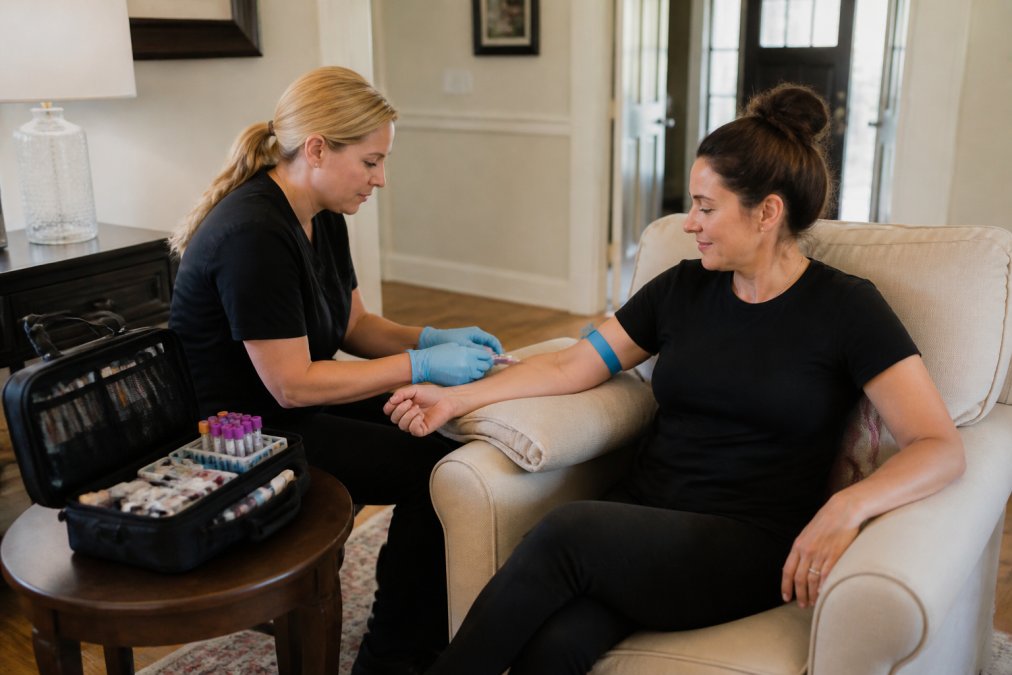
Most mobile services follow the same sequence, though details vary by provider:
- Booking and intake. You schedule online or by phone and confirm whether you have a physician’s order or need the provider to coordinate one.
- Verification. The provider confirms your identity, insurance details if applicable, and the specific tests requested.
- The visit. The phlebotomist performs venipuncture or a finger-prick test, typically in under 15 minutes.
- Specimen handling. Samples are labeled, packaged, and transported according to sample stability requirements.
- Laboratory processing. Your specimen goes to your preferred lab, and results are sent to your ordering physician.
Mobile Phlebotomy Cost: What You Actually Pay For
Mobile phlebotomy cost is not one number but a stack of separate charges. Most providers bill in three layers:
- The mobile or visit fee. This covers the phlebotomist’s time, travel, and supplies. It is the convenience premium you pay for not driving to a lab.
- The laboratory test fee. This is the same charge a clinic or standalone lab would bill for running your panel, and it is set by the lab, not the mobile provider.
- Specimen transport and handling. Some providers fold this into the visit fee; others bill it separately, especially for time-sensitive or cold-chain specimens.
- What is the total visit fee, and does it include specimen transport?
- Is the lab fee billed separately, and can you show me that price upfront?
- Do you bill my insurance directly, or am I paying cash and seeking reimbursement?
Insurance, Superbills, and Out-of-Pocket Costs
Many mobile phlebotomy providers operate as cash-pay services: you pay at the time of service and pursue reimbursement yourself. If that is your situation, this workflow is what actually gets a claim paid.
A few practical points worth repeating:
- Confirm in-network status before booking, not after.
- Ask for the superbill at the time of service, not weeks later.
- Check whether your plan requires a physician’s order for the specific tests you want.
- Out-of-pocket costs may still apply even when a test is covered.
Pro Tip
If you are using a health savings account or flexible spending account, mobile phlebotomy visit fees and lab fees for qualified medical tests are generally eligible expenses. Save your itemized receipt either way.
If you are using a health savings account or flexible spending account, mobile phlebotomy visit fees and lab fees for qualified medical tests are generally eligible expenses. Save your itemized receipt either way.
How to Prepare for an At-Home Blood Draw
Preparation for an at-home blood draw is nearly identical to preparing for a clinic visit, with a few home-specific logistics. Preparing well in advance prevents the most common reason for a repeat visit: a sample that cannot be used.
- Confirm fasting requirements. Some tests require 8-12 hours without food (Fasting for a Blood Test: MedlinePlus Medical Test). Ask the ordering provider, not the internet.
- Hydrate. Drinking water in the hours before your appointment makes veins easier to find, especially for a venous blood draw.
- Wear short or loose sleeves. A sleeve that rolls above the elbow saves time and reduces discomfort.
- Prepare a clean, well-lit space. A table and a chair near a window work well.
- List your medications. Some medications affect certain test results; your phlebotomist should know.
- Arrange for children or pets. A calm environment helps, particularly for pediatric collections.
Pro Tip
If you have a history of difficult veins, tell the scheduler when you book. A phlebotomist who knows to bring a warming pack or a smaller-gauge needle in advance is far more likely to get the draw on the first attempt.
::: (Source: CLIA regulations for laboratory testing)
If you have a history of difficult veins, tell the scheduler when you book. A phlebotomist who knows to bring a warming pack or a smaller-gauge needle in advance is far more likely to get the draw on the first attempt.
::: (Source: CLIA regulations for laboratory testing)
Mobile Phlebotomy Safety Standards and Credentials
Mobile phlebotomy safety standards rest on three pillars: the phlebotomist’s certification, the provider’s infection-control practices, and the laboratory’s accreditation. All three matter, and you are entitled to ask about each, because ‘certified’ is a word anyone can print on a website.
What Phlebotomy Certification Actually Means
In the United States, phlebotomy certification is a voluntary credential issued by a national certifying body after a candidate completes an accredited training program and passes an exam. It is not the same as a state license, and the two are often confused.
- Certification is granted by a private certifying organization and signals that the phlebotomist met a training and testing standard. Common credentials you will see after a phlebotomist’s name include CPT (Certified Phlebotomy Technician) and similar designations from national certifying bodies.
- State licensure is a separate requirement. A handful of states require anyone performing venipuncture to hold a state-issued license in addition to certification. If you live in one of those states, ask for the license number, not just the certification.
- Continuing education is usually required to keep a certification current, which is why an active credential is more meaningful than a lapsed one.
Infection Control in a Home Setting
Infection control in a home draw is the same standard as a clinic draw, applied in a less controlled space. Look for:
- Single-use needles and lancets, opened in front of you from sealed packaging.
- Sharps disposal into a proper sharps container, not a trash bag. The phlebotomist should carry the container out with them.
- Hand hygiene before and after gloves, and gloves changed between patients.
- Site preparation with an appropriate antiseptic, allowed to dry before the stick.
- Clean collection technique on a surface the phlebotomist controls, not your dining table.
Laboratory Accreditation: The Third Pillar
The lab that processes your sample should hold accreditation from a recognized body. In the United States, the two names you are most likely to encounter are CLIA certification, required for any lab performing diagnostic testing on human specimens, and CAP accreditation, a voluntary peer-review program many hospital and reference labs pursue on top of CLIA. It is a fair question to ask which lab a mobile provider uses and what accreditation it holds.
A common mistake is assuming that a lower-priced mobile service is cutting the same corners a clinic would never cut. If a provider cannot tell you which laboratory processes their samples, what certification their phlebotomists hold, or how they dispose of sharps, treat that as a serious red flag.
Pediatric and Geriatric Considerations
Two groups benefit disproportionately from at-home collection.
For infants and young children, a familiar environment reduces distress and makes a difficult draw easier on everyone. Pediatric collections call for smaller-gauge needles, a parent or caregiver positioned to comfort the child, and a phlebotomist who is comfortable working with small veins. Phlebotomy Experts provides specialized care for infants and children, which matters when a child is already anxious.
Pro Tip
When booking for a child or an older adult, say so at scheduling. It lets the provider assign a phlebotomist with the right experience and bring the right needle sizes, which is the difference between one stick and three.
When booking for a child or an older adult, say so at scheduling. It lets the provider assign a phlebotomist with the right experience and bring the right needle sizes, which is the difference between one stick and three.
At-Home vs. Clinical Lab Draws: Pros and Cons
Neither option is universally better. The right choice depends on what you value more: convenience or a familiar clinical environment.
| Factor | At-Home Blood Draw | Clinical Lab Draw |
|---|---|---|
| Convenience | High; no travel or waiting room | Requires travel and check-in |
| Cost | Often includes a visit fee | Standard lab fees only |
| Comfort | Familiar setting, less anxiety | Clinical environment |
| Difficult veins | One-on-one attention | Varies by staffing |
| Insurance | May require self-reimbursement | Often billed directly |
| Best for | Mobility limits, busy schedules, needle phobia | Routine draws with easy access |
Who Benefits Most From an At-Home Blood Draw
At-home collection is worth it for people whose time, mobility, or anxiety makes a clinic visit genuinely difficult, a narrower group than the marketing suggests, and a wider one than skeptics assume.
The clearest cases:
- Busy professionals who cannot easily step out for an appointment during working hours.
- Patients with mobility limitations or chronic conditions requiring regular monitoring.
- People with needle phobia or difficult veins who need a patient, experienced phlebotomist.
- Parents of young children who want to avoid a stressful clinic trip.
- Care facilities coordinating specimen collection for multiple residents.
Key Takeaway
The at-home blood draw is worth it when the convenience, comfort, or expertise it provides solves a problem you actually have. It is not worth it simply because it sounds more modern than driving to a lab.
The at-home blood draw is worth it when the convenience, comfort, or expertise it provides solves a problem you actually have. It is not worth it simply because it sounds more modern than driving to a lab.
Conclusion
Whether an at-home blood draw is worth it comes down to your circumstances, not a universal rule. If travel, scheduling, or needle anxiety has kept you from getting tested, the convenience and comfort of a home visit may be exactly what you need; anyone with easy vein access and a flexible schedule may find a standard lab visit simpler.
Frequently Asked Questions
Are at-home blood tests as reliable as clinical lab draws?
When a licensed phlebotomist performs a venous blood draw at home, the sample quality can match a clinic draw. Reliability depends on proper technique, correct tube handling, and timely transport to a lab-certified facility. Finger-prick tests collected at home carry higher risk of pre-analytical errors like insufficient sample volume or contamination. Ask whether your provider uses venipuncture and delivers specimens promptly to an accredited clinical laboratory.
How much does a mobile phlebotomy service typically cost?
Mobile phlebotomy cost depends on your location, the number of tests ordered, and whether the visit is a one-time draw or recurring. Pricing also varies based on travel distance, after-hours scheduling, and whether the service includes specimen delivery to your chosen lab. Some providers bill insurance directly, while others expect payment upfront and supply a superbill for reimbursement. Request a written quote that itemizes the draw fee separately from any laboratory processing charges.
What are the safety and privacy standards for mobile phlebotomy?
Reputable mobile phlebotomy safety standards include single-use sterile needles, proper sharps disposal, hand hygiene, and labeled specimen containers that maintain sample stability during transport. Phlebotomists should follow standard precautions and use personal protective equipment. For privacy, ask whether the provider uses unmarked vehicles and discreet arrival procedures. Specimens must be transported under conditions that preserve specimen integrity, and sensitive samples may require cold-chain logistics to avoid degradation.
Does insurance cover mobile phlebotomy services?
Coverage depends on your plan and whether the draw is deemed medically necessary. Many insurers cover the laboratory tests themselves but treat the mobile draw fee as a convenience charge. Medicare Part B may cover home draws for homebound patients when specific criteria are met. If your plan denies the convenience fee, you can request a superbill with proper coding and submit it for reimbursement. Call your insurer before booking to confirm what your plan covers.
Get started with Phlebotomy Experts and schedule a licensed phlebotomist to come to you. Call now to schedule your visit.
