Breaking down the cost of in home blood draws: collection fees, lab charges, insurance, and what you actually pay out-of-pocket.

Mobile Phlebotomy for Corporate Wellness: A Complete Guide
Table of Contents
- What Mobile Phlebotomy Brings to Corporate Wellness
- How On-Site Employee Health Screenings Work in Practice
- OSHA Bloodborne Pathogens Standards and Safety Compliance
- How to Properly Store Blood Samples Before Lab Transport
- ROI and Cost Efficiency for HR Departments
- Integration With Digital Health Platforms and Follow-Up Workflows
- Getting Started: Logistics and Space Requirements
- Frequently Asked Questions
Last Updated: September 24, 2026
What Mobile Phlebotomy Brings to Corporate Wellness
Mobile phlebotomy for corporate wellness eliminates the friction of traditional lab visits by bringing blood draw services directly to your workplace. Instead of employees taking time off to visit an external facility, certified phlebotomists arrive on-site to conduct screenings, collect samples, and ensure specimens reach the laboratory promptly. This approach fundamentally changes how organizations approach preventive health.
The shift matters because employee health directly impacts operational costs. When employees skip screenings due to inconvenience, early health conditions go undetected. Mobile phlebotomy removes that barrier. Employees participate during work hours without losing productivity to travel time, waiting rooms, or scheduling conflicts around business operations.
Facilities that implement mobile phlebotomy for corporate wellness typically see higher engagement because the service meets employees where they are. The convenience factor alone drives adoption, but the real value emerges when early screening results catch conditions before they become expensive to treat.
The logistics are straightforward: a licensed phlebotomist arrives at your designated location, sets up in a private space, and conducts draws according to your organization’s wellness program requirements. Samples are collected in proper containers, labeled with appropriate identifiers, and transported under controlled conditions to maintain specimen integrity. Results flow back to ordering physicians or your occupational health provider within standard turnaround times.
Pro Tip
Schedule mobile phlebotomy for corporate wellness during lower-traffic hours, typically early morning or mid-afternoon. This reduces employee disruption and allows the phlebotomist to work without rushing between draws.
Schedule mobile phlebotomy for corporate wellness during lower-traffic hours, typically early morning or mid-afternoon. This reduces employee disruption and allows the phlebotomist to work without rushing between draws.
How On-Site Employee Health Screenings Work in Practice
On-site employee health screenings begin with planning your wellness event logistics. Your organization identifies which tests employees need based on age, role, or health history. Common screenings include lipid panels, glucose testing, complete blood counts, and biometric measurements like blood pressure and BMI. The phlebotomist coordinates with your HR department to schedule the event, reserve appropriate space, and communicate screening details to participants.
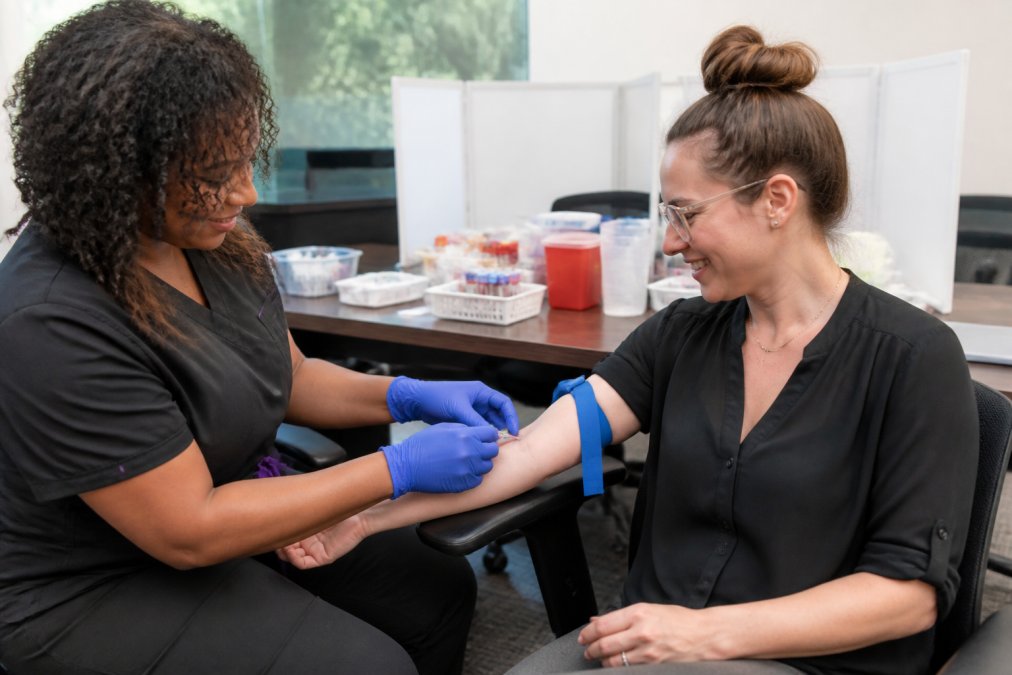
The actual screening process prioritizes employee comfort and privacy. A designated conference room, break room, or wellness space serves as the collection area. The phlebotomist sets up a sterile workstation with all necessary supplies: collection tubes, alcohol prep pads, gauze, bandages, and biohazard containers. Employees check in, provide identification, and answer basic health history questions. The draw itself typically takes 5-10 minutes per person, depending on the number of tests ordered.
During the draw, the phlebotomist applies a tourniquet above the elbow, locates an appropriate vein, and collects blood into labeled tubes in a specific order to prevent contamination (Order of Blood Draw Tubes and Additives). For employees with difficult veins or needle anxiety, phlebotomists use techniques like warm compresses, proper positioning, and gentle handling to improve success rates. Samples are immediately placed in collection tubes with appropriate additives to preserve them until laboratory analysis.
After collection, employees receive aftercare instructions: keep pressure on the site for a few minutes, avoid heavy lifting with that arm for several hours, and stay hydrated. Most employees experience minimal discomfort or bruising. The phlebotomist documents all draws, verifies sample labels, and prepares specimens for transport.
Key Takeaway
The key to successful on-site screenings is advance communication. Employees who understand why they’re being screened and what to expect participate more readily and experience less anxiety during the process.
The key to successful on-site screenings is advance communication. Employees who understand why they’re being screened and what to expect participate more readily and experience less anxiety during the process.
OSHA Bloodborne Pathogens Standards and Safety Compliance
OSHA’s Bloodborne Pathogens Standard (29 CFR 1910.1030) establishes mandatory safety requirements for any workplace where employees may be exposed to blood or other potentially infectious materials. For organizations conducting on-site phlebotomy, compliance means ensuring proper handling, storage, and disposal of specimens and used equipment.
The standard requires that all individuals handling blood specimens receive training on bloodborne pathogen transmission, exposure control procedures, and proper use of personal protective equipment. Your phlebotomist must wear gloves, a lab coat or gown, and eye protection during draws. Sharps (needles, lancets) must be placed immediately into puncture-resistant containers that are labeled with biohazard symbols. Used gloves, gauze, and other contaminated materials go into designated biohazard waste bags for proper disposal or incineration.
Exposure control plans must document procedures for handling accidental needlestick injuries or blood spills. If an employee or phlebotomist sustains an exposure, the incident is reported, first aid is provided, and baseline testing may be offered. Your organization should have a written protocol for these scenarios and ensure all staff know the reporting process.
Hand hygiene is non-negotiable. Phlebotomists wash hands before and after each draw, even when gloves are worn. Surfaces where specimens are placed must be cleaned and disinfected between draws using appropriate disinfectants. Reusable equipment like blood pressure cuffs is cleaned between uses.
Documentation is critical for compliance. Records of training, exposure incidents, and medical surveillance must be maintained for at least three years. When you partner with a mobile phlebotomy service, verify that technicians hold current certifications and that the company maintains OSHA-compliant protocols.
Watch Out
Improper specimen handling or disposal creates legal liability. If your organization fails to follow OSHA standards during on-site phlebotomy for corporate wellness, you risk citations, fines, and potential exposure claims. Always verify your phlebotomy provider’s compliance documentation before scheduling.
Improper specimen handling or disposal creates legal liability. If your organization fails to follow OSHA standards during on-site phlebotomy for corporate wellness, you risk citations, fines, and potential exposure claims. Always verify your phlebotomy provider’s compliance documentation before scheduling.
How to Properly Store Blood Samples Before Lab Transport
Proper specimen storage directly impacts test accuracy. Blood samples begin degrading immediately after collection, so how you store them before transport determines whether results are valid or require recollection. Temperature, light exposure, and time are the three critical variables.
Most blood samples must be kept at room temperature until they reach the laboratory. Refrigeration is generally avoided unless specifically ordered by the testing physician, because cold temperatures can cause hemolysis (cell breakdown) or alter test results. Samples should never be frozen unless the lab explicitly requires it for specialized testing.
Light exposure damages certain analytes. Samples for bilirubin testing, for example, must be protected from direct sunlight or fluorescent light because light degrades bilirubin and produces falsely low results. Use opaque collection tubes or store samples in a dark container during transport.
Timing matters tremendously. Most samples must reach the laboratory within a specific timeframe of collection, though some tests have shorter windows. Glucose samples, for instance, should reach the lab within a specific timeframe because blood cells continue to consume glucose after collection, producing artificially low glucose readings if delayed. Samples for culture (bacterial or fungal testing) have different requirements and may need to arrive within specific timeframes to allow proper incubation.
During transport, samples must be kept upright in a secure container. Horizontal placement or rough handling can cause hemolysis or improper mixing of additives with blood. For mobile phlebotomy for corporate wellness, the phlebotomist uses insulated transport containers with temperature-stabilizing materials to maintain proper conditions during the drive to the laboratory. (Source: research on the economic impact of employee health)
Chain of custody documentation travels with every sample. Labels include the patient’s name, date and time of collection, test ordered, and the collector’s initials. This documentation ensures samples are tracked from collection through analysis and prevents mix-ups that could invalidate results.
ROI and Cost Efficiency for HR Departments
Mobile phlebotomy for corporate wellness delivers financial returns beyond the direct cost of the service itself. HR departments measure ROI through reduced absenteeism, lower healthcare expenses, and improved employee retention.
When employees participate in preventive screenings, early-stage health conditions are identified before they become expensive to treat. An employee with undiagnosed hypertension who continues untreated eventually experiences a cardiac event, triggering emergency care, hospitalization, and extended recovery time. Screening catches that employee’s elevated blood pressure, allows medication intervention, and prevents the costly crisis. Similar patterns apply to diabetes, high cholesterol, and other common conditions.
Absenteeism reduction is quantifiable. Employees who feel their employer invests in their health tend to take fewer sick days.
Integration With Digital Health Platforms and Follow-Up Workflows
Modern wellness programs integrate screening results with digital health platforms so employees and their physicians can access findings immediately. When mobile phlebotomy for corporate wellness is paired with digital health management, the entire workflow becomes seamless.
- Notification to the employee’s physician of abnormal findings
- Automated reminders for employees to schedule follow-up appointments
- Tracking of whether employees act on recommendations
- Re-screening intervals based on baseline findings and risk factors
Pro Tip
Request that your digital health platform generate automated follow-up reports showing which employees completed recommended actions after screening. This data helps HR measure program effectiveness and justify continued investment in mobile phlebotomy for corporate wellness.
Request that your digital health platform generate automated follow-up reports showing which employees completed recommended actions after screening. This data helps HR measure program effectiveness and justify continued investment in mobile phlebotomy for corporate wellness.
Getting Started: Logistics and Space Requirements
Implementing mobile phlebotomy for corporate wellness requires minimal infrastructure, but planning the details prevents delays and ensures a smooth event. Start by identifying your screening goals: are you conducting annual wellness exams, occupational health baseline testing, or targeted screening for specific health conditions? Your goals determine which tests to order and how many phlebotomists you need.
Frequently Asked Questions
How does mobile phlebotomy integrate with existing corporate wellness programs?
Mobile phlebotomy fits directly into wellness initiatives by bringing certified phlebotomists and diagnostic testing to your workplace, eliminating the need for employees to leave during work hours. Results feed into your existing health risk assessment systems and can connect with your wellness platform to track participation, biometric data, and preventive health outcomes. This integration reduces friction and typically increases screening participation rates compared to off-site programs.
What are the HIPAA compliance requirements for on-site blood collection?
Any on-site mobile phlebotomy service must follow HIPAA Privacy and Security Rules to protect patient health information. This includes secure specimen labeling, confidential handling during transport, and encrypted data transmission to your laboratory partner. Your service provider should maintain Business Associate Agreements (BAAs) with all laboratories and digital platforms involved, document chain of custody procedures, and train staff on patient privacy protocols. Verify your provider’s compliance documentation before contracting.
How much does mobile phlebotomy cost compared to traditional lab visits?
Pricing depends on the number of employees screened, the types of tests ordered, frequency of visits, and your location. Rather than comparing per-draw costs, evaluate total program cost against productivity gains: eliminated travel time, reduced absenteeism, and higher participation rates often offset or reduce net program expense. Contact your mobile phlebotomy provider directly for a customized quote based on your workforce size and screening scope.
What makes certified phlebotomists different from unlicensed technicians?
Certified phlebotomists complete formal training, pass certification exams, and maintain ongoing education in blood collection techniques, sample handling, infection control, and patient safety. They’re trained to handle difficult veins, manage needle-phobic patients, and follow strict standard operating procedures for specimen integrity. Licensing requirements vary by state, so verify your provider’s credentials and certifications match your state’s regulations before engagement.

Related Posts