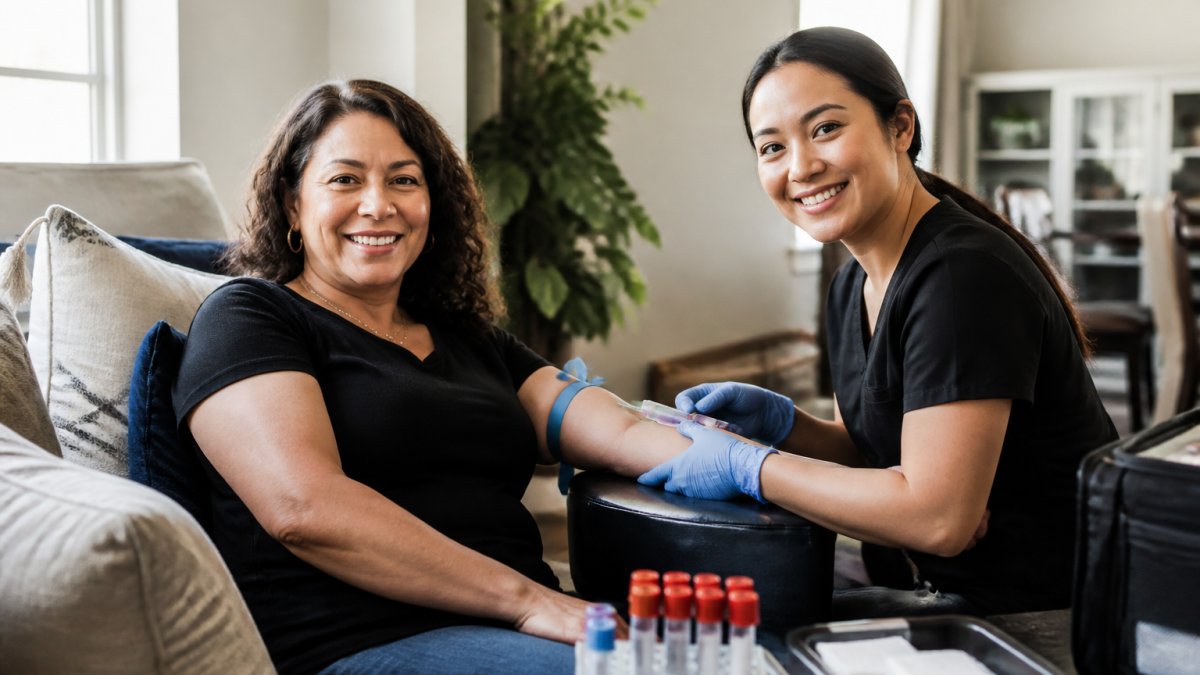
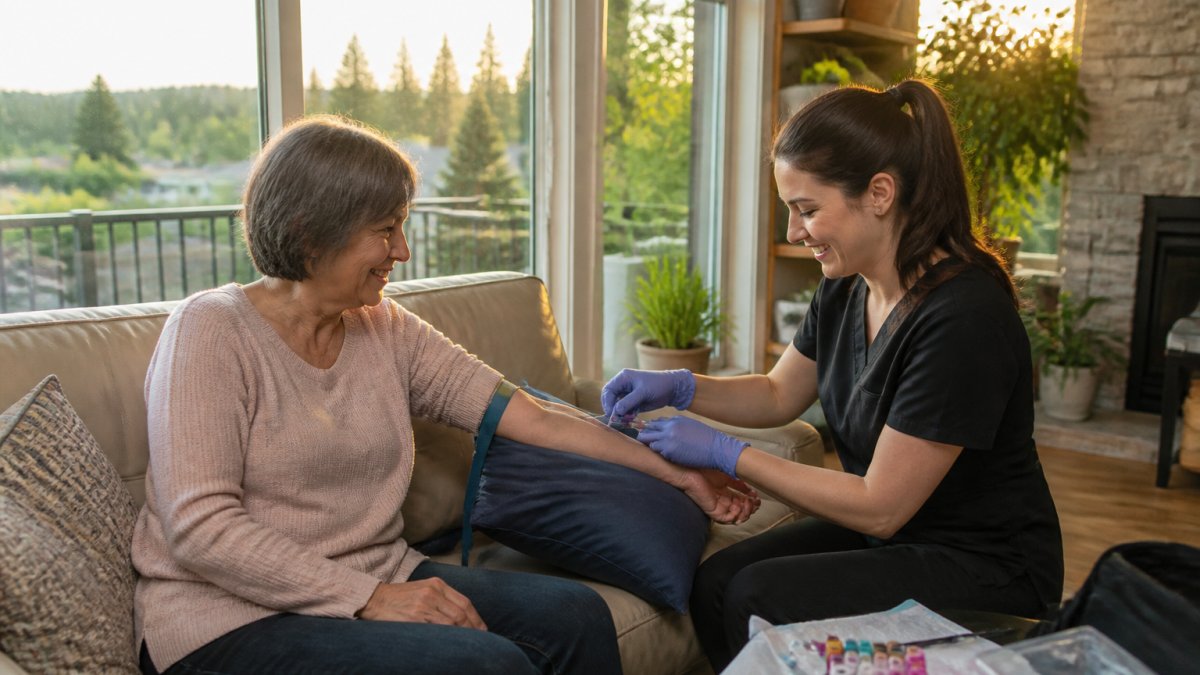
Breaking down the cost of in home blood draws: collection fees, lab charges, insurance, and what you actually pay out-of-pocket.
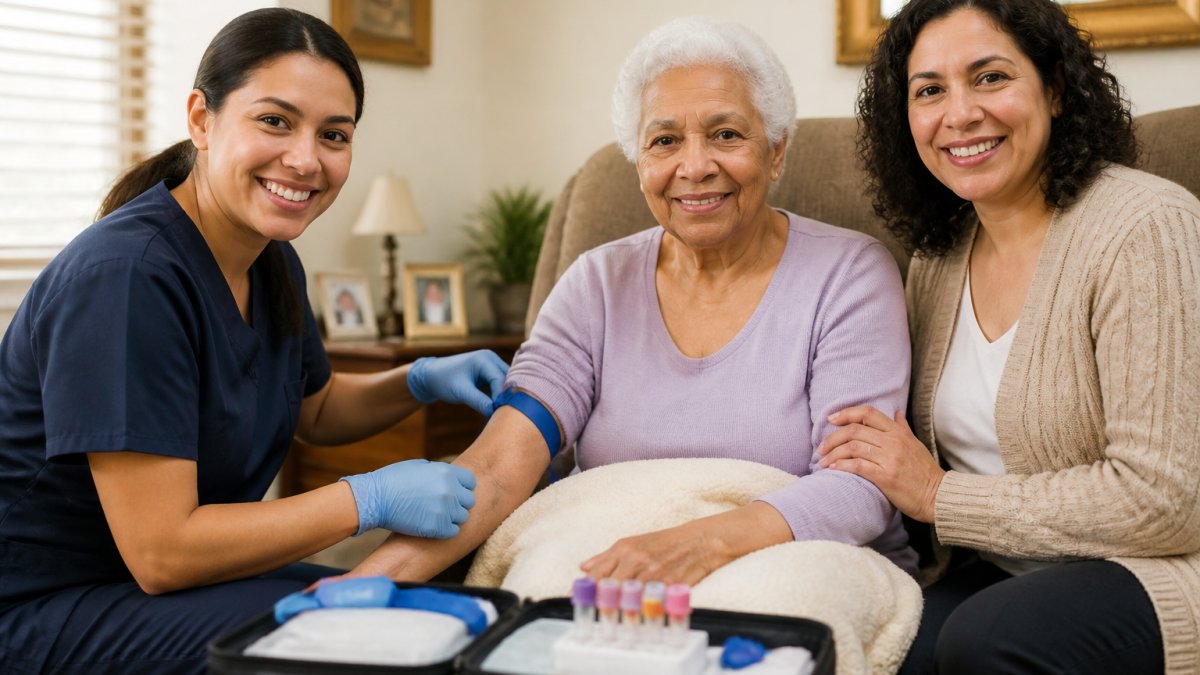
How to Book Mobile Phlebotomy for Hospice Care
Table of Contents
- Step 1: Confirm Hospice Lab Order Requirements Before You Book
- Step 2: Check Mobile Phlebotomy Insurance Coverage and Billing Options
- Step 3: Prepare for an In-Home Blood Draw for Hospice Patients
- Step 4: Schedule the Mobile Phlebotomy Visit and Share Key Details
- What to Expect During the Mobile Phlebotomy Visit
- Hospice Appointment Checklist: What to Have Ready Before the Phlebotomist Arrives
- Common Mistakes to Avoid When Booking Mobile Phlebotomy for Hospice Care
- Frequently Asked Questions
Last Updated: October 2, 2026
Step 1: Confirm Hospice Lab Order Requirements Before You Book
Booking a mobile phlebotomy visit for hospice care starts with paperwork, not a phone call. In this guide from Phlebotomy Experts, we walk you through how to book mobile phlebotomy for hospice care the right way, so the draw happens once and the results reach the hospice team without delay. A mobile phlebotomy visit is a scheduled in-home blood draw performed by a licensed phlebotomist who brings the supplies, collects the specimen, and delivers it to a laboratory for testing. For hospice families, it removes a stressful trip for a patient who should not be moved. (Source: Centers for Medicare & Medicaid Services (CMS) guidelines)
What a Valid Lab Requisition Must Include
A lab requisition is the form that tells the lab what to test. Without a complete one, the phlebotomist may arrive and have to leave empty-handed. Check that your requisition has:
- Patient’s full legal name and date of birth
- Ordering physician’s name and signature
- Specific tests requested, not just “blood work”
- Diagnosis code supporting the order
- Insurance information and prior authorization if needed
- Collection date and any special handling instructions (for example, a tube that must be kept on ice or drawn at a specific time)
Get a copy before the visit. The hospice nurse can usually provide it. If the requisition is handwritten, confirm the test names are legible, a misread test name is a common reason a specimen is rejected by the lab and must be redrawn.
Getting the Physician Order Coordinated with the Hospice Team
The hospice medical director or attending physician must sign off on the order. This is called physician order coordination, and it is where most bookings stall.
Here is the mechanism that actually works:
- The hospice nurse case manager identifies the need for a lab draw during a routine visit or a symptom change.
- The nurse contacts the hospice physician, who reviews the patient’s status and signs the order.
- The signed order is transmitted to the lab or to the mobile phlebotomy provider, usually by fax or secure electronic order, not by text or a phone message.
- The mobile provider confirms receipt and schedules the draw.
- The phlebotomist arrives with a copy of the order and verifies it against the patient’s identity before drawing.
A verbal order is not enough for most labs.
Ask the hospice nurse case manager to confirm the order is signed and dated. Then ask them to send it directly to the lab or to you.
Watch Out
Booking before the physician order is signed is the single most common reason a hospice blood draw gets rescheduled. The phlebotomist cannot legally draw without it, and the family pays the price in lost time.
Booking before the physician order is signed is the single most common reason a hospice blood draw gets rescheduled. The phlebotomist cannot legally draw without it, and the family pays the price in lost time.
Key Takeaway
Before you call a mobile phlebotomy provider, have three things in hand: the signed requisition, the hospice nurse case manager’s name and direct number, and the lab the specimen should go to. With those three, the booking call takes minutes instead of days.
Before you call a mobile phlebotomy provider, have three things in hand: the signed requisition, the hospice nurse case manager’s name and direct number, and the lab the specimen should go to. With those three, the booking call takes minutes instead of days.
Step 2: Check Mobile Phlebotomy Insurance Coverage and Billing Options
Mobile phlebotomy insurance coverage for a hospice patient is not a single answer. It depends on three things: who ordered the test, whether the test relates to the terminal diagnosis, and which benefit the hospice agency has elected. Getting this wrong is how families end up with a surprise bill for a draw they thought was covered.
How the Medicare Hospice Benefit Actually Pays for Blood Draws
When a patient elects the Medicare hospice benefit, the hospice agency receives a per-diem payment from Medicare and becomes responsible for nearly all care related to the terminal diagnosis and related conditions.
The split happens when a test falls outside the terminal diagnosis. A common example: a hospice patient with end-stage heart failure who develops a suspected urinary tract infection.
What to Confirm Before the Phlebotomist Arrives
- Which entity is ordering the test: the hospice medical director, the attending physician, or an outside specialist
- Whether the test is tied to the terminal diagnosis in the chart
- Whether prior authorization is required by the payer
- Whether the mobile provider bills insurance directly or collects upfront and issues a receipt for the family to submit
- The CPT code for the draw and the test, so you can verify coverage
- Whether the mobile provider is in-network with the patient’s plan, if a non-hospice payer is involved
Most mobile phlebotomy providers bill the hospice agency directly when the draw is under the hospice benefit, and bill the family or the secondary payer when it is not. Ask which model the provider uses before you book, the answer determines whether you pay anything at the visit.
Questions to Ask About Billing and Coding Before the Visit
- Is this test covered under the hospice benefit or billed separately?
- Does the mobile service bill my insurance, or do I pay upfront?
- What is the billing code for this test?
- Will I get a written estimate?
- If I pay upfront, what documentation do I need to submit for reimbursement?
- Is there a separate charge for specimen transport or after-hours visits? (Source: CLIA regulations)
Pricing for mobile phlebotomy varies by provider, location, and test type. Ask each provider directly for their current rates rather than assuming. A written estimate before the visit is reasonable to request and protects you from a disputed charge later.
Pro Tip
Ask the hospice social worker to review the order with you. They often catch benefit coordination issues before they become surprise bills, and they can tell you whether the agency has a contracted mobile phlebotomy provider whose charges are already covered.
Ask the hospice social worker to review the order with you. They often catch benefit coordination issues before they become surprise bills, and they can tell you whether the agency has a contracted mobile phlebotomy provider whose charges are already covered.
Watch Out
Do not assume a test is covered just because the hospice nurse ordered it. The hospice benefit covers services related to the terminal diagnosis; a test ordered for an unrelated complaint can be billed to Medicare Part B or Medicaid, and the family may owe a copay or coinsurance.
Do not assume a test is covered just because the hospice nurse ordered it. The hospice benefit covers services related to the terminal diagnosis; a test ordered for an unrelated complaint can be billed to Medicare Part B or Medicaid, and the family may owe a copay or coinsurance.
Step 3: Prepare for an In-Home Blood Draw for Hospice Patients
An in-home blood draw for hospice patients works best when the space is ready and the patient is calm. Small preparations make the visit faster and gentler.
Room Setup, Patient Comfort, and Caregiver Support
Set up a quiet room with good light. Have the patient seated or reclined in a comfortable chair with an armrest. Keep a blanket nearby, since hospice patients chill easily. A caregiver should stay in the room to offer reassurance and answer questions about medical records or medications.
Hospice-Specific Protocols: Symptom Management and Comfort-First Draws
Hospice care prioritizes comfort over speed. The phlebotomist should use the smallest needle that will work, limit the number of sticks, and pause if the patient shows signs of distress. Symptom management, like pain or anxiety control, comes before the draw. Tell the phlebotomist about any recent medications, since some affect blood chemistry.
Step 4: Schedule the Mobile Phlebotomy Visit and Share Key Details
Call the mobile phlebotomy provider and give them everything at once. Have ready:
- The signed lab requisition
- The patient’s address and access instructions
- Best times of day for the patient
- Any mobility or anxiety concerns
- The hospice agency’s contact name
Confirm the appointment in writing. Ask how the specimen gets to the lab and when results go to the physician. Reliable providers handle specimen transport themselves to protect specimen integrity.
What to Expect During the Mobile Phlebotomy Visit
The visit usually takes 15 to 30 minutes. The phlebotomist arrives with a mobile kit, verifies the patient’s identity, and confirms the order before starting.
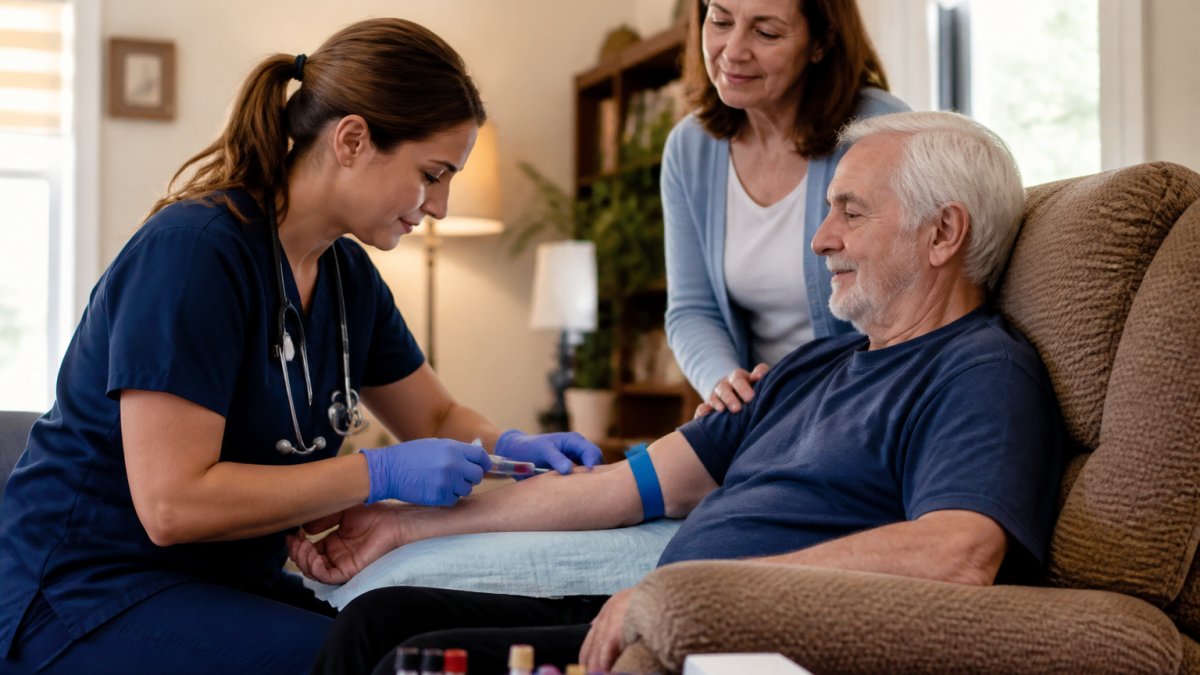
The phlebotomist performs venipuncture, labels the tubes at the bedside, and packs them for transport. HIPAA compliance and patient identification checks happen at every step. Expect a gentle bedside manner and clear communication with the caregiver.
Hospice Appointment Checklist: What to Have Ready Before the Phlebotomist Arrives
Use this checklist to avoid delays:
- Signed lab requisition in hand
- Photo ID and insurance card ready
- List of current medications
- Hospice nurse’s name and phone number
- Clear path to the room and a chair with an armrest
- A caregiver present for support
- Questions written down for the phlebotomist
Common Mistakes to Avoid When Booking Mobile Phlebotomy for Hospice Care
A few missteps cause most problems. Avoid these:
- Booking before the physician order is signed
- Assuming insurance covers everything without checking
- Forgetting to mention anxiety or difficult veins
- Not asking how the specimen reaches the lab
- Skipping the caregiver’s role in calming the patient
At Phlebotomy Experts, our licensed phlebotomists handle hospice blood draws with a gentle bedside manner and deliver specimens to your chosen lab for prompt processing. If you need reliable in-home blood collection for a hospice patient, call us to schedule a visit.
Frequently Asked Questions
Does Medicare cover mobile phlebotomy services for hospice patients?
Medicare typically covers blood draws and lab tests that are medically necessary for hospice care. Mobile phlebotomy may be covered under the hospice benefit if the service is ordered by the hospice physician. Coverage depends on whether the phlebotomy is related to the terminal diagnosis or a separate condition. Always verify benefits with the hospice agency and the mobile phlebotomy provider before the visit, and ask how the service will be billed.
What documentation is required to book a mobile blood draw for hospice care?
You will need a signed physician order or lab requisition that includes the patient’s full name, date of birth, diagnosis codes, specific tests ordered, and the ordering provider’s information. The hospice agency should also provide consent for the in-home visit. Some mobile phlebotomy companies request a copy of the patient’s insurance card and a photo ID. Having these documents ready when you call to schedule speeds up the booking process and prevents delays.
Can mobile phlebotomy services come to an assisted living facility for multiple hospice residents?
Yes, many mobile phlebotomy providers work with assisted living and long-term care facilities to collect specimens for multiple residents in one visit. This is often more efficient than sending each resident out. When booking, tell the scheduler how many residents need draws, what tests are ordered, and whether the facility has a designated collection room. The phlebotomist will coordinate with facility staff to follow HIPAA compliance and patient identification protocols for each person.
How are lab specimens transported safely from a home setting?
After the blood draw, the phlebotomist labels each tube at the bedside using two patient identifiers, then packages the specimens according to clinical laboratory standards for specimen integrity. Tubes are placed in biohazard bags and transported in temperature-appropriate containers directly to the lab. Turnaround time depends on the lab and the tests ordered. Ask the provider which clinical laboratory they use and how they handle STAT or time-sensitive specimens for hospice patients.
Coordinating a hospice blood draw can feel overwhelming when you are already stretched thin. Phlebotomy Experts takes the logistics off your plate with licensed phlebotomists, in-home mobile blood draws, and specimen delivery to the laboratory or hospital of your choice. We prioritize patient comfort and prompt results for the ordering physician. Get started with Phlebotomy Experts and give your loved one one less trip to make.

Related Posts