
Concierge lab services bring blood draws to your home or office. See how mobile phlebotomy works, what it costs, and how to prepare for a blood test.
How to Prepare for a Fasting Blood Test at Home
Table of Contents
- Step 1: Confirm Your Fasting Blood Test Instructions
- Step 2: Know How Long to Fast Before a Blood Test
- Step 3: Can You Drink Water Before a Fasting Blood Test?
- Step 4: Follow Your Fasting Blood Test Medication Instructions
- Step 5: Plan Your Last Meal and What to Avoid
- Step 6: At-Home Blood Draw Preparation and Scheduling
- Step 7: What to Do If You Slip Up or Feel Unwell
- Frequently Asked Questions
Last Updated: October 17, 2026
Step 1: Confirm Your Fasting Blood Test Instructions
A fasting blood test is a blood draw taken after you have gone without food for a set number of hours. The purpose is simple: food changes some results, and your ordering clinician needs a clean baseline.
At Phlebotomy Experts, we see how much confusion this step causes. The single most common mistake is fasting longer than needed. More is not better. Follow your test-specific instructions exactly.
Before you plan anything, confirm three details with your ordering clinician or the laboratory:
- Which tests are ordered
- How many hours you must fast
- Whether water and medications are allowed
Get this in writing if you can. A portal message or printed order beats a memory of a phone call.
Which Tests Usually Require Fasting
Not every blood test needs fasting. Many common panels do not. Fasting is typically requested for tests where food and drink shift the numbers, such as:
- Glucose test: measures blood sugar, which rises after eating
- Lipid panel: checks cholesterol and triglycerides
- Metabolic panel: some versions include glucose
- Triglycerides: especially sensitive to recent meals
Other tests, like a basic blood count, usually need no fasting at all. The MedlinePlus guide to blood test preparation is a reliable plain-language reference for what different tests require.
Pro Tip
If your order lists several tests, the strictest fasting requirement wins. Ask the lab to confirm rather than guessing.
If your order lists several tests, the strictest fasting requirement wins. Ask the lab to confirm rather than guessing.
Step 2: Know How Long to Fast Before a Blood Test
Most fasting instructions fall between 8 and 12 hours. The exact window depends on the test and your clinician’s preference. Do not default to the longest option out of caution.
Here is how the common windows usually work:
| Fasting Window | Typical Use | Practical Timing |
|---|---|---|
| 8-hour fast | Glucose screening, some panels | Skip late snacks, sleep through most of it |
| 10-hour fast | Many lipid and metabolic orders | Finish dinner by early evening |
| 12-hour fast | Triglyceride testing, specific orders | Plan dinner and draw time carefully |
The 8-Hour, 10-Hour, and 12-Hour Fasting Windows
An 8-hour fast is the easiest to manage. Most people sleep through it. A 10-hour fast gives a little more buffer for a morning appointment. A 12-hour fast demands planning, especially if your draw is early.
Count backward from your appointment time. If your draw is at 8 a.m. and you need a 12-hour fast, your last bite of food is at 8 p.m. the night before. Write that time down. It removes the guesswork.
Step 3: Can You Drink Water Before a Fasting Blood Test?
Yes, plain water is almost always allowed during a fasting blood test. Staying hydrated makes the draw easier because fuller veins are simpler to find. Dehydration is a common reason for a difficult stick.
What to avoid:
- Coffee and tea, even black
- Juice, soda, and sports drinks
- Milk and creamers
- Any drink with calories
These count as food for fasting purposes. Chewing gum and mints are gray areas, so ask your lab. When in doubt, stick to plain water and nothing else.
Watch Out
Skipping water to “be safe” backfires. Poor hydration can make veins hard to access and lead to repeat needle sticks.
Skipping water to “be safe” backfires. Poor hydration can make veins hard to access and lead to repeat needle sticks.
Step 4: Follow Your Fasting Blood Test Medication Instructions
Never stop or skip a medication on your own before a fasting blood test. This is the rule that matters most. Some drugs must be taken with food, some affect results if timing shifts, and some are dangerous to interrupt. Your clinician decides what changes, if any, your job is to ask before your fasting day, not on it.
Questions to Ask Before Fasting Day
Bring this list to your clinician or pharmacist:
- Should I take this medication with a small sip of water during the fast?
- Should I delay a morning dose until after the draw?
- Does this drug need food, and if so, how do I handle the fast?
- Will this medication or supplement skew any of the ordered tests?
- What should I do if my instructions from the lab and my prescriber conflict?
Get the answer in writing if you can. A portal message beats a memory of a phone call.
Common Scenarios
- Routine medications: Many can be taken with a small sip of plain water during the fast. Confirm each one.
- Medicines that must be taken with food: Ask whether the dose can move to after the draw or whether the test should be scheduled differently. Do not skip a food-dependent dose to protect the fast without instruction.
- Diabetes medication, including insulin: Timing interacts with fasting and with low-blood-sugar risk. Ask for a specific plan, and ask what to do if symptoms of low blood sugar occur during the fast.
- Pregnancy: Fasting tolerance and medication needs can differ. Tell your clinician you are pregnant and follow their instructions rather than a general rule.
- Supplements: Biotin can interfere with certain lab results. Tell your clinician about everything you take, including vitamins and herbal products. The FDA guidance on reporting medication and supplement use explains why full disclosure matters.
When Instructions Conflict
If the laboratory’s fasting instructions and your prescriber’s medication instructions do not line up, do not guess and do not quietly pick one. Call the ordering clinician’s office and ask which instruction takes priority for your situation. A short call before the draw is cheaper than a repeat test or a misleading result.
Watch Out
Do not stop, skip, or double a dose to “protect” your fasting result. Changes to medication timing are a clinical decision, not a preparation step.
Do not stop, skip, or double a dose to “protect” your fasting result. Changes to medication timing are a clinical decision, not a preparation step.
Step 5: Plan Your Last Meal and What to Avoid
Your last meal before the fast shapes how comfortable the next hours feel. Aim for a normal, balanced dinner rather than a heavy one. Very fatty or very sugary meals can leave you hungrier and thirstier overnight.
What to avoid in that final meal:
- Fried and greasy foods
- Sugary desserts and sodas
- Alcohol
- Large portions that sit heavy
Fiber-rich foods and lean protein tend to keep you full longer. Finish eating at your calculated cutoff time and note it. Then switch to water only.
Step 6: At-Home Blood Draw Preparation and Scheduling
At-home collection changes the logistics, not the fasting rules. You still fast for the required hours. What changes is where the blood sample is collected and how it reaches the laboratory. The keyword asks how to prepare at home, so treat this step as two jobs: prepare your space and prepare your kit.
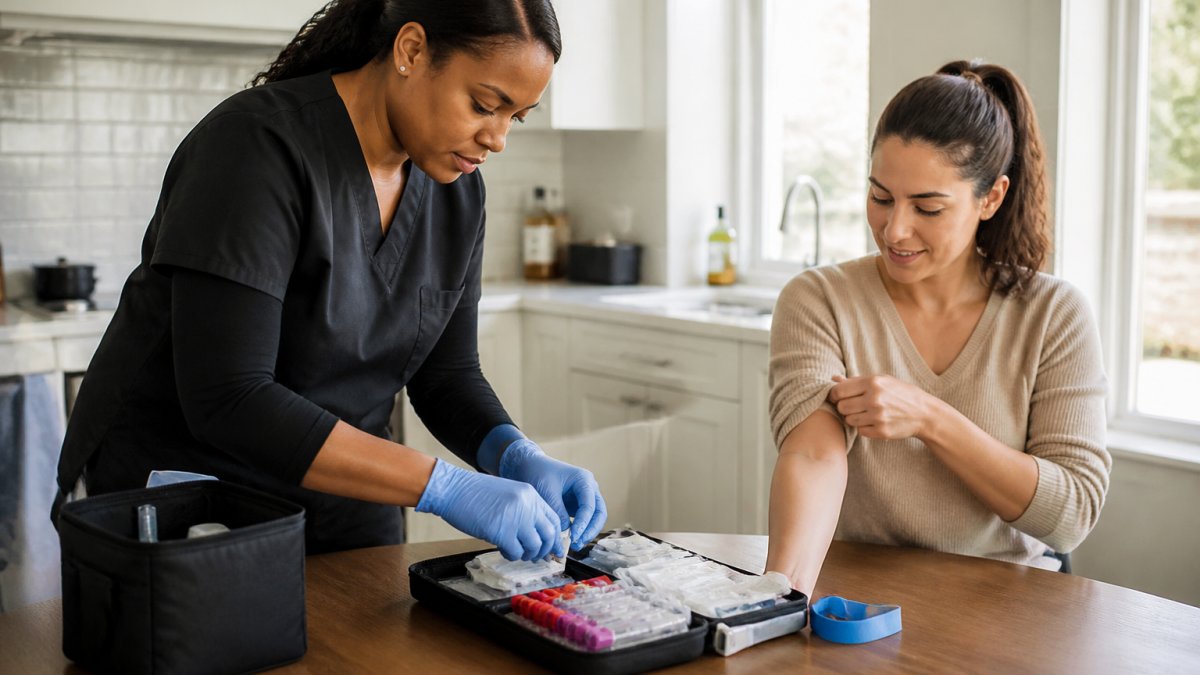
Prepare the Collection Space
Book your appointment for the early morning when possible. You sleep through most of the fast, and you eat sooner afterward. Before the visit, set up:
- A clear table and a chair with armrests
- Good lighting near a window or lamp
- Your test order and photo ID ready
- A list of your medications and supplements
- A glass of plain water within reach
Have a light snack ready for after the draw so you are not scrambling while lightheaded.
Verify the Kit and Instructions Before Fasting Day
If you are using an at-home test kit rather than a mobile phlebotomist, read the instructions before your fasting day, not on it. Confirm:
- Fasting requirement for that specific kit. Collection methods and fasting windows vary by kit and by test. Do not assume every blood test can be done at home or that every kit fasts the same way.
- Collection method. Fingerstick, dried blood spot, or venous draw each have different steps and different failure modes.
- Timing window. Some kits require collection within a set window after waking or at a specific point in your fast.
- Labeling. Fill out name, date, and collection time exactly as instructed. An unlabeled or mislabeled sample is often rejected.
- Storage and return. Note whether the sample needs refrigeration, must stay at room temperature, or must be mailed the same day. Check the pickup or drop-off schedule so the sample does not sit over a weekend.
Ask how the laboratory handles the sample once it leaves your hands, and keep the tracking number if one is provided.
Know What Home Collection Cannot Do
Home collection is convenient, but it is not a substitute for every test. Some orders require a laboratory draw, a specific tube type, or processing within a narrow time frame that a kit cannot guarantee. If your order includes a test your kit does not cover, or if instructions conflict, call the ordering clinician or laboratory before your fasting day. At Phlebotomy Experts, our licensed phlebotomists collect the specimen and deliver it to the laboratory of your choice.
Key Takeaway
The fasting window is the same at home. What you gain is a calmer setting, less waiting, and a scheduled draw time, provided you verify the kit and plan the sample’s trip to the lab before you fast.
The fasting window is the same at home. What you gain is a calmer setting, less waiting, and a scheduled draw time, provided you verify the kit and plan the sample’s trip to the lab before you fast.
Step 7: What to Do If You Slip Up or Feel Unwell
A slip-up happens. You ate a snack, forgot, or drank coffee out of habit. Tell your phlebotomist or clinician before the draw. Do not hide it. They may reschedule the test or note the issue so results are read correctly.
Some tests tolerate small mistakes. Others do not, and a repeat draw is safer than a misleading result.
Feeling unwell during the fast is different. Watch for:
- Dizziness or lightheadedness
- Shaking or sweating
- Confusion or irritability
- Fainting
Sit down, drink water, and eat something if symptoms are mild. If symptoms are severe or you have a condition like diabetes, contact your clinician right away. Do not push through a fast that feels unsafe.
Watch Out
If you feel faint, stop fasting and eat. A missed test can be rescheduled. A fall or fainting episode cannot be undone.
If you feel faint, stop fasting and eat. A missed test can be rescheduled. A fall or fainting episode cannot be undone.
The CDC information on safe specimen collection is a useful reference for how samples should be handled from collection to lab.
Fasting rules feel fussy until they cost you a repeat draw or a misleading result. The fix is simple: confirm your instructions, count backward from your appointment, drink plain water, and never change medications alone. When you would rather skip the lab waiting room, Phlebotomy Experts brings a licensed phlebotomist to your home, handles difficult veins with a gentle approach, and delivers your specimen to the laboratory of your choice. Call now to schedule your at-home blood draw.
Frequently Asked Questions
How long should you fast before a blood test?
Most fasting blood tests call for an 8-hour to 12-hour fasting window, with 8 to 10 hours being common for a glucose test or lipid panel. Your ordering clinician sets the exact fasting period, so follow the written fasting instructions attached to your order. Fasting longer than 12 hours is not automatically better and can affect some results, so do not extend the window on your own. If your instructions are unclear, call the ordering clinician before you start the fast.
Can you drink water before a fasting blood test?
Plain water is generally allowed during the fasting window and is often encouraged so you stay hydrated and make the blood draw easier. Skip calorie-containing drinks such as coffee with cream and sugar, juice, soda, and sports drinks, since those break the fast. Black coffee and plain tea are sometimes permitted but can affect certain tests, so confirm with your ordering clinician first. When in doubt, stick to plain water.
What happens if you accidentally eat before a fasting blood test?
Tell the phlebotomist or your ordering clinician before the blood draw. Eating during the fasting window can change blood glucose and triglycerides, so the laboratory may flag the sample as non-fasting or your clinician may ask you to reschedule. Do not try to compensate by skipping the test or fasting longer afterward. In many cases the draw can still go ahead and the ordering clinician will decide whether the results are usable.
How do you prepare for a blood draw at home?
Confirm your fasting instructions, note the exact time your fast began, and set out your ID, insurance card, and lab order. Drink plain water, dress in a short-sleeved shirt, and clear a well-lit space with a table where the phlebotomist can set up. Tell the technician about medications, supplements, and any history of difficult veins or needle phobia. If you use an at-home test kit, read the sample collection and mail-the-sample instructions before the appointment so nothing delays processing.
