
Concierge lab services bring blood draws to your home or office. See how mobile phlebotomy works, what it costs, and how to prepare for a blood test.
How to Find Mobile Phlebotomy Services: 2026 Guide
Table of Contents
- What Mobile Phlebotomy Services Actually Include
- How to Find At Home Blood Draw Services Near You
- Verifying Credentials: A Safety Checklist for Mobile Phlebotomy
- Understanding Mobile Phlebotomy Cost and Insurance Coverage
- How to Prepare for an At-Home Blood Draw
- Specialized Needs: Facilities, Clinical Trials, and Difficult Draws
- Frequently Asked Questions
Last Updated: September 16, 2026
What Mobile Phlebotomy Services Actually Include
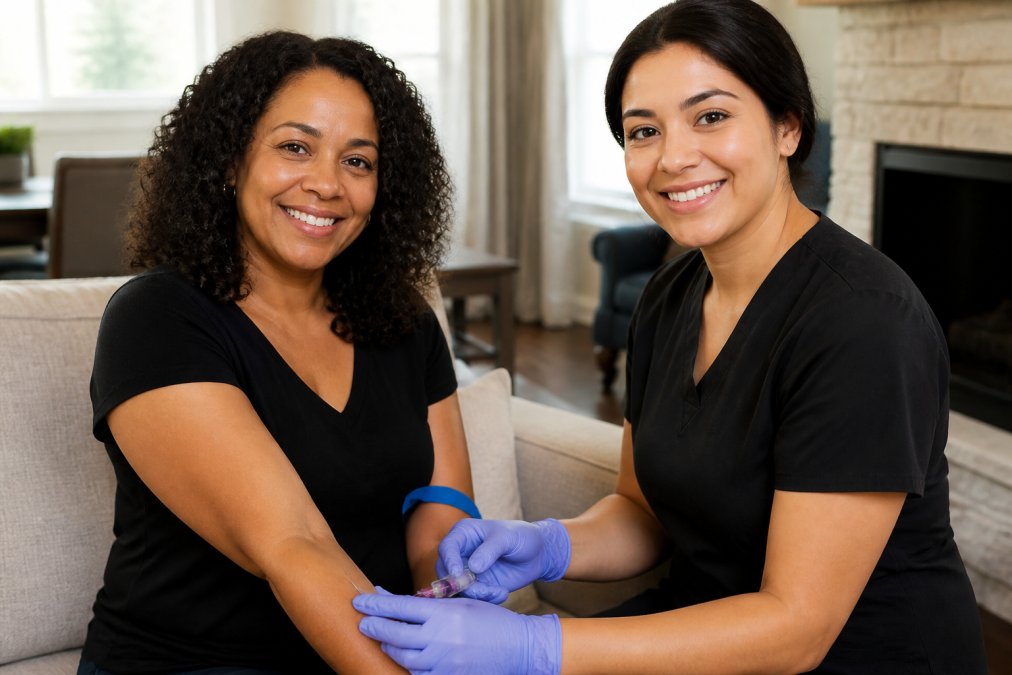
Mobile phlebotomy is a licensed phlebotomist traveling to your home, office, or care facility to collect blood and other specimens, then delivering those samples to the laboratory your physician designated. If you have been searching for how to find mobile phlebotomy services, the short answer is this: verify the provider’s license, confirm they accept your lab order, and ask who handles transport and results. This guide from Phlebotomy Experts walks through each step, because the details decide whether your sample arrives intact or you get asked to repeat the draw.
A standard visit covers venipuncture, labeling, and specimen handling. Many providers also offer point-of-care testing, pediatric draws, and therapeutic phlebotomy for patients with chronic conditions.
Key Takeaway
The visit itself is only half the service. Specimen integrity between your kitchen table and the lab analyzer is what determines whether your results are usable.
The visit itself is only half the service. Specimen integrity between your kitchen table and the lab analyzer is what determines whether your results are usable.
Mobile vs. Clinic Visits: What Changes at Home
The draw technique is identical. Everything around it changes. At a clinic, you drive, park, wait, and sit in a shared room. At home, you stay put and the phlebotomist manages the logistics: supplies, sharps handling, biohazard disposal, and temperature-controlled transport.
Sample turnaround time and diagnostic accuracy both depend on how the specimen is stored during transit. A properly trained phlebotomist treats the cooler as seriously as the needle.
Who Benefits Most From At-Home Collection
Homebound services exist for people who cannot reasonably travel: patients with mobility issues, those managing chronic conditions requiring routine blood work, parents of infants, and anyone with needle phobia or difficult veins.
Busy professionals use mobile clinical services for a different reason: time. A draw takes ten minutes at your desk instead of half a day at a lab.
Pro Tip
If you have a history of difficult draws, say so when you book. Experienced phlebotomists bring different needle gauges and warming techniques when they know in advance.
If you have a history of difficult draws, say so when you book. Experienced phlebotomists bring different needle gauges and warming techniques when they know in advance.
How to Find At Home Blood Draw Services Near You
Finding at home blood draw services comes down to two paths: national directories and direct provider websites. Confirm zip code coverage before you invest time in a booking form, then verify the provider, because a directory listing is not a credential.
Using Directories and Provider Websites
Directories let you filter providers by location, specialty, and stated rates. Provider websites give you more detail on credentials and service scope. Use both.
- Directory platforms aggregate multiple local providers so you can compare rates side by side
- Direct provider sites show licensing details, service areas, and specialty offerings
- Physician referrals remain the most reliable route, since your doctor’s office already knows which labs accept their requisitions
How to Verify a Provider Before You Book
This step separates a safe visit from a risky one. Work through it in order.
1. Confirm the license, not just the certificate. Phlebotomy certification (from bodies like ASCP, NHA, or AMT) proves training. A state license, where required, proves legal authority to practice. Ask which authority issued the credential and verify it with that body’s online lookup. A provider who cannot name the issuing authority is not one to book.
2. Ask for proof of liability insurance. A legitimate provider carries professional liability coverage. Ask for the certificate of insurance and confirm the policy is current.
3. Confirm the specimen chain of custody. Ask exactly how your sample is labeled, stored, and transported, and which laboratory receives it. A named lab is a good sign. A vague answer is not.
4. Check the sharps and biohazard process. A trained phlebotomist arrives with a sharps container and follows a written disposal protocol. Ask what happens to the needle after the draw.
5. Verify privacy handling. Ask how your medical records and lab orders are stored and who can access them.
Watch Out
Never hand your lab orders to an unlicensed individual who found you through a social media post. An improperly handled specimen means a repeat draw, delayed diagnosis, or a rejected sample, and an unverified stranger in your home.
Never hand your lab orders to an unlicensed individual who found you through a social media post. An improperly handled specimen means a repeat draw, delayed diagnosis, or a rejected sample, and an unverified stranger in your home.
Questions to Ask Before You Book
Ask these before you confirm an appointment:
- Are your phlebotomists licensed in this state, and with which authority?
- Do you accept my laboratory requisition, and which labs do you deliver to?
- What is your fee structure, and is lab processing billed separately?
- How do you handle specimens that require specific handling or timing?
- What is your policy if the draw is unsuccessful?
- Can you provide proof of liability insurance?
That last question separates confident providers from the rest.
Verifying Credentials: A Safety Checklist for Mobile Phlebotomy
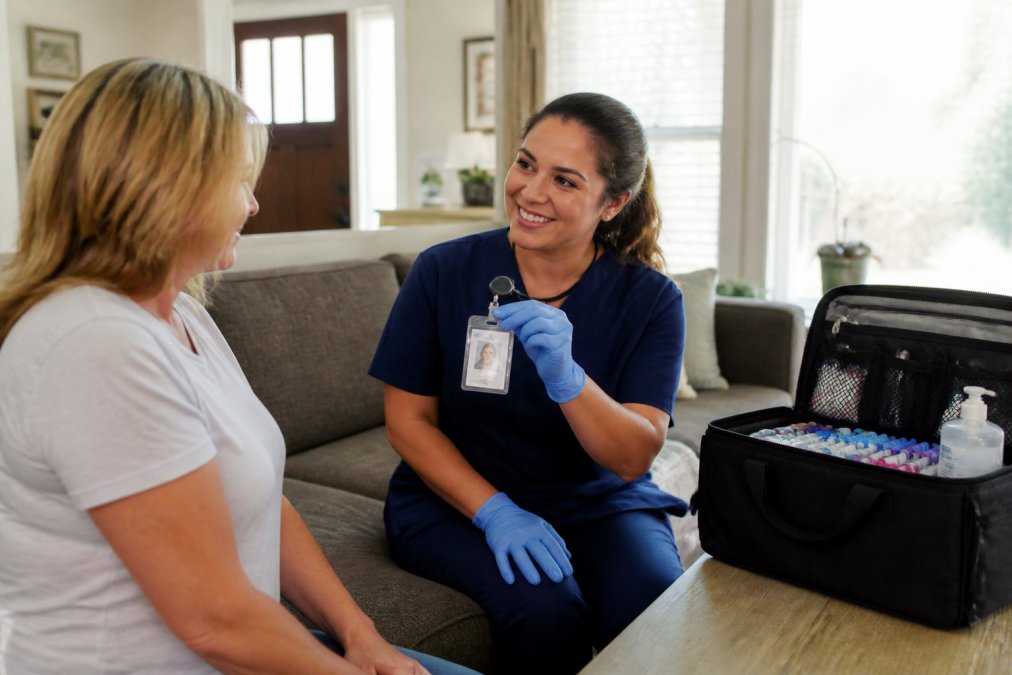
Credential verification takes five minutes and prevents the worst outcomes. A legitimate mobile phlebotomy provider will answer every item below without hesitation.
- Current phlebotomy license or certification, verifiable with the issuing body
- Proof of liability insurance
- Clear process for sharps and biohazard disposal
- Written protocol for specimen labeling, chain of custody, and transport
- Confirmation of how patient privacy and medical records are protected
- A named laboratory where your samples will be delivered
Medical credentialing standards vary by state, so ask which authority issued the license. A provider who cannot name it is not one to book.
Understanding Mobile Phlebotomy Cost and Insurance Coverage
Mobile phlebotomy cost is really two bills wearing one coat. The collection visit is a service fee. The laboratory analysis is a separate claim. Most billing surprises happen because patients only asked about the first number.
What Drives the Price of a Home Visit
Providers typically charge a per-visit fee for the draw, then the laboratory bills separately for processing. Factors that move the collection fee include travel distance, same-day or STAT scheduling, the number of tubes required, and whether the draw is routine or specialized.
Some providers publish transparent self-pay rates. Others quote per case.
Best For
Patients who want predictable out-of-pocket costs should ask specifically for a self-pay collection rate rather than a bundled estimate.
Patients who want predictable out-of-pocket costs should ask specifically for a self-pay collection rate rather than a bundled estimate.
A Step-by-Step Insurance Verification Guide
This is the part most patients skip, and the part that produces the surprise invoice. Work through it before you book.
Watch Out
A verbal “we take your insurance” is not verification. It means the provider will bill your plan. It does not mean your plan will pay. Confirm coverage with the insurer, not the provider.
A verbal “we take your insurance” is not verification. It means the provider will bill your plan. It does not mean your plan will pay. Confirm coverage with the insurer, not the provider.
When Mobile Collection Is Not Covered
If your plan does not cover mobile collection, the visit becomes a self-pay expense. Compare the collection fee against the cost of a half-day off work, transportation, and a clinic copay, for routine draws, the math often favors self-pay. For recurring draws tied to a chronic condition, ask your physician whether a home health benefit or homebound waiver applies, since those pathways can move the visit under a covered service.
What to Do If a Claim Is Denied
Denials are common and frequently reversible. Request the explanation of benefits, identify the denial reason code, and call the insurer with the CPT codes and the provider’s tax ID in hand. If the denial is because the collection was coded as a convenience rather than a medical necessity, ask your physician to document why an at-home draw was required. That documentation is often the difference between a paid claim and a write-off.
How to Prepare for an At-Home Blood Draw
Knowing how to prepare for an at-home blood draw prevents most failed attempts. Preparation is simple, but skipping it wastes the visit.
- Confirm fasting requirements. Many panels require 8 to 12 hours without food (Fasting for a Blood Test: MedlinePlus Medical Test). Water is usually fine, but confirm with your ordering physician.
- Hydrate the day before. Well-hydrated veins are easier to locate and tend to cooperate.
- Wear short sleeves or loose sleeves you can roll above the elbow.
- Have your laboratory requisition and photo ID ready at the door.
- Clear a well-lit surface with a chair and enough room for the phlebotomist’s kit.
- Tell the provider about medications or blood thinners when you schedule, not when they arrive.
Specialized Needs: Facilities, Clinical Trials, and Difficult Draws
Facility administrators need volume capacity, not a single appointment. Nursing homes and assisted living communities typically require recurring on-site collection for multiple residents, so the provider must schedule in batches, keep individual lab orders straight, and manage chain of custody for every specimen.
Frequently Asked Questions
How much does a mobile phlebotomist cost?
Mobile phlebotomy cost varies by provider, location, and whether you need same-day service. Some services charge a flat per-visit fee for the collection, with lab processing billed separately. Others bundle collection and processing into one rate. Always ask whether the quoted price includes the blood draw, specimen transport, and lab analysis, or just the home visit itself. Request a written estimate before booking so there are no surprises.
How do I verify if a mobile phlebotomist is licensed?
Ask the provider for their phlebotomy license or certification number, then check it against your state’s health department or licensing board database. A legitimate mobile phlebotomy provider will share this without hesitation. You can also ask whether they carry professional liability insurance and whether they follow standard precautions for biohazard disposal. If a provider cannot produce credentials or hesitates to answer, find another service.
What information do I need to provide for an at-home blood draw?
You will typically need a valid laboratory requisition or lab order from your physician, a photo ID, and your insurance card if you plan to bill through insurance. Some providers also ask for your preferred laboratory so they can deliver specimens to the right facility. If you are using a direct-to-consumer test kit, have the kit ready and confirm the provider is familiar with its collection requirements before the appointment.
Does insurance cover mobile phlebotomy services?
Coverage depends on your plan and the reason for the blood draw. Medically necessary lab work ordered by a physician is often covered, but the mobile convenience fee may be an out-of-pocket expense. Call your insurance company before booking and ask two questions: whether the lab tests are covered, and whether home collection is a reimbursable service. Get the answer in writing or note the representative’s name and reference number.
