
Concierge lab services bring blood draws to your home or office. See how mobile phlebotomy works, what it costs, and how to prepare for a blood test.
What Is Mobile Phlebotomy for Routine Blood Work?
Table of Contents
- What Is Mobile Phlebotomy for Routine Blood Work?
- How Mobile Blood Collection Works: Step by Step
- Do You Need a Doctor’s Order for Blood Work at Home?
- How to Prepare for a Blood Test Before Your Visit
- What Does Mobile Blood Draw Cost?
- Who Benefits from Routine Blood Work at Home
- Safety, Privacy, and Limitations of Mobile Phlebotomy
- Conclusion
- Frequently Asked Questions
Last Updated: October 20, 2026
What Is Mobile Phlebotomy for Routine Blood Work?
Mobile phlebotomy for routine blood work is a service where a licensed phlebotomist comes to your home, office, or care facility to collect a blood sample for standard lab tests.
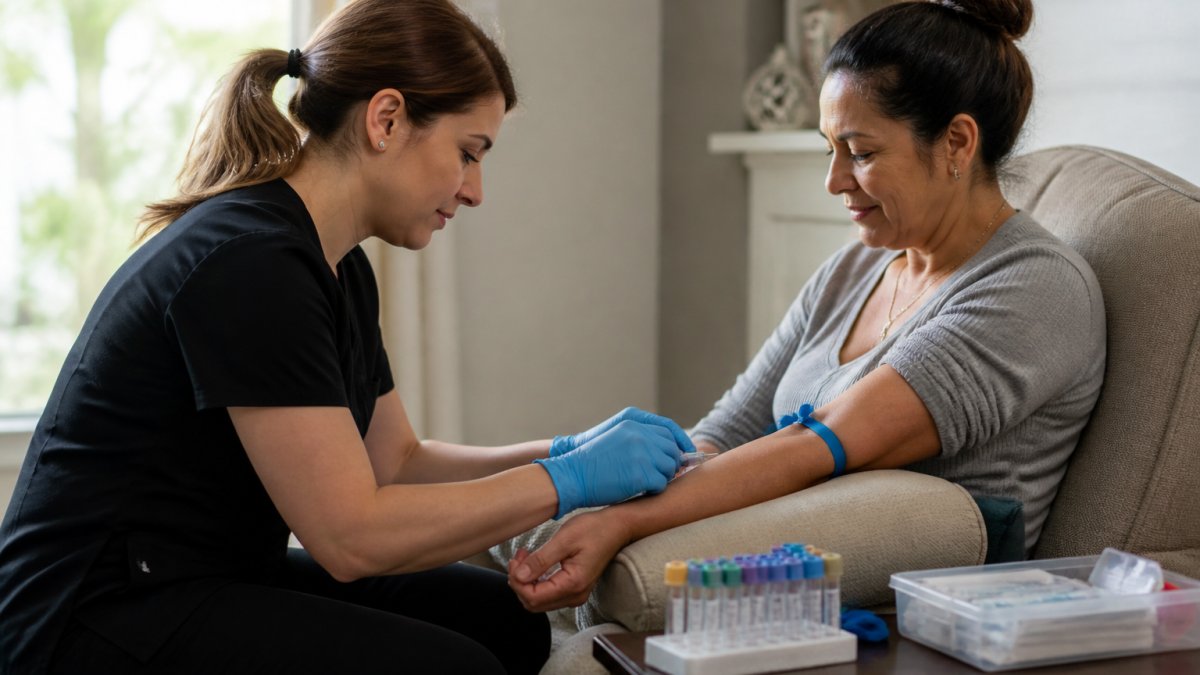
The core idea is simple. A trained professional performs the same venipuncture you would get at a clinic. Then the specimen goes to the lab for analysis. The difference is location and convenience.
What a Mobile Phlebotomist Does During a Routine Visit
A mobile phlebotomist draws blood, labels the specimen, and prepares it for transport. Most visits take 15 to 30 minutes.
Here is what happens during a typical appointment:
- Confirms your identity and your doctor’s order
- Reviews your test list and any prep instructions
- Finds a suitable vein and performs the draw
- Labels each tube at the point of collection
- Stores the sample correctly for transport
- Delivers the specimen to your chosen lab
Where Mobile Blood Collection Takes Place
Collection can happen almost anywhere a patient needs it. Common settings include:
- Private homes and apartments
- Offices and workplaces
- Assisted living and nursing facilities
- Hotels and temporary stays
- Clinical trial sites and sports facilities
The goal is access. If you can receive a visitor safely, you can usually receive a blood draw there.
How Mobile Blood Collection Works: Step by Step
The process runs from booking to results in a clear order. Here is how it works from start to finish, with the practical details that most guides skip.
Step 1: Confirm the Order and Eligibility
Routine blood work generally starts with a clinician’s order, also called a requisition or lab order. The order tells the laboratory which tests to run and connects the results to the clinician who ordered them. Before you book a mobile draw, confirm three things:
- The order exists and is current. Ask your clinician’s office to send the requisition to the laboratory you plan to use, or ask whether the mobile service can accept a copy.
- The test is supported for home collection. Most standard blood counts and chemistry panels are routine, but some tests require special handling, timing, or a collection site. Ask the service to confirm your specific test list.
- The location is in the service area. Mobile coverage is usually defined by ZIP code and appointment window, so confirm your address before you pay.
A common mistake is booking a draw before the order exists. Confirm the requisition first. It saves a repeat visit.
Step 2: Book the Appointment
You book a time window, share your test order, and confirm your address. Then a phlebotomist is dispatched to you. A simple booking checklist:
- Confirm which tests your clinician ordered
- Have your insurance card and photo ID ready
- Share any mobility, parking, or access notes (gate codes, elevator access, pets)
- Note your preferred laboratory
- Ask about fasting or timing rules
- Confirm the cancellation and rescheduling policy
Ask whether the service draws at your home, workplace, or care facility, and whether there are added charges for after-hours or weekend visits.
Step 3: Prepare Before the Visit
Preparation affects accuracy and how easy the draw is. Use this quick prep guide:
- Fasting tests: follow your clinician’s fasting window exactly. Not all routine panels require fasting.
- Hydration: drink water beforehand to make veins easier to find.
- Medications: ask your clinician before skipping anything.
- Timing: some tests need a morning draw.
- Clothing: wear short sleeves or loose arms.
- Collection area: clear a well-lit space with a chair and a table for the collection kit.
Pro Tip
Ask your clinician whether your specific test requires fasting. Not all routine panels do, and fasting when it is not needed just makes the visit harder.
Ask your clinician whether your specific test requires fasting. Not all routine panels do, and fasting when it is not needed just makes the visit harder.
Step 4: The Visit Itself
A mobile phlebotomist draws blood, labels the specimen, and prepares it for transport. Most visits take 15 to 30 minutes. During a typical appointment the phlebotomist:
- Confirms your identity and your doctor’s order
- Reviews your test list and any prep instructions
- Finds a suitable vein and performs the draw
- Labels each tube at the point of collection
- Stores the sample correctly for transport
- Delivers the specimen to your chosen laboratory
Step 5: Specimen Handling and Transport
Sample integrity depends on proper handling. Tubes are labeled on site, stored at the right temperature, and transported within the laboratory’s required window. Most routine samples reach the laboratory the same day. From there, Clinical Laboratory Improvement Amendments (CLIA) program information sets the quality standards that laboratories follow for testing.
Step 6: After Collection and Results
Collection turnaround and result turnaround are different things. The draw itself is quick, but the laboratory needs time to process and analyze the sample. Ask two questions when you book:
- Who communicates results? Results usually go to the clinician who ordered the tests, and that office shares them with you. Some laboratories also offer a patient portal.
- When should you expect them? Routine panels often return within a few business days, but timing depends on the test and the laboratory.
If you have not heard back within the timeframe the laboratory quoted, follow up with the ordering clinician’s office rather than the phlebotomist, who typically does not interpret results.
Do You Need a Doctor’s Order for Blood Work at Home?
In most cases, yes. Routine blood work usually requires a doctor’s order, also called a requisition or lab order. (Source: guidelines for laboratory services)
The order tells the lab which tests to run. It also connects the results to the clinician who ordered them. Some services offer their own ordering option, but many insurers require a clinician’s order for coverage.
A common mistake is booking a draw before the order exists. Confirm the requisition first. It saves a repeat visit.
How to Prepare for a Blood Test Before Your Visit
Preparation affects accuracy. Fasting, timing, and hydration all matter for certain tests.
Use this quick prep guide:
- Fasting tests: follow your clinician’s fasting window exactly
- Hydration: drink water beforehand to make veins easier to find
- Medications: ask your clinician before skipping anything
- Timing: some tests need a morning draw
- Clothing: wear short sleeves or loose arms
What most guides miss is hydration. Well-hydrated veins are easier to access, which means fewer sticks.
What Does Mobile Blood Draw Cost?
Mobile blood draw cost varies by service, location, and test type. The most useful way to understand pricing is to separate the charges into three buckets, because they are billed by different parties and covered differently.
The Three Cost Buckets
- Collection or convenience fee. This is what the mobile phlebotomy service charges for the visit and the draw. It may be a flat visit fee, a travel fee based on distance, or a combined service fee. After-hours, weekend, and same-day visits often carry a higher rate.
- Laboratory processing charge. The laboratory bills for running the tests themselves. This charge depends on the specific tests ordered and the laboratory’s fee schedule.
- Add-on charges. These can include supplies, a second draw attempt, stat or rush processing, or a fee for delivering the specimen to a laboratory outside the service’s usual network.
Insurance and Payment Responsibilities
Insurance treatment is the part patients most often misunderstand. A common pattern is that the laboratory work may be covered under your plan while the mobile collection or travel fee is not, or is covered only under specific plan types. Before you book, ask:
- Does my plan cover the laboratory tests, and is the laboratory in network?
- Does my plan cover a mobile collection or travel fee at all?
- Will I owe a copay, coinsurance, or deductible amount for the tests?
- Is a clinician’s order required for coverage?
Many insurers require a clinician’s order for laboratory coverage. If you are paying out of pocket, ask for the total before the visit so there are no surprises.
Questions to Ask Before You Book
- Is there a separate visit or travel fee, and does it change by distance or time of day?
- Does my insurance cover the draw or only the tests?
- Which laboratory will process the sample, and is it in my network?
- Are there added charges for after-hours visits or a second draw attempt?
- What is the cancellation and rescheduling policy, and is there a no-show fee?
At Phlebotomy Experts, pricing depends on your location and the service requested. Call us for current rates and a clear quote before your visit.
Key Takeaway
Ask for an itemized quote that separates the collection fee from the laboratory charge. That single step makes it much easier to compare providers and to check what your plan will actually cover.
Ask for an itemized quote that separates the collection fee from the laboratory charge. That single step makes it much easier to compare providers and to check what your plan will actually cover.
Who Benefits from Routine Blood Work at Home
Home collection helps people who face barriers to a clinic visit. The benefits are real, but they are not universal.
Groups who often benefit:
- Older adults and people with limited mobility
- Patients managing chronic conditions with regular testing
- Busy professionals who cannot spare a clinic trip
- People with needle phobia or difficult veins
- Parents managing draws for infants and children
- Facility administrators coordinating multiple residents
Reduced travel and less waiting are the biggest wins. For someone who needs frequent draws, that adds up fast.
Safety, Privacy, and Limitations of Mobile Phlebotomy
Safety and privacy are reasonable concerns. A licensed phlebotomist follows the same infection-control and labeling standards used in a clinic.
Privacy is also a fair question. A discreet visit means no waiting room and no shared lobby. Our technicians arrive in plain, professional attire, not a marked van.
But home collection has limits. These include:
- Not every test or condition suits a home draw
- Emergency or urgent symptoms need in-person care
- Some insurance plans will not cover travel fees
- Difficult draws may still need a lab or clinic
Watch Out
If you feel faint during or after a draw, tell your phlebotomist right away and lie down. Ignoring dizziness can lead to a fall.
If you feel faint during or after a draw, tell your phlebotomist right away and lie down. Ignoring dizziness can lead to a fall.
Conclusion
Arranging routine blood work should not add stress to your week. The right mobile phlebotomy service removes the drive, the waiting room, and the guesswork.
Phlebotomy Experts brings licensed, experienced technicians to your home or office. We offer in-home blood draws, delivery of your specimen to the lab of your choice, and a calm bedside manner built for anxious patients and difficult veins. Call now to schedule your visit and let us handle the rest.
Frequently Asked Questions
Is mobile phlebotomy worth it for routine blood work?
For many patients, mobile phlebotomy is worth it because it removes travel, waiting rooms, and scheduling friction. It can be especially valuable for older adults, people with limited mobility, busy professionals, and anyone with needle anxiety who wants a calmer setting. Whether it is worth the added cost depends on your insurance coverage, your distance from a lab, and how often you need testing. Compare the mobile blood draw cost against your usual lab visit, including time off work and transportation, before deciding.
Do I need a doctor’s order for a mobile blood draw?
In most cases, yes. Routine blood work is typically ordered by a physician, nurse practitioner, or other licensed clinician, and the mobile phlebotomy service collects the specimen against that order. Some services can help coordinate with your provider or work with a lab that accepts self-pay testing, but the requirements vary by state and by laboratory. Ask the mobile phlebotomy provider what doctor’s order for blood work they need before your appointment so the collection is not delayed.
How should I prepare for routine blood work at home?
Preparation depends on the tests ordered. Fasting for 8 to 12 hours is common for glucose and lipid panels, but not all routine blood work requires it. Drink water normally, avoid strenuous exercise right before the draw, and take medications as directed unless your clinician says otherwise. Have your doctor’s order, insurance card, and a list of medications ready. Clear a well-lit space with a table and chair so the phlebotomist can set up collection supplies safely.
How long does a mobile blood draw appointment take?
The draw itself usually takes 5 to 15 minutes, but the full appointment often runs 20 to 30 minutes including setup, paperwork, and specimen labeling. Difficult veins or multiple tubes can add time. After collection, the phlebotomist packages the blood specimen for transport and delivers it to the laboratory, where sample turnaround time depends on the tests ordered. Ask the provider when results are expected and how they will be sent to your ordering clinician.
