
Learn why blood bruises after a draw, what makes a bruise more likely, simple home care steps, and signs that call for prompt medical advice right away.
Are Mobile Blood Draws Safe? What Patients Should Know
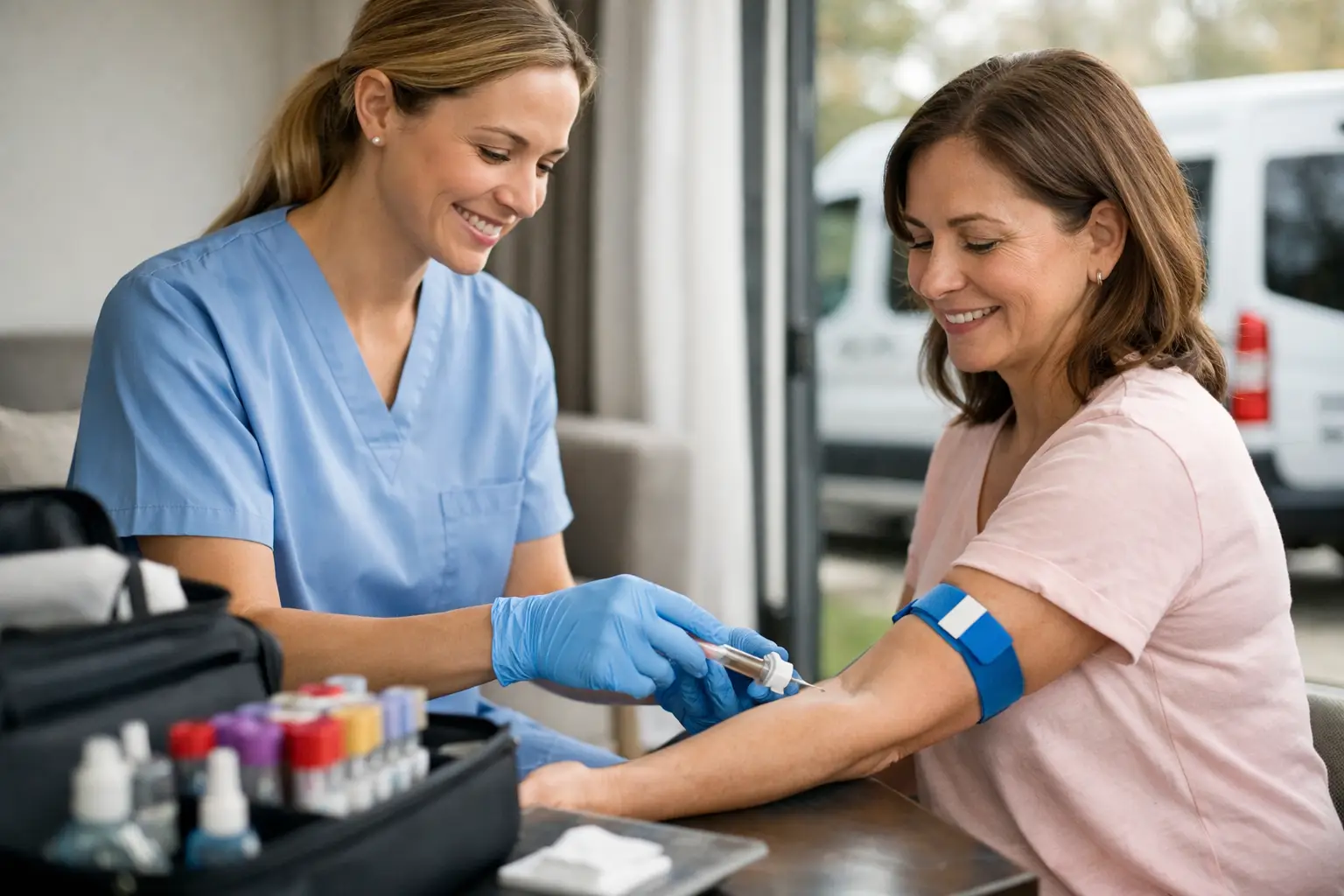
A crowded waiting room is not the only place to get reliable lab work. For an older parent who cannot easily travel, a busy professional between meetings, or someone trying to avoid unnecessary exposure to illness, the question is practical: are mobile blood draws safe? They can be, provided the service follows the same core protections you should expect in any clinical collection setting – qualified phlebotomy care, clean supplies, correct patient identification, careful specimen handling, and prompt delivery to the appropriate laboratory.
Mobile collection does not mean casual collection. A professional phlebotomist brings the clinical process to your home, office, care facility, or another approved location so you can receive needed blood work with more comfort and less disruption.
Are Mobile Blood Draws Safe When Done at Home?
The setting changes, but the safety standards should not. A properly trained mobile phlebotomist uses sterile, single-use needles and collection supplies, follows hand hygiene and protective protocols, confirms the patient and test order, labels specimens at the time of collection, and prepares them for transport according to laboratory requirements.
That process matters because a blood draw has two safety goals. First, the person receiving care should be protected from infection, injury, and avoidable discomfort. Second, the specimen must arrive at the laboratory in usable condition so the results accurately reflect your health.
At home, many patients actually feel calmer than they do at a busy laboratory. You can sit in a familiar chair, lie down if you tend to feel faint, have a family member nearby, and avoid a long check-in line. For people with mobility limitations, weakened immune systems, dementia, chronic illness, or anxiety around needles, those small details can make a meaningful difference.
Still, “mobile” is not automatically a guarantee of quality. Safety depends on who is coming to your location and how carefully they manage every step of the appointment.
What Makes a Mobile Blood Draw Safe?
A safe appointment begins before the needle is opened. The phlebotomist should review the test order, verify your identity using appropriate identifiers, and ask relevant questions such as whether you have fasted, take blood thinners, have a history of fainting, or have an arm that should not be used because of a mastectomy, dialysis access, injury, or medical instruction.
Clean, Single-Use Equipment
Needles, lancets, collection tubes, alcohol pads, gloves, gauze, and bandages should be handled appropriately and used according to infection-control practice. A needle should never be reused. The phlebotomist should maintain a clean work area and safely dispose of sharps after the draw.
You do not need a hospital-looking room for a safe blood draw. You do need a clean, stable surface, good lighting, and enough space for the phlebotomist to work without rushing. Your kitchen table, a desk, or a bedside area may work well if it can be cleared and cleaned first.
Experienced Technique and Patient Assessment
A certified, experienced phlebotomist knows how to select an appropriate vein, position the patient safely, recognize signs of dizziness, and respond calmly if a draw is difficult. Good technique can reduce the chance of bruising, repeated needle sticks, or a missed vein, although no blood draw is completely free of those possibilities.
Some patients need extra consideration. Children may benefit from a calm, patient approach and a parent’s presence. Older adults often have delicate skin or veins that roll more easily. Patients receiving therapeutic phlebotomy may require additional observation and hydration guidance. A mobile provider should adapt to the patient in front of them, not treat every appointment like a quick stop.
Correct Labeling and Chain of Custody
One of the most overlooked parts of blood-draw safety is specimen accuracy. Even a perfectly comfortable draw is not helpful if the wrong tube is used, the label is incomplete, or the sample goes to the wrong laboratory.
Professional mobile collection includes clear labeling at the collection site and careful coordination with the ordering provider and laboratory. Depending on the test, samples may need to be kept upright, protected from light, refrigerated, maintained at room temperature, or delivered within a specific time window. Specialty testing can have even more detailed instructions.
This is why a qualified mobile service should understand laboratory collection requirements rather than simply pick up a sample and hope for the best. Prompt transport helps protect specimen integrity and reduces the risk that you will need to repeat the draw.
Privacy and Respect in Your Own Space
Safety also includes privacy. Your health information, lab order, and results-related paperwork should be handled discreetly. A HIPAA-compliant provider respects the fact that your home or office is personal space, explains what is happening, and does not make you feel rushed or exposed.
A warm bedside manner is not just a nice extra. When patients feel heard, they are more likely to share information that affects the draw, such as a previous fainting episode, a difficult vein, a latex sensitivity, or concern about a medication. That communication helps the appointment go more smoothly.
How Mobile Blood Draws Compare With a Lab Visit
A traditional laboratory has a fixed clinical environment, reception staff, and on-site processing workflows. Mobile service trades some of that fixed infrastructure for personal attention and convenience. Neither option is automatically right for every situation.
For routine physician-ordered blood work, recurring monitoring, home test-kit collection, assisted-living support, or a patient who has difficulty getting out, mobile collection can be an excellent fit. It saves travel time and can reduce the physical strain of getting dressed, arranging transportation, waiting, and returning home.
For an urgent medical problem, severe symptoms, uncontrolled bleeding, chest pain, shortness of breath, or a situation where immediate evaluation is needed, a mobile blood draw is not a substitute for emergency care. Call 911 or seek urgent medical attention when symptoms require it.
There are also tests that require special timing, preparation, or immediate processing. A reputable service will tell you whether your requested collection can be handled at your location and may coordinate the timing with the laboratory. Honest guidance is part of safe care.
Questions to Ask Before Booking
Before inviting a mobile phlebotomist into your home or facility, ask a few direct questions. Confirm that the person performing the draw is certified or licensed as required in your state and experienced with your type of collection. Ask whether the service works with your specific laboratory or can deliver to the lab named on your order.
You can also ask how specimens are labeled, transported, and kept within required time and temperature ranges. If you need a specialty collection, such as therapeutic phlebotomy, prenatal DNA testing, PRP-related collection, or serum eye-drop processing, ask whether the phlebotomist has experience with that exact protocol.
Finally, find out what you need to do before the appointment. You may need to fast, drink water, avoid certain supplements, have your lab order available, or plan to sit or lie down afterward. The right preparation can make your veins easier to access and help prevent lightheadedness.
Simple Ways to Prepare for a Safer, Easier Draw
Unless your clinician has told you to fast or limit fluids, drink water before the appointment. Hydration can make veins easier to find. Wear a shirt with sleeves that roll up comfortably, and choose a quiet spot with a chair that has arm support if possible.
Let the phlebotomist know if you have ever fainted during a draw, are taking anticoagulants, have had lymph nodes removed, have a port or fistula, or have a preferred arm. Do not be shy about mentioning needle anxiety. A caring professional can slow down, explain each step, and help you remain comfortable.
After the draw, hold firm pressure on the site for the time you are instructed. A small bruise or tenderness can happen, especially if you have fragile veins or take blood-thinning medication. Contact a medical professional promptly if bleeding does not stop with pressure, swelling becomes significant, or you have concerning symptoms.
Care That Comes to You, Without Cutting Corners
The safest mobile blood draw is one that feels both personal and professional: a trained phlebotomist arrives prepared, listens to your needs, uses proper technique, protects your privacy, and ensures your specimen gets where it needs to go. That is the standard patients deserve whether they are at home, in assisted living, recovering in rehabilitation, or taking a short break from work.
At Phlebotomy Experts, the goal is to let the laboratory come to you while keeping your comfort, dignity, and specimen care front and center. If getting to a lab has become one more stressful task on an already full plate, a well-coordinated mobile appointment may be the kinder, safer-feeling next step.
