
Learn why blood bruises after a draw, what makes a bruise more likely, simple home care steps, and signs that call for prompt medical advice right away.
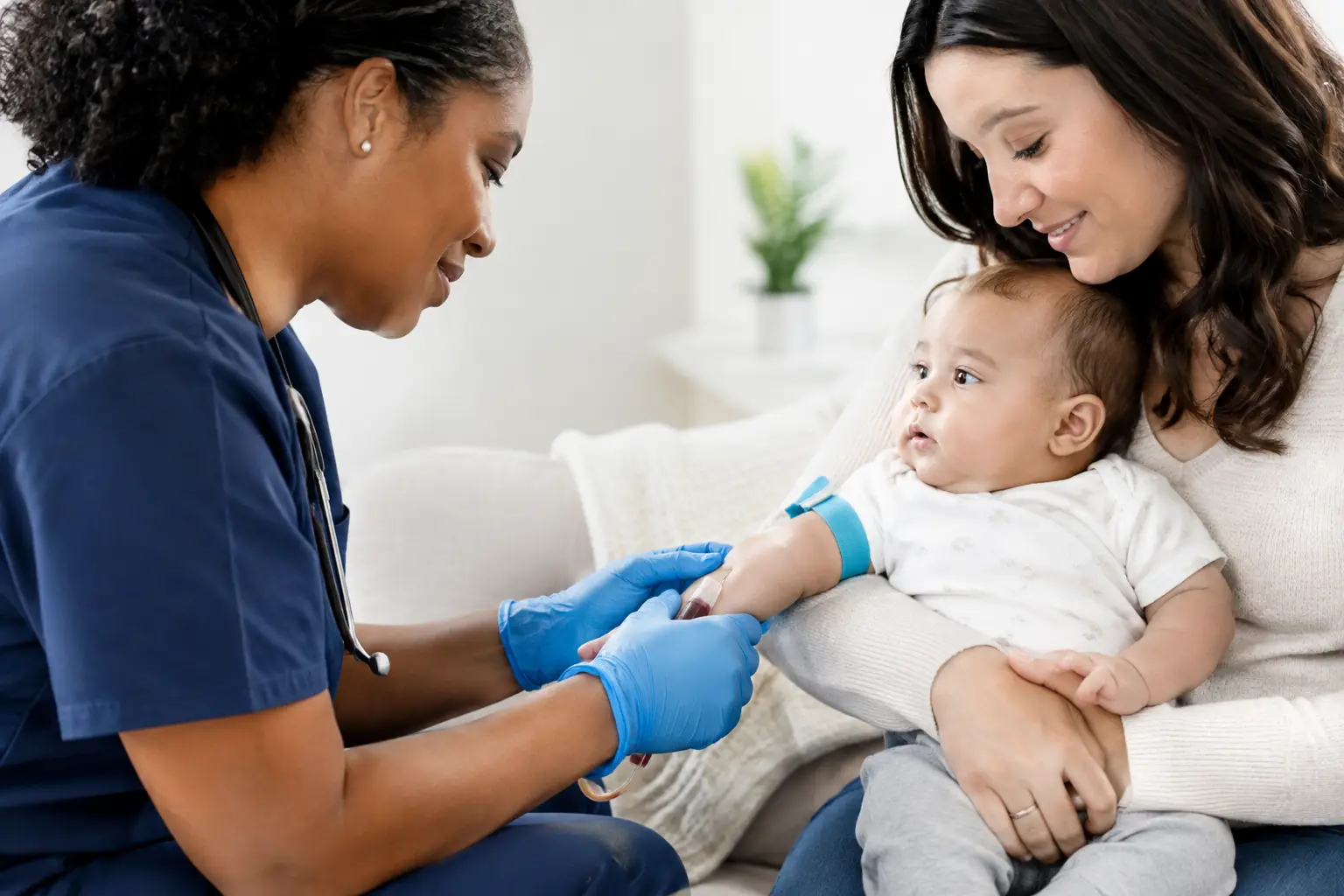
Can Mobile Phlebotomists Draw Infants Safely?
A lab order for a baby can turn into a much bigger task than it sounds. Packing a diaper bag, keeping an infant fed and calm, finding parking, and sitting in a crowded waiting room is a lot to ask of a new parent. So, can mobile phlebotomists draw infants? In many cases, yes – but infant collection requires the right order, the right supplies, the right experience, and a careful decision about whether a home visit is appropriate for that particular test.
For families who qualify, mobile collection can make a necessary blood draw feel far more manageable. The goal is not simply to bring a needle into the home. It is to provide calm, skilled collection while protecting your little Angel’s comfort, the specimen’s integrity, and the laboratory’s requirements.
Can Mobile Phlebotomists Draw Infants at Home?
A qualified mobile phlebotomist may be able to collect an infant blood specimen at home when the requested test, the infant’s age and condition, and the receiving laboratory’s policies allow it. Some pediatric collections are straightforward. Others require specialized handling, a specific volume of blood, immediate processing, or a hospital-based pediatric team.
That distinction matters. A responsible mobile service does not promise every infant draw in every situation. Before an appointment is confirmed, the collection team should review the physician or provider’s lab order, the baby’s age, the tests requested, collection timing, and where the specimen needs to go.
For example, a routine physician-ordered blood test may be suitable for a mobile visit if the proper pediatric collection materials are available and the laboratory accepts the specimen. A test involving urgent results, complicated processing, very limited collection windows, or a medically fragile newborn may be better handled at a pediatric hospital, specialty clinic, or the ordering provider’s office.
Why Experience Matters So Much With Infant Draws
Infants are not small adults. Their veins are tiny, they have less blood volume, and they cannot explain what feels uncomfortable. A successful draw depends on a phlebotomist who understands pediatric technique, stays patient under pressure, and knows when to pause or recommend another setting.
Experienced pediatric collectors consider more than finding a vein. They review the requested tubes and volumes, use age-appropriate equipment, support the baby securely, and work efficiently once collection begins. They also communicate with the parent throughout the process, because a calm caregiver often helps a baby settle more quickly.
There is no honest way to guarantee that a baby will not cry. Crying is a normal response to being held still or feeling a quick stick. What can be controlled is the environment: familiar surroundings, fewer strangers, no crowded lab lobby, and a professional with an awesome bedside manner with a Smile.
A home setting may be especially helpful for parents caring for a newborn, siblings who cannot be left behind, or infants who are more comfortable after feeding and resting in their usual routine. Still, home comfort does not replace clinical judgment. If the phlebotomist determines that collection cannot be completed safely or that the specimen may not meet laboratory standards, the right next step may be referral to a pediatric facility.
What Happens Before an Infant Mobile Blood Draw
The best infant appointments begin before the phlebotomist arrives. Parents should have a valid lab order from the child’s physician or authorized provider. That order tells the collection professional exactly which tests are needed and helps determine whether mobile collection can be arranged.
During scheduling, be prepared to share your baby’s age, the requested tests, the ordering provider, insurance or payment details if requested, and the preferred laboratory. If your child has had difficult blood draws, was born prematurely, has a bleeding concern, has very small veins, or has a medical device such as a port, mention that early. Those details help the team plan responsibly rather than making assumptions at the doorstep.
Ask whether the test has special instructions. Some infant tests have timing requirements related to feeding, medications, or the time of day. Others may need the specimen protected from light, chilled, spun, or delivered immediately. A mobile phlebotomy concierge service coordinates collection and specimen delivery, but the laboratory’s acceptance rules always come first.
It is also wise to ask what will make the visit easiest. In many cases, parents can prepare a clean, well-lit area with a comfortable chair or couch, a swaddle or blanket, diapers, wipes, and a favorite pacifier if the baby uses one. The phlebotomist will guide positioning, so there is no need to restrain your baby before they arrive.
How Parents Can Help Make the Visit Easier
A little preparation can make a meaningful difference, particularly when a baby is overtired or hungry. If there are no fasting instructions from the ordering provider, feeding your infant shortly before or after the appointment may be comforting. Breastfeeding, bottle-feeding, a pacifier, gentle rocking, or a familiar voice can all help during a brief collection.
Try to keep the room warm. Babies can become unsettled when they are chilly, and warmth can also support easier vein access. Dress your child in clothing that allows practical access to an arm, hand, or foot without a full outfit change.
Parents should also expect the appointment to include identity checks and careful labeling. This may feel like extra time when you are focused on a fussy baby, but it is a vital safeguard. The collector must verify the patient, match the order, label tubes accurately, package the specimen correctly, and arrange prompt delivery to the designated laboratory.
When a Mobile Visit May Not Be the Best Choice
Mobile infant collection is a helpful option, not a replacement for every level of pediatric care. A hospital or pediatric specialty setting is usually the better choice when an infant is acutely ill, has breathing difficulty, is severely dehydrated, needs urgent testing, or requires close medical monitoring.
Some tests may also require services that cannot be provided in a home environment. This can include immediate bedside analysis, complex processing, a larger-than-usual blood volume, or collection by a specific hospital department. Newborn screening programs and certain state-regulated collections may have their own procedures as well.
Parents should never delay urgent medical care while trying to arrange a convenient lab draw. If your baby appears very unwell, has trouble breathing, is unusually difficult to wake, has a seizure, or you believe there is an emergency, seek emergency medical care right away.
Questions Worth Asking Before You Schedule
The right questions protect both your child and the specimen. Ask whether the phlebotomist has pediatric or infant collection experience, whether your baby’s specific test can be collected at home, and whether the service has the appropriate pediatric supplies. Confirm where the sample will be delivered and how quickly it will get there.
You can also ask what happens if the draw is unsuccessful. With infants, a compassionate plan matters. A skilled professional will not keep attempting collection beyond what is reasonable. Depending on the circumstances, they may discuss rescheduling, using another approved collection approach, or referring you to a pediatric laboratory setting.
At Phlebotomy Experts, appointments are approached with the same care parents bring to the visit: verify the order, assess whether home collection is appropriate, arrive prepared, and treat every family with patience and respect. HIPAA-compliant handling and prompt coordination with established laboratories help keep the focus where it belongs – on your baby’s comfort and reliable testing.
If your infant has a physician-ordered blood test, call to discuss availability before making the trip to a lab. A quick conversation can clarify whether an experienced mobile pediatric collection visit is a good fit, what to prepare, and when a pediatric facility would be the safer choice. The right collection setting is the one that gives your baby careful care and gives you a little more breathing room.
