
Learn why blood bruises after a draw, what makes a bruise more likely, simple home care steps, and signs that call for prompt medical advice right away.
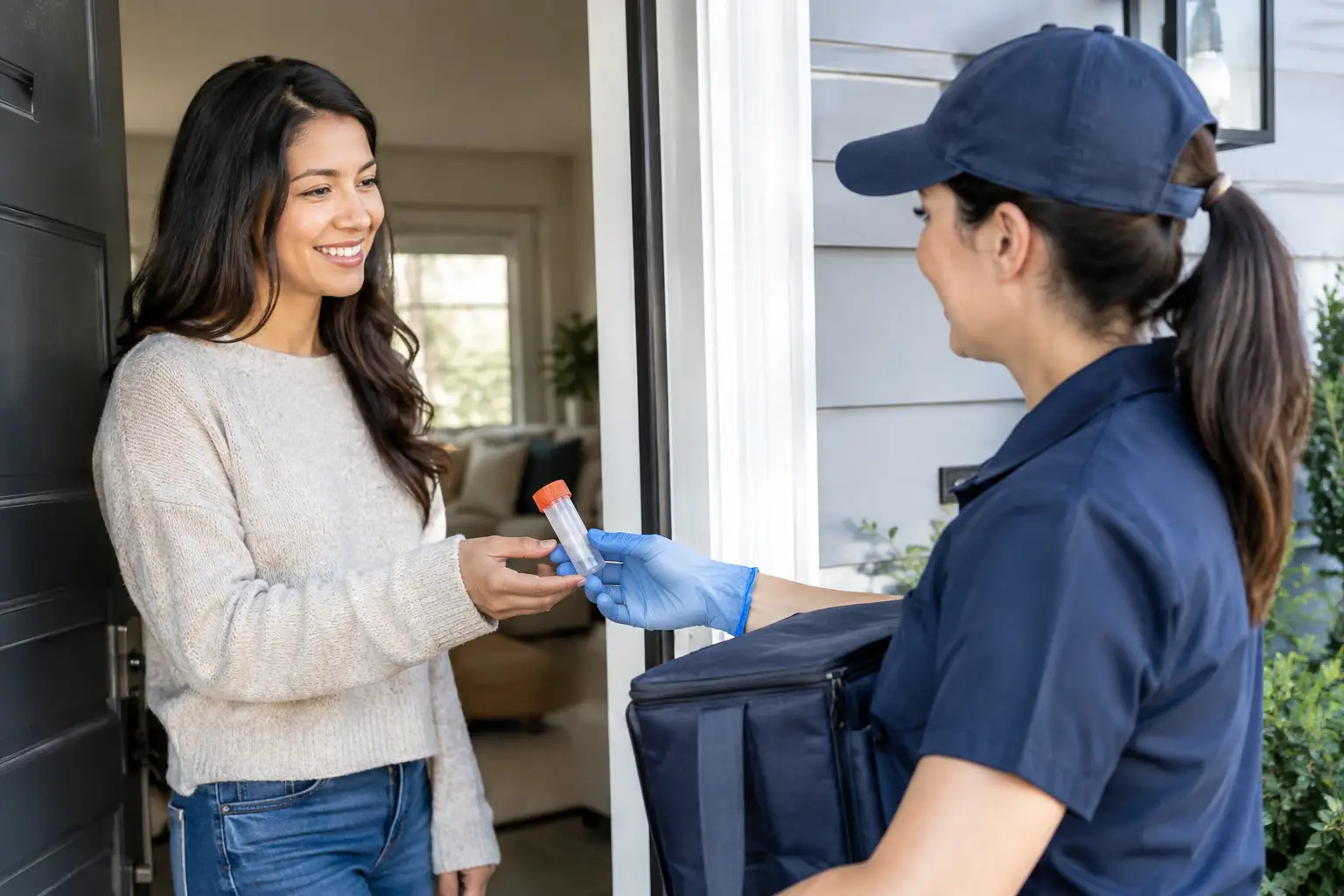
How Mobile Specimen Delivery Works at Your Door
A lab order should not automatically mean rearranging your workday, sitting in a crowded waiting room, or finding transportation when you do not feel your best. How mobile specimen delivery works is refreshingly simple: a qualified phlebotomist comes to you, collects and prepares the specimen according to the laboratory’s requirements, and brings it to the appropriate lab or hospital for processing.
For many patients, that means the laboratory comes to them – at home, at the office, in assisted living, during rehabilitation, or wherever a collection can be performed safely and comfortably. The draw itself may only take a few minutes. The planning and handling behind it are what help protect your results.
Mobile specimen delivery starts with the right details
Before an appointment, the mobile phlebotomy team needs to understand what has been ordered. A laboratory requisition, physician order, test kit instructions, and your preferred laboratory all help determine the collection plan. Some tests require fasting, a particular time of day, special tubes, or delivery within a limited window after collection.
That is why a good mobile appointment is never just, “Show up and draw blood.” The collector confirms the patient’s information, reviews the order, checks any preparation instructions, and makes sure the requested laboratory can receive the specimen. If a test has unique requirements, such as chilled transport, light protection, or immediate processing, those details guide the visit and delivery route.
Patients can help by having their photo ID, insurance information if required by the laboratory, lab order, and any kit or paperwork ready before the phlebotomist arrives. If you are unsure whether you should fast, take your regular medication, or stop a supplement, ask your ordering provider before the appointment. Mobile collectors follow the order and collection requirements, but your physician is the right person to advise you about your care.
What happens during an at-location collection
A certified phlebotomist arrives with the supplies needed for the ordered draw. They will identify you using the required information, review the paperwork, and select an appropriate collection area. At home, that may be your kitchen table, a comfortable chair, or another clean, well-lit space. For a patient in hospice, a residential care community, or a rehabilitation facility, the phlebotomist works thoughtfully within the care setting.
Comfort matters. Some people have difficult veins, feel nervous around needles, have a history of fainting, or need extra time because of mobility concerns. A compassionate mobile phlebotomist does not rush through that. They explain what is happening, use appropriate technique, and help the patient remain as relaxed as possible. For children, older adults, and medically fragile patients, an awesome bedside manner with a smile can make a meaningful difference.
After collection, each tube or specimen container is labeled at the appointment using the information required by the lab. This step is critical. A specimen is only useful when the laboratory can confidently match it to the correct patient and order. The collector also completes required paperwork and records collection timing when the test calls for it.
Collection is not always a standard blood draw
Mobile specimen services can support more than routine venipuncture. Depending on the order and service availability, a visit may involve a home blood-test kit, therapeutic phlebotomy, prenatal DNA gender testing, or specialty collection connected with serum eye drops or PRP treatment.
Each pathway has different instructions. A home test kit may need specific packaging or documentation. Therapeutic phlebotomy may require clinical parameters and a more detailed physician order. Specialty specimens can have strict handling windows. The common thread is careful collection, correct labeling, and a delivery plan built around the laboratory or treatment facility’s protocol.
How mobile specimen delivery works after the draw
Once the specimen is collected and labeled, it is prepared for transport. The right method depends on the test. Some specimens can travel at room temperature for a defined period. Others need a cold pack, protective packaging, rapid delivery, or special handling to prevent exposure to light or damage in transit.
The phlebotomist secures the specimen and accompanying documents before leaving the location. This protects the sample from leaks, breakage, temperature problems, and mix-ups. It also preserves an organized chain of custody – a record of where the specimen is and who has handled it from collection through laboratory drop-off.
The specimen is then delivered to the designated receiving location, which may be an established laboratory, a hospital laboratory, or a specialty processing facility. Phlebotomy Experts coordinates deliveries with laboratories and hospitals such as Quest Diagnostics, Labcorp, WestPac Labs, CMB Laboratory, St. Joseph, and Cedars-Sinai when the order, location, and laboratory requirements align.
Delivery timing is not one-size-fits-all. A routine panel may have a wider acceptable transport window than a specimen requiring immediate processing. When timing is critical, the appointment should be scheduled with that requirement in mind. Same-day support can be helpful, but availability, distance, laboratory receiving hours, and the nature of the test all matter.
What happens when the lab receives it
At the laboratory, staff receive the specimen, confirm that the labeling and paperwork meet their acceptance standards, and begin the testing process. If the specimen meets the requirements, it moves into the lab’s workflow. Results are generally sent to the ordering physician, healthcare provider, or patient portal according to the laboratory’s process.
Mobile phlebotomy does not replace the laboratory or your doctor. It makes the collection and delivery portion easier to access. Your provider orders and interprets the test. The laboratory performs the analysis. The mobile team helps get the correctly collected specimen where it needs to go with less stress on your day.
Why careful transport protects your results
A blood tube is not simply a container. The sample inside can change over time if it is exposed to the wrong temperature, shaken excessively, delayed too long, or collected in the wrong tube. That can lead to a rejected specimen or results that need to be repeated.
This is why experienced mobile collection matters. The goal is not merely convenience. It is convenience supported by procedure: verifying the order, selecting the correct supplies, following collection instructions, documenting the draw, protecting the specimen, and delivering it promptly.
There are still times when a mobile visit may not be the best option. Certain tests require collection directly at a hospital or specialty center. Some laboratories have narrow receiving hours, and some orders involve procedures that need an on-site clinical team. A responsible concierge service will tell you when your order calls for a different setting rather than forcing a mobile solution that does not fit.
Who benefits most from mobile delivery
Mobile specimen delivery is especially helpful for people whose schedule, health, or living situation makes a lab visit difficult. Busy professionals can schedule a draw at an office. Families can avoid bringing children into a crowded waiting area. Older adults and patients with mobility limitations can remain in familiar surroundings. Immunocompromised patients can reduce unnecessary exposure to busy public spaces.
It can also support care teams in assisted living communities, group homes, hospice settings, and rehabilitation facilities. Instead of asking a vulnerable patient to travel for a routine draw, the collection can happen where care is already being provided. For patients who need recurring monitoring or therapeutic phlebotomy, that consistency can remove a major practical barrier to following the care plan.
The experience should feel personal, not clinical in the cold sense. You still receive professional, HIPAA-compliant service, but you also get the courtesy of having someone meet you where you are.
Preparing for a smooth appointment
A little preparation helps the visit go smoothly. Choose a clean area with a stable chair, good lighting, and enough room for the phlebotomist to work. Drink water beforehand unless your provider has told you otherwise, since hydration can make veins easier to access. Wear clothing with sleeves that can be comfortably rolled up.
Keep your lab order and identification close by, and mention anything the phlebotomist should know, such as a history of fainting, difficult veins, a mastectomy, a port, or blood-thinner use. Do not assume every laboratory or specimen type can be handled the same way. When you call to check appointment availability, share the exact test name, laboratory, preferred collection date, and any special instructions listed on the order.
The best mobile specimen visit leaves you with one less thing to manage. You can focus on your family, recovery, work, or simply resting at home while a trained professional handles the collection with care and gets your specimen moving in the right direction.
