Use this guide to mobile lab safety to know what a safe in-home blood draw looks like, from verified credentials and clean setup to fast specimen delivery.
Does Insurance Cover Mobile Phlebotomy Services?
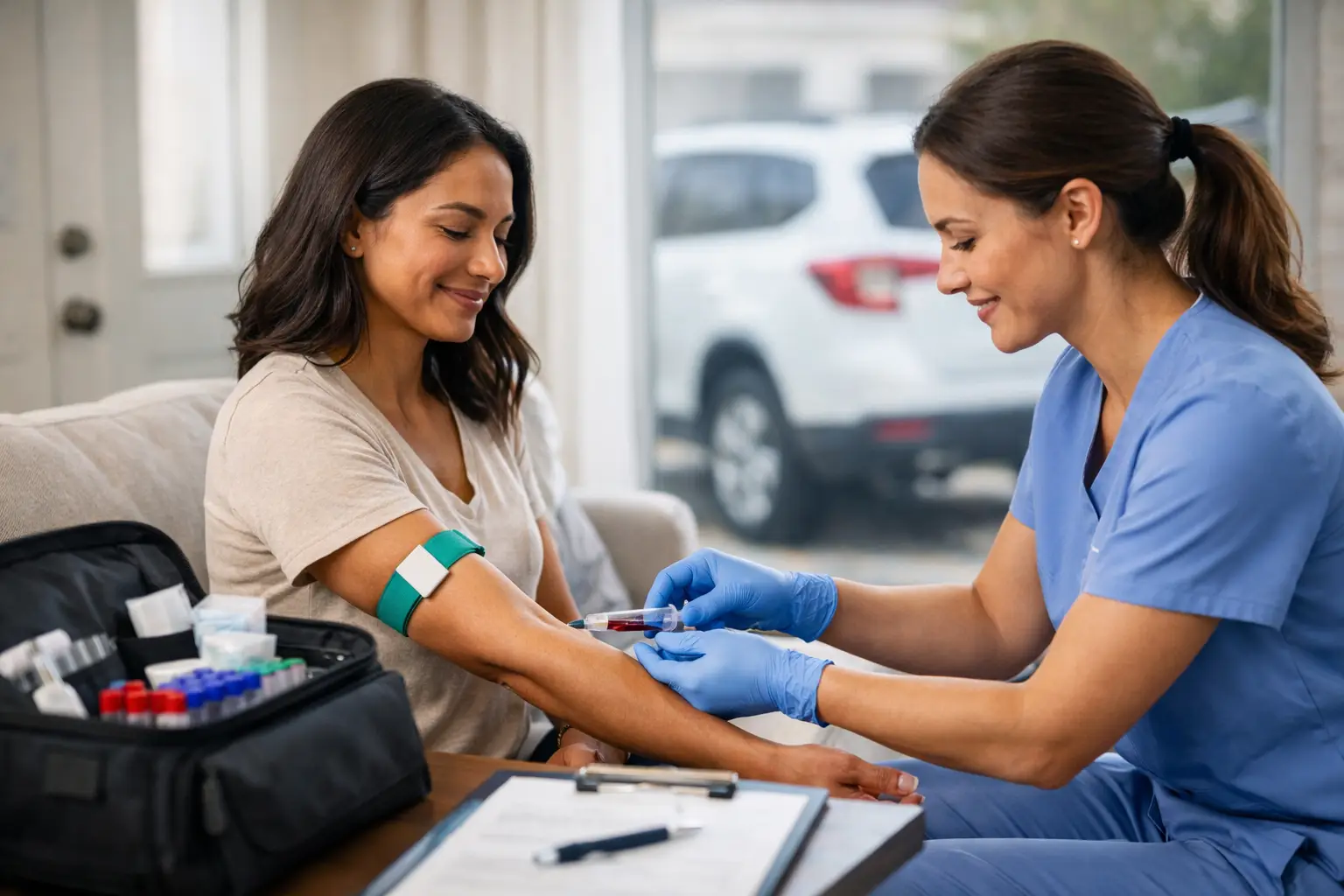
A home blood draw can make a difficult day much easier. For an older parent who cannot safely travel, a busy professional with no time to sit in a crowded waiting room, or a patient who needs recurring lab work, having a certified phlebotomist come to you is a real relief. But before scheduling, many patients ask the same practical question: does insurance cover mobile phlebotomy?
The honest answer is: sometimes, but not always in the way people expect. Your health insurance may cover the laboratory test and may cover the blood draw itself when it is medically necessary and ordered by an authorized provider. The convenience fee for having a phlebotomist travel to your home, office, assisted-living community, or rehabilitation facility may be separate.
That distinction matters. A little preparation before your appointment can prevent billing surprises and help you choose the most comfortable option for your care.
Does Insurance Cover Mobile Phlebotomy?
Insurance coverage usually has two parts: the lab testing and the mobile collection service.
When your physician, nurse practitioner, or other qualified provider orders blood work, your insurance plan may cover the test performed by the laboratory. Coverage depends on your plan, the reason for testing, whether the laboratory is in network, and any deductible, copay, or coinsurance that applies. A cholesterol panel, thyroid test, complete blood count, or other routine test may be covered under your medical benefits when your plan’s requirements are met.
Mobile phlebotomy is different. The mobile provider’s work includes scheduling, traveling to your location, verifying collection requirements, safely drawing and labeling specimens, protecting your privacy, and delivering the specimen promptly to the appropriate laboratory or hospital. Many insurance plans do not automatically reimburse this travel and concierge portion of the service.
In other words, insurance may pay the lab for processing your specimen while you pay a separate mobile collection or travel fee. In certain cases, a plan, medical group, home-health benefit, facility, or care program may arrange or reimburse in-home collection. There is no one answer that applies to every patient or plan.
Why Coverage Varies So Much
Insurance rules are built around networks, billing codes, medical necessity, and plan-specific benefits. A service that is covered for one person may be denied or handled differently for another, even if both patients receive the same test.
A patient with a physician-directed home-health program may have a different benefit path than someone booking a convenient blood draw at home before work. Someone living in a skilled nursing facility may have collection services coordinated through the facility. A person using an out-of-network laboratory may face higher costs even when the test itself is medically appropriate.
Medicare, Medicare Advantage, Medicaid, employer-sponsored plans, and private individual plans all have their own policies. Traditional Medicare may cover medically necessary laboratory testing ordered by a treating provider, but that does not mean it will cover every independent mobile phlebotomy travel charge. Medicare Advantage plans can have their own network and authorization rules. Medicaid benefits also vary by state and managed-care plan.
For specialty services, coverage can be even more specific. Therapeutic phlebotomy may be covered when it is medically prescribed for an eligible diagnosis and performed through the appropriate provider or facility. Prenatal DNA gender testing, wellness testing, IV vitamin therapy, and certain elective services are commonly treated differently from diagnostic lab work. A medical order alone does not guarantee that every related service is covered.
The Questions to Ask Before You Schedule
You do not need to become a billing expert. A quick call to your insurance member-services number, usually listed on the back of your card, can clarify the basics. Tell the representative that you have a provider order for laboratory testing and are considering an in-home or mobile specimen collection service.
Ask whether the ordered lab test is covered, whether the selected laboratory is in network, and whether your plan covers a mobile specimen-collection or travel fee. Also ask if prior authorization, a referral, specific diagnosis information, or use of a designated provider is required. Write down the representative’s name, the date of the call, and any reference number they provide.
It also helps to call the laboratory or mobile phlebotomy provider before the visit. Confirm where the specimen will be delivered, whether the laboratory accepts your insurance, what the mobile service fee is, and whether any receipt or itemized documentation will be available for you to submit to your plan. Clear answers upfront make the appointment feel as easy as it should.
What You May Pay Out of Pocket
Even when the lab test is covered, your out-of-pocket cost can include a deductible, copay, coinsurance, or a noncovered convenience fee. If your deductible has not been met, your plan may apply the negotiated lab cost toward it. If the laboratory is out of network, your share can be higher.
The mobile visit fee is often a self-pay expense because it pays for the licensed professional’s time, travel, supplies, scheduling coordination, and direct-to-lab delivery. For many families, that cost is worthwhile when it avoids missed work, a stressful trip, a long wait, or the risk of exposing an immunocompromised loved one to a busy public setting.
If your plan will not directly cover the mobile fee, ask whether you can submit a claim for possible out-of-network reimbursement. There is no guarantee, but an itemized receipt may be useful. If you have a Health Savings Account or Flexible Spending Account, you can also ask your plan administrator whether the particular collection expense is eligible. Eligibility rules vary, so it is best to verify before relying on those funds.
When Mobile Collection May Be Especially Worth It
Coverage is only one part of the decision. For some patients, the value of mobile phlebotomy is the ability to complete essential testing without turning it into an all-day event.
At-home service can be especially helpful for people with limited mobility, chronic illness, disability, severe anxiety around medical settings, or a temporary recovery after surgery. It can also support hospice patients, assisted-living residents, and rehabilitation clients who need respectful, coordinated collection where they are receiving care. Parents of young children and pregnant mothers may appreciate a quieter, more personal setting as well.
A qualified mobile phlebotomist should follow the same careful fundamentals you expect in any collection setting: correct patient identification, proper specimen handling, clean technique, secure labeling, HIPAA-conscious communication, and timely delivery to the designated laboratory. Comfort should never come at the expense of accuracy.
At Phlebotomy Experts, the focus is on bringing that care to the patient’s location with certified, experienced field professionals and prompt laboratory coordination. Whether a visit is planned days ahead or you need to check same-day availability, the goal is simple: let the laboratory come to you without adding confusion to an already busy care plan.
A Simple Way to Avoid Surprises
Before booking, have your lab order, insurance card, preferred laboratory information, and provider’s contact details ready. Confirm whether fasting is required, whether your order has special handling instructions, and whether the laboratory needs the specimen by a certain time. These small details can determine whether a sample can be collected successfully during the visit.
Then separate the two financial questions: “Will my insurance cover the lab test?” and “Will my insurance cover the mobile visit?” Asking both is far more useful than asking generally whether your insurance covers blood work.
If the mobile fee is self-pay, weigh it against the real cost of traveling to a lab: transportation, parking, time away from work, arranging a caregiver, or putting off testing because the trip feels overwhelming. Convenient care is not always insurance-covered care, but it can still be the right care arrangement for your circumstances.
A quick benefits check and a clear conversation before your appointment can leave you free to focus on what matters most: getting your blood work completed comfortably, correctly, and on time.

Related Posts