A homebound testing guide for arranging safe, comfortable blood draws at home, preparing your paperwork, and getting specimens to the right lab on time.
What Happens During a Venipuncture Appointment?
A venipuncture appointment is usually much quicker and calmer than people expect. If you are wondering what happens during a venipuncture appointment, the basic process is simple: a trained phlebotomist confirms your order and identity, collects the required blood samples, labels them carefully, and prepares them for prompt delivery to the appropriate laboratory.
For many patients, the biggest difference is where it happens. Instead of arranging transportation, sitting in a busy waiting room, or trying to fit a lab visit into a full day, mobile phlebotomy brings the collection process to your home, office, assisted-living community, rehabilitation facility, or other convenient location. You still receive professional, careful specimen collection – just with more privacy, comfort, and personal attention.
Before Your Venipuncture Appointment
A successful blood draw starts before the phlebotomist arrives. Your physician or healthcare provider typically supplies the lab order, which identifies the tests requested and any special instructions. Some tests require fasting, a particular collection time, or preparation such as avoiding supplements. Others do not. Follow the instructions from your ordering provider or laboratory, especially if your test involves glucose, cholesterol, hormone levels, therapeutic phlebotomy, or specialty processing.
It also helps to drink water unless your provider has told you to limit fluids. Good hydration can make veins easier to locate and may help the draw go more smoothly. You do not need to overdo it – a normal amount of water is enough.
Before the appointment, have your photo ID, insurance information if requested, lab order, and any test kit or collection paperwork ready. Wear a shirt with sleeves that can comfortably roll above the elbow. If you know one arm or vein has worked better for you in the past, mention that when your phlebotomist arrives. That small detail can be genuinely helpful.
If you are prone to fainting, have difficult veins, take blood thinners, have had a mastectomy or lymph-node removal, or have a port, PICC line, dialysis access, or other medical restriction, say so upfront. A professional phlebotomist will listen, review the situation, and follow appropriate collection practices. Some access devices require specialized orders or clinical staff, so the right approach depends on your physician’s instructions.
What Happens During a Venipuncture Appointment at Home?
Your phlebotomist begins by introducing themselves, reviewing the paperwork, and confirming your identity. This is not just a formality. Correct identification and accurate labeling are essential to making sure your specimen is connected to the right patient and the right tests.
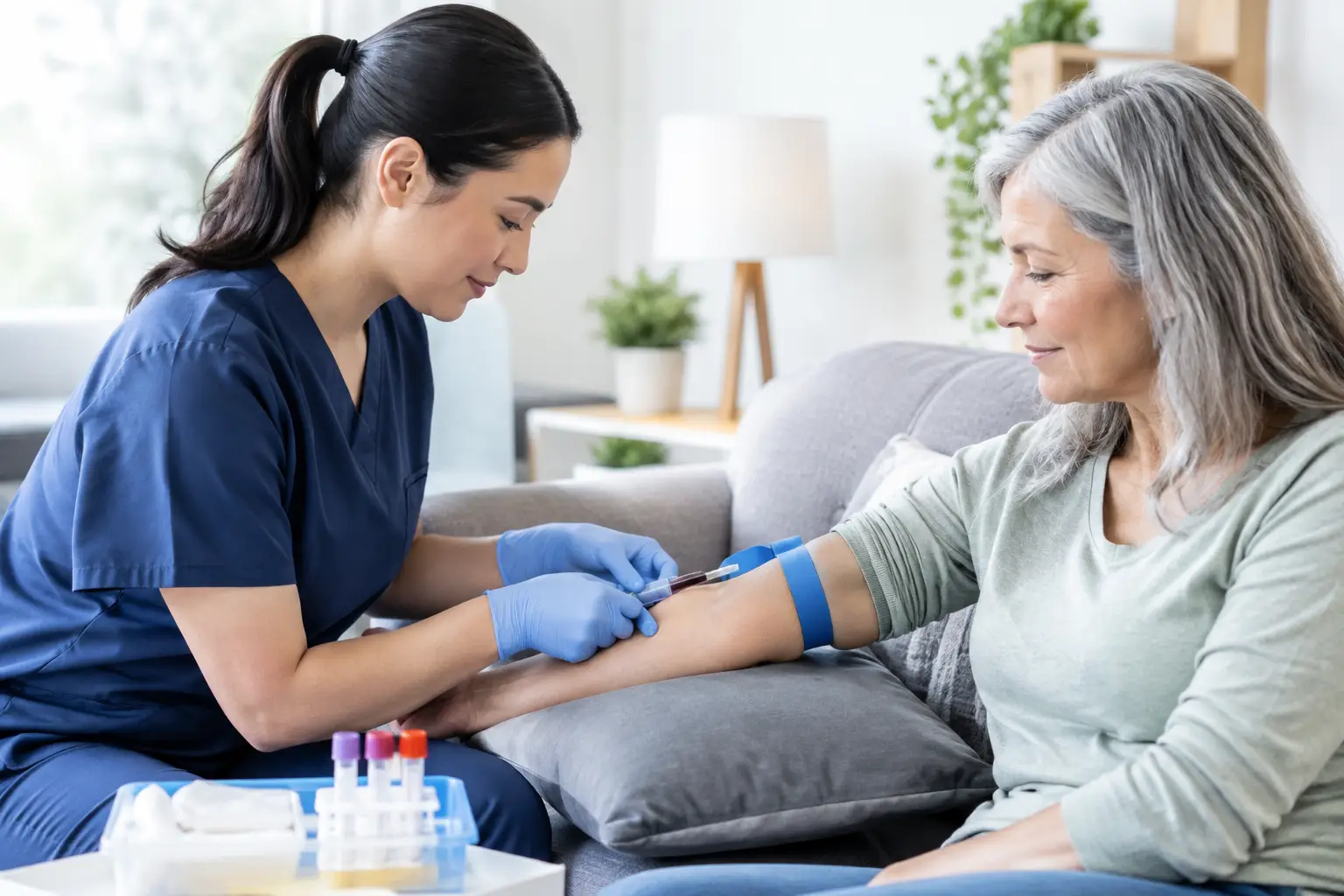
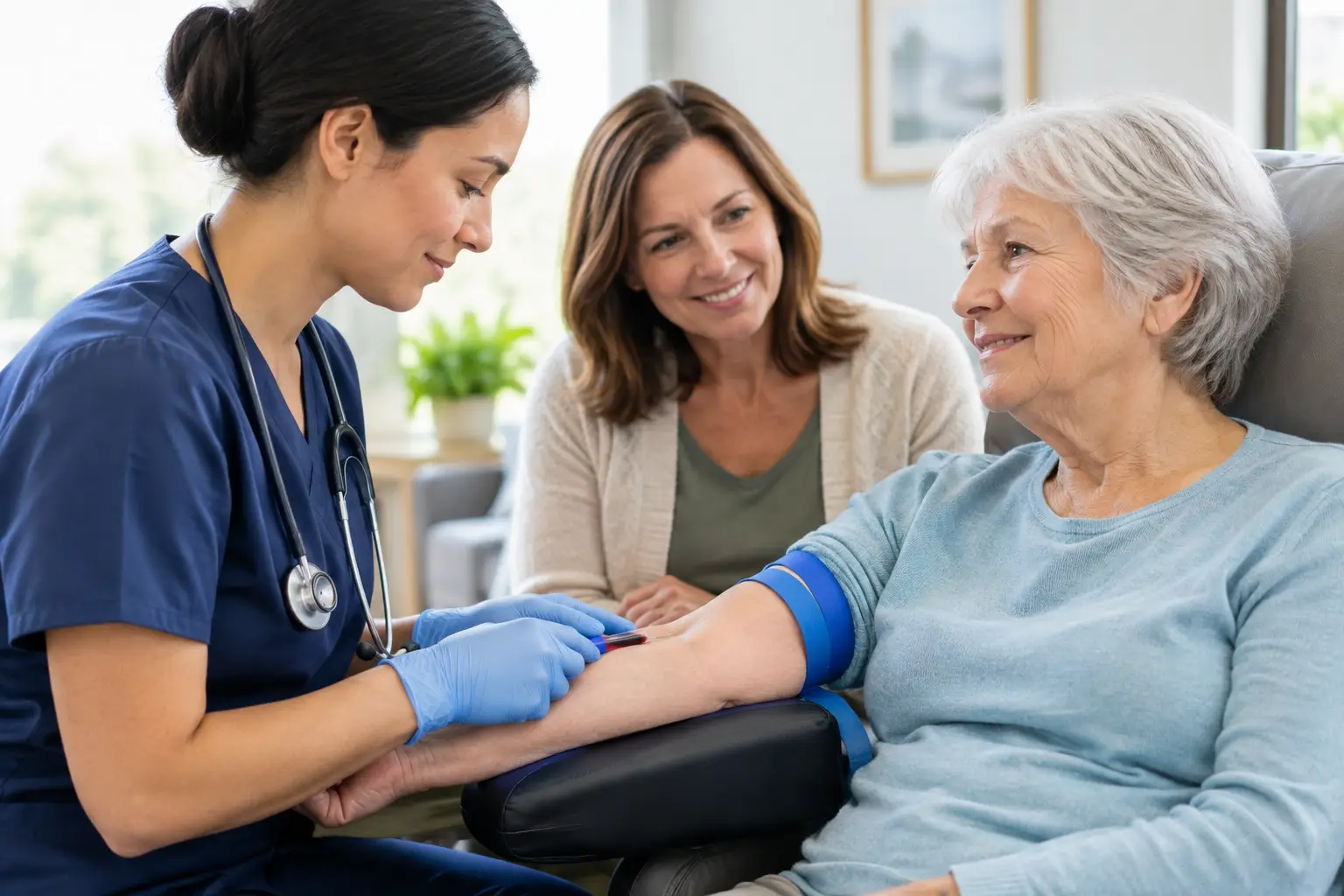
Next, you will be seated comfortably. A kitchen table, desk, recliner, or other stable chair with arm support often works well. For patients who are bedridden, recovering in a facility, or receiving hospice care, the phlebotomist can work with the care environment while prioritizing safety and comfort. Children may sit with a parent or caregiver if that helps them feel secure.
The phlebotomist will apply a tourniquet around your upper arm. This temporarily slows blood flow from the arm and makes a vein easier to see or feel. You may be asked to make a gentle fist. The most common collection site is a vein in the inside bend of the elbow, though the best site depends on your veins, skin condition, medical history, and the type of test ordered.
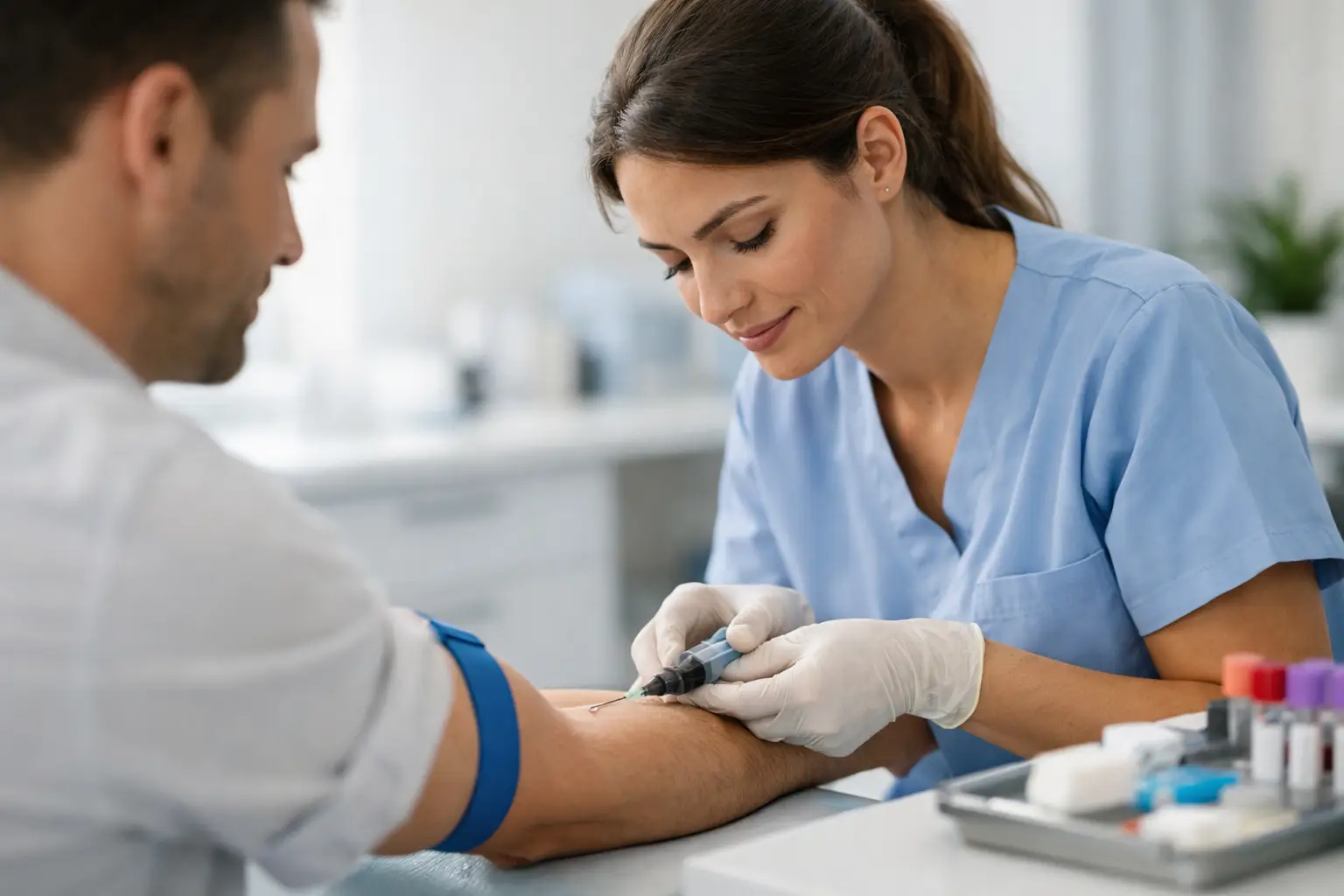
After selecting a vein, the area is cleaned with an antiseptic. Let the skin dry naturally. This helps reduce contamination and can prevent extra stinging. The phlebotomist then performs the venipuncture using a sterile, single-use needle and collection equipment.
Most people feel a brief pinch or pressure when the needle enters. The actual blood collection often takes less than a few minutes. You may see several tubes being filled, which can look like a lot, but each tube may contain a different additive or be needed for a different test. The number of tubes does not always reflect a large amount of blood being taken.
During the draw, try to keep your arm still and breathe normally. If you begin feeling dizzy, nauseated, sweaty, anxious, or faint, say something right away. There is no prize for pushing through discomfort. An experienced phlebotomist can pause, reposition you safely, and help you rest before continuing if appropriate.
Comfort Matters, Especially for Nervous Patients
Fear of needles is common among adults and children alike. Good bedside manner makes a real difference. You can look away, talk through the process, listen to music, or ask the phlebotomist to tell you only what you need to know. Some patients prefer a clear play-by-play; others want a quick, quiet draw. Both preferences are completely okay.
For children, the appointment usually goes best when adults keep the message simple and calm. Calling the blood draw a small poke is more honest and less frightening than making promises that it will not hurt at all. A favorite toy, show, snack for afterward if permitted, or a parent’s steady presence can help. Our little Angel’s deserve patience, reassurance, and a phlebotomist who knows how to make the moment feel manageable.
Difficult veins can happen for many reasons, including dehydration, age, certain medical conditions, prior treatment, or simply natural anatomy. A skilled phlebotomist may use warmth, adjust positioning, or select a different appropriate site. Occasionally, a blood draw cannot be completed on the first attempt. That is frustrating, but it is safer to be honest and thoughtful than to keep trying without a clear plan.
After the Blood Draw: Pressure, Bandage, and Aftercare
Once all required tubes are collected, the tourniquet is released and the needle is removed. You will be asked to hold firm pressure over the site, usually for a few minutes. This step matters because it helps stop bleeding and reduces the chance of bruising.
A small bandage or gauze wrap is then placed over the area. Keep it on for the time your phlebotomist recommends, often around 15 to 30 minutes. If you take blood thinners or tend to bruise easily, you may need to apply pressure a little longer.
A tiny spot of blood, mild tenderness, or a small bruise can be normal. For the rest of the day, avoid heavy lifting or strenuous use of that arm if possible. If bleeding restarts, apply direct pressure without repeatedly checking the site. Contact a healthcare professional promptly if you experience persistent bleeding, significant swelling, severe pain, numbness, redness that worsens, or other symptoms that concern you.
You can generally return to your normal routine right away. If you fasted, have a meal or snack unless your provider gave different instructions. If you felt lightheaded during the collection, take a few extra minutes seated or lying down, drink water, and stand slowly.
What Happens to Your Specimen After Collection?
The appointment does not end when the bandage goes on. Each tube is labeled and handled according to laboratory requirements. Some specimens must remain at a certain temperature, be protected from light, be processed within a specific timeframe, or be delivered directly to a particular laboratory or hospital.
That coordination is especially valuable for patients using home test kits, arranging specialty testing, receiving recurring therapeutic phlebotomy, or needing collection for services such as serum eye-drop processing or prenatal DNA testing. Proper timing and handling can be just as important as the draw itself.
With a mobile collection service such as Phlebotomy Experts, a certified phlebotomist can collect at your location and coordinate prompt delivery to established laboratories and hospitals. The goal is simple: protect the specimen, protect your privacy, and save you the stress of making another trip across town.
When Will You Get Results?
Your phlebotomist collects and delivers the specimen, but the laboratory performs the testing and reports results through your physician, patient portal, or the process established by the ordering provider. Result times vary widely. Routine tests may be available quickly, while specialty tests, cultures, genetic testing, and send-out panels can take longer.
If you have questions about why a test was ordered, what a result means, or whether you need treatment, your ordering provider is the right person to contact. A blood draw is an important step in your care, but it is not a diagnosis by itself.
A venipuncture appointment should leave you feeling cared for, not rushed. Choose a time and place where you can sit comfortably, have your paperwork ready, and give yourself a few quiet minutes afterward. A calm setting, a skilled hand, and a little preparation can turn a task you have been putting off into one small, very doable part of taking care of yourself.

Related Posts