
Learn why blood bruises after a draw, what makes a bruise more likely, simple home care steps, and signs that call for prompt medical advice right away.
Venipuncture Aftercare Guide for a Calm Recovery
A successful blood draw does not end when the needle comes out. The few minutes and hours afterward can make a real difference in how your arm feels and how quickly the puncture site settles down. This venipuncture aftercare guide gives you simple, practical steps to follow at home, at work, or wherever your appointment takes place.
For most people, aftercare is easy: apply pressure, keep the bandage on for a short time, and give that arm a little break. A small bruise or mild tenderness can happen even with an excellent blood draw. Your veins, medications, skin, hydration level, and the type of collection all play a role. Knowing what is normal can help you feel comfortable, while knowing the warning signs can help you get the right care without delay.
Right After Your Blood Draw
Your phlebotomist will place gauze or cotton over the site and ask you to apply firm, steady pressure. Keep your arm straight if you can. Bending at the elbow right away may allow more blood to seep under the skin, which can make bruising more likely.
Continue pressing for at least two to three minutes, or longer if your phlebotomist instructs you to. If you take a blood thinner, have a bleeding disorder, bruise easily, or had several tubes collected, you may need to hold pressure for five minutes or more. Do not peek repeatedly to see whether it has stopped. Consistent pressure works better.
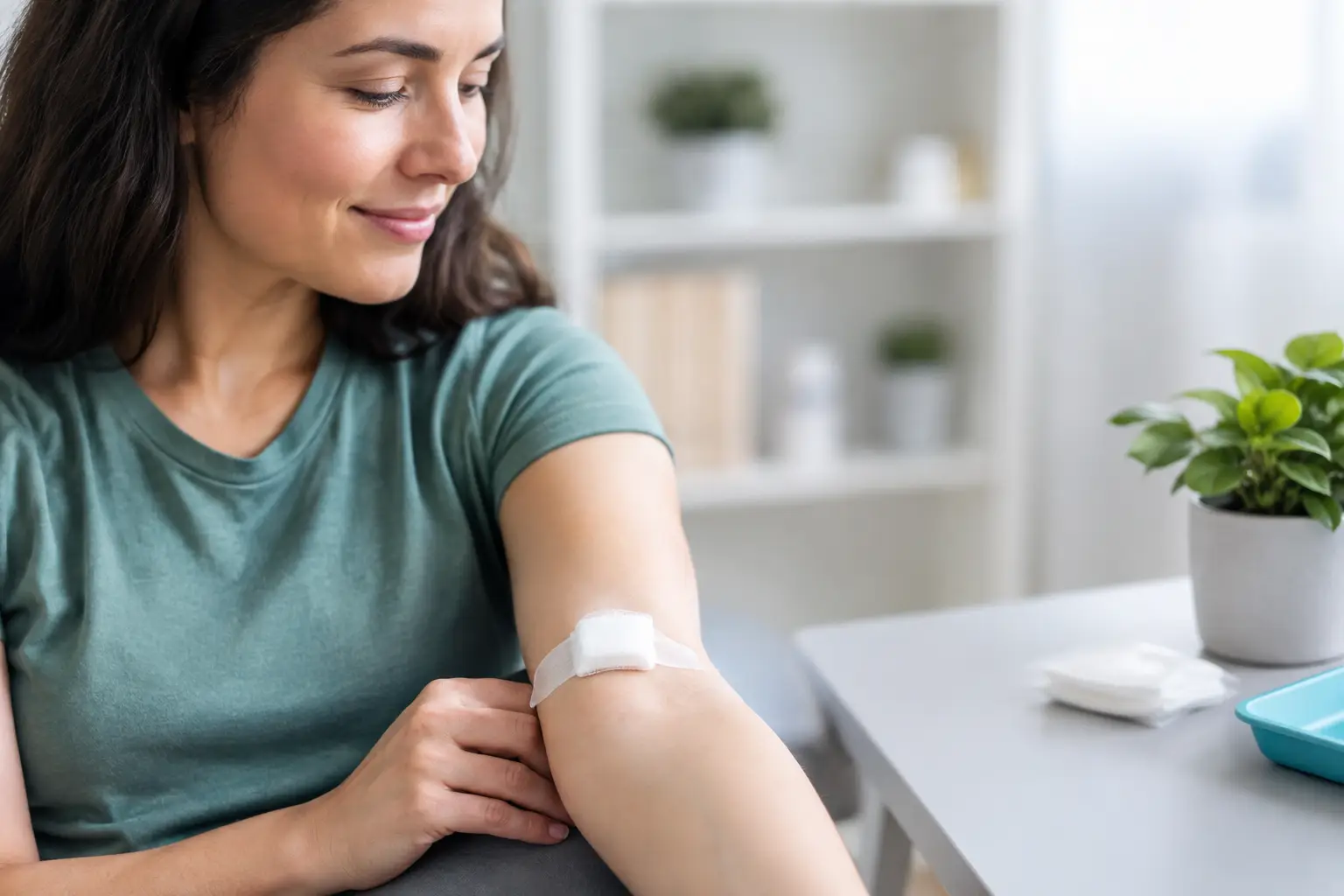
Once the bleeding has stopped, a small bandage is usually all you need. Leave it in place for about 30 minutes, unless it becomes wet, dirty, or irritating. If you have sensitive skin or an adhesive allergy, tell your phlebotomist before the draw so another option can be used.
Venipuncture Aftercare Guide for the First 24 Hours
Treat the collection site gently for the rest of the day. That does not mean you need to cancel your plans or stay in bed. It simply means avoiding extra strain on the arm that was used for the draw.
Skip heavy lifting, intense upper-body workouts, repetitive pulling, and carrying bulky bags with that arm for several hours. If you had a therapeutic phlebotomy or a larger-volume collection, take the rest of the day especially easy and follow the specific instructions your care team provides. Those appointments can leave you more likely to feel tired or lightheaded than a routine blood test.
Hydration is a helpful next step. Have water and eat a normal meal or snack if you have been fasting and your clinician says it is okay to do so. Your body will replace the small amount of blood drawn during routine testing without any special treatment, but fluids and food can help you feel steadier afterward.
If the site starts bleeding again, place clean gauze or a clean cloth over it and apply direct pressure with your arm straight. Hold that pressure continuously for five minutes. If bleeding does not stop, or if it is heavy, contact a medical professional promptly.
A note for people who feel faint
Some people feel warm, sweaty, nauseated, dizzy, or weak after a blood draw. This can happen because of anxiety, fasting, dehydration, or a vasovagal response, which is a temporary drop in blood pressure. It can happen to the toughest Cool Cat, so there is no need to feel embarrassed.
Sit or lie down immediately if you feel faint. Put your head between your knees only if you are seated safely and your provider recommends it. Do not drive, climb stairs, or rush back into a busy day until the feeling passes. Drink water, have a snack if permitted, and ask someone to stay nearby if you are not feeling steady.
If you are receiving a mobile appointment, let your phlebotomist know as soon as you have a history of fainting. A compassionate, experienced professional can adjust your position, give you time, and make comfort part of the plan.
Is Bruising After a Blood Draw Normal?
A small blue, purple, or yellow-green bruise around the puncture site is common. It happens when a little blood collects beneath the skin. Older adults, people with fragile veins, and patients using aspirin, anticoagulants, or certain supplements may bruise more easily.
A cold pack wrapped in a cloth can be used during the first day to help with soreness or swelling. Apply it for short periods, not directly on bare skin. After the first 24 hours, a warm compress may feel more comfortable and can support normal healing. Avoid rubbing or massaging the area, since that may increase irritation or bruising.
Most mild bruises improve over several days and fade within one to two weeks. The color may change as it heals. That is usually part of the normal process. If you are unsure, take a photo after the draw so you can compare whether the area is getting smaller or larger over time.
When to Call a Clinician
A blood draw site should generally improve, not become more painful, swollen, or red. Contact your physician, urgent care provider, or another qualified clinician if you notice a large or rapidly expanding bruise, persistent bleeding after firm pressure, increasing swelling, numbness or tingling in the hand or arm, or pain that is getting worse instead of better.
Also seek medical guidance if the area becomes hot, very red, drains fluid, or you develop a fever. Infection after routine venipuncture is uncommon, especially when proper protective procedures are followed, but new or worsening symptoms deserve attention.
Call 911 or seek emergency care for severe symptoms such as trouble breathing, chest pain, loss of consciousness that does not quickly resolve, or uncontrolled bleeding. These symptoms are not typical after a standard blood draw and should never be managed by waiting it out at home.
Special Considerations for Children and Older Adults
Children may want to remove a bandage as soon as they see it. Keeping it on for the recommended time and giving them a small snack, water, and a quiet moment afterward can help. Watch young children so they do not scratch at the site or use the arm roughly right after the draw.
For older adults, especially those with thin skin or medications that affect clotting, a little extra pressure and a longer rest period are often wise. If a loved one has memory concerns, mobility limitations, or lives in assisted living, make sure a caregiver knows which arm was used and what changes to watch for. Small details make aftercare safer and less stressful.
Your Comfort Is Part of the Appointment
At Phlebotomy Experts, the goal is to let the laboratory come to you while keeping each step clear and comfortable. Whether your draw happens at home, at the office, in a rehabilitation setting, or in assisted living, your phlebotomist can review aftercare instructions based on your collection and health needs.
Before your next appointment, mention any past bruising, fainting, difficult veins, adhesive sensitivity, or blood-thinning medications. That information helps your licensed phlebotomist prepare for a smoother visit. Afterward, give your arm a little kindness, listen to your body, and reach out for medical guidance whenever something does not feel right.
