Breaking down the cost of in home blood draws: collection fees, lab charges, insurance, and what you actually pay out-of-pocket.
Therapeutic Phlebotomy at Home: What to Expect
Table of Contents
- What Is Therapeutic Phlebotomy at Home?
- Conditions That May Need Therapeutic Phlebotomy
- Therapeutic Phlebotomy Prescription Requirements
- Preparing for a Therapeutic Phlebotomy Appointment
- Therapeutic Phlebotomy Procedure Duration and What Happens During the Visit
- Recovery, Side Effects, and Follow-Up Care
- Insurance, Reimbursement, and Home Visit Logistics
- Conclusion
- Frequently Asked Questions
Last Updated: September 19, 2026
What Is Therapeutic Phlebotomy at Home?
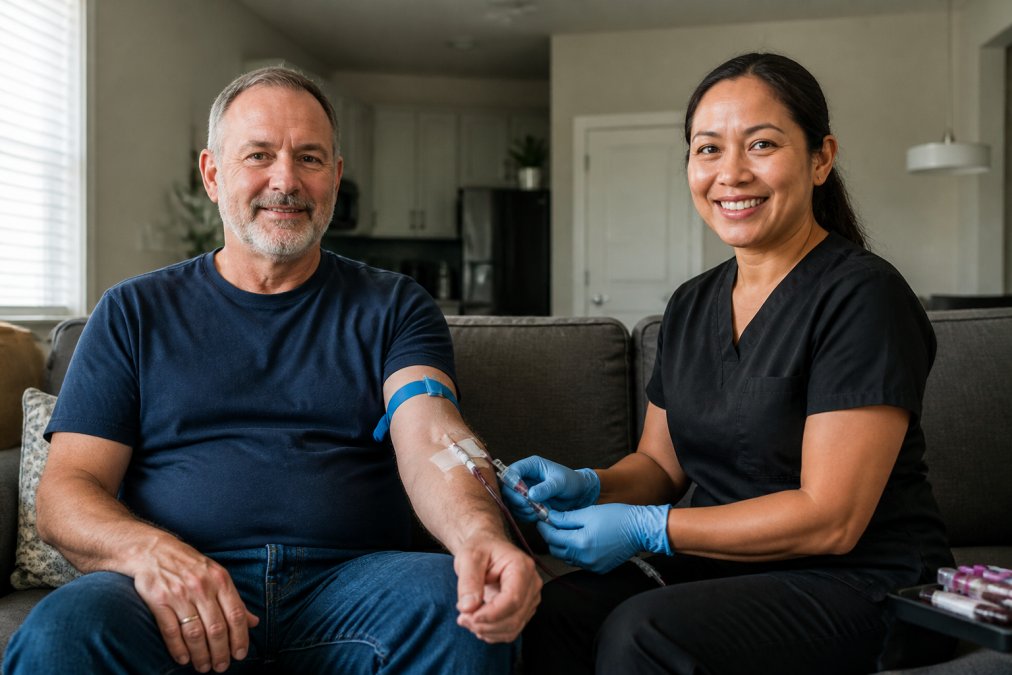
Therapeutic phlebotomy at home is a prescribed medical treatment in which a licensed phlebotomist removes a set amount of whole blood from a patient in their own home, under a physician’s orders, to lower iron levels or red blood cell counts. It is the same procedure you would receive at a clinic, delivered to your living room. (Source: National Institutes of Health (NIH) information on polycythemia vera)
This guide from Phlebotomy Experts covers how the treatment works, who qualifies, and what the visit actually looks like. We have helped patients across Southern California, Austin, and Las Vegas receive this care without a waiting room.
The core idea is simple. Your blood holds iron. Sometimes it holds too much. Removing blood removes iron with it. Doctors call this iron depletion, and it is the goal of every therapeutic phlebotomy session.
Keep reading, because the details matter more than most people expect.
Conditions That May Need Therapeutic Phlebotomy
Several conditions respond to regular blood removal, and each one has its own target numbers. A physician decides whether you qualify.
- Polycythemia vera: the body makes too many red blood cells, which thickens the blood
- Hemochromatosis: the body absorbs and stores too much iron
- Porphyria cutanea tarda: a liver condition often tied to iron overload
- Erythrocytosis: elevated red blood cell count from other causes
Doctors track progress with a serum ferritin test and a hematocrit reading. Ferritin shows stored iron. Hematocrit shows how much of your blood is made of red cells.
Both numbers guide how often you get treated. Neither is something you can judge at home.
One thing most guides skip: the same procedure appears under older names. Bloodletting and venipuncture show up in medical records and insurance paperwork, but they describe the same act.
Therapeutic Phlebotomy Prescription Requirements
You cannot book this treatment on your own. Therapeutic phlebotomy is a prescribed treatment, which means a physician must order it in writing.
A valid order usually includes:
- Your diagnosis and the reason for treatment
- The volume of blood to remove per visit
- How often to repeat the procedure
- Target ferritin or hematocrit levels
- Any monitoring your doctor wants between visits
Rules vary, so check your state’s health department guidance or ask your doctor’s office directly.
Watch Out
Do not schedule a home visit without a written order. A phlebotomist who draws blood for iron reduction without one is working outside their scope, and your insurance may deny the claim.
Do not schedule a home visit without a written order. A phlebotomist who draws blood for iron reduction without one is working outside their scope, and your insurance may deny the claim.
Once you have the order, the rest is logistics. A mobile laboratory sends a licensed phlebotomist to you, performs the draw, and delivers the specimen to the lab your doctor chose.
Preparing for a Therapeutic Phlebotomy Appointment
Preparation is short and mostly about hydration. Drink water the day before and the morning of your visit. Good hydration plumps your veins, which makes venous access easier.
Skip alcohol for 24 hours before the draw. Alcohol affects hydration and can change some lab values.
Eat a normal meal within a few hours of the appointment. Arriving on an empty stomach raises your odds of feeling lightheaded afterward.
Have these items ready:
- Your photo ID and insurance card
- The written physician order
- A list of current medications and supplements
- A chair with armrests near an outlet or window
- A snack and water for after the draw
Tell the phlebotomist about contraindications up front. Recent blood thinners, a bleeding disorder, or a history of fainting all change how the visit runs.
Therapeutic Phlebotomy Procedure Duration and What Happens During the Visit
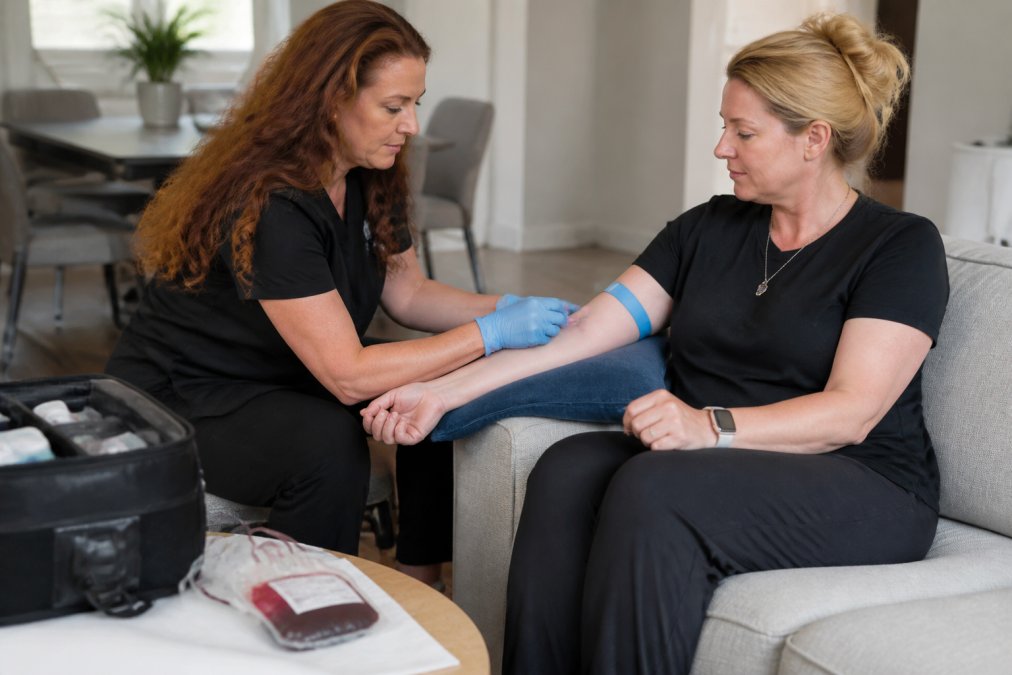
Most home visits take 30 to 45 minutes from setup to cleanup. The actual draw takes 10 to 15 minutes. The rest is preparation, monitoring, and safe disposal, the parts that separate a proper home visit from a casual one.
Before the needle
The phlebotomist confirms your identity and reviews the written order. They wash hands, don gloves, and set up a clean field on a stable surface. Supplies come out of sealed packaging in front of you. The draw site is cleaned with an antiseptic and allowed to dry.
During the draw
A tourniquet is applied, a vein is located, and the needle is inserted. Blood flows into a collection bag or tubes until the ordered volume is reached. A typical session removes around 500 mL of whole blood, close to what a standard donation collects. Your doctor may order more or less depending on your blood volume and diagnosis.
Home-specific safety and waste protocols
This is where home care differs from a clinic, and where most guides go silent.
- Sharps: the needle goes directly into a puncture-resistant sharps container. Never into household trash. Ask the provider which path they use.
- Blood-contaminated waste: gauze, gloves, and tubing go into a labeled biohazard bag, not the kitchen bin. The provider removes it.
- Spill kit: a proper mobile kit includes absorbent material and disinfectant for a spill. If blood contacts a surface, it is cleaned with a disinfectant effective against bloodborne pathogens.
- Hand hygiene: the phlebotomist should sanitize before and after the draw, and before handling the specimen.
- Specimen chain of custody: the tube or bag is labeled at the bedside with your identifiers, then placed in a transport cooler at the correct temperature. (Source: Centers for Medicare & Medicaid Services (CMS) guidelines on home health services)
A home visit is not a casual draw. It follows the same sterile technique, sharps handling, and biohazard disposal rules as a clinic, the difference is that the provider brings the protocol to you.
After the needle
The needle is removed, pressure is applied, and the site is bandaged. The phlebotomist labels the specimen, packs it for transport, and leaves you written recovery instructions. Cleanup includes the sharps container, biohazard bag, and any used supplies, none of it stays in your home.
Recovery, Side Effects, and Follow-Up Care
Most people feel fine within an hour. Some feel tired for the rest of the day, and that is normal.
Common side effects include:
- Light bruising or soreness at the needle site
- Mild fatigue or a foggy feeling
- Brief dizziness when standing up fast
- A cold sensation in the arm during the draw
Insurance, Reimbursement, and Home Visit Logistics
Coverage depends on your diagnosis, your plan, and where the draw happens. This is the part most articles skip, and it is where patients lose the most money.
The codes your doctor’s office will use
Ask the billing office for the codes before your first visit so you can confirm coverage in advance. The common ones are:
- CPT 99195, therapeutic phlebotomy, the procedure code for the draw itself
- ICD-10 E83.119, hemochromatosis without other organ involvement, a frequent diagnosis code for iron overload
- ICD-10 D45, polycythemia vera
- ICD-10 D75.1, secondary polycythemia, sometimes used for erythrocytosis from other causes
How coverage usually breaks down
Most commercial plans treat therapeutic phlebotomy as a covered medical service when medical necessity is documented. Medicare Part B generally covers it as an outpatient service when a physician orders it for a covered diagnosis. Medicaid coverage varies, so check your state’s plan directly.
Questions to ask your insurer before the first visit
- Is therapeutic phlebotomy covered for my specific diagnosis code?
- Does the plan cover a home or mobile visit, or only a clinic or hospital draw?
- Is prior authorization required, and how long does it take?
- What is my deductible, and has it been met this plan year?
- What is my coinsurance or copay for the procedure?
- Which labs are in network for the specimen testing?
Do not assume a home visit is covered just because the procedure is. The site of service can change the reimbursement, and a surprise bill after the draw is hard to reverse. Get the answer in writing before you schedule.
What home visit logistics actually involve
A licensed phlebotomist arrives with a mobile kit: collection bags or tubes, sterile supplies, sharps container, labeling materials, and a transport cooler. The draw happens in a chair with armrests, ideally near a table and an outlet if any equipment needs power.
Keep a folder with every order, visit note, and explanation of benefits. If a claim is denied, the paper trail is what gets it reversed.
Conclusion
The hardest part of therapeutic phlebotomy at home is rarely the needle. It is the paperwork, the scheduling, and the uncertainty about what happens next.
Frequently Asked Questions
Do I need a prescription for therapeutic phlebotomy?
Yes. Therapeutic phlebotomy is a prescribed treatment, not a routine blood draw. A physician must order it for a specific diagnosis such as polycythemia vera, hemochromatosis, or porphyria cutanea tarda, and the order usually includes how often to treat and how much blood to remove. If you do not have a current order, talk to your doctor first.
How long does a therapeutic phlebotomy procedure take?
Therapeutic phlebotomy procedure duration varies by how much blood is removed and how easily venous access is achieved. The draw itself often takes 10 to 20 minutes, but the full appointment, including screening, setup, the draw, and post-procedure monitoring, usually runs 30 to 60 minutes. At home, add time for the phlebotomist to set up equipment and confirm your recovery before leaving. Difficult veins or a larger prescribed volume can extend the visit.
Is therapeutic phlebotomy at home safe?
When performed by a licensed phlebotomist using sterile technique and under clinical supervision, at-home therapeutic phlebotomy can be a safe alternative to a clinic visit. Risks include bruising, lightheadedness, fainting, and rare adverse reactions, so post-procedure hydration and a short rest period matter. Home visits also remove the stress of travel for patients with mobility issues or needle phobia. Always confirm the provider’s licensing and follow your physician’s instructions.
What conditions require therapeutic phlebotomy?
The most common conditions are polycythemia vera and other forms of erythrocytosis, hereditary hemochromatosis, and porphyria cutanea tarda. In each case, the goal is to reduce iron overload or lower red blood cell count, hematocrit, and blood viscosity. Serum ferritin and hematocrit levels guide how often treatment is needed. Your hematologist or primary care physician determines whether therapeutic phlebotomy is appropriate based on lab results and your overall health.

Related Posts