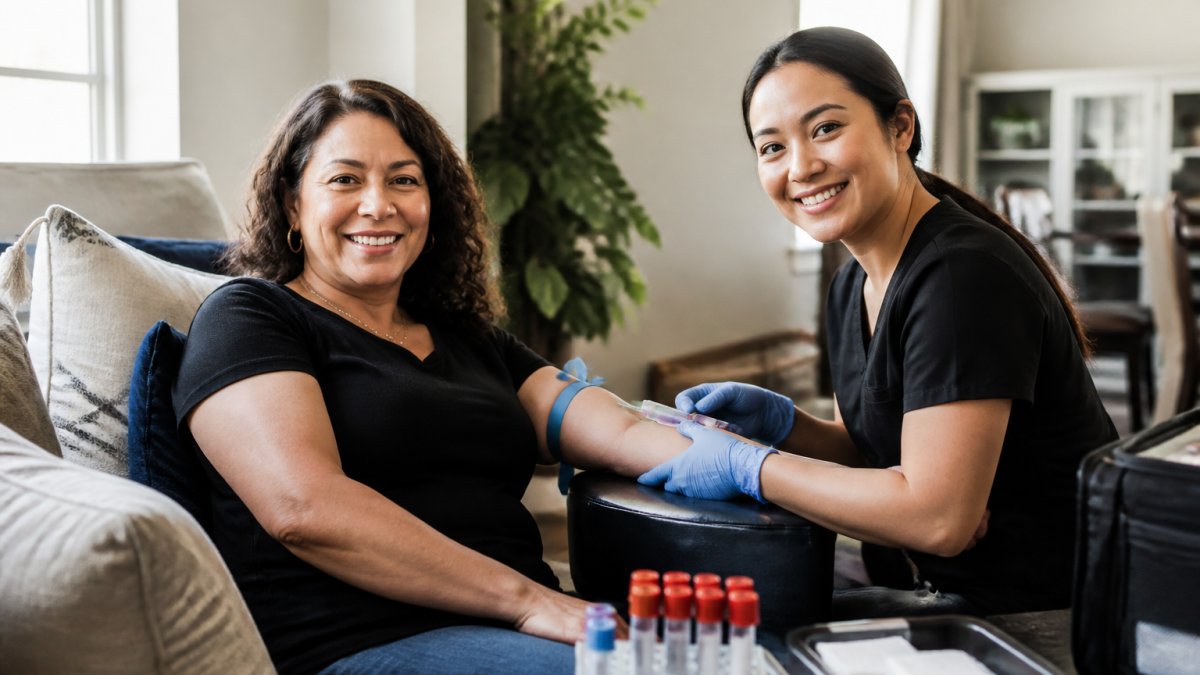
Breaking down the cost of in home blood draws: collection fees, lab charges, insurance, and what you actually pay out-of-pocket.
Is Mobile Phlebotomy Covered by Insurance? 2026 Guide
Table of Contents
- How Mobile Phlebotomy Insurance Coverage Works
- Medicare Coverage for Mobile Phlebotomy Explained
- What Is a Mobile Phlebotomy Convenience Fee?
- Private Pay vs. Insurance-Billed At Home Blood Draw Services
- In-Network vs. Out-of-Network Mobile Phlebotomy Providers
- Step-by-Step: How to Verify Your Coverage Before Booking
- Frequently Asked Questions
Last Updated: September 28, 2026
How Mobile Phlebotomy Insurance Coverage Works
Is mobile phlebotomy covered by insurance? Sometimes, and the deciding factor is medical necessity. Most health plans cover a blood draw when a doctor orders it to diagnose or monitor a condition. At Phlebotomy Experts, we see this question every day, so this guide breaks down what plans pay for and what you may owe.
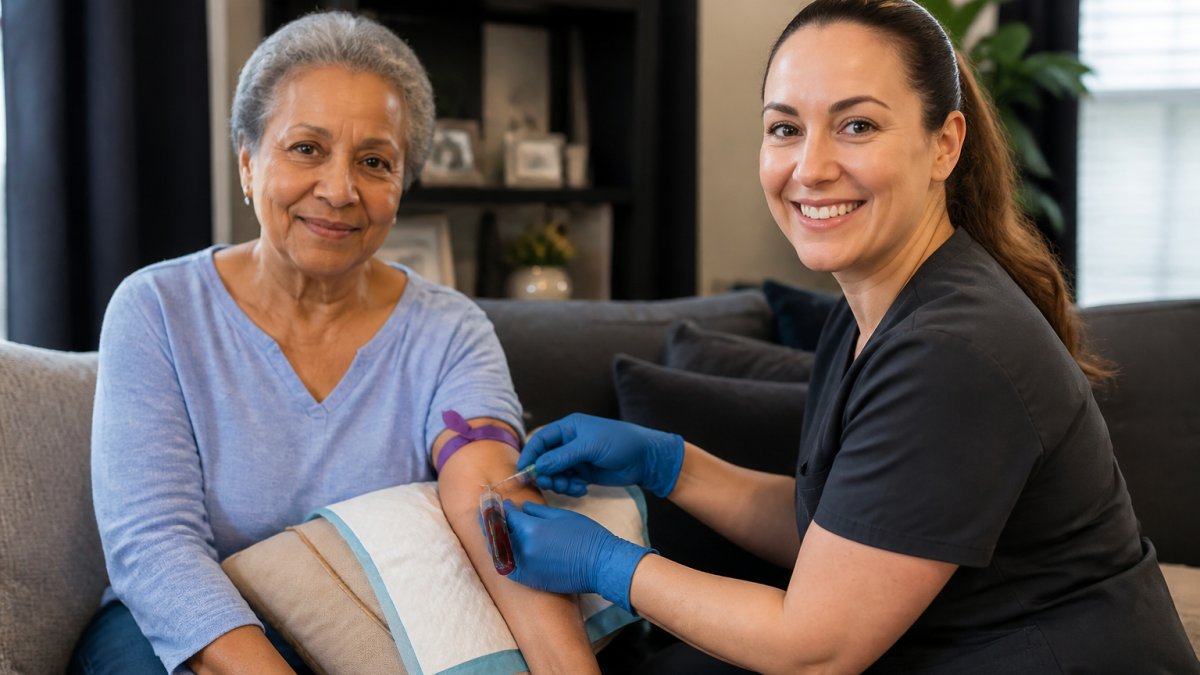
Mobile phlebotomy is a service where a licensed technician travels to your home, office, or facility to collect blood and deliver the specimen to a lab. Coverage depends on why the draw happens, not where it happens.
Health plans generally separate blood draws into two buckets:
- Medically necessary draws: ordered by a doctor to diagnose or monitor a condition
- Elective or convenience draws: requested without a medical order, such as some wellness panels
The draw itself is often bundled into the lab test payment. That is why two patients with the same insurance can get very different bills.
Medically Necessary vs. Elective Blood Draws
Medically necessary means a licensed provider ordered the test to treat or monitor a health issue. Plans usually cover these draws, minus any deductible or copayment.
Elective draws are different. If you request a test on your own, most plans treat it as private pay. You cover the full cost.
A few common examples help clarify the split:
- Covered: blood work to check thyroid levels after a diagnosis
- Covered: regular draws for a chronic condition like diabetes
- Often not covered: a general wellness panel with no doctor’s order
Key Takeaway
The order matters more than the location. A doctor’s order for a medically necessary test is the single biggest factor in whether insurance pays.
The order matters more than the location. A doctor’s order for a medically necessary test is the single biggest factor in whether insurance pays.
Medicare Coverage for Mobile Phlebotomy Explained
Medicare Part B generally covers lab tests when a doctor orders them for a medical reason. That includes the blood draw itself, whether you go to a lab or a technician comes to you.
Medicare coverage for mobile phlebotomy follows the same logic as any other lab service. If the test is medically necessary, Part B usually pays its share after your deductible. You can confirm current rules and costs through Medicare’s official lab services page.
When Medicare Pays for Home Blood Draws
Medicare pays for a home blood draw when a doctor orders the test and you meet the program’s home health rules. The draw must be tied to your care, not just convenience.
A few situations where this applies:
- You are homebound and cannot easily travel to a lab
- A doctor orders ongoing monitoring for a chronic condition
- You qualify for home health services under Medicare rules
If you do not meet those rules, Medicare may still cover the test at a lab, but not the trip to your home.
What Is a Mobile Phlebotomy Convenience Fee?
A mobile phlebotomy convenience fee is a charge for bringing the service to you. It covers travel time, mileage, scheduling, and the labor of sending a technician to your location instead of having you come to a draw station.
How the Fee Is Coded and Billed
This is where most guides stay vague, and it is the single biggest source of billing confusion. The blood draw itself and the travel to reach you are two different things on a claim.
- The draw (venipuncture): billed under a specimen collection code, most commonly CPT 36415 for a routine venous draw. This is the code a lab or provider uses for the act of drawing blood.
- The home or facility visit: when a provider travels to a patient’s residence, the visit component is typically billed under a home visit or domiciliary code, such as CPT 99347-99350 for established-patient home visits, or a comparable evaluation and management code, depending on what the clinician documents.
- Travel and mileage: some services add a separate travel or mileage line. There is no single universal CPT code for “mobile phlebotomy travel”, it is often billed as a practice-specific service charge, a supply code, or folded into a flat convenience rate.
- Modifiers: a modifier can signal that a service was performed in a non-facility or home setting. The exact modifier depends on the payer and the code it attaches to.
What Typically Falls Outside Coverage
Common charges that insurance treats as non-covered include:
- A travel surcharge based on distance from the draw station
- A service fee for after-hours, weekend, or holiday visits
- A flat convenience fee for home or office collection
- A rush or same-day scheduling charge
Some providers waive the fee for facility visits, bulk appointments, or recurring chronic-care draws. Ask before you book so there are no surprises.
Watch Out
Do not assume the convenience fee is covered just because the blood test is. The lab test and the travel fee are separate line items, and the travel fee is usually your responsibility even when the draw itself is covered.
Do not assume the convenience fee is covered just because the blood test is. The lab test and the travel fee are separate line items, and the travel fee is usually your responsibility even when the draw itself is covered.
Pro Tip
Ask for an itemized quote that lists the draw code, the visit code, and any travel charge as separate lines. If a provider will not break it down, that is a signal to get a second quote.
Ask for an itemized quote that lists the draw code, the visit code, and any travel charge as separate lines. If a provider will not break it down, that is a signal to get a second quote.
Private Pay vs. Insurance-Billed At Home Blood Draw Services
Private pay means you cover the full cost yourself. Insurance-billed means the provider submits a claim to your plan, and the plan pays its share.
| Factor | Private Pay | Insurance-Billed |
|---|---|---|
| Who pays | You, in full | Plan pays its share |
| Needs a doctor’s order | No | Usually yes |
| Speed | Often faster | Depends on claim review |
| Best for | Elective or wellness tests | Medically necessary draws |
In-Network vs. Out-of-Network Mobile Phlebotomy Providers
In-network providers have a contract with your plan. Out-of-network providers do not, and that changes what you pay and how the claim gets filed.
The Nuance Most People Miss: Two Networks, Not One
Here is the pain point that trips up almost everyone. A mobile blood draw touches two separate network relationships:
- The phlebotomist or mobile service that comes to you
- The lab that runs the specimen
Before you book, ask two separate questions:
- Is the mobile phlebotomy service itself in-network with my plan?
- Is the lab you send the specimen to in-network with my plan?
Superbills and Self-Submitted Claims
A superbill is an itemized receipt you can submit to your insurance for reimbursement. It lists the services, the codes, and the amounts you paid. If you use an out-of-network provider, ask for one at the time of service.
- Confirm your plan allows out-of-network reimbursement. Some plans, including many HMO-style plans, do not reimburse out-of-network care at all. Call member services and ask directly.
- Get the superbill at the time of service. It should list the draw code (often CPT 36415), any visit or travel code, the date of service, the provider’s tax ID and NPI, and the amount you paid.
- Attach the doctor’s order. A signed order or referral from your physician showing medical necessity is usually required.
- Submit a claim form. Many plans provide a member reimbursement form, sometimes called a claim form or a member submission form, on their website. Attach the superbill and the order.
- Keep copies of everything. Photograph the superbill and the claim form before you send them.
- Track the claim and follow up. Reimbursement timelines vary by plan. If you have not heard back within the plan’s stated window, call and reference your claim number.
Pro Tip
Ask for the superbill at the time of service. Chasing one down weeks later is the most common reason self-submitted claims get delayed or denied.
Ask for the superbill at the time of service. Chasing one down weeks later is the most common reason self-submitted claims get delayed or denied.
Watch Out
An in-network lab does not automatically make the mobile draw in-network. Confirm both the service and the lab separately, or you may get a surprise bill for the travel portion.
An in-network lab does not automatically make the mobile draw in-network. Confirm both the service and the lab separately, or you may get a surprise bill for the travel portion.
Step-by-Step: How to Verify Your Coverage Before Booking
Verifying coverage takes about ten minutes and saves you from surprise bills. Here is how to do it before you book.

- Find your plan details. Check your insurance card for the member services number.
- Ask if the service is covered. Confirm whether mobile phlebotomy is a covered benefit.
- Confirm medical necessity. Ask if a doctor’s order is required for coverage.
- Check the network. Find out if the provider is in-network or out-of-network.
- Ask about the convenience fee. Confirm whether any travel or service fee applies.
- Get it in writing. Request a summary of your expected out-of-pocket cost.
Frequently Asked Questions
Does insurance cover mobile phlebotomy?
It depends on why the blood draw is ordered and your specific plan. Most insurance plans, including Medicare, cover mobile phlebotomy when a licensed healthcare provider orders the blood draw as medically necessary. If the visit is for elective testing like DNA gender testing or wellness panels not ordered by a physician, you will likely pay out of pocket. Always verify coverage eligibility with your insurer before booking.
How do I check if my insurance covers at home blood draw services?
Call the member services number on your insurance card and ask three questions: Is mobile phlebotomy a covered benefit under my plan? Does the provider need to be in-network? What is my patient liability after deductible and copayment? Get the representative’s name and a reference number. You can also request prior authorization if your plan requires it for home health services or mobile lab services.
What is the difference between a lab fee and a mobile phlebotomy convenience fee?
The lab fee covers processing and analyzing your specimen at a clinical laboratory. The mobile phlebotomy convenience fee covers the cost of sending a licensed phlebotomist to your home or office, including travel surcharge and specimen collection. Insurance typically pays the lab fee as part of diagnostic testing but may not cover the convenience fee, leaving that portion as patient liability.
Can I get reimbursed for mobile phlebotomy services?
Yes, in some cases. If you pay out of pocket, ask the mobile phlebotomy provider for a superbill that includes billing codes, the phlebotomist’s credentials, and the date of service. Submit the superbill to your insurer for reimbursement. Out-of-network reimbursement rates vary, and you may need medical necessity documentation from your ordering provider. Keep copies of all claim submission paperwork.
Insurance rules for mobile blood draws vary by plan, and one wrong assumption can mean a surprise bill. Phlebotomy Experts takes the guesswork out of it. Our licensed phlebotomists come to your home or office, handle specimen collection, and deliver your samples to the lab of your choice. With a gentle bedside manner and 20 years of medical experience behind our team, we make at-home blood draws simple and reliable. Call now to schedule your visit and let us handle the details.

Related Posts