Breaking down the cost of in home blood draws: collection fees, lab charges, insurance, and what you actually pay out-of-pocket.
Safe Serum Eye Drop Transport: Mobile Lab Guide
Table of Contents
- How Mobile Lab Providers Handle Serum Eye Drop Transport
- Autologous Serum Eye Drops Storage Requirements During Transit
- Mobile Phlebotomy Safety Standards You Should Expect
- How to Transport Autologous Serum Tears Safely
- Comparing Mobile Lab Providers for Serum Eye Drop Services
- Regulatory Compliance and Contingency Planning for Transport Delays
- Conclusion: Making an Informed Choice for Your Serum Eye Drops
- Frequently Asked Questions
Last Updated: September 29, 2026
How Mobile Lab Providers Handle Serum Eye Drop Transport
Mobile lab providers handle serum eye drop transport by collecting blood at your home, letting it clot under controlled conditions, then separating the serum through centrifugation before delivering it to a compounding pharmacy for sterile processing. Whether services like TinderTouch are safe comes down to one thing: whether the provider follows strict chain-of-custody and temperature protocols at every step. This guide from Phlebotomy Experts breaks down what safe serum eye drop transport looks like, where mobile services cut corners, and how to verify a provider.
The Mobile Phlebotomy Process for Serum Collection
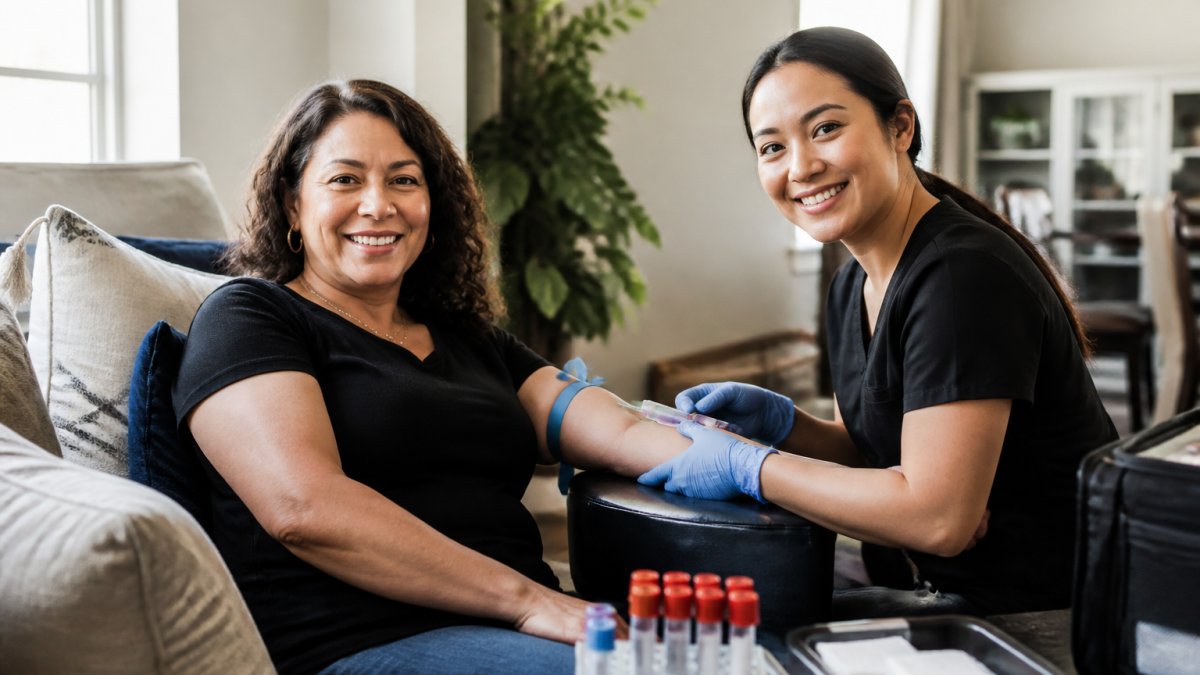
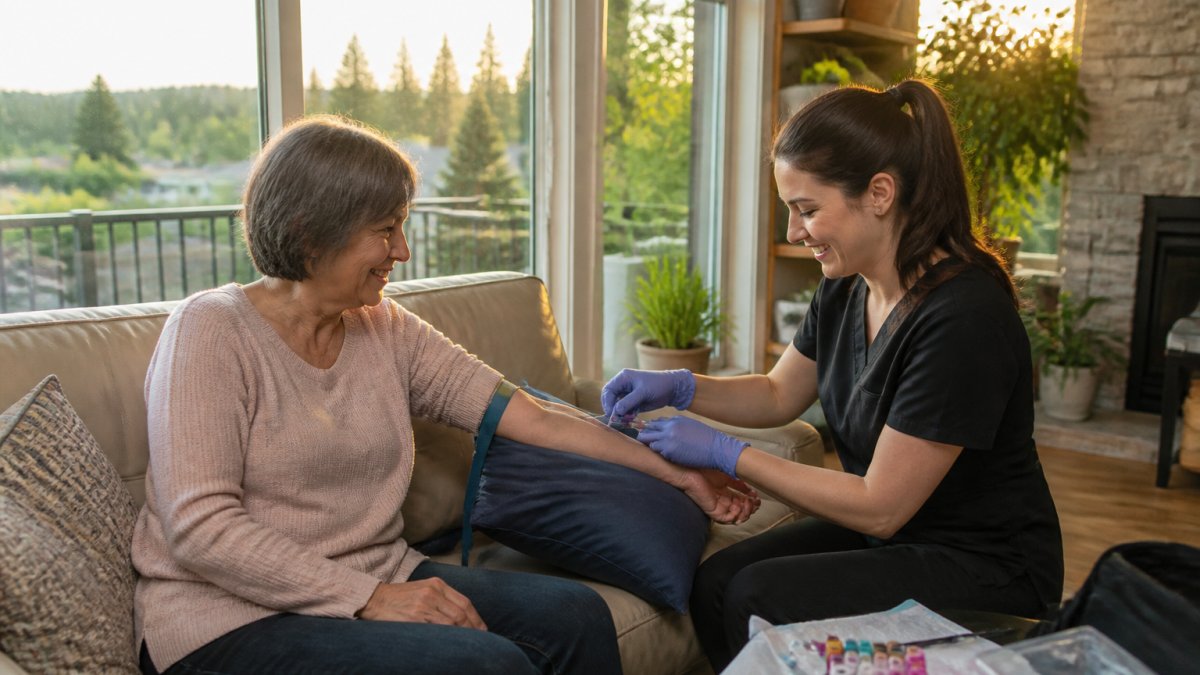
A mobile phlebotomy visit for serum collection typically takes 15 to 30 minutes. The licensed technician draws blood into plain red-top tubes with no anticoagulant, because serum must clot before separation.
Here is what a proper collection looks like:
- Verify your identity and the ordering physician’s requisition
- Draw the required volume into sterile serum tubes
- Label each tube at the bedside with your name, date, and time
- Let the sample clot upright at room temperature, not in a hot car
- Package the tubes for transport to a processing lab or compounding pharmacy
Autologous Serum Eye Drops Storage Requirements During Transit
Watch Out
Never let a technician leave serum tubes in a hot vehicle or on a sunny windowsill. Heat and light break down the proteins that make serum tears effective, and a compromised sample often means a repeat draw.
Never let a technician leave serum tubes in a hot vehicle or on a sunny windowsill. Heat and light break down the proteins that make serum tears effective, and a compromised sample often means a repeat draw.
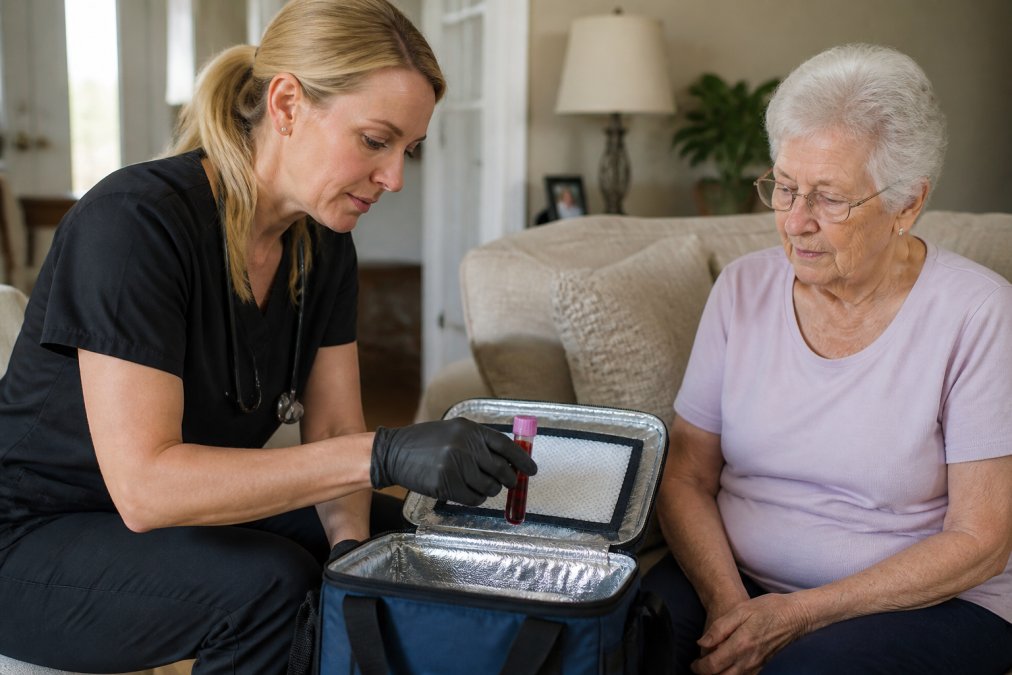
A mobile provider should use a temperature-controlled transport bag or cooler with a validated range. Ask what happens if the sample is delayed, a provider without an answer has no contingency plan.
Mobile Phlebotomy Safety Standards You Should Expect
Mobile phlebotomy safety standards you should expect include licensed staff, aseptic technique, proper biohazard handling, and documented chain of custody. Any provider that cannot show you these basics is not equipped for serum eye drop transport.
Here is what to check:
- Licensed technician: Ask for the phlebotomist’s certification and state licensure.
- Aseptic technique: Sterile supplies, gloves, and proper site preparation for every draw.
- Biohazard handling: Sharps containers and labeled transport packaging.
- Chain of custody: A documented record of who handled the specimen and when.
Pro Tip
Ask the provider to walk you through their specimen handoff. A confident, specific answer, naming the lab, the courier, and the temperature range, tells you more than any marketing page will.
Ask the provider to walk you through their specimen handoff. A confident, specific answer, naming the lab, the courier, and the temperature range, tells you more than any marketing page will.
How to Transport Autologous Serum Tears Safely
To transport autologous serum tears safely, keep the specimen cool, upright, and out of light, and get it to the processing facility within the provider’s stated window.
What the Specimen Actually Requires
Serum separated from clotted blood is a protein-rich biologic. The growth factors and cytokines that make it therapeutic, epidermal growth factor, transforming growth factor-beta, fibronectin, and others, degrade with heat, ultraviolet light, and time. Most protocols call for separation and refrigeration or freezing within hours, not days, which is why the transport leg matters as much as the draw.
A properly prepared transport has four components:
- Validated temperature range. A qualified cold-chain shipper maintains a defined range, commonly 2°C to 8°C (36°F to 46°F) for refrigerated specimens, with documentation. A cooler bag with a frozen gel pack is not the same thing unless the provider has validated that configuration.
- Temperature monitoring. Data loggers or time-temperature indicators record the actual conditions during transit. Without a logger, no one can prove the specimen stayed in range.
- Secondary containment. Tubes travel inside a sealed secondary container with absorbent material, then inside the outer shipper, so a leak never reaches the courier or the environment.
- Chain-of-custody documentation. Every handoff, technician to courier, courier to lab, lab to compounding pharmacy, is signed and time-stamped.
Comparing Transport Methods
| Transport Method | Temperature Control | Typical Use | Main Risk |
|---|---|---|---|
| Hand delivery by technician | Cooler bag, often unvalidated | Short urban routes | Traffic delays; no data logger |
| Medical courier, validated packaging | Qualified shipper with data logger | Regional and long-distance | Handoff errors at each transfer point |
| Standard overnight shipping | Limited; ambient or single gel pack | Non-urgent samples | Temperature swings; no real-time visibility |
For serum eye drops, a medical courier using validated packaging is generally strongest beyond a short local route. Hand delivery by the same technician can work in dense urban areas where the trip is under an hour, but it depends on the route and the cooler’s actual performance. Standard shipping leaves too much to chance: once the package is in the carrier network, no one can intervene if a delay occurs.
The Cold Chain Is a Chain
A common pattern in mobile lab operations is an excellent draw and an afterthought transport. The technician draws into correct red-top tubes, lets them clot, then places them in a generic cooler and drives to the lab. If that drive takes 90 minutes in summer traffic, the specimen may or may not still be usable, and without a data logger, no one knows.
Watch Out
Ask the provider whether their transport packaging is validated and whether a temperature data logger travels with the specimen. If the answer is vague, assume there is no monitoring. An unmonitored specimen is an unverifiable specimen.
Ask the provider whether their transport packaging is validated and whether a temperature data logger travels with the specimen. If the answer is vague, assume there is no monitoring. An unmonitored specimen is an unverifiable specimen.
Questions That Separate Real Cold-Chain Providers From the Rest
- What temperature range does your shipper maintain, and how is it validated?
- Does a data logger travel with the specimen, and can I see the record?
- What is the maximum time from draw to processing facility?
- Who signs for the specimen at each handoff?
A provider who can answer all four in specific terms is operating a real cold chain. A provider who cannot is offering a blood draw with a cooler, which is not the same service.
Comparing Mobile Lab Providers for Serum Eye Drop Services
Mobile lab providers differ most in how they handle the specialized processing step. Routine blood draws and serum eye drop collection are not the same service, and not every provider is set up for the latter.
| Provider | Specialized Serum Focus | Transport Protocol | Best For |
|---|---|---|---|
| Phlebotomy Experts | Yes | Direct delivery to your chosen lab | Patients wanting licensed, gentle in-home care |
| OnDemand Mobile Lab | Yes | Compounding facility partnership | Serum-specific collection |
| Tender Touch Mobile Labs | Partial | Secure transport | Established regional service |
| Travalab | Partial | Standardized protocols | Scheduled routine draws |
| OptiVena | Limited | Lab delivery | Cost-conscious patients |
Regulatory Compliance and Contingency Planning for Transport Delays
Regulatory compliance and contingency planning are the two areas competitors gloss over most. A provider should be able to name the standards governing its blood specimen handling and describe what it does when a route runs long. This is where you have the most leverage, the questions are simple, and the answers are either specific or they are not.
The Regulatory Layers That Actually Apply
Several frameworks govern a mobile lab handling serum eye drop specimens:
- OSHA bloodborne pathogens standard (29 CFR 1910.1030). Sets the baseline for handling blood and other potentially infectious materials, including sharps disposal, personal protective equipment, and exposure control plans. The OSHA bloodborne pathogens standard is the floor, not the ceiling.
- CLIA certification. Any laboratory that performs testing on human specimens must hold a CLIA certificate, and the processing lab your specimen goes to should be CLIA-certified. Ask for the lab’s CLIA number.
- CAP accreditation. Many hospital and reference labs voluntarily pursue College of American Pathologists accreditation, which imposes stricter proficiency testing and quality management than CLIA alone. A CAP-accredited processing lab is a meaningful signal.
- HIPAA. Patient data, your name, requisition, diagnosis, and specimen identifiers, travels with the specimen. The mobile provider and any courier handling labeled specimens are subject to HIPAA privacy and security rules. Ask how the specimen label and any accompanying paperwork are protected during transit.
- State phlebotomy licensure. Requirements vary by state. Some states license phlebotomists directly; others do not. A provider operating across state lines should be able to state which licensure applies to the technician at your door.
What a Real Contingency Plan Contains
A temperature excursion is any deviation outside the validated range, a gel pack warming too fast, a courier stuck in traffic, a package left on a dock. A provider with a genuine contingency plan can describe all of the following without hesitation:
- Excursion thresholds. At what temperature and for how long does the specimen become unusable? This should be a written number, not a guess.
- Monitoring and alerting. Who sees the data logger reading, and at what point does someone act on it?
- Backup courier or secondary route. If the primary courier is delayed, what is the alternate?
- Patient and physician notification. If the specimen is compromised, who calls you, and how quickly?
- Repeat draw policy. Does the provider redraw at no charge if the specimen is lost to a transport failure? Get this in writing before the first draw.
Pro Tip
Ask the provider to email you their specimen transport and excursion policy before your appointment. A provider who will not put it in writing is telling you something.
Ask the provider to email you their specimen transport and excursion policy before your appointment. A provider who will not put it in writing is telling you something.
A Patient-Led Verification Checklist
Before you book, run through these questions. The answers, not the marketing copy, tell you whether the provider is equipped for serum eye drop transport.
- Is the phlebotomist licensed in my state, and what is their certification?
- Which laboratory or compounding pharmacy receives the specimen, and is it CLIA-certified (and CAP-accredited, if applicable)?
- What temperature range is the specimen held at during transport, and is that range validated?
- Does a temperature data logger travel with the specimen, and can I receive the record?
- What is the maximum time from draw to processing facility?
- What is the written protocol if the specimen is delayed or experiences a temperature excursion?
- Is a repeat draw covered at no charge if transport fails?
- How is my personal health information protected during transport and handoff?
The safest mobile lab providers combine licensed staff, validated temperature-controlled transport with monitoring, documented chain of custody, and a written backup plan for delays. Verify all four before you book, and get the excursion policy in writing.
Conclusion: Making an Informed Choice for Your Serum Eye Drops
Choosing a mobile lab for serum eye drop transport is a safety decision, not just a convenience one. The right provider keeps your specimen cool, documented, and moving, and can explain every step in plain language. Phlebotomy Experts brings licensed phlebotomists to your home or office, delivers specimens to your preferred laboratory, and pairs specialized serum eye drop collection with a gentle bedside manner built for anxious patients and difficult veins. Call Now to Scheduled!
Frequently Asked Questions
What safety protocols should mobile labs follow for biological specimen transport?
Mobile labs should use temperature-controlled containers with validated cold chain logistics, maintain chain of custody documentation, and follow aseptic technique when handling blood specimens. The phlebotomist must be a licensed technician trained in biohazard handling and specimen integrity. Transport vehicles should have secure storage to prevent contamination or temperature fluctuations. Look for providers with written standard operating procedures for serum eye drop transport and quality assurance checks at every step.
How are autologous serum eye drops stored during transit?
During transit, autologous serum eye drops must be kept at refrigerated temperatures, typically between 2°C and 8°C (36°F to 46°F), to maintain stability. Mobile lab providers use insulated coolers with temperature monitoring devices to ensure consistent cold chain logistics. The specimens should be protected from light and physical shock. Once collected, the blood is transported to a compounding pharmacy or clinical laboratory for sterile processing and centrifugation within a few hours to preserve growth factors and therapeutic efficacy.
Are mobile phlebotomy services regulated for specialized medical transport?
Mobile phlebotomy services are regulated at the state level, and requirements vary. In many states, phlebotomists must hold a certified phlebotomist certification and follow CLIA (Clinical Laboratory Improvement Amendments) guidelines for specimen handling. For specialized transport like serum eye drops, additional compliance with biohazard handling and transport validation may apply. Always ask the provider about their licensing, training, and adherence to standard operating procedures for biologic specimen transport.
What questions should I ask a mobile lab provider before booking serum eye drop services?
Ask about the phlebotomist’s certification and experience with serum tears, the specific temperature-controlled transport methods used, and how they maintain chain of custody. Inquire about their partnership with a compounding pharmacy or clinical laboratory for sterile processing. Also ask about contingency plans for transport delays, insurance coverage, and whether they provide a patient-led verification checklist. A reliable provider will have clear answers and documentation for quality assurance.
This article is for general information only and is not medical advice. Talk with your eye care provider about whether autologous serum eye drops are right for you.

Related Posts