
Concierge lab services bring blood draws to your home or office. See how mobile phlebotomy works, what it costs, and how to prepare for a blood test.
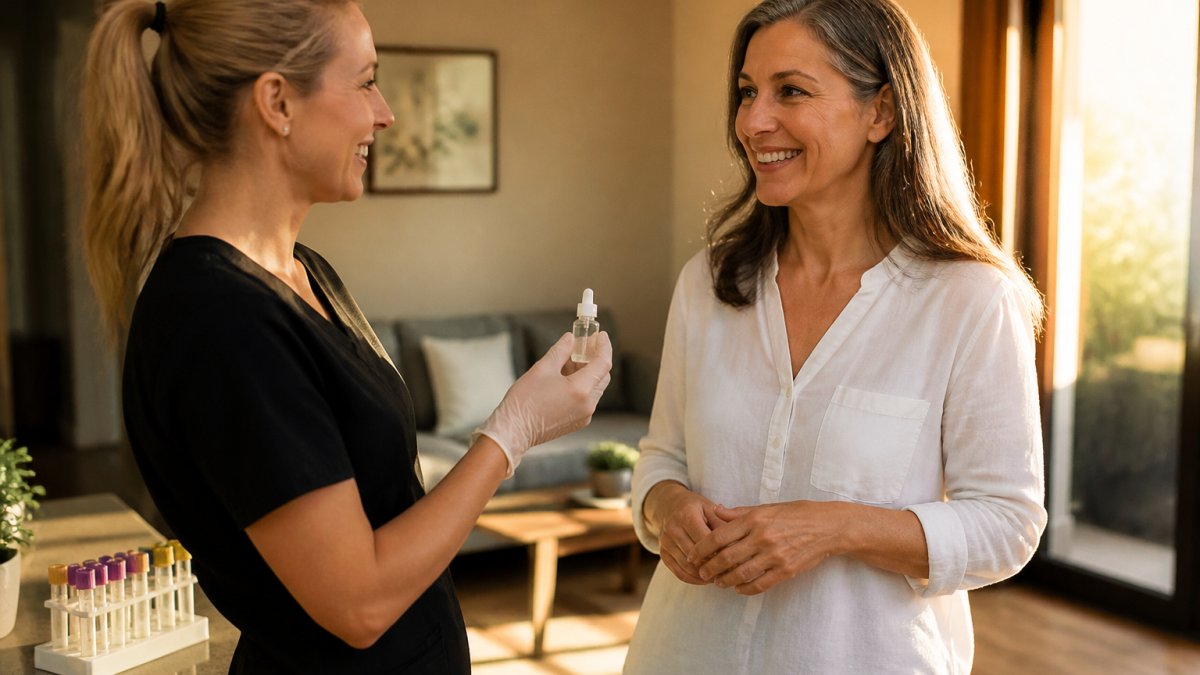
Autologous Serum Eye Drops: Prescription Rules
Table of Contents
- Can You Get Autologous Serum Eye Drops Without a Prescription?
- What Are Autologous Serum Eye Drops and How Do They Differ From Artificial Tears?
- How to Get Autologous Serum Eye Drops: A Step-by-Step Guide
- Autologous Serum Eye Drops Side Effects and Safety Considerations
- How to Store Autologous Serum Eye Drops Safely
- Cost, Insurance, and Alternatives When Serum Tears Are Out of Reach
- Frequently Asked Questions
Last Updated: October 8, 2026
Can You Get Autologous Serum Eye Drops Without a Prescription?
No. These drops are made from your own blood, so they require a provider’s order, a blood draw, and a licensed compounding pharmacy.
This guide from Phlebotomy Experts walks through the full access pathway, from provider evaluation to storage, cost, and alternatives.
Autologous serum eye drops are custom-made eye drops created from a patient’s own blood serum.
Three facts shape everything else:
- Every batch is made from one patient’s blood, so it cannot be mass-produced or sold off the shelf.
- A licensed eye care provider must order the drops before any blood is drawn.
- The drops are prepared by a compounding pharmacy under sterile conditions.
If you have severe dry eye or a non-healing cornea, the path runs through your eye doctor, not a checkout page.
What Are Autologous Serum Eye Drops and How Do They Differ From Artificial Tears?
Autologous serum eye drops are eye drops made from the clear, liquid part of your own blood.
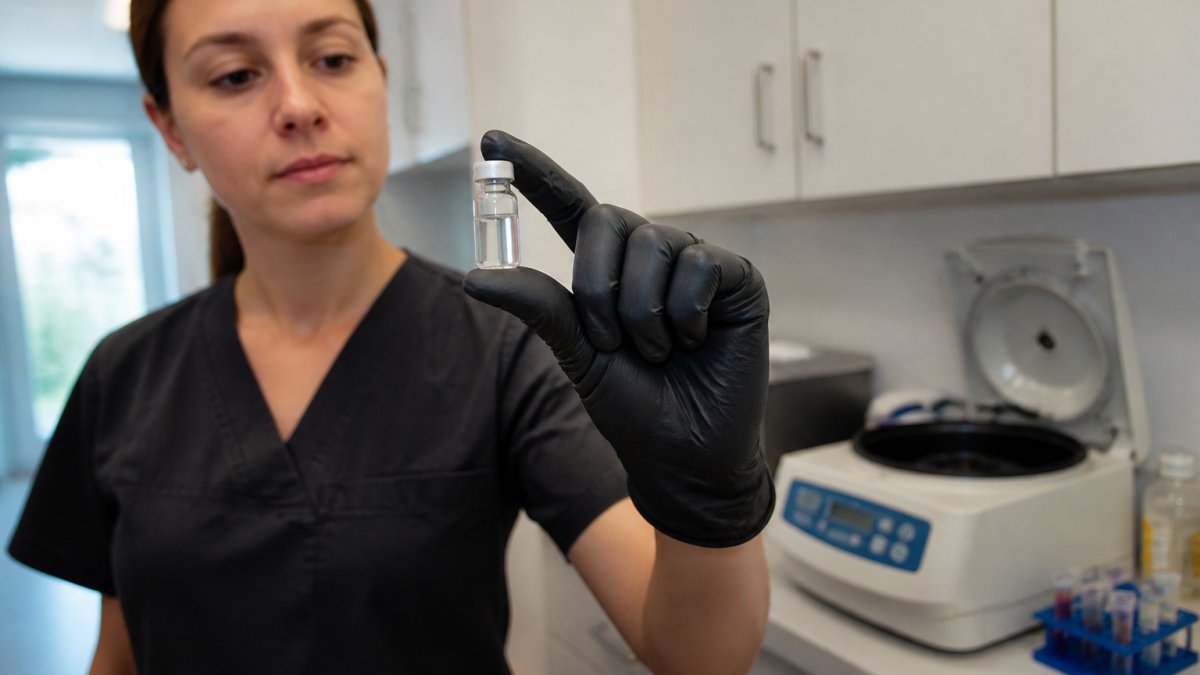
Artificial tears, by contrast, are factory-made and sold without a prescription. They add temporary moisture but do not deliver your own biology back to your eye.
Here is how the two compare:
| Feature | Artificial Tears | Autologous Serum Eye Drops |
|---|---|---|
| Prescription needed | No | Yes |
| Source | Manufactured | Your own blood |
| Best for | Mild to moderate dry eye | Severe or chronic dry eye |
| Custom-made | No | Yes, per patient |
The key difference is personalization: serum tears are built for one person, which is why they cannot be bought over the counter.
How to Get Autologous Serum Eye Drops: A Step-by-Step Guide
Getting autologous serum eye drops is a chain of clinical and laboratory steps, each completed in order.
Step 1: Confirm You Need a Provider Order First
There is no workaround. A licensed eye care provider, an ophthalmologist or, in many practices, an optometrist, must evaluate you and write the order before any blood is drawn. A compounding pharmacy cannot accept a self-referral, and a phlebotomy service cannot collect a sample without that order in hand. Expect the draw station to ask which provider ordered it, so have the name and order ready.
Step 2: The Eye Care Evaluation
Start by contacting an eye care provider who manages ocular surface disease. Not every general practice offers serum tears, so ask upfront whether the provider orders them or can refer you.
The evaluation itself usually includes:
- A review of your symptoms and how long you have had them
- A slit-lamp exam of the ocular surface, including the cornea and tear film
- Tear film testing, which may include tear breakup time or Schirmer testing
Providers typically reserve serum tears for severe or chronic dry eye, or a corneal surface problem that has not healed with standard care. Bring a written list of your current drops and medications, since some affect candidacy and blood safety.
Step 3: Screening Before the Blood Draw
Before approving the draw, your provider screens for conditions that could make your serum unsafe or unreliable, generally active infections and certain blood disorders. Tell your provider about any history of hepatitis, HIV, or other bloodborne conditions, and about anticoagulant or immunosuppressant medications. In some cases blood testing is ordered alongside the serum collection. This is also where eligibility gets settled, so a non-candidate can be redirected to other treatments.
Step 4: Arranging the Blood Draw
Once the order is written, the draw is scheduled. A trained phlebotomist collects a venous sample, usually from your arm, and the serum is separated from blood cells by centrifuge.
Some patients go to a hospital lab, a draw station, or the compounding pharmacy; others use a mobile phlebotomy service that comes to the home or office. Mobile collection suits patients with needle phobia, difficult veins, mobility limits, or schedules that make a weekday lab trip hard.
Two timing rules apply:
- Schedule the draw promptly after approval. Serum quality depends on fresh, properly handled samples.
- Confirm where the sample must go and by when. Some pharmacies require delivery within a set window after collection.
Step 5: Compounding at a Licensed Pharmacy
A licensed compounding pharmacy turns your serum into sterile eye drops, diluting it, commonly with saline, though the exact diluent and concentration are set by the prescriber, and packaging it into small sterile vials.
Ask your provider or pharmacy these questions before the draw:
- What dilution and concentration will be used?
- How many vials will one draw produce?
- Is the preparation preservative-free?
Compounding pharmacies that handle serum tears follow sterile preparation standards, and the finished product is dispensed to you rather than sold off a shelf, the core reason no over-the-counter version exists.
Step 6: Receiving and Starting the Drops
You receive the finished drops, often frozen, with thawing, storage, and use instructions. Your provider sets the dosing schedule, often several times a day. Because each batch comes from one blood draw, you will repeat the draw periodically to keep a fresh supply. (Source: National Eye Institute’s information on dry eye disease)
Step 7: Confirm the Rules That Apply to You
Requirements and compounding pathways vary by jurisdiction, and pharmacy practices differ. Before committing to a provider or pharmacy, confirm:
- Whether a written order, specific prescription form, or additional documentation is required where you live
- Whether the pharmacy can ship to your location and under what conditions
- What the refill process looks like and how far in advance to schedule the next draw
Getting these answers early prevents the most common delay: an evaluation that stalls because the order, draw, and pharmacy were never lined up as one sequence.
Key Takeaway
The access pathway is provider order → evaluation and screening → blood draw → compounding → delivery. Every step depends on the one before it, so line up your provider, your draw method, and your pharmacy before the first appointment.
The access pathway is provider order → evaluation and screening → blood draw → compounding → delivery. Every step depends on the one before it, so line up your provider, your draw method, and your pharmacy before the first appointment.
Autologous Serum Eye Drops Side Effects and Safety Considerations
Most people tolerate autologous serum eye drops well, but side effects can happen: mild stinging or burning when drops go in, temporary blurring, and redness.
More serious risks are rare but worth knowing:
- Infection if the drops are contaminated during handling or storage.
- Irritation or allergic reaction to preservatives or diluents in the preparation.
- Worsening symptoms that need a provider’s review rather than more drops.
Because the drops are made from your own blood, they are screened and prepared under sterile conditions to reduce risk. Still, no treatment is risk-free. Report any new pain, vision change, or swelling to your eye doctor right away.
Watch Out
Never share your serum eye drops with anyone else, even a family member with similar symptoms. Each batch is made from one person’s blood and is meant for that person only. Sharing them risks infection and gives the other person a treatment that was never matched to their eyes.
Never share your serum eye drops with anyone else, even a family member with similar symptoms. Each batch is made from one person’s blood and is meant for that person only. Sharing them risks infection and gives the other person a treatment that was never matched to their eyes.
How to Store Autologous Serum Eye Drops Safely
Storage rules matter because serum eye drops contain living proteins that break down over time. Follow your compounding pharmacy’s exact instructions, since freezing and thawing methods vary.
General guidance:
- Keep unopened vials frozen until you need them.
- Thaw one vial at a time, as directed, and keep it refrigerated after opening.
- Use opened vials within the timeframe your pharmacy specifies.
Pro Tip
Label each vial with the date you opened it. This helps prevent using a vial past its safe window.
Label each vial with the date you opened it. This helps prevent using a vial past its safe window.
Cost, Insurance, and Alternatives When Serum Tears Are Out of Reach
Cost is the biggest barrier for many patients, and the part they get the least warning about. Autologous serum eye drops involve several separate expenses, usually billed by different parties:
- The eye care evaluation, a standard office visit, often billed to your vision or medical plan depending on how the visit is coded
- The blood draw, billed by the lab, draw station, or mobile phlebotomy service that performs the collection
- The compounding fee, charged by the pharmacy for preparing, diluting, and packaging your serum
Because these charges come from different providers, the total is rarely quoted in one place. Ask each party for its portion before you start, and whether the pharmacy charges per vial or per batch.
Insurance and Coverage Questions to Ask
Coverage varies widely. Many plans treat serum tears as experimental or non-covered, and some classify the treatment outside standard pharmacy benefits. Do not assume a denial is final, but do expect to ask specific questions:
- Does my health plan cover compounding pharmacy services, and is this preparation on the covered list?
- Is the blood draw billed separately, and by whom, the lab, the draw service, or the pharmacy?
- Does the plan require prior authorization before the draw, and who submits it?
A common pattern is partial coverage: the office visit and draw are covered, while compounding and shipping are not. Knowing which piece is uncovered tells you whether the treatment is genuinely out of reach or just needs budgeting.
Alternatives When Serum Tears Are Unavailable or Unaffordable
If serum tears are not covered, unavailable locally, or too expensive to sustain, you still have clinician-guided options. Ask your provider which fits your specific diagnosis rather than your symptoms in general:
- Preservative-free artificial tears, the standard first step, and the right baseline for mild to moderate dry eye
- Prescription eye drops, including anti-inflammatory drops and other therapies aimed at the underlying cause rather than moisture alone
- Punctal plugs, small inserts that slow tear drainage so your own tears stay on the eye longer
If symptoms are persistent, worsening, or accompanied by pain, vision change, or a cornea that will not heal, seek specialist assessment rather than cycling through over-the-counter products. A cornea or ocular surface specialist can confirm the diagnosis and say whether serum tears are the right tool or another therapy would work better.
Where a Mobile Blood Draw Fits Into the Cost Picture
One expense patients overlook is the cost of getting to the draw itself, time off work, transportation, and arranging a lab visit around caregiving or mobility needs. A mobile blood draw service brings the collection to your home or office without changing the clinical steps. If your provider has approved serum tears, ask whether mobile collection is an option and how it is billed, so you can compare it against a standard lab visit.
Pro Tip
Before your first appointment, call the compounding pharmacy your provider uses and ask for its serum tear fee schedule in writing. Having the pharmacy’s numbers alongside your insurance answers turns a vague cost concern into a budget you can actually plan around.
Before your first appointment, call the compounding pharmacy your provider uses and ask for its serum tear fee schedule in writing. Having the pharmacy’s numbers alongside your insurance answers turns a vague cost concern into a budget you can actually plan around.
Frequently Asked Questions
Can you get autologous serum eye drops without a prescription?
No. Autologous serum eye drops are a prescription-only treatment. They are made from your own blood, which must be collected and processed under medical supervision, and they are not available over the counter. You need a prescription from a licensed eye care provider, such as an ophthalmologist or optometrist, who will evaluate your condition and determine if serum tears are appropriate. Attempting to obtain them without a prescription is not only impossible but also unsafe because the preparation requires sterile handling and proper dosing.
How do you get autologous serum eye drops?
The process starts with an evaluation by an eye care provider who confirms you are a candidate. If prescribed, you will have a blood draw, usually at a clinic, hospital, or through a mobile phlebotomy service. Your blood is then sent to a compounding pharmacy that separates the serum and prepares sterile eye drops. The drops are typically dispensed in small vials and must be stored properly. Your provider will give you instructions on how often to use them and when to return for follow-up.
What are the potential side effects of autologous serum eye drops?
Most people tolerate serum tears well because they are made from their own blood. However, side effects can include mild irritation, burning, or redness right after putting in the drops. There is also a small risk of infection if the drops are not handled or stored correctly. Some patients may experience an allergic reaction, though this is rare. If you notice increasing discomfort, vision changes, or signs of infection, stop using the drops and contact your eye doctor promptly.
How should autologous serum eye drops be stored?
Storage instructions vary depending on how the drops are prepared. In general, serum eye drops should be kept refrigerated and protected from light. Some formulations must be frozen for long-term storage and thawed before use. Never leave them at room temperature for extended periods, and do not use them past the expiration date given by the compounding pharmacy. Always follow the specific storage directions from your provider or pharmacist to maintain the drops’ safety and effectiveness.
