
Concierge lab services bring blood draws to your home or office. See how mobile phlebotomy works, what it costs, and how to prepare for a blood test.
Mobile Phlebotomy for Pediatric Blood Draws
Table of Contents
- What Mobile Phlebotomy for Pediatric Blood Draws Offers
- How to Prepare a Child for a Blood Test at Home
- What to Expect During a Pediatric Blood Draw
- Tips for Calming a Child During a Blood Draw
- Safety, Credentials, and Specimen Handling
- Scheduling and What Happens After the Draw
- When a Blood Draw Is Difficult or Unsuccessful
- Frequently Asked Questions
Last Updated: October 10, 2026
What Mobile Phlebotomy for Pediatric Blood Draws Offers
Mobile phlebotomy for pediatric blood draws brings professional blood collection directly to your home or office, eliminating the stress of clinic visits. At Phlebotomy Experts, our licensed phlebotomists specialize in gentle collection techniques designed specifically for infants and children, ensuring a calm experience from start to finish. (Source: Statista’s 2026 research on healthcare accessibility)
Mobile phlebotomy for pediatric blood draws comes to you at a time that works best, eliminating scheduling conflicts and transportation challenges. Your child remains in a familiar, comfortable environment with a parent or caregiver present, reducing anxiety and improving specimen quality.
How to Prepare a Child for a Blood Test at Home
Preparation sets the tone for a successful draw. Explain what will happen in simple, honest language appropriate to your child’s age.
For younger children (ages 2-5), keep explanations brief and concrete, using pictures or age-appropriate books about doctor visits. For older children (ages 6+), explain why the test is necessary and what the phlebotomist will do step by step.
The night before, ensure your child gets adequate sleep and eats a normal meal. If fasting is required, explain this clearly and reassure them they can eat afterward.
Pro Tip
Bring a comfort item to the appointment, a favorite stuffed animal, blanket, or toy. Familiar objects provide emotional anchoring and give your child something to focus on during the draw.
Bring a comfort item to the appointment, a favorite stuffed animal, blanket, or toy. Familiar objects provide emotional anchoring and give your child something to focus on during the draw.
What to Expect During a Pediatric Blood Draw
The pediatric blood draw typically takes only a few minutes. When the phlebotomist arrives, they’ll introduce themselves and explain what they’re going to do in child-friendly language.
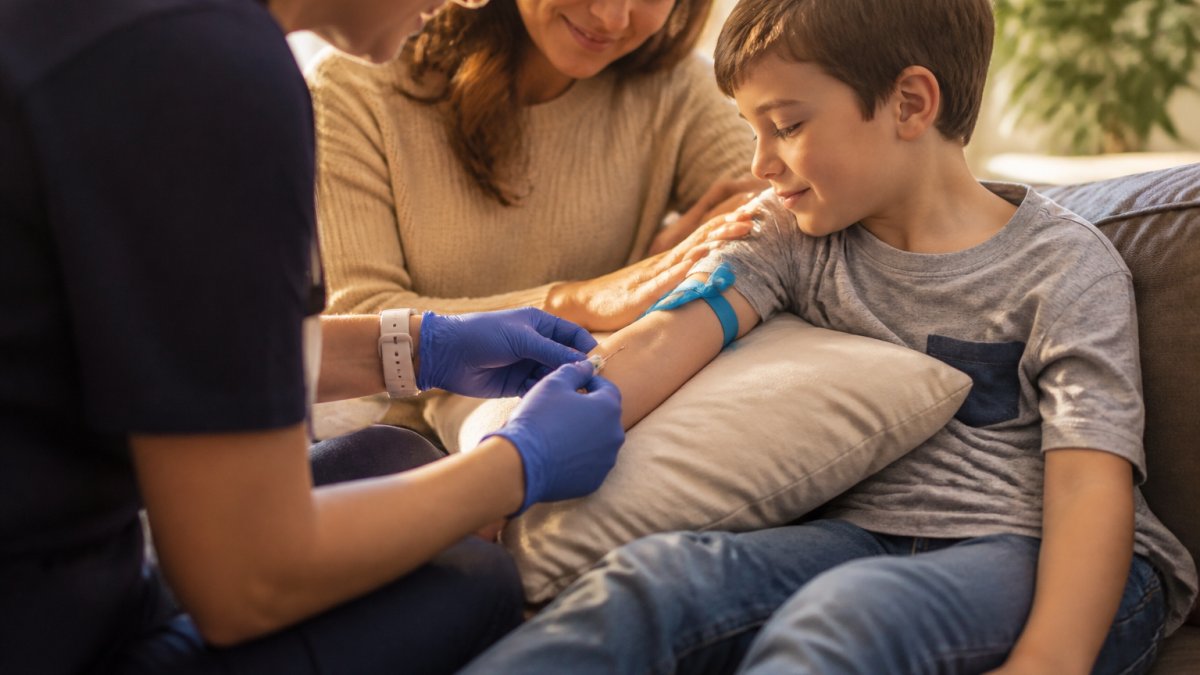
The phlebotomist will clean the skin with an alcohol wipe and apply a gentle tourniquet above the collection site to make veins more visible. The needle insertion lasts only seconds, and most children report pressure sensation is more noticeable than sharp pain.
Age-Specific Approaches and Comfort Measures
Infants and very young toddlers (under 2 years) often respond best to being held by a parent during collection. Heel sticks or finger pricks may be used for small blood volumes. Keeping the environment calm makes all the difference.
Toddlers and preschoolers (2-5 years) benefit from distraction techniques like watching a favorite show, singing, or squeezing a stress ball during the draw.
School-age children (6-12 years) often respond well to being given control where possible. Letting them choose which arm, watching the process, or having a reward planned afterward helps them and reduces anxiety. Honest communication about what sensations they’ll feel builds trust.
Tips for Calming a Child During a Blood Draw
Anxiety is a common challenge during pediatric blood draws, but proven techniques help.
Guided imagery also works well. Ask your child to imagine a favorite place and describe it in detail while the phlebotomist works, redirecting focus away from the needle.
Pressure can reduce pain perception. Some children find it helpful if a parent gently squeezes their hand during the draw.
Praise and positive reinforcement matter tremendously. Affirm your child’s bravery: “You did such a great job staying still” or “I’m really proud of how brave you were.”
Watch Out
Never punish a child for being scared or crying during a blood draw. This creates lasting negative associations with medical procedures and can increase anxiety during future appointments. Validate their feelings while remaining calm and supportive.
Never punish a child for being scared or crying during a blood draw. This creates lasting negative associations with medical procedures and can increase anxiety during future appointments. Validate their feelings while remaining calm and supportive.
Safety, Credentials, and Specimen Handling
Your child’s safety depends on working with properly trained and licensed professionals. Licensed phlebotomists complete formal training programs and pass certification exams demonstrating competency in blood collection techniques, specimen handling, and infection control.
Infection control is non-negotiable. Phlebotomists use sterile, single-use needles and follow strict protocols to prevent contamination. The collection site is cleaned with an appropriate antiseptic before the needle is inserted.
Specimen handling directly affects test accuracy. Phlebotomy Experts ensures specimens are delivered promptly to your preferred laboratory, maintaining proper temperature and handling throughout transport to prevent repeat draws.
Scheduling and What Happens After the Draw
Scheduling a mobile phlebotomy appointment requires a few key steps to ensure everything is in place before the phlebotomist arrives at your home.
Before You Book: Verify Lab Orders and Insurance Coverage
Before scheduling, confirm that your child’s physician has placed a laboratory order specifying which tests are needed, any special handling requirements (such as fasting), and the preferred laboratory. Scheduling without a valid order can result in a wasted appointment or unexpected charges.
Understand the cost structure upfront. Mobile phlebotomy fees typically include travel and collection, but laboratory processing fees are separate. Confirm whether your insurance plan covers in-home blood draws and whether prior authorization is required to prevent billing surprises.
Scheduling the Appointment
Contact your mobile phlebotomy provider with your child’s full name, date of birth, relevant medical history, specific blood tests ordered, preferred date and time, insurance information, and any special access instructions.
Confirm fasting instructions if required. For tests like glucose or lipid panels, your child may need to fast for 8-12 hours before the draw (the CDC). Write these instructions down and post them somewhere visible.
What Happens Immediately After the Draw
After collection, the phlebotomist will apply direct pressure for 1-2 minutes to stop bleeding and then apply a small adhesive bandage. Your child can remove it after a few hours unless bleeding continues.
Minor bruising is normal and typically fades within 3-7 days. A cold compress for the first 10 minutes can reduce swelling. Encourage your child to avoid strenuous activity with the arm used for the draw for the remainder of the day.
Your child can eat and drink normally immediately after the draw, even if fasting was required beforehand. There are no activity restrictions unless your child’s physician has specified otherwise for their particular condition.
Specimen Transport and Result Timeline
The phlebotomist will label the blood sample with your child’s name, date of birth, and collection time, following strict laboratory identification standards. The specimen is then placed in a secure, temperature-controlled container and transported to the laboratory you specified. Most specimens are delivered within 24 hours of collection, and many providers offer same-day delivery for time-sensitive tests.
Laboratory processing time varies by test type. Routine tests (complete blood count, basic metabolic panel) typically return results within 24 hours. More specialized tests may take 2-5 business days. Your ordering physician receives the results electronically and will contact you with findings and any recommended next steps.
Key Takeaway
Verifying lab orders, insurance coverage, and fasting requirements before scheduling protects you from billing surprises and ensures the appointment runs smoothly. Clear communication with your provider about specimen destination and result delivery timelines keeps everyone aligned and reduces anxiety while waiting for results.
Verifying lab orders, insurance coverage, and fasting requirements before scheduling protects you from billing surprises and ensures the appointment runs smoothly. Clear communication with your provider about specimen destination and result delivery timelines keeps everyone aligned and reduces anxiety while waiting for results.
When a Blood Draw Is Difficult or Unsuccessful
Sometimes a blood draw doesn’t go smoothly on the first attempt. This happens occasionally with all patients, especially children, and it’s not a reflection on your child or the phlebotomist’s skill. Difficult veins, movement, or anxiety can make collection challenging. Our experienced phlebotomists have techniques for these situations: they may try a different site, use a smaller needle, apply a warm compress to help veins become more accessible, or adjust positioning to improve blood flow.
Managing a Difficult or Failed Draw
If a first attempt is unsuccessful, the phlebotomist will discuss options with you before proceeding. A second attempt by the same professional often succeeds because they’ve learned what works best for your child’s veins and can adjust their technique accordingly.
Communicate openly with your phlebotomist about your child’s history before the appointment begins. If your child has had difficult draws in the past, mention this upfront.
If your child has a known bleeding disorder, clotting disorder, or takes blood-thinning medication, inform the phlebotomist immediately. These conditions may require longer pressure application after the draw or special handling to prevent excessive bleeding.
When to Seek an Alternative to Home Collection
While mobile phlebotomy works well for most children, some situations are better served by a clinic or hospital setting. Consider scheduling a clinic-based draw instead if:
- Your child has a history of severe vasovagal responses (fainting, extreme dizziness, or nausea during or after blood draws). A clinic setting allows immediate access to recovery equipment and trained staff.
- Multiple previous home draws have failed despite experienced phlebotomists’ best efforts. A pediatric specialist or hospital lab may have access to ultrasound-guided needle placement or other advanced techniques.
- Your child requires central line blood draws or has a port-a-cath, PICC line, or other vascular access device. These require specialized training and sterile protocols best managed in a clinical setting.
- Your child has severe needle anxiety, behavioral challenges, or developmental delays that make cooperation difficult. A pediatric phlebotomist in a clinic may have additional support staff, sedation options, or behavioral specialists available.
There is no shame in choosing a clinic-based draw if it’s the right fit for your child. The goal is a successful collection with minimal trauma, not adherence to a particular setting.
Aftercare and When to Contact Your Pediatrician
After the draw, monitor the collection site for the following 24-48 hours. Minor bleeding, bruising, and mild swelling are normal. However, contact your child’s pediatrician or seek immediate care if you notice:
- Excessive bleeding that doesn’t stop after 10-15 minutes of direct pressure. This may indicate a clotting disorder or require evaluation.
- Swelling, redness, warmth, or pus at the collection site. These signs suggest infection and require prompt medical attention.
- Severe bruising that spreads beyond the immediate collection area or is accompanied by pain. While minor bruising is expected, extensive bruising may indicate a vascular injury.
- Your child develops a fever, chills, or systemic symptoms within 24-48 hours of the draw. Although rare, infection can occur and requires evaluation.
- Numbness, tingling, or weakness in the arm or hand used for the draw that persists beyond a few hours. This may indicate nerve irritation and should be assessed by a clinician.
- Your child faints, has severe dizziness, or experiences chest pain or difficulty breathing during or after the draw. Seek immediate medical attention.
Most children experience no complications. A small bruise that fades within a week is the most common aftereffect. However, knowing what to watch for gives you confidence and ensures your child receives prompt care if an uncommon complication does arise.
Watch Out
Never ignore signs of infection or excessive bleeding. While mobile phlebotomy is safe when performed by trained professionals, complications can occasionally occur. Your pediatrician is your partner in your child’s care and should be contacted with any concerns.
Never ignore signs of infection or excessive bleeding. While mobile phlebotomy is safe when performed by trained professionals, complications can occasionally occur. Your pediatrician is your partner in your child’s care and should be contacted with any concerns.
Frequently Asked Questions
Can a phlebotomist draw a child’s blood at home?
Yes. Licensed phlebotomists trained in pediatric blood collection can perform draws at home. Mobile phlebotomy for pediatric blood draws brings professional, gentle specimen collection to your house or office. A trained phlebotomist arrives with pediatric-sized needles, proper equipment, and experience managing children’s anxiety. The specimen is then safely transported to your preferred laboratory for processing. This approach eliminates the stress of a clinic visit for many families.
How do I prepare a child for a blood test?
Start by explaining the process in simple, honest language appropriate to your child’s age. Avoid words like ‘shot’ or ‘hurt.’ Let them know a technician will visit your home, what the room will look like, and that a small sample of blood will be collected. Read age-appropriate books about blood draws together. The night before, ensure your child gets normal sleep and eats a light breakfast unless fasting is required by the test. On the day of the draw, keep routines calm and avoid discussing the test repeatedly.
What should I do if my child feels faint or anxious during a blood draw?
Alert the phlebotomist immediately if your child shows signs of dizziness, excessive anxiety, or distress. A trained pediatric phlebotomist knows how to pause, reassure, and use calming techniques. Have your child lie down during or after the draw to prevent fainting. Deep breathing exercises, holding a parent’s hand, or focusing on a favorite object can help. If your child has a history of severe anxiety or fainting, mention this when scheduling so the technician can plan accordingly.
How quickly do samples reach the laboratory after an at-home blood draw?
Licensed phlebotomists follow strict specimen handling protocols to preserve sample integrity. Samples are typically transported to the laboratory on the same day of collection. The exact timeframe depends on the specific tests ordered and your laboratory’s location. When you schedule, ask about the specimen transport process and expected turnaround time for results. Proper handling during transport ensures your results are accurate and you won’t need to repeat the test.
