
Learn why blood bruises after a draw, what makes a bruise more likely, simple home care steps, and signs that call for prompt medical advice right away.
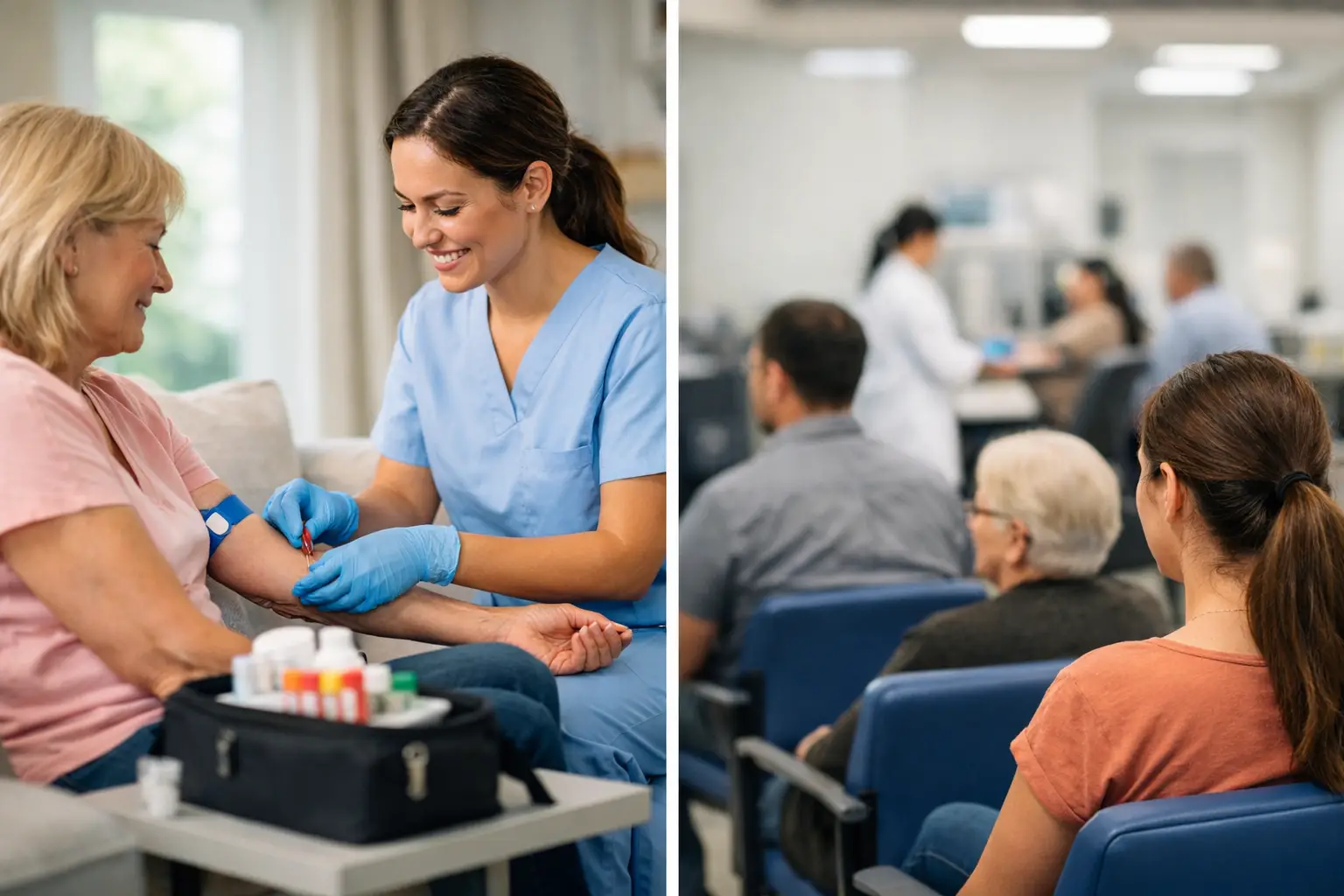
Mobile Phlebotomist Versus Laboratory Waits
The difference in mobile phlebotomist versus laboratory waits can feel very real at 7:30 in the morning, when you are fasting, trying to get a child ready for school, or helping a parent with limited mobility get out the door. A routine blood draw may only take a few minutes. Getting to the lab, checking in, waiting in a crowded room, and getting home can take much longer.
For many patients, a mobile blood draw is not about avoiding a minor inconvenience. It is a practical way to complete physician-ordered testing with more comfort, privacy, and personal attention. Let the laboratory come to you, whether that means your home, office, assisted-living community, rehabilitation setting, or another appropriate location.
Mobile Phlebotomist Versus Laboratory Waits: What Changes?
A traditional laboratory visit puts the schedule, setting, and pace largely in the laboratory’s hands. You may be able to make an appointment, but appointment times do not always eliminate check-in lines, seating delays, or a busy collection area. Walk-in patients can face even more uncertainty, especially during early morning fasting hours.
A mobile phlebotomist works around your scheduled collection window. Instead of budgeting time for transportation, parking, registration, and waiting room delays, you prepare in a familiar setting and have your specimen collected there. Afterward, the phlebotomist follows the required handling procedures and coordinates delivery to the designated laboratory or hospital.
That does not mean a mobile appointment makes every part of testing instant. Your physician still needs to place the proper order, some tests require special preparation, and laboratory processing times still apply. The major change is the collection experience: less travel, less waiting in a public area, and more control over where the draw happens.
The Time Cost Is Usually Bigger Than the Blood Draw
When people say, “I only need labs,” they often mean the needle part will be quick. That is usually true. The hidden time is everything surrounding it.
A laboratory visit can involve getting dressed and ready, driving across town, finding parking, checking in, waiting, having the draw, then returning home or heading to work. For a busy professional, that may mean rearranging meetings. For a caregiver, it may require coordinating transportation and support for another person. For an older adult, it can be physically tiring before the appointment even starts.
With mobile collection, the appointment can fit into the day with far less disruption. A patient can remain at home after an early-morning fasting draw, return to work quickly after an office appointment, or receive care in a residential setting without a difficult outing. That saved time is often the reason patients choose concierge service in the first place.
Fasting Can Make Waiting Harder
Fasting tests are a good example. Going without food may be manageable for a short period, but a delayed appointment can be uncomfortable. It can also be especially challenging for children, pregnant patients, people who feel lightheaded easily, and individuals managing medical conditions that make prolonged fasting difficult.
A scheduled at-location collection can reduce the unpredictable part of the morning. You can be ready when your phlebotomist arrives, complete the draw, and eat according to your provider’s instructions soon afterward. It is a small change that can make a stressful medical errand feel much more manageable.
Comfort Matters More Than People Expect
Laboratory waiting rooms are necessary places, but they are not always restful. They can be crowded, noisy, and full of people who are sick or worried about their own health. For an immunocompromised patient, someone in hospice care, or a person recovering from surgery, avoiding unnecessary exposure and travel may be a meaningful part of the care plan.
Home collection also gives patients more control over their environment. You can sit in your preferred chair, have a family member nearby, and take a moment to settle your nerves. Patients with a history of difficult draws, needle anxiety, or fainting often appreciate not feeling rushed through a busy collection line.
Compassionate bedside manner is not an extra. It can shape whether a child stays calm, whether an older adult feels respected, and whether a nervous patient can complete an important test. An experienced mobile phlebotomist has time to communicate, confirm instructions, and provide steady reassurance with a Smile.
When a Laboratory Visit May Still Be the Right Choice
Mobile service is helpful, but it is not automatically the best fit for every situation. Some tests must be collected at a specific facility, during a tightly controlled appointment, or alongside other services that a hospital or laboratory provides. Certain specialty tests have exact timing, temperature, centrifugation, or processing requirements that need advance coordination.
Cost is another consideration. A laboratory may bill your insurance for the test itself, while a mobile collection service can have a separate travel or concierge fee. Patients should understand what their insurance covers, what their selected laboratory requires, and whether a mobile visit is available for the specific order.
If you are already at a medical center for another appointment and the laboratory has an immediate opening, going directly to the lab may be perfectly sensible. The goal is not to make every draw mobile. The goal is to choose the setting that supports your health, schedule, and level of comfort.
How a Mobile Blood Draw Typically Works
The process should be straightforward. First, make sure you have a valid physician order or the required test kit and confirm any preparation instructions. These may include fasting, hydration, medication timing, or collecting at a certain time of day.
Next, schedule your collection and share the laboratory or hospital destination for the specimen. A qualified mobile phlebotomist arrives with appropriate collection supplies, verifies patient information, performs the draw, labels and handles the specimen carefully, and coordinates prompt delivery to the designated laboratory. Your results are generally reported through your ordering provider, patient portal, or laboratory process – not interpreted by the phlebotomist at the appointment.
Phlebotomy Experts provides this hands-on support for patients who need routine draws, recurring therapeutic phlebotomy, home test-kit collection, and specialized collection coordination. The service is built around certified field experience, HIPAA-compliant practices, and the kind of respectful care that helps patients feel looked after rather than processed.
A Few Details to Confirm Before Scheduling
Before booking, confirm the name of the testing laboratory, whether your order has been sent or is in hand, and whether you need fasting or other preparation. If the collection is for a specialty kit, prenatal DNA testing, serum eye-drop processing, PRP-related services, or another time-sensitive need, say so when you request availability.
It also helps to choose a quiet, well-lit space with a chair or comfortable place to sit. Keep your photo identification, insurance information if needed, laboratory paperwork, and test kit nearby. A little preparation helps the appointment move smoothly and protects the integrity of the specimen.
Who Benefits Most From Skipping the Waiting Room?
Mobile phlebotomy can be a strong fit for people whose time, mobility, or health makes laboratory travel unnecessarily difficult. That includes professionals who cannot lose half a workday, parents coordinating family schedules, older adults, and patients in assisted living, group homes, rehabilitation, or hospice settings.
It can also be a relief for people who need repeated collections. A patient undergoing therapeutic phlebotomy or monitoring an ongoing condition may already be carrying a heavy medical schedule. Reducing one difficult trip can make it easier to stay consistent with physician-directed care.
For caregivers, mobile service can replace a complicated outing with a scheduled visit in a setting where the patient already feels secure. That practical support is often just as valuable as the time saved.
The best choice is the one that helps you complete needed testing without turning a short blood draw into an exhausting day. If waiting rooms, transportation, or mobility are standing between you and timely care, checking mobile appointment availability may be the kindest next step for yourself or someone you love.
