Orange County Labs alternative for professionals: compare mobile phlebotomy, concierge lab testing, pricing, turnaround times and HIPAA compliance. Get.

Cost of Mobile Lab Services: What to Expect in 2026
Table of Contents
- How Much Do Mobile Lab Services Cost in 2026?
- Mobile Phlebotomy Service Fees: The Breakdown
- Factors Affecting Mobile Blood Draw Costs
- At Home Blood Draw Insurance Coverage: What’s Covered?
- Mobile vs. Traditional Lab Testing: A Cost Comparison
- How to Get an Accurate Quote and Avoid Surprises
- Conclusion
- Frequently Asked Questions
Last Updated: September 6, 2026
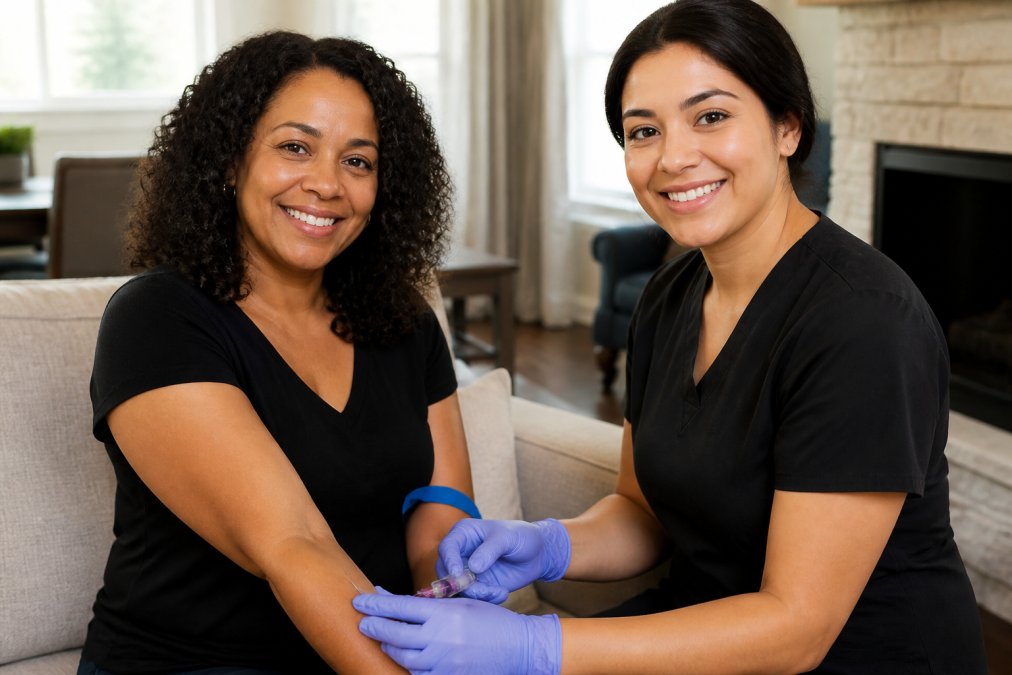
Mobile phlebotomy brings a licensed technician to your home or office to collect blood and other specimens, eliminating the need to travel to a clinic. Below, we break down exactly what drives the cost of mobile lab services, what insurance typically covers, and how to avoid unexpected charges.
How Much Do Mobile Lab Services Cost in 2026?
Mobile lab services in 2026 generally cost a base per-visit fee plus separate laboratory processing charges, though pricing varies widely by provider and region (peer-reviewed research). The collection visit is the primary line item, but the lab that analyzes your specimen bills independently.
A common mistake is comparing only the visit fee without accounting for the lab’s separate bill. For example, some national providers advertise a per-visit collection fee, with lab processing billed separately by the diagnostics network (EXTERNAL_LINK: Quest Diagnostics Patient Service Center information | questdiagnostics.com). This two-part structure means your total out-of-pocket expense depends on both the phlebotomist and the clinical laboratory.

Key Takeaway
Always ask for a bundled estimate that includes both the mobile visit fee and estimated lab processing costs before you schedule. A quote covering only the phlebotomist’s time is incomplete.
Always ask for a bundled estimate that includes both the mobile visit fee and estimated lab processing costs before you schedule. A quote covering only the phlebotomist’s time is incomplete.
Mobile Phlebotomy Service Fees: The Breakdown
Mobile phlebotomy service fees typically consist of three distinct components: the collection fee, laboratory processing costs, and travel or convenience surcharges. Understanding each line item is the key to reading any estimate accurately.
The Collection Fee vs. Lab Processing Costs
The collection fee covers the phlebotomist’s time, skill, and specimen handling. This is the amount providers advertise as their starting price. For context, some mobile services list per-visit collection fees starting around $65 to $75 (healthcare.gov).
Travel Surcharges and Convenience Fees
Beyond the base visit, many providers add a travel surcharge based on distance from their service hub, compensating the courier and technician for drive time and fuel. Some companies fold this into a flat “convenience fee,” while others calculate it per mile.
Factors Affecting Mobile Blood Draw Costs
Several variables influence the final price of a mobile blood draw. The most significant factors are scheduling urgency, the patient’s age and medical complexity, and the geographic region.
Stat vs. Routine Scheduling
Routine appointments scheduled days in advance cost less than stat or same-day requests, which require the provider to prioritize your visit and pull a technician from an existing route. If your test does not require immediate collection, booking a routine slot several days out is the most cost-effective approach.
Pediatric and Geriatric Pricing Considerations
Blood draws for infants, young children, and elderly patients with fragile veins often carry additional fees due to specialized care, extra time, and alternative collection techniques. Providers with this expertise may price these visits higher due to the advanced skill required and longer appointment windows.
At Home Blood Draw Insurance Coverage: What’s Covered?
At home blood draw insurance coverage is rarely a single yes-or-no answer because mobile lab services create a split bill. The core distinction is between the collection fee (the phlebotomist’s visit) and the lab processing fee (the diagnostic test itself). Insurance treats these two line items completely differently, and that split is the root of most surprise bills.
The In-Network Lab vs. Out-of-Network Phlebotomist Trap
Your health plan likely has a negotiated rate with a specific clinical laboratory network, such as Quest Diagnostics or Labcorp. When your physician orders a test, that order is typically routed to a lab your insurer has a contract with, and the lab processing portion is covered at your standard in-network rate, subject to your deductible and copay.
The mobile phlebotomy company, however, is a separate entity. Many mobile draw services are not contracted with every insurance plan, meaning the collection fee is billed as an out-of-network service. Even when the phlebotomist is in-network, your plan may classify a home visit as a “convenience service” rather than a medically necessary procedure, leaving you responsible for the full collection fee.
How to Verify Coverage Before You Book
The only way to avoid an unexpected bill is to get written confirmation from your insurer before scheduling. Do not rely on a phone representative’s verbal assurance alone. Follow this process:
- Ask your provider for their NPI number and tax ID. This is the identifier your insurer needs to check network status.
- Call the number on the back of your insurance card. Ask specifically: “Is this NPI in-network for CPT code 36415 (routine venipuncture)?”
- Ask whether a home visit modifier applies. Some insurers require modifier codes for home health services, which can change your cost-sharing.
- Request a pre-determination of benefits in writing. This is a formal document from your insurer stating what they will cover and what your responsibility will be.
The HSA and FSA Angle Most Articles Miss
A health savings account or flexible spending account can be used to pay for both the collection fee and the lab processing fee, even when your insurance denies the claim. The EXTERNAL_LINK: IRS guidelines on qualified medical expenses | irs.gov define diagnostic services as eligible, and the mobile collection fee generally qualifies because it is a service rendered to obtain a diagnosis. This means you can pay the out-of-pocket portion with pre-tax dollars, effectively reducing the real cost by your marginal tax rate.
What to Do When You Receive a Separate Bill
A common pattern is that your insurer pays the lab processing claim, then you receive a separate bill from the mobile phlebotomy company weeks later. Do not assume this bill is an error. Review your explanation of benefits from both claims. If the collection fee was denied, you have the right to appeal, stating that the home visit was medically necessary because you are homebound, have a mobility impairment, or have a condition that makes travel to a lab unsafe. Many patients successfully overturn denials by having their physician write a letter of medical necessity.
Watch Out
Never schedule a mobile lab visit without first asking the provider: “Are you in-network with my insurance, and do you bill my plan directly, or am I responsible for submitting the claim myself?” Some mobile services are cash-pay only and will not file claims on your behalf, which adds administrative burden and delays reimbursement.
Never schedule a mobile lab visit without first asking the provider: “Are you in-network with my insurance, and do you bill my plan directly, or am I responsible for submitting the claim myself?” Some mobile services are cash-pay only and will not file claims on your behalf, which adds administrative burden and delays reimbursement.
Mobile vs. Traditional Lab Testing: A Cost Comparison
When comparing mobile versus traditional lab testing, the visit fee is the primary differentiator, but the total cost gap is often narrower than patients assume. A traditional visit involves no collection fee, yet it requires transportation, time off work, and potentially a copay. Mobile services add a per-visit charge for the convenience of having a certified phlebotomist arrive at your door.
| Cost Component | Traditional Lab Visit | Mobile Lab Service |
|---|---|---|
| Collection Fee | None | Per-visit fee (varies by provider) |
| Lab Processing | Billed by lab | Billed by lab (separate) |
| Travel/Transport | Patient’s own cost | Travel surcharge or included |
| Time Investment | Travel + wait time | Minimal; visit at home |
For homebound patients, those with mobility issues, or busy professionals, the mobile premium is often justified by eliminating travel and wait times. However, for routine, non-urgent testing where you live near a lab, the traditional route may be marginally cheaper. The value calculation depends heavily on your personal circumstances.
How to Get an Accurate Quote and Avoid Surprises
Getting an accurate quote requires understanding that every provider quotes differently. Some advertise an all-inclusive flat rate, while others quote only the phlebotomist’s time and leave lab processing as an unknown. The most reliable approach is to ask for a written estimate that itemizes each component.
The Four Line Items Every Quote Must Include
A complete quote should break down into four distinct charges:
- Base collection fee, The phlebotomist’s time and skill for the venipuncture itself.
- Travel surcharge, A per-mile fee or flat zone charge based on distance from the provider’s service hub.
- Lab processing fee, The diagnostic test cost billed by the clinical laboratory. This is often the largest line item and is frequently excluded from advertised prices.
- Specimen handling or courier fee, Some providers add a charge for transporting your sample to the lab under proper temperature control.
If a provider refuses to itemize these components or gives you only a single lump sum without explanation, that is a red flag. Transparent providers will walk you through each charge without hesitation.
Estimating Travel Costs Before You Call
Travel surcharges are the most variable component of a mobile lab quote, and the easiest to predict if you know the provider’s pricing model. Most companies operate from a central hub and charge either a flat fee per zone or a per-mile rate. A common pattern is a base fee covering the first 10 to 15 miles, followed by a per-mile charge of $2 to $4 beyond that radius (cms.gov).
For example, a patient living 25 miles from a provider’s hub might expect a travel surcharge of $20 to $40 on top of the base collection fee. Patients in dense urban areas often pay less because multiple phlebotomists are stationed across the city, while rural patients face fewer technicians and longer distances, pushing both the travel surcharge and base fee upward.
The Urban vs. Rural Cost Differential
Regional pricing is not uniform. Metropolitan providers with multiple phlebotomists spread overhead across more daily visits, keeping base fees competitive. Rural providers may charge a higher base fee because they cannot schedule as many visits per day when drive times are 30 to 45 minutes each way.
Questions That Separate Transparent Providers from the Rest
Beyond the basic pricing questions, ask these five specific questions to uncover hidden costs and quality issues:
- “Do you deliver specimens to the laboratory of my choice?” Providers that mandate their own lab network may have negotiated processing rates that are higher than your insurer’s preferred lab.
- “What is your policy on failed draws?” If the phlebotomist cannot obtain a specimen on the first attempt, is there a rescheduling fee? Some providers charge a full visit fee for a failed draw, while others return at no cost.
- “Are your phlebotomists background-checked and certified?” Legitimate providers employ certified phlebotomy technicians with current credentials and completed background checks. Ask for verification before allowing someone into your home.
- “How do you transport specimens to maintain integrity?” Certain tests require temperature-controlled transport within a specific time window. A provider without proper courier protocols may compromise your sample, leading to a redraw and an additional fee.
- “What happens if my insurance denies the claim?” A provider that bills insurance directly should have a clear process for appealing denials. Cash-pay-only providers should disclose that upfront.
Building Your Own Cost Estimate Worksheet
Before you book, create a simple worksheet with three columns: the provider’s quoted base fee, the estimated travel surcharge based on your distance from their hub, and the lab processing fee estimate from your insurer’s explanation of benefits for the specific test ordered. Add these three numbers together. If the total is significantly higher than the advertised starting price, you have identified the gap between marketing and reality.
Key Takeaway
The cheapest advertised base fee is not necessarily the lowest total cost. A provider with a slightly higher base fee but no travel surcharge and a partnership with your insurer’s preferred lab network may be the more economical choice overall. Always compare the complete four-line-item estimate, not the headline number.
The cheapest advertised base fee is not necessarily the lowest total cost. A provider with a slightly higher base fee but no travel surcharge and a partnership with your insurer’s preferred lab network may be the more economical choice overall. Always compare the complete four-line-item estimate, not the headline number.
Conclusion
The cost of mobile lab services is not a single number but a combination of collection fees, lab processing, and travel charges. By understanding this structure and asking pointed questions about insurance coverage and itemized pricing, you can avoid surprise bills. For those seeking a provider that prioritizes clear communication and patient comfort, Phlebotomy Experts offers licensed, experienced technicians who bring professional blood draws to your home or office and deliver specimens to the laboratory of your choice. Call Now to Scheduled!
Frequently Asked Questions
How much does a mobile phlebotomist charge per draw?
The cost of mobile lab services varies widely. A per-visit collection fee is standard, and research shows providers start around $65 to $75 per visit. This fee typically covers the phlebotomist’s time, travel, and the blood draw itself. It does not include the laboratory processing fees, which are billed separately by the lab that runs your tests.
Does health insurance cover the cost of mobile lab services?
At home blood draw insurance coverage is not guaranteed. While Medicare and many private insurers may cover the laboratory testing portion of your visit, the mobile phlebotomy service fee is often considered a convenience charge and may be an out-of-pocket expense. Contact your insurance provider before your appointment to ask about coverage for both the collection service and the lab work, and confirm whether the mobile provider is in-network.
What is the difference between a mobile draw fee and lab testing costs?
A mobile draw fee is the charge for the phlebotomist to travel to your location and perform the venipuncture. This is a service fee paid to the mobile company. Lab testing costs are separate charges from the clinical laboratory that analyzes your specimen, such as Quest Diagnostics. Your total out-of-pocket expense will be the sum of both the mobile phlebotomy service fee and the lab’s processing bill.
Are there hidden fees associated with at-home blood draws?
Billing transparency is improving, but you should ask specific questions. Beyond the base collection fee, potential costs include travel surcharges for distances beyond a standard service radius, fees for STAT or same-day service, and additional charges for difficult draws or multiple specimen collections. Always request a complete cost estimate that includes the collection fee, any travel surcharge, and the anticipated lab processing fees before you book.

Related Posts