
Concierge lab services bring blood draws to your home or office. See how mobile phlebotomy works, what it costs, and how to prepare for a blood test.
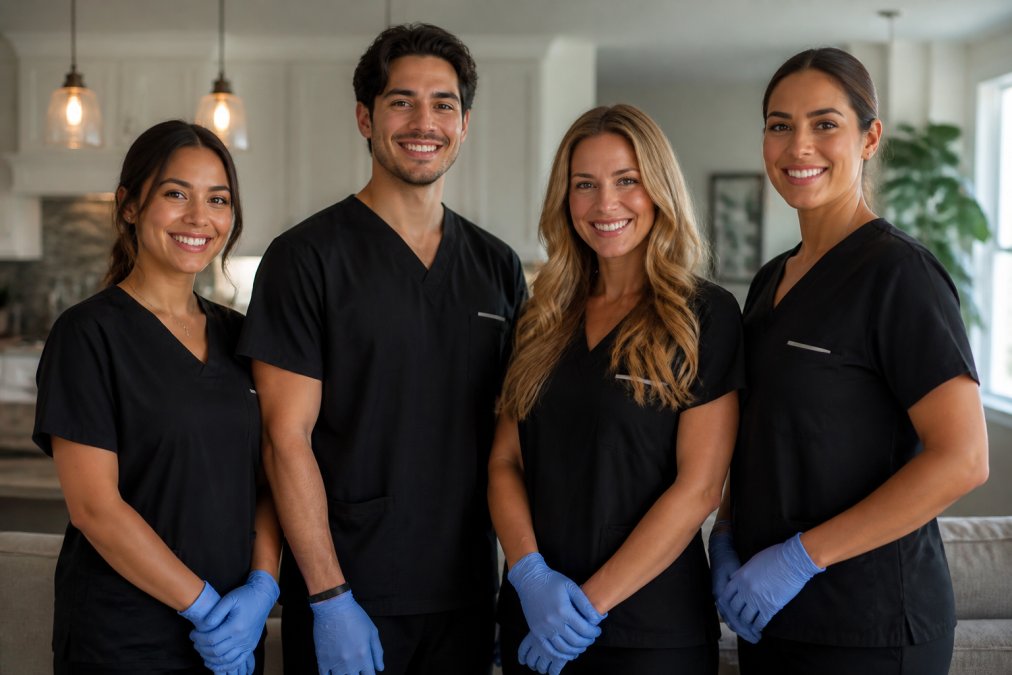
Orange County Labs vs Onsite Phlebotomy Solutions
Table of Contents
- Orange County Labs vs Onsite Phlebotomy Solutions: Which Mobile Blood Draw Service Wins?
- Feature Comparison at a Glance
- How In-Home Blood Draws Work: A Step-by-Step Walkthrough
- Concierge Lab Services Benefits vs Standard Mobile Phlebotomy
- Understanding Mobile Phlebotomy Cost and Billing Transparency
- How to Schedule Mobile Blood Work Without the Hassle
- Specialized Testing and Logistics: Handling the Details
- Which Provider Fits Your Needs?
- Frequently Asked Questions
Last Updated: September 5, 2026
Orange County Labs vs Onsite Phlebotomy Solutions: Which Mobile Blood Draw Service Wins?
Choosing between Orange County Labs vs Onsite Phlebotomy Solutions often comes down to how you value convenience against cost. Both bring the laboratory to your living room, but service models, pricing transparency, and logistical capabilities differ in ways that matter depending on your health needs. At Phlebotomy Experts, we have spent years performing these exact in-home draws and understand the practical differences that guides rarely mention.
Mobile phlebotomy sends a licensed technician to a patient’s home or office for blood collection. The core promise is simple, yet execution varies widely between providers.
Feature Comparison at a Glance
A quick overview reveals that the differences between these providers are not always obvious from their websites. Here is a snapshot of what each service brings to the table:
| Feature | Orange County Labs | Onsite Phlebotomy Solutions | Phlebotomy Experts |
|---|---|---|---|
| Service Model | VIP concierge visits | Scheduled mobile visits | In-home and office concierge |
| Pricing Transparency | Contact for pricing | Starting fee varies by scope | Contact for a personalized quote |
| Specimen Handling | Direct-to-door collection | Collaboration with major reference labs | Delivery to the lab or hospital of your choice |
| Specialized Care | Premium personalized focus | Facility-based draws | DNA testing, IV vitamin therapy, pediatric care |
| Best For | Patients wanting a premium experience | Facilities needing reliable scheduling | Patients seeking flexible, specialized service |
Orange County Labs markets itself as a VIP concierge service for a premium experience without waiting rooms. Onsite Phlebotomy Solutions operates across Southern California with a focus on scheduled reliability for homes and care facilities. Neither advertises the depth of specialized care, such as handling difficult veins in infants or managing clinical trial logistics, where Phlebotomy Experts differentiates itself.
How In-Home Blood Draws Work: A Step-by-Step Walkthrough
A mobile blood draw involves a coordinated chain of preparation, clinical verification, and specimen handling that determines whether results are accurate the first time.
Step 1: The Lab Order Is Transmitted
Your physician or clinic must send a valid lab order specifying the exact tests, required tube types, and special handling instructions. Most providers accept orders via secure fax, encrypted email, or direct interface with major EHR systems like Epic or Cerner. Without a valid order, the phlebotomist cannot legally draw your blood.
Step 2: Scheduling and Pre-Visit Preparation
Once the order is received, you select a time window, typically two to four hours. For fasting tests, schedule the earliest slot. The dispatcher calls the day before to confirm the address, review fasting requirements, and remind you to hydrate, drinking 16 to 24 ounces of water in the hour before the visit makes veins easier to locate.
Step 3: The Phlebotomist Arrives and Verifies Safety
The technician arrives with a sealed kit. Before any needle touches your skin, the phlebotomist confirms your identity using your full name and date of birth against the lab order, and verifies the order against the test requisition to ensure the correct tubes are used, for example, a light blue tube for coagulation studies must be filled to the proper volume or the sample will be rejected.
Step 4: The Venipuncture and Specimen Collection
The draw typically takes under five minutes. The phlebotomist selects an appropriate vein, usually in the antecubital area, and cleanses the site with an alcohol wipe, allowing it to dry to prevent hemolysis (peer-reviewed research). For difficult veins, the technician may use a warm compress or a pediatric butterfly needle. Each tube must be filled to its stated vacuum level and gently inverted the required number of times to mix with the anticoagulant or clot activator.
Step 5: Labeling, Packaging, and Transport
This is the step where errors most often occur. Immediately after collection, the phlebotomist labels each tube at the bedside with your name, date of birth, collection time, and their initials. Tubes are placed in a leak-proof biohazard bag and transferred to a cooler or transport box. For temperature-sensitive tests, such as ammonia, which must be placed on ice immediately, or cold agglutinins, which must be kept at body temperature, the technician uses a temperature-controlled transport system with a data logger (the CDC).
Step 6: Processing and Result Delivery
The laboratory receives your samples, logs them, and runs the requested tests. Turnaround times vary: a complete blood count may be available within hours, while genetic testing or specialized cultures can take several days. Results are transmitted electronically to your ordering physician. Most mobile services do not provide results directly to patients, that communication flows through your doctor’s office.
Pro Tip
Ask the dispatcher who performs the specimen transport. A dedicated medical courier with proper handling protocols reduces the risk of sample degradation, which is a common cause of inconclusive results. Also ask whether the service uses temperature-monitored transport for sensitive tests, this is a marker of a professionally run operation.
Ask the dispatcher who performs the specimen transport. A dedicated medical courier with proper handling protocols reduces the risk of sample degradation, which is a common cause of inconclusive results. Also ask whether the service uses temperature-monitored transport for sensitive tests, this is a marker of a professionally run operation.
Concierge Lab Services Benefits vs Standard Mobile Phlebotomy
Concierge lab services benefits extend beyond not driving to a clinic. The primary advantage is eliminating waiting rooms, which reduces exposure to other illnesses and lowers stress for patients with needle anxiety.
Standard mobile phlebotomy offers similar convenience, but the concierge model typically adds flexibility: evening or weekend appointments, a longer visit window for difficult draws, and a more personalized approach to patient comfort.
A common mistake is assuming all mobile services handle complex cases equally. Concierge providers frequently see patients with a history of difficult draws, so their technicians develop sharper skills over time. This level of care is particularly valuable for expectant mothers needing DNA gender testing or elderly patients with fragile veins.
Understanding Mobile Phlebotomy Cost and Billing Transparency
Mobile phlebotomy cost is the biggest source of confusion for patients, and most provider websites make it worse by hiding pricing behind a “Contact Us” form. The total cost is split into two separate charges: the visit fee (for the technician’s time and travel) and the laboratory testing fee (for processing your samples).
The Visit Fee: What You Are Actually Paying For
The visit fee covers the phlebotomist’s travel time, supplies, and clinical skill required to perform the draw in a non-clinical setting (the NIH). It typically ranges from $50 to $150 per visit, depending on location, time of day, and whether the service charges a flat rate or per-mile travel fee. Some “VIP concierge” providers charge a premium exceeding $200 per visit.
The Laboratory Testing Fee: The Second Bill You Must Expect
The visit fee rarely covers the actual laboratory analysis. After collection, samples are sent to a reference laboratory, often a major national lab like Quest Diagnostics or Labcorp, or a regional hospital lab, which bills separately for the tests. Your total out-of-pocket cost is the sum of two invoices, so ask for both before booking.
How to Verify Insurance Coverage Before You Book
This is the step most patients skip, and it is the most common source of billing surprises. Here is a practical checklist to verify coverage before you schedule:
-
Call your insurance plan’s member services line. The number is on the back of your insurance card. Ask two specific questions: “Is the mobile phlebotomy service a participating in-network provider?” and “Does my plan cover in-home blood draw visits, or only draws performed at a designated lab facility?” Some plans cover the lab testing portion but classify the mobile visit fee as out-of-network or non-covered.
-
Ask the mobile service for their NPI number and tax ID. This is the identifier your insurance company needs to check network status. A reputable service will provide this without hesitation. If a provider cannot or will not give you this information, that is a red flag.
-
Request a written estimate. Before the visit, ask the mobile service to provide a written breakdown of the visit fee, any travel surcharges, and the expected laboratory charges based on your physician’s lab order. Providers that cannot produce this estimate are likely to add fees later.
-
Confirm the lab is in-network. Even if the mobile service is in-network, the reference lab they use may not be. Ask which lab will process your samples and verify that lab’s network status with your insurer. An out-of-network lab can result in a bill that is significantly higher than the in-network rate.
-
Ask who submits the claim. Some mobile services bill your insurance directly for the visit fee, while others require you to pay upfront and submit a claim yourself for reimbursement. The laboratory testing fee is almost always billed separately by the lab. Knowing this in advance prevents the shock of a claim denial weeks later.
The Self-Pay Option: When It Makes Sense
If you have a high-deductible health plan or the mobile service is out-of-network, self-pay may be more predictable. Many reference labs offer discounted self-pay rates, and some mobile services bundle the visit fee with a negotiated lab rate. For a routine draw, this bundled rate often ranges from $100 to $250.
Watch Out
Be wary of providers who quote a flat rate without asking about your insurance or the number of tests ordered. Complex orders with multiple tubes can trigger additional handling fees that appear only on your final invoice. Always request the full cost breakdown in writing before the technician arrives.
Be wary of providers who quote a flat rate without asking about your insurance or the number of tests ordered. Complex orders with multiple tubes can trigger additional handling fees that appear only on your final invoice. Always request the full cost breakdown in writing before the technician arrives.
The Transparency Test: What to Ask Before You Commit
Before booking, put the provider to a simple transparency test:
- “What is your exact visit fee, and does it include travel time?”
- “Which reference laboratory will process my samples, and is that lab in-network with my insurance?”
- “Will you submit the claim to my insurance, or do I need to file it myself?”
A provider that answers all three clearly and in writing demonstrates a level of billing transparency that is rare in this industry. A provider that hedges, deflects, or tells you to “call the lab” is likely to leave you with an unexpected bill.
How to Schedule Mobile Blood Work Without the Hassle
Scheduling mobile blood work should take minutes, not days of phone tag. The most efficient providers offer online booking portals where you select your service area, choose a time window, and upload your physician’s lab order.
If you require fasting blood work, schedule for early morning. For patients managing chronic conditions, confirm the provider can accommodate recurring appointments. Facilities like nursing homes should ask about capacity for multiple residents in a single visit.
Prepare your space before the technician arrives: clear a table or counter area, have your insurance card and identification ready, and ensure you are well-hydrated. The entire visit typically lasts 15 to 30 minutes.
Specialized Testing and Logistics: Handling the Details
Not all blood tests are routine, and the logistics of specialized testing can overwhelm a general mobile service. Providers must handle specimen integrity carefully, particularly for tests requiring immediate processing or specific temperature controls.
Specialized testing includes DNA gender testing for expectant mothers, which demands careful handling to prevent contamination, and therapeutic phlebotomy for patients requiring regular blood removal. Some services also support biometric screening for corporate wellness programs or clinical trial specimen collection, which requires strict adherence to study protocols.
A phlebotomist who performs hundreds of standard draws a month may lack experience with the precision required for specialized testing. When booking, ask whether the technician has specific experience with your type of test. For autologous serum eye drops or IV vitamin therapy, you need a provider with established protocols for handling these sensitive biological materials.
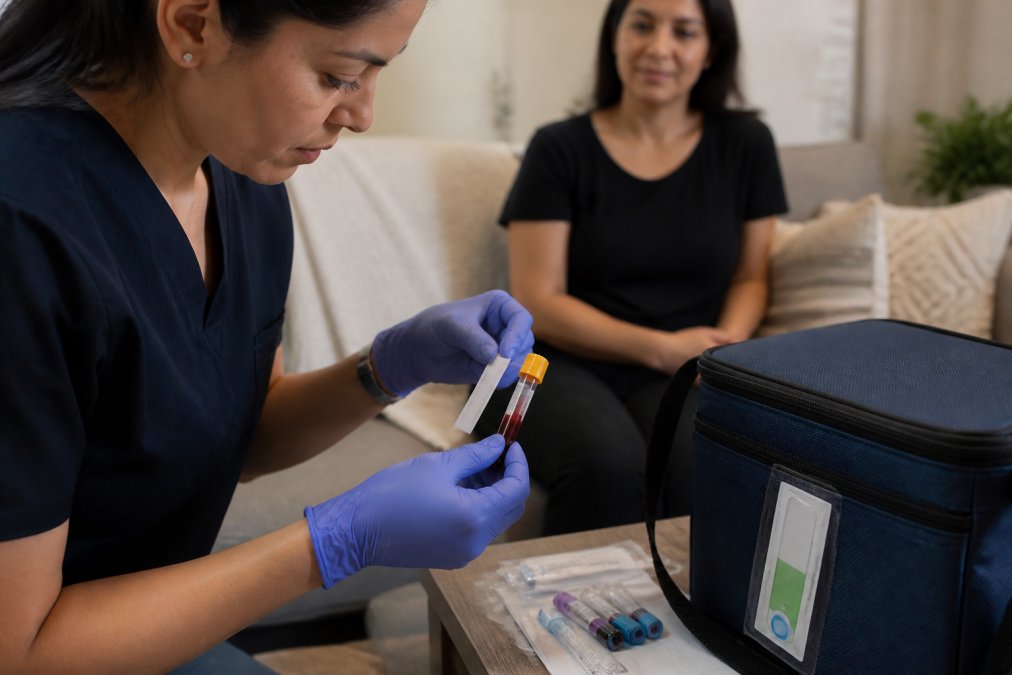
Turnaround time for results depends on the testing laboratory, not the mobile service. A provider with strong relationships with major reference labs can often expedite processing, but the phlebotomist’s job ends at specimen delivery.
Which Provider Fits Your Needs?
The answer depends on your priorities. Orange County Labs suits patients who want a premium, concierge experience and are comfortable requesting pricing directly. Onsite Phlebotomy Solutions serves those who need reliable scheduling across Southern California, particularly for facility-based draws.
For most patients, however, the deciding factor is the breadth of service and flexibility to handle specialized needs. Phlebotomy Experts stands out because we deliver specimens to the laboratory or hospital of your choice, a level of control neither other service advertises. Our licensed technicians are experienced with infants, elderly patients, and those with difficult veins, and we offer specialized care including DNA gender testing and IV vitamin therapy.
Choosing between mobile phlebotomy providers requires balancing cost, convenience, and clinical capability. The right service should make you feel safe and cared for, not like another appointment to rush through. At Phlebotomy Experts, our licensed, experienced technicians bring the laboratory to your door with a gentle bedside manner and prompt delivery of results to your physician. Whether you need a routine draw, DNA gender testing, or specialized care for a family member, we handle the details with professionalism. Call Phlebotomy Experts today to schedule your in-home blood draw and experience healthcare that comes to you.
Frequently Asked Questions
What should I look for when choosing a mobile phlebotomy service?
Confirm the company employs licensed, experienced phlebotomists and can handle difficult veins or needle phobia. Ask about specimen handling and transport to ensure your samples arrive at the lab intact. Verify the service area covers your location and that scheduling is flexible enough for your routine. Check whether they work with your preferred laboratory.
How much does a mobile phlebotomist charge?
Mobile phlebotomy cost varies by provider and service scope. Some companies advertise a starting fee, while others require a direct quote based on your location and the complexity of the draw. Always ask for a full breakdown before booking, and clarify whether the visit fee is separate from laboratory testing charges.
What is the difference between concierge lab services and standard mobile phlebotomy?
Both bring a phlebotomist to your location, but concierge lab services typically add a higher level of personalization and coordination. Concierge providers often offer specialized draws, such as DNA gender testing, and manage logistics like delivering specimens to the lab of your choice. Standard mobile services focus primarily on routine blood collection and transport.
Are mobile phlebotomy services covered by insurance?
Coverage depends on your individual insurance plan and the reason for the blood draw. Many plans cover the laboratory testing portion but may not cover the convenience fee for an in-home visit. Contact your insurance provider before scheduling to understand what is billed as a medical service versus a concierge fee.
How are specimens handled during mobile phlebotomy transport?
Reputable mobile phlebotomy services follow strict protocols for specimen collection, labeling, and temperature control. After the draw, samples are packaged and handed to a medical courier for transport to the clinical laboratory. This chain of custody preserves sample integrity and keeps turnaround time for results predictable.
This article was written using GrandRanker
