A qualified phlebotomist holds a current certification, completed a formal training program, and can draw blood safely on the first try. Anyone can pass a written test; not everyone can find a vein on a dehydrated patient at 6 a.m.
Certifications and Licensure That Matter
Certification proves baseline competence. Several national bodies offer it, each carrying weight in different settings.
ASCP (American Society for Clinical Pathology): widely recognized in hospitals
NHA (National Healthcareer Association): common in outpatient clinics
AMT (American Medical Technologists): accepted across most clinical settings
NCCT (National Center for Competency Testing): often seen in physician offices
Skills Beyond the Needle
Technical skill is table stakes. Standout phlebotomists bring more:
Calm communication with anxious patients
Steady hands with pediatric and geriatric patients
Knowledge of infection control and sterile technique
Familiarity with specimen collection order of draw
A common mistake is hiring for speed and ignoring bedside manner. Patients remember how they felt, not how fast you finished.
Where to Find Professional Phlebotomists
The best candidates come from three places: job boards, staffing agencies, and training program networks. Job boards cast a wide net but flood you with unqualified applicants. Staffing agencies vet for you but cost more. Training programs give you fresh graduates who need mentoring.
Job Boards and Staffing Agencies
General job boards work for high-volume hiring. Niche medical boards work better for specialized roles.
Indeed and LinkedIn: large candidate pools, mixed quality
ASCP Career Center: certified candidates only
Allied health staffing agencies: pre-screened, higher fees
Travel phlebotomy agencies: short-term coverage for labs and clinics
Training Programs and Professional Networks
Local phlebotomy programs are goldmines. Instructors know which students show up on time and which ones panic under pressure.
How to Verify Phlebotomist Certification and Credentials
Most hiring guides stop at “check the certification.” That’s useless without knowing where to check, what a valid record looks like, and how to catch the two failure modes that hurt patients: a credential never issued, and one that’s real but expired.
Step 1: Match the Credential to the Issuing Body
Ask for the certification number, issuing organization, and date of issue, then use that organization’s own verification tool:
ASCP (American Society for Clinical Pathology), use the ASCP credential verification lookup; it returns credential status and expiration.
NHA (National Healthcareer Association), use the NHA certification verification tool; it confirms whether the credential is current.
AMT (American Medical Technologists), use the AMT credential verification directory.
NCCT (National Center for Competency Testing), use the NCCT verification service.
Step 2: Confirm Status, Not Just Existence
A result that says “issued” is not the same as “active.” Check three fields on every record:
Status, active, lapsed, or revoked
Expiration date, most phlebotomy credentials renew on a multi-year cycle and require continuing education units (CEUs) to renew
Name match, maiden names, hyphenated names, and middle-name omissions are the most common reason a legitimate record looks fake
Watch Out Skipping verification is the fastest way to hire someone who can’t legally draw blood. Fake or expired credentials put patients at risk and expose your business to liability.
Step 3: Verify State Licensure Separately
Certification is issued by a private body; licensure by a state. They are not the same, and a national certification does not substitute for a state license where one is required.
Step 4: Run a Technical Competency Check
Credentials prove someone passed a test, not that they can draw blood on a hard stick. This is the step competitors skip.
Build a short practical screen:
Order of draw, ask the candidate to recite the order for multiple tubes and explain why it matters (additive carryover between tubes).
Tube selection, give them a scenario (coagulation panel, complete blood count, glucose) and ask which tubes they’d pull.
Difficult draw, ask them to walk through their approach to a dehydrated patient, a pediatric patient, and a patient on anticoagulants.
Needle and site selection, ask how they choose gauge and site, and what they do after two failed attempts.
Specimen handling, ask how they label, store, and transport specimens, and how they handle a hemolyzed sample.
Step 5: Document the File
Keep a verification record for every hire: the portal result, the date checked, the expiration date, and a copy of any state license. If an inspector asks for training and credential records you can’t produce, that’s a problem you can’t fix after the fact.
Pro Tip Ask candidates to bring their own tourniquet and supplies to the practical test. The ones who do are usually the ones who take the work seriously.
::: (Source: Bureau of Labor Statistics’ employment projections)
Red Flags That Warrant a Second Look
A certification number that returns no record
A credential from an organization you can’t independently confirm
A resume that lists “certified” with no body, number, or date
A candidate who can’t explain order of draw or tube selection
A state license that doesn’t match the name on the certification
None of these is automatically disqualifying. All of them are reasons to slow down before you make an offer.
Screening Candidates: Resume, Interview, and Practical Evaluation
Resume screening comes first. Look for specifics: number of sticks performed, settings worked in, and patient populations served. Vague resumes usually mean vague experience.
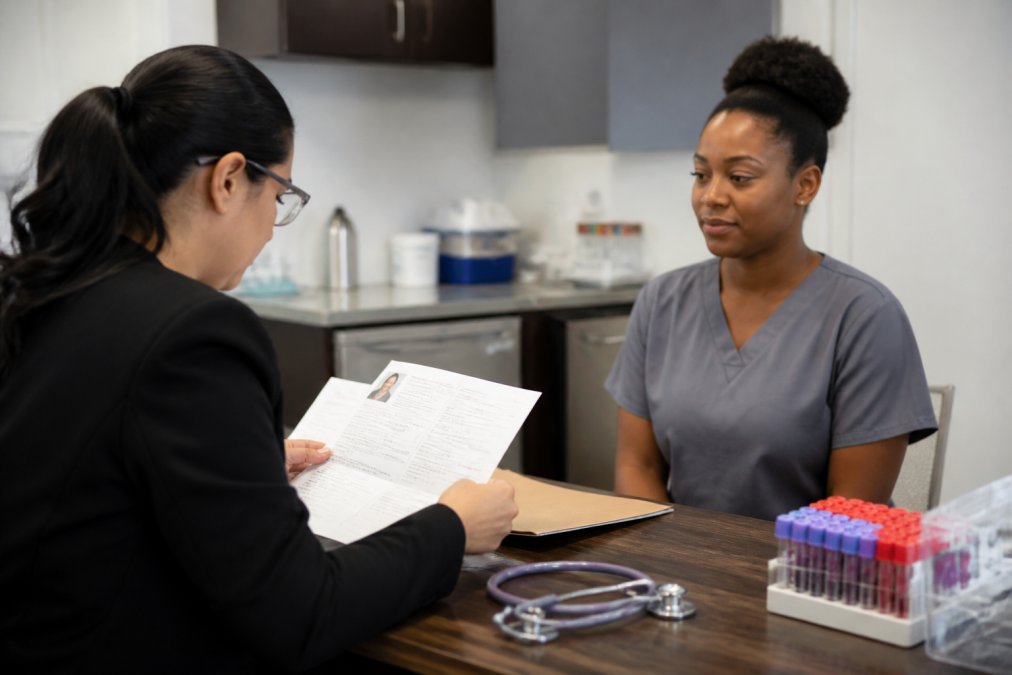
Hiring manager reviewing credentials and resumes of professional phlebotomists at a desk with medical supplies
During the interview, ask behavioral questions:
“Tell me about a time you missed a vein. What did you do next?”
“How do you handle a patient who faints during a draw?”
“Walk me through your order of draw for multiple tubes.”
At Home Blood Draw Services: What to Look For
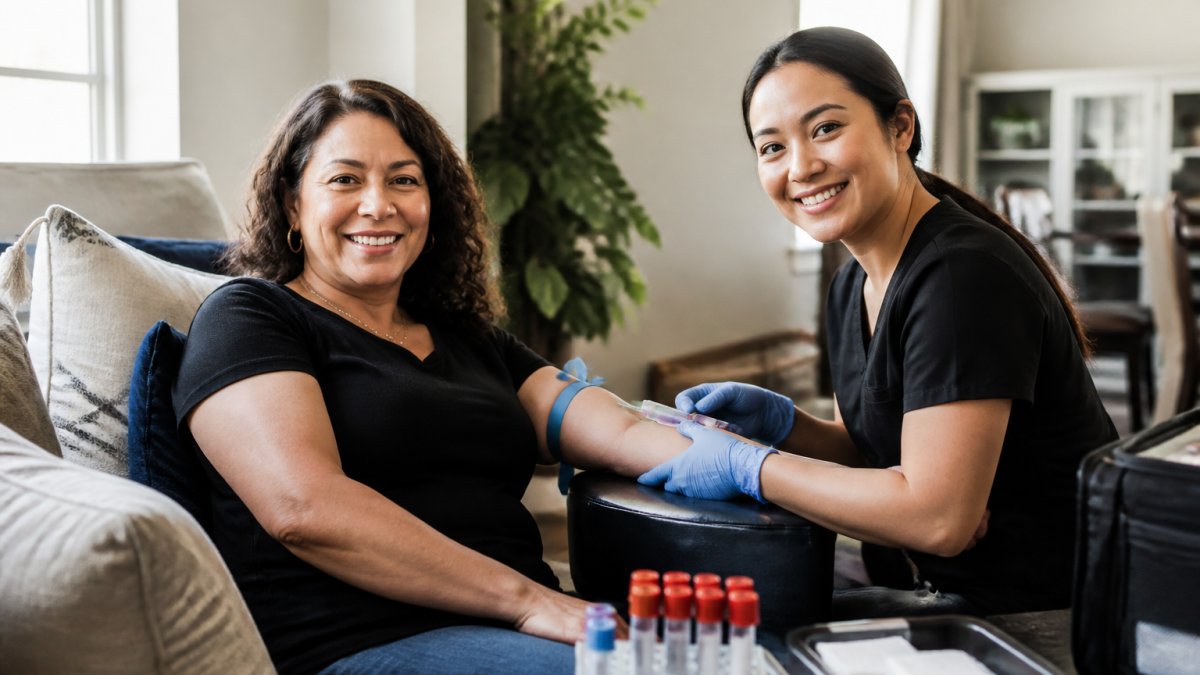
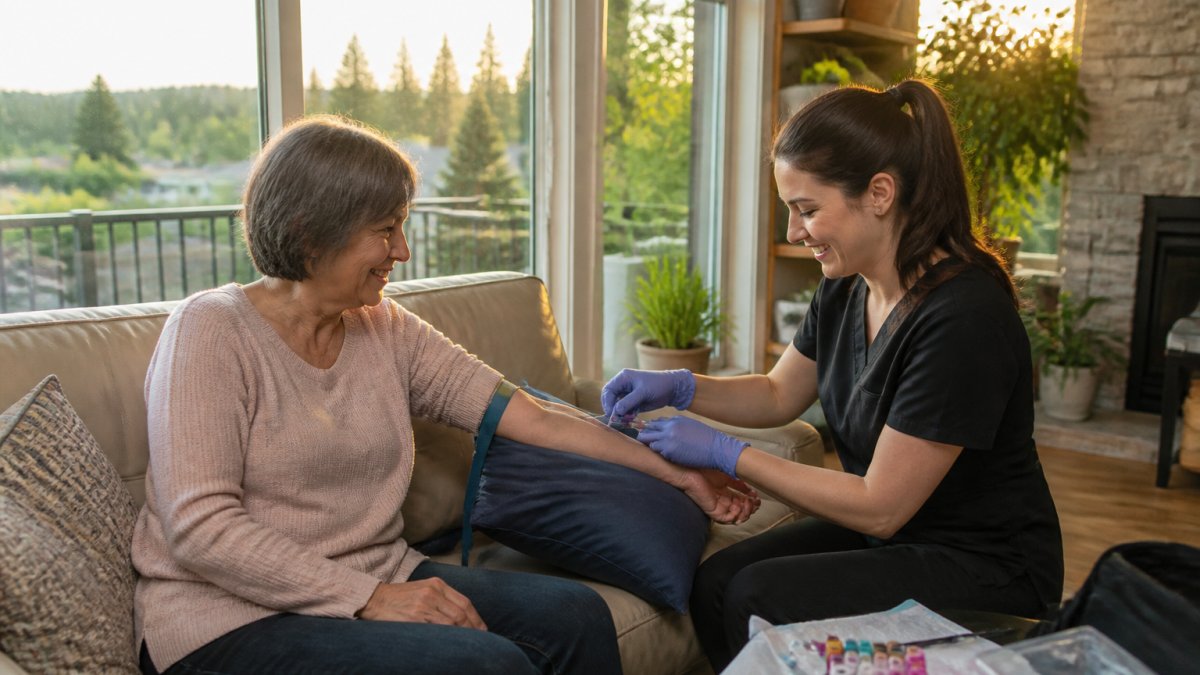
At home blood draw services require different vetting than clinic-based hiring. Your phlebotomist enters someone’s home, often alone, often with a patient who has mobility issues or needle phobia.
Transport protocol: knows how to handle specimens safely
Patient care: gentle with anxious or pediatric patients
Compliance awareness: understands HIPAA compliance in a home setting
Compliance and Legal Considerations When Hiring Phlebotomists
Compliance is where most hiring managers get caught off guard. Phlebotomists handle protected health information, so HIPAA compliance training is mandatory, not optional.
Key legal points to cover:
HIPAA: every hire needs documented privacy training
OSHA bloodborne pathogens standard: required training and exposure control plan
State scope of practice: confirms what a phlebotomist can and cannot do
Malpractice insurance: some states require it, others don’t
Accreditation requirements: check if your lab or facility needs specific credentials
Salary Benchmarking and Compensation Packages
Pay is the single biggest lever for attracting a qualified phlebotomist, and most hiring guides handle it with a shrug. A vague “pay competitively” line loses candidates to the clinic down the street that posted a real number. Here’s how to set a number you can defend.
Start With Primary-Source Data
Use the Bureau of Labor Statistics Occupational Outlook Handbook for current wage data, and pull the figures for your specific metropolitan area rather than the national average. National averages hide huge regional spreads, a phlebotomist wage in a high-cost metro can run well above the national median, and a rural area can run well below it (Phlebotomists).
Adjust for Setting and Shift
The same credential commands different pay depending on where the work happens:
Setting
Pay Structure
Common Perks
Hospital lab
Hourly, shift differential
Health insurance, PTO
Outpatient clinic
Hourly, predictable schedule
Standard benefits
Mobile/home visit
Hourly plus per-visit
Mileage, flexible hours
Staffing agency
Hourly, contract
Higher rate, no benefits
Price the Mobile Model Correctly
Mobile and at-home phlebotomy is where compensation gets mishandled. A per-visit rate looks generous until you do the math on unpaid drive time.
A workable mobile structure usually combines:
A base hourly rate for scheduled hours
A per-visit or per-draw component for completed draws
Mileage reimbursement at the federal standard rate, or a fuel stipend
Paid travel time between appointments, or a route-density bonus
Build the Package, Not Just the Rate
Hourly rate is the headline, but the offer that wins is the whole package. The levers that move candidates most:
Schedule control, set shifts, no mandatory overtime, or a four-day week
Benefits, health coverage, PTO, and a retirement match matter more to career phlebotomists than a marginal hourly bump
CEU support, paying for continuing education units and renewal fees removes a real out-of-pocket cost and signals you want them to stay certified
Path to advancement, lead phlebotomist, trainer, or lab technician roles give candidates a reason to stay past the first year
Sign-on or retention bonus, useful in tight markets, but only if it’s structured so it doesn’t create a revolving door
Benchmark Before You Post, Not After
Benchmark before the listing goes live. A posting below the local market will sit unfilled, and the candidates who apply will be the ones other employers passed on.
A simple process:
Pull the BLS figure for your metro area
Record posted ranges from at least five local listings for the same title
Adjust up or down for shift, setting, and travel requirements
Add the non-wage levers you can actually offer
Post a range, not a mystery
A competitive offer is a defensible number plus a package that answers the candidate’s real question: is this job worth leaving the one I have? Benchmark locally, price travel and shift correctly, and lead with the levers you control.
Conclusion
Hiring the right phlebotomist takes more than a resume scan and a handshake. You need verified credentials, a real skills test, and a clear understanding of your state’s legal rules.
Frequently Asked Questions
What credentials should I look for in a professional phlebotomist?
Look for certification from a recognized body such as ASCP, NHA, or AMT. Verify that the certification is current and that the phlebotomist has completed an accredited training program. Also check for state licensure where required. A qualified professional phlebotomist should have hands-on experience with venipuncture, specimen collection, and infection control. Ask about continuing education to ensure they stay current with safety protocols and HIPAA compliance.
How do I verify a phlebotomist’s certification status?
Contact the certifying organization directly or use their online verification tool. Most major certifying bodies maintain a public registry where you can confirm a phlebotomist’s credentials by name or certification number. Request a copy of their certificate and check the expiration date. For phlebotomist certification verification, also confirm any state licensure requirements, as some states mandate additional credentials beyond national certification.
Are mobile phlebotomy services regulated?
Mobile phlebotomy services must comply with state and federal regulations, including CLIA (Clinical Laboratory Improvement Amendments) if they perform testing, and HIPAA for patient privacy. Some states require mobile phlebotomists to hold the same licensure as those working in clinical settings. When evaluating at home blood draw services, ask about their compliance protocols, how they handle specimen transport, and whether their staff are licensed and insured.
What is the difference between a mobile phlebotomist and a clinical lab technician?
A mobile phlebotomist travels to patients to collect blood samples, focusing on venipuncture and specimen collection. A clinical lab technician works in a diagnostic laboratory, performing tests on those samples. Mobile phlebotomists need strong patient interaction skills and the ability to work independently. Clinical lab technicians require additional training in laboratory testing and sample processing. Both roles are essential in the healthcare professional pipeline.