Orange County Labs alternative for professionals: compare mobile phlebotomy, concierge lab testing, pricing, turnaround times and HIPAA compliance. Get.

Is At-Home DNA Gender Testing Private? HIPAA Facts
Table of Contents
- How At-Home DNA Gender Testing Works
- Early DNA Gender Testing Accuracy: What the Evidence Shows
- HIPAA Compliance for At-Home DNA Testing: What Protects You
- Benefits of Clinical Phlebotomy for Gender Testing
- At-Home vs. Clinical Collection: Privacy, Accuracy, and Cost
- Troubleshooting Sample Collection and Handling
- Regulatory and Legal Landscape for At-Home DNA Testing
- Frequently Asked Questions
Last Updated: September 10, 2026
How At-Home DNA Gender Testing Works
Is at-home DNA gender testing private? Privacy depends almost entirely on which company processes your sample, not on the kit on your counter. At-home DNA gender testing is a non-invasive prenatal screening method that analyzes cell-free fetal DNA in a maternal blood sample for Y-chromosome markers. This guide from Phlebotomy Experts breaks down what protects your data, where the gaps are, and how to choose a collection method you can trust.
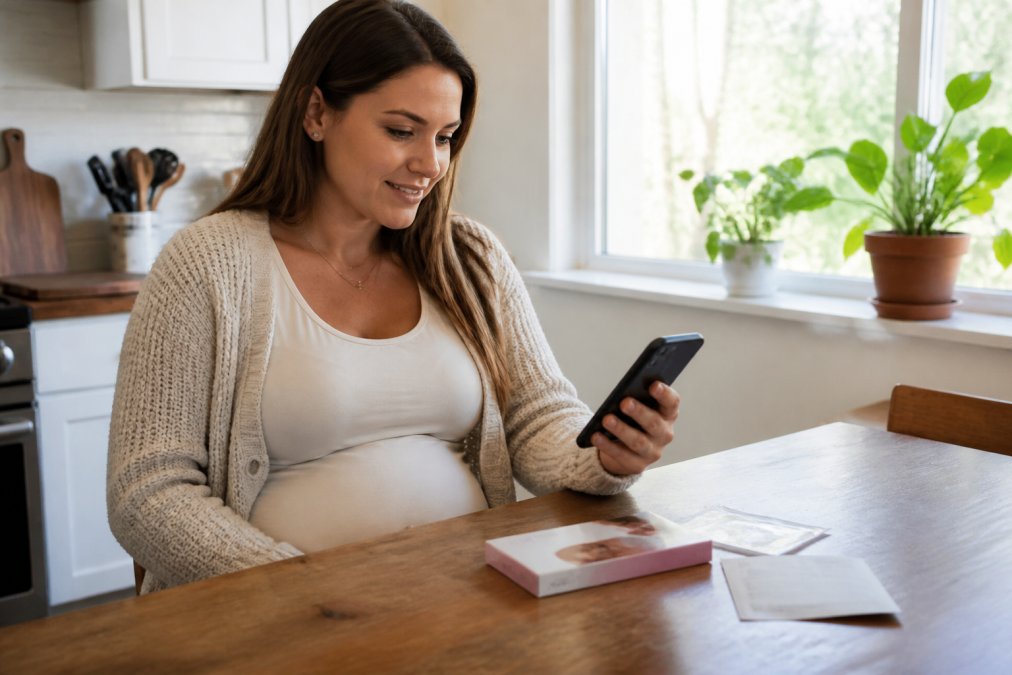
The process starts with a finger-prick blood sample, typically collected between 7 and 10 weeks of gestational age. That sample contains maternal blood and small fragments of fetal sex DNA. Because the test looks for specific genetic markers rather than imaging the fetus, it is DNA-based and non-invasive.
From Finger-Prick to Lab: The Sample Journey
Once you collect the sample at home, you ship it to a laboratory processing facility, usually via overnight shipping to slow degradation. The lab runs chromosomal analysis to detect Y-chromosome sequences: presence typically indicates a male fetus, absence a female fetus.
Turnaround time varies by lab, often between a few business days and two weeks. What matters for privacy is the chain of custody: every handoff between you, the carrier, and the lab depends on the company’s privacy policy and data handling practices.
Watch Out
The biggest mistake with at-home kits is assuming “discreet packaging” equals “private data handling.” Packaging hides the box from your neighbors. It says nothing about whether your genetic data gets shared with third-party marketers or research partners. Read the privacy policy before you swab or prick.
The biggest mistake with at-home kits is assuming “discreet packaging” equals “private data handling.” Packaging hides the box from your neighbors. It says nothing about whether your genetic data gets shared with third-party marketers or research partners. Read the privacy policy before you swab or prick.
Early DNA Gender Testing Accuracy: What the Evidence Shows
Early DNA gender testing accuracy is high when the test is done at the right gestational age and the lab receives enough fetal DNA. The critical variable is fetal fraction, the percentage of cell-free DNA in your blood that comes from the placenta rather than from you.
Timing, Fetal Fraction, and False Results
Fetal fraction rises as pregnancy progresses. Test too early and there may not be enough fetal DNA to detect, producing a false negative for a male fetus. A false positive is rarer but possible, often from contamination during sample collection or vanishing twin pregnancies.
A common mistake is testing at the earliest advertised window without confirming dating. If your gestational age is off by a week, you may fall below the reliable threshold. A clinical validation-backed lab will flag low fetal fraction and ask for a redraw rather than issue a shaky result.
Pro Tip
Ask the lab whether it reports fetal fraction on your result. A lab that shows you this number is telling you how confident the result is. A lab that hides it is asking you to trust a black box.
Ask the lab whether it reports fetal fraction on your result. A lab that shows you this number is telling you how confident the result is. A lab that hides it is asking you to trust a black box.
HIPAA Compliance for At-Home DNA Testing: What Protects You
HIPAA compliance for at-home DNA testing is where the conversation gets murky. The Health Insurance Portability and Accountability Act governs how covered entities, most healthcare providers, labs, and clearinghouses, handle protected health information (PHI). A direct-to-consumer kit sold outside a clinical relationship may not fall under HIPAA at all, and that gap is the most important thing to understand before you buy.
The Covered-Entity Test
HIPAA applies when three conditions line up: the entity is a covered entity (or a business associate acting for one), the information is PHI, and it is transmitted or maintained electronically. A licensed phlebotomist drawing blood for a physician-ordered test sent to a clinical setting lab generally sits inside that chain. Buy a kit off a shelf and mail it yourself, and you are usually dealing with a consumer genetics company that is not a covered entity, so HIPAA’s Privacy, Security, and Breach Notification Rules do not automatically apply.
According to U.S. Department of Health and Human Services guidance on HIPAA and health apps, many direct-to-consumer health tools operate outside HIPAA’s scope. That leaves three other layers doing the work: the company’s own privacy policy, state genetic privacy statutes, and federal consumer-protection law.
De-Identification Is Not the Same as Anonymity
Kit marketing often claims your sample is “de-identified” or “anonymized.” Under the HIPAA Privacy Rule, de-identification means either the Safe Harbor method (stripping 18 identifiers) or Expert Determination. Neither guarantees anonymity: a full genotype can be matched to a relative, and supposedly de-identified genomic datasets have been re-identified. Ask what standard a company used and whether it retains the linking key.
GINA and Its Limits
The Genetic Information Nondiscrimination Act of 2008 (GINA) prohibits health insurers and employers from discriminating based on genetic information. But GINA does not cover life, disability, or long-term care insurance, and it does not cover the direct-to-consumer testing company itself, it restricts insurers and employers, not what the lab can sell or share.
State Genetic Privacy Laws Fill Some Gaps
Because HIPAA and GINA leave holes, states have stepped in. National Conference of State Legislatures genetic privacy overview tracks how legislatures handle genetic data differently. A few patterns matter for at-home testing:
- Some states treat genetic information as sensitive data requiring opt-in consent before disclosure.
- Some require destruction of the sample after testing unless the consumer consents to retention.
- Some extend protections to insurance categories GINA does not reach.
Two buyers of the same kit can therefore have different legal protections depending on where they live. If you want to know your actual footing, look up your state’s genetic privacy statute, not just the kit’s privacy policy.
The FTC Has Entered the Conversation
In 2023, the Federal Trade Commission brought enforcement actions against consumer genetic testing companies over how they handled sensitive health and genetic data, including allegations of unexpected third-party sharing. The FTC’s Health Breach Notification Rule, applied to certain health apps and connected devices, is another lever outside HIPAA. Even when HIPAA does not apply, the FTC can act on deceptive data-sharing claims.
What to Ask Before You Buy
| Question | Why It Matters |
|---|---|
| Is the lab a covered entity or business associate? | Determines whether HIPAA applies at all |
| What de-identification standard is used? | Safe Harbor and Expert Determination are not equal |
| Is the sample destroyed after testing? | Retention is the biggest long-term privacy risk |
| Does the policy allow sharing with research partners? | Most consumer kits do, often by default |
| Does your state extend protections beyond GINA? | State law may cover life or disability insurance |
A secure portal for results and a clear data-retention policy are minimum expectations. A clinical setting draw ordered through your physician gives you a clearer legal footing than a kit with no clinical relationship attached, because HIPAA, not just a privacy policy, is doing the work.
Benefits of Clinical Phlebotomy for Gender Testing
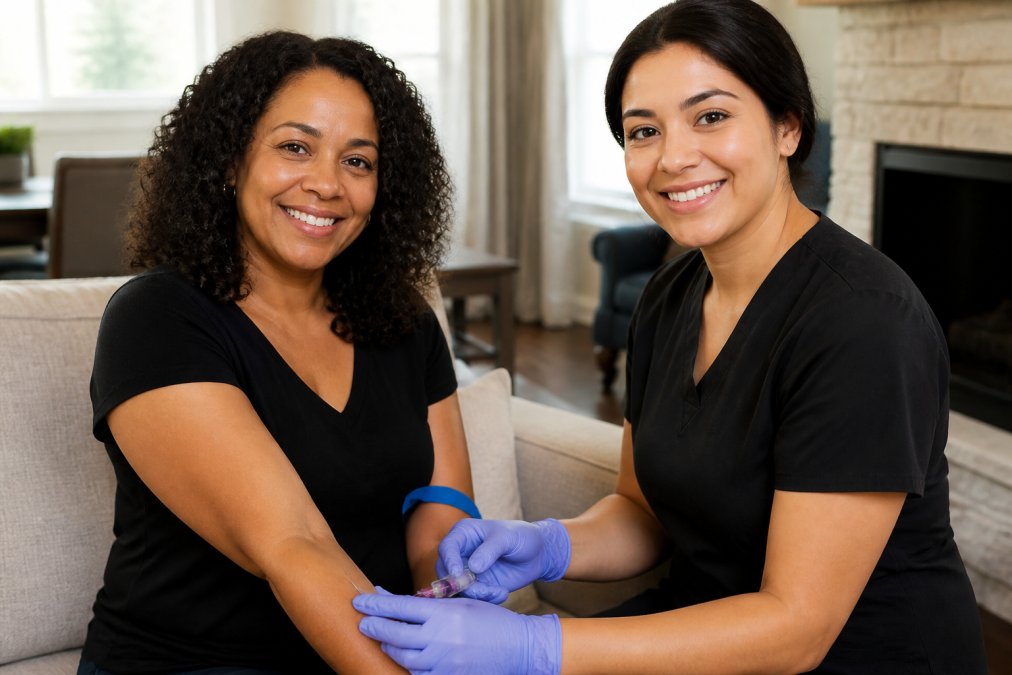
The benefits of clinical phlebotomy for gender testing come down to sample integrity and accountability. A trained professional drawing blood in a clinical setting or at your home reduces the contamination risks that plague self-collected finger-prick samples.
Phlebotomy Experts sends licensed phlebotomists to your home or office, draws the sample, and delivers it to the laboratory or hospital you choose. The blood-based sample moves through a documented chain of custody rather than sitting in a mailbox. For expectant mothers with needle phobia or difficult veins, a single clean draw also avoids the redraw cycle that delays results.
Test reliability improves when the sample is handled correctly from the moment it leaves your arm, the practical argument for professional collection that kit marketing never addresses.
At-Home vs. Clinical Collection: Privacy, Accuracy, and Cost
Choosing between home-use kits and professional collection is a trade-off between convenience, privacy, and control. Neither is universally better, it depends on how much you value a documented chain of custody versus a kit you never have to schedule around.
- Privacy: At-home kits feel more discreet, but your genetic data may sit with a company outside HIPAA. Professional collection routes data through your provider.
- Accuracy: Clinical draws reduce contamination and low-fetal-fraction errors, especially with difficult veins.
- Convenience: Kits win on scheduling. Mobile phlebotomy wins on not having to leave your home at all.
- Cost: Pricing for both paths depends on the lab, the test, and your location. Check with your provider and the lab directly for current figures rather than trusting a kit’s advertised price.
Key Takeaway
Privacy is not about whether a van is visible from the street. It is about who holds your genetic data, how long they keep it, and whether federal health privacy law covers them. Ask that question before you buy any kit.
Privacy is not about whether a van is visible from the street. It is about who holds your genetic data, how long they keep it, and whether federal health privacy law covers them. Ask that question before you buy any kit.
Troubleshooting Sample Collection and Handling
Most failed at-home tests trace back to collection errors, and the fix is usually mechanical. A weak finger-prick produces too little blood, and a sample that sits too long before overnight shipping degrades in transit.
- Not enough blood: Warm your hands first, hydrate, and use the lancet on the side of the fingertip, not the pad.
- Clotted sample: Follow the kit’s mixing instructions exactly. Inverting the tube the wrong number of times ruins the sample.
- Delayed shipping: Mail the sample on a day it will not sit in a facility over a weekend. A stalled sample is a wasted test.
- Contamination: Do not touch the collection card or tube interior. Skin oils and debris can trigger a false positive or an unreadable result.
A false negative from a low-fetal-fraction sample is the most common early-testing failure. If your result comes back inconclusive, that is usually the lab being honest, not the test being broken.
Regulatory and Legal Landscape for At-Home DNA Testing
The regulatory and legal landscape for at-home DNA testing is a patchwork, with no single agency overseeing the whole consumer path. Knowing which framework applies tells you whether you are getting a medical result or a recreational one, a distinction kit marketing blurs on purpose.
CLIA: The Lab-Side Framework
Clinical laboratories in the United States that test human specimens for health assessment operate under the Clinical Laboratory Improvement Amendments of 1988 (CLIA), administered by CMS with technical support from the CDC and FDA. A CLIA-certified lab must meet quality standards for personnel, proficiency testing, and quality control. A CLIA number means the lab is regulated, but CLIA certifies the lab, not the specific test. A lab can be CLIA-certified and still run a test never reviewed by the FDA.
FDA and Laboratory-Developed Tests
Most at-home gender tests are laboratory-developed tests (LDTs), tests designed, manufactured, and used within a single lab. Historically, the FDA has exercised enforcement discretion over most LDTs, meaning it has generally not required premarket review. That is why a kit can reach your mailbox without the kind of clinical trial evidence a prescription diagnostic would need. According to U.S. Food and Drug Administration information on direct-to-consumer genetic tests, the agency has moved to bring certain direct-to-consumer tests under review, but coverage is not uniform, and the LDT oversight picture has been shifting through rulemaking and litigation. The practical takeaway for a consumer: a kit’s “lab-certified” badge usually means CLIA, not FDA clearance.
Recreational vs. Diagnostic: Why the Label Matters
A test marketed as “for informational or entertainment purposes only” is not a diagnostic test: it is not intended to inform medical care, and its result should not drive clinical decisions. A diagnostic test, ordered by a physician, run in a clinical setting, and reported with clinical validation, carries different legal and clinical weight. The same Y-chromosome marker can be measured in both, but only one is a medical finding.
Why does this matter for privacy? Because the regulatory category often determines which privacy rules attach. A recreational kit sold direct to a consumer typically sits outside HIPAA. A diagnostic test ordered through your provider generally sits inside it. The label on the box is a privacy signal, not just a marketing one.
State Law: The Layer That Actually Varies
Genetic privacy rules vary by state, which is why two buyers of the same kit can have different protections depending on where they live. Some states require consent before genetic data is disclosed, some mandate sample destruction after testing, and some extend protections to insurance categories that GINA does not cover. National Conference of State Legislatures genetic privacy overview tracks how legislatures handle genetic data differently. If you want to know what actually protects you, read your state’s statute, not just the kit’s privacy policy.
What This Means for You
The practical takeaway: ask where your data goes, who can access it, and what happens after the result. Ask whether the test is recreational or diagnostic, and whether the lab is CLIA-certified. A diagnostic test ordered through your physician and run in a clinical setting gives you a clearer legal footing than a kit with no clinical relationship attached, because CLIA, HIPAA, and your state’s genetic privacy law do work a consumer privacy policy alone cannot.
Frequently Asked Questions
Are at-home gender kits accurate?
At-home DNA gender tests that use a finger-prick blood sample and are processed in a clinical lab can detect fetal sex with high accuracy, often above 99% when the test is taken after 7 to 10 weeks of pregnancy. Accuracy depends on gestational age, proper sample collection, and laboratory validation. False results can occur if the sample is collected too early or if there is not enough fetal DNA in the maternal blood.
Are at-home gender test results legally protected under HIPAA?
HIPAA generally applies to health care providers, laboratories, and clearinghouses that transmit health information electronically. If an at-home DNA gender testing company partners with a HIPAA-covered lab or provider, your results are protected. However, some direct-to-consumer companies operate outside HIPAA’s scope, so their privacy practices are governed by their own policies and the FTC. Always check who processes your sample and what privacy policy applies before you buy.
How is genetic data handled by at-home DNA testing companies?
Reputable companies use secure portals, encryption, and strict access controls to protect your genetic data. They may de-identify samples, limit who can see results, and offer options to delete data after testing. Less transparent companies might share anonymized data with research partners or third parties. Read the privacy policy carefully, especially sections on data retention, sharing, and whether your sample or data can be used for research without additional consent.
What happens to your DNA sample after a gender test is completed?
After laboratory processing, samples are typically stored for a set period, then destroyed according to the lab’s retention policy. Some labs keep samples for quality control or future testing unless you request deletion. If you want your sample destroyed after results are reported, ask the lab or the mobile phlebotomy service about its retention and destruction procedures before you provide the sample.

Related Posts